
Category Archives: Medical Tourism/Health Tourism

Medical tourism for cancer patients in Latvia

Patients from all over the world are travelling to Latvia to seek treatment from cancer and the Virotherapy Centre has developed a programme to ensure their treatment is as comfortable as possible.
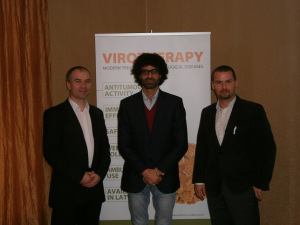
DNE Editor in Chief Maher Hamoud visits the Latvian facilities

The treatment of cancer is constantly changing and many scientists are involved in trying to find a cure for one of the deadliest diseases we are confronted with in modern times. The small country of Latvia is at the forefront of one of the latest treatments for many forms of cancer that is attracting patients from all over the world.

It all began with Latvian scientist Aina Muceniece who began her career in 1945 at the A. Kirchenstein Institute of Microbiology. After years of study the first laboratory for virotherapy as a treatment for cancer was established at the institute, which led to the development of the medicine Rigvir.

Over the years several clinical trials were conducted that proved the safety and effectiveness of Rigvir in stage four cancer patients.

Following the collapse of the former Soviet Union the testing and use in treatment of Rigvir stopped for a few years, but its effectiveness in the treatment of several kinds of cancer, from prostate to bladder, colon, melanoma and lung cancer, had been proven. In 2002 the work began again and since 2005 Rigvir has been used in treatment in hospitals and available in pharmacies all over Latvia. Rigvir activates and normalises the immune system of the patient and is well-tolerated and safe.

Aina Muceniece’s daughter followed in her mother’s footsteps and heads the Association of Virotherapy of Latvia which aims to promote virotherapy and the training of doctors to use the medication. As Rigvir proved to be more and more successful and interest from patients all over the world grew, the Latvian Virotherapy Centre was established to provide treatment and support for those patients.

Currently Rigvir is used in hospitals all over Latvia in the treatment of cancer and has been accepted as treatment for melanoma patients by insurance companies since 2011.

Patients from all over the world are travelling to Latvia to seek treatment and the Virotherapy Centre has developed a programme to ensure their treatment is as comfortable as possible. When a new patient seeks the help of the centre the first consultation is done by phone or email and a complete assessment of the medical records and tests is conducted when the patient is still in their home country.

The clinic then takes care of all the travel, accommodation and medical arrangements for the patient and makes sure that any additional screening and tests are organised to take place in the Latvian hospital. A full treatment plan and follow up is created by the doctors of the clinic after which the treatment starts.

The first round of treatment will take place when the patient is in Latvia, but the follow-up treatments can normally take place when the patient is back at home in their own environment. The arrangements to deliver Rigvir to the patients are handled by the clinic as well, making the whole experience as comfortable as possible for the patients.

source: http://www.dailynewsegypt.com / Daily News Egypt / Home> Lifestyle> Current Article / February 06th, 2013
Medical tourism destination

With a highly competitive international healthcare system that is the envy of many western countrie, Bangkok has developed reputation as a medical tourist destination. By Mark Bibby Jackson / Photo by Nick McGrath

David Towers walked into a hospital in Cambodia for what he assumed was a routine medical check up. That was where the drama started.

“They carried out a series of standard tests and told me I’d suffered a heart attack,” Towers says.

While detaining him for further tests, the hospital summoned his wife and asked her to pay for a three-night stay.

“I lay in bed feeling like [a] hypochondriac for three days,” he says. “Nurses kept telling me I looked fine, but the doctor insisted I was near death’s door.”

Eventually, the fortysomething Scottish expat evacuated to Thailand where an ambulance was waiting at the airport to rush him to Bangkok Hospital. On arrival, he was wired up to machines by a team of heart experts in the Accident and Emergency Unit. Within minutes they diagnosed that there was nothing wrong and he had not suffered a heart attack.

Towers’ hospital bill, which amounted to around $18,000, was covered by his medical insurance — not that that covers the stress and anguish caused by the initial misdiagnosis.

The Hospital of Choice

Stories like this explain why expats across the region choose Thailand for both routine and emergency procedures.

“It’s not uncommon for a patient to come here from one of those countries [Vietnam, Myanmar and Cambodia] and get a different diagnosis or treatment,” says Kenneth Mays, senior director of hospital marketing and business development at Bumrungrad International Hospital.

The odds of an accurate diagnosis are higher in Thailand, but that doesn’t mean patients from elsewhere should jump on a plane for basic medical care.

“You should have a doctor you can see about your routine aches and pains close to home,” Mays says. “If you run into more serious problems, patients should consider coming to a hospital like ours.”

Ruben Torel founded Medeguide, an online directory that allows users to search for top doctors at leading international hospitals around the world. He says Bumrungrad is by no means alone in the standard of medical care it provides its patients.

“The top international hospitals in Thailand are competitive with those you would find in Europe, the US and Australia,” he says.

Regional Migration

Bangkok also stands out in Southeast Asia for the level of service at its hospitals.

“The top international hospitals employ an army of support staff, including interpreters, concierge services and even valet parking,” Torel says.

Another advantage is speed. In Bangkok, visitors can walk into a hospital and see a specialist quickly, something Torel says is “unheard of in other parts of the world”. Patients sometimes arrive from countries where universal health care also means unseemly wait times.

All clinical doctors are Thai, as they have to pass medical examinations in the Thai language, but many train overseas and know the needs of international patients. Some hospitals have foreign medical coordinators and others — including Bumrungrad, Bangkok Hospital, BNH Hospital and Samitivej — are accredited by the Joint Commission International, the US-based agency regarded as the gold standard for healthcare providers worldwide.

That helps Bangkok attract expats as well as locals from neighbouring countries.

According to Torel, Cambodians and Burmese come for diagnostics and specialty medical services, like cancer treatment, cardiac surgery and neurological disorders. Vietnamese are much more selective, and tend to travel for cancer treatment, neurosurgery and specialty medicine.

“Our medical costs are typically far less than what might be found in Europe or America,” says Dieter Burckhardt, assistant marketing communications and branding manager of Bangkok Hospital.

Spoilt for Choice
The number of international-standard hospitals and the range of treatments and services they provide has created a very competitive environment. Local Thais make it a point to shop around for the best value, creating a beneficial system that trickles down to overseas customers, according to Mays.

“The international patients get the same prices as locals and they benefit from that competition,” he says.

But Torel says the playing field is not quite so level.

“While there are rules and regulations against dual pricing, any expat who lives in Thailand will tell you what’s on paper and what’s done in practice are two very different things,” he says. “Hospitals are not immune to this practice, and even if the hospital’s prices are fixed, doctors’ fees are not.”

And with so many hospitals marketing themselves as ‘international’, it can be difficult to sort the wheat from the chaff.

“It’s a buyer’s market and from a consumer perspective that’s a good thing, but from a healthcare consumer perspective, too much choice can be a confusing thing,” says Torel, who established Medeguide in response to hearing “thousands” of patients asking for the same thing — the name of a good doctor

source: http://www.asialifemagazine.com / Home / January 31st, 2013

Tricity Institute of Plastic Surgery, Chandigarh, India – the New Medical Tourism Destination for Cosmetic Surgery

India is a major hub for medical tourism. Patients across the globe prefer India for the array of medical facilities available. Tricity Institute of Plastic Surgery (TIPS) in Chandigarh is fast emerging as a favorite for cosmetic surgery procedures.

Chandigarh, India :

The rising medicals costs in developed economies has somewhat forced the people there to look for other relatively cheaper options. With countries like India offering almost at par medical services, it has proved to be a boon for many. The best part is that the price of treatment as such comes to somewhere around 1/4th of the actual cost otherwise, even if all overheads are added up. So it’s not surprising for patients to line up for India to get themselves treated. Even some health insurance providers prefer to send patients to India for treatment if it is mutually agreed.

The cost is of course a big factor but even the medical facilities in India are state of art and in some cases even better than what is available in any given country. Almost all the staff in any medical centre in India has good understanding of English language. So it’s very convenient to talk, share and understand which is very critical for any treatment.

Nowadays plastic & cosmetic surgery is gaining a lot of acceptance with people across the world. The advancements in this field have ensured that people now can somewhat chisel their body back into shape. Procedures like Breast Enlargement, Breast Reduction  , Tummy Tuck, Liposuction , Facelift, Lips Reshaping,  Arm Lift , Hair Transplant,  Hymenoplasty ,  Botox  etc are quite popular these days. Tricity Institute of Plastic Surgery in Chandigarh, India is one such centre for these procedures, where a lot of foreigners have got treated. And now people from outside India who are turning up here for treatment are mostly referrals from these patients who were very happy with the results they got.

Most of the cosmetic surgery procedures do not need a lot of time. A few are even completed in less than an hour. Some of the patients from outside India who got treated for quick procedures at Tricity Institute of Plastic Surgery (TIPS) Chandigarh were back in 3-4 days. The initial interaction can be done on Email, chat or a call. Patients usually send their photographs and are apprised of what is best for them on email. All communication is kept strictly confidential and private.

About T.I.P.S:
Tricity Institute of Plastic Surgery (TIPS) is located in Chandigarh, India. TIPS is committed to “Best Treatment at the Best Price” for patients both from India and Abroad. The centre takes pride in its team of top 3 plastic surgeons of the region (all ex-PGI) who have carried out more than 5000+ successful surgeries till date. Moreover, a combined experience of more than 30 years, it can’t get any better than this. More details on their website http://www.newcosmeticsurgery.com/.

source: http://www.sbwire.com / Home> Press Release / by SB Wire / February 06th, 2013

Healthy outlook for Dubai’s medical tourism industry

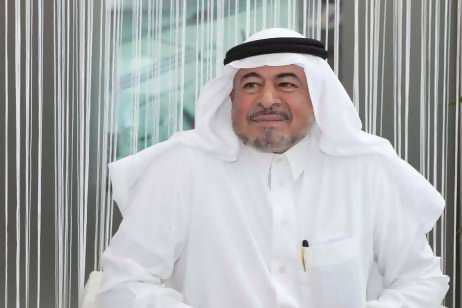
Sobhi Batterjee is the president and chief executive of Saudi German Hospitals Group, which has a hospital in Dubai. Jeffrey E Biteng / The National

Sobhi Batterjee is the president and chief executive of the Jeddah-based Saudi German Hospitals Group, which opened a hospital in Dubai last year. On the sidelines of the 38th edition of the Arab Health exhibition in Dubai last week, he talked about why it makes business sense to provide health care in Yemen and medical tourism in the UAE.

Why did you open in Dubai, where several international hospitals are present?

We were the only regional brand to be recruited by the Government of Dubai to start our project here and we welcomed the idea because we felt the future is here. Dubai will be the Hong Kong of the Middle East. We are targeting those top 2 per cent of India, Iran, east Russia and all Africa to come to Dubai for treatment.

I would not be surprised if Dubai can attract patients from Europe. The locals know the lands. So we know the values. We have been competing traditionally with much more powerful local brands such as King Faisal Specialist Hospital and Research Centre, Saudi military hospitals and King Fahad National Guard Hospital in Saudi Arabia.

You opened a hospital in Sanaa, Yemen, five years ago. Why does it make business sense to go there?

We reduced travel abroad in Yemen [for healthcare reasons] in five years by at least 50 per cent. And we are now making money in Yemen, after five years of hard work. We have treated more than 400,000 people there. Unless we do business with the poor, they will be poor forever. If nobody does business with [Microsoft and Apple] they would go bankrupt. That’s what is happening with the poor. If you take a Rolls-Royce to sell it to somebody in the jungle, nobody would buy it. You have to make a vehicle that will work in the jungle, and he can afford to buy it. That’s what we are doing in Yemen.
How do the prices compare?

We are doing normal deliveries for US$150 (Dh550) in Yemen. It is one tenth of the price we do in Saudi Arabia and probably one twentieth of the price in Dubai. We have to understand there is volume there, and appreciation.
How do you think Dubai can better its position in medical tourism?

Regulations [in Dubai] now allow [medical] professionals to move from the private to the government sector without any restrictions, because they get more benefits in the government sector. This will cause the vicious cycle of price escalation. And this will drive the local private sector out of competition from world medical tourism.

We can’t compete with India, Bangkok, Malaysia and Singapore [unless this stops]. But Dubai has the advantage of infrastructure. Patients need rehabilitation and Dubai is positioned for that with excellent hotels, safety, beaches, restaurants and tourist areas. Patients would love to come and stay for one to two months there. Moreover, patients have a lot of difficulty in going to Europe and the United States due to visa restrictions. So Dubai has a golden opportunity.

ssahoo@thenational.ae

source: http://www.thenational.ae / Home> The National Conversation> Industry Insights / by Sunanda Sahoo / February 04th, 2013

PQ minister wary province being used for medical tourism

pq-minister-wary-province-being-used-for-medical-tourism-1.1139421

Health Minister Rejean Hebert didn’t mince words.

“I think it’s unacceptable and I don’t want it to be repeated,” said Hebert, responding for the Marois government after it was revealed that a 31-year-old Kuwaiti woman had heart surgery at the McGill University Health Centre.

A year ago, the Kuwaiti government paid the hospital $200,000 to perform the surgery, speed the woman’s recovery at the ICU and then in a private room.

The health minister says, if a hospital can make room for surgery for a foreign patient, then it should make room for Quebecers on waiting lists.

“We have waiting lists for surgery and it’s unacceptable to use the facilities in the Quebec health care system to let people from very rich country to have a special access to these facilities,” said Hebert.

The Quebec Federation of Medical Specialists agrees.

“It’s quite amazing to see that there was a bed available for someone in December, a period where we all know that emergency wards, including all those at the MUHC, are overcrowded,” said Dr. Gaetan Barrette.

Defending its actions, the MUHC says the surgery was performed on compassionate grounds.

“We are involved in a project in Kuwait, or some of the doctors are, to help train their physicians and this patient came in through, we became aware of that through the doctor who was training there and he just realized that this could not be done in Kuwait and her life could be saved by bringing her here,” said Ian Popple, speaking for the hospital network.

Popple says no Quebecer in need was denied care. He says the staff worked on their own time and the beds the patient occupied were closed for budgetary reasons.

“The funding from the Kuwait government allowed us to open up beds that weren’t currently funded by the Quebec government,” said Popple.

This patients’ rights advocate says he has no objections to what the MUHC did, so long as two basic criteria were met.

“That the budget, the public money, is not affected and that no patient is being left aside because of it,” said patients’ rights advocate Paul Brunet.

The question for some remains: If a foreign patient can pay for speedy care in a public institution can a Quebecer do the same? The answer is no.

“This was a one-off case. It was on compassionate grounds and we’re not looking at doing any more of these cases,” said Popple.

The health minister has told the MUHC he doesn’t want to see the practice repeated, adding that if there’s humanitarian surgery that’s needed, he wants to be informed so he can authorize it.

source: http://www.montreal.ctvnews.com / CTV Montreal / Home> News / February 01st, 2013