Category Archives: Medical Tourism/Health Tourism

Medical tourism showcase by Germany

The German National Tourist office (GNTO) along with its affiliate in Dubai will be conducting a three-day medical tourism workshop across key markets such as Kuwait, Doha and Abu Dhabi. Medical experts from GCC countries can attend the show which is being held from September 30th – October 2nd, 2012. Commencing with Kuwait City on September 30th, the next city is Doha on October 1st and finally concluding in Abu Dhabi, on October 2nd.

“Many factors are progressively consolidating the popularity of Germany as healthcare and medical treatment destination, especially among patients coming from Arabian Gulf states,” said Antje Roeding-Boudier, Director of the Marketing and Sales Office for the Gulf Countries at the GNTO.

The road show will have institutional, medical and tourism representatives, coming from Germany. The staged activities include panel discussions, exchanges of experiences as well as one-to-one workshop sessions.

source: http://www.traveldailymedia.com / Home> Medical Tourism> Kuwait / By Charmaine Fernz / Thursday, 27 September 2012

Peru to attract more Chinese tourists

LIMA – Peru is promoting to attract more tourists from China by introducing the country’s besttourism sites, Peruvian Trade and Tourism Minister Jose Luis Silva said Friday.

Silva said this during the announcement of the holding of the First International ThermalTourism Show “Termatalia” 2012, scheduled for September 28 to 30 in Lima, aimed atpromoting health tourism and the thermal waters tourism sites.

“We are working to promote these sites to bring tourists everywhere, from China to othercountries,” Silva told Xinhua.

As part of these efforts, Silva has led several business missions to take part in internationalshows.

The Peruvian government has taken measure to facilitate visa procedures for Chinese touristsand businessmen to visit the Andean country.

According to official statistics, Peru received 8,586 Chinese tourists in 2011, lower than those of its neighboring countries such as Brazil and Chile.

In 2011, Peru received 2.5 million tourists from all over the world, generating income of more than $3.3 billion.

source: http://www.chinadaily.com.cn / Home> Business> Industries / September 22nd, 2012 (Ximhua)

Russians top list of health care tourists

For generations, people have been coming to Finland for health reasons.

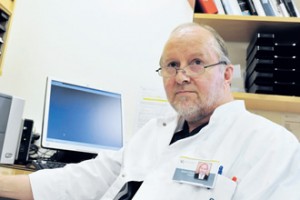
Sakari Orava a preeminent surgeon in the fields of sports injuries, was sought by David Beckham  to help with a ruptured Achilles tendon.

WHEN David Beckham ruptured an Achilles tendon several years ago, he chose to come to Finland for surgery. He, along with other top international athletes, trusted his career with surgeon Sakari Orava and the Finnish health care system. While high-profile footballers generate headlines for domestic health care, such tourism is nothing new for Finland.

At the end of the 19th century Finnish health spas were a popular destination for health-conscious foreign travellers, with Naantali, Turku and Lappeenranta hosting resorts. According to a presentation from Markku Tyni at the University of Savonia Applied Sciences, the people who came to these spas from abroad were not only urbane aristocrats: commoners as well as the elite came to Finland.

Here they visited doctors and received modern therapy, such as electric treatments and turpentine vapours. Many were from Russia.

New EU directive

Although St. Petersburg residents may have flocked to the Grand Duchy of Finland for health reasons, in the last century health care tourism dwindled. Conflict with Russia limited such visits, and other European nations developed their own national health care systems.

“It has not been very common,” explains Matti Bergendahl, CEO of the private health care services company Mehiläinen. “Generally speaking, health care services have been provided locally. Finnish private or public hospitals have not been marketing health care services outside Finland.”

Yet this may be changing. Bergendahl points out that the quality and access of care in Finland could be a draw to foreign visitors. Some specific physicians and services may develop good reputations internationally. More changes may come from Europe.

“In the future, demand may increase due to a new EU law,” continues Bergendahl. “A newly-adopted EU directive improves patients’ rights to cross-border health care and should become part of national law by the end of October 2013. Patients travelling to another EU country for health care should then enjoy equal treatment with the citizens of the country in which they are treated. This new law can increase demand for cross-border services.”…

DAVID J. CORD
HELSINKI TIMES
LEHTIKUVA / VESA MOILANEN / MIKKO STIG

source: http://www.HelsinkiTimes.fi / Parent category: Themes ,  Category: Health & Wellbeing / September 14th, 2012

Scottsdale Plastic Surgeon Offers Expert Advice on Medical Tourism

With the rise of medical tourism, Scottsdale plastic surgeon Dr. John Corey offers advice to patients considering going under the knife – outside of the U.S.

Scottsdale, AZ (PRWEB) September 19, 2012

Looking refreshed after a vacation may have a whole new meaning, according to high trends in medical tourism outside of the U.S. Traveling abroad for Plastic Surgery is becoming more and more popular but what exactly are the benefits and more importantly, what are the risks? Scottsdale Board Certified Plastic Surgeon, Dr. John Corey says there are several things for patients to consider before jumping on a plane for a low-cost procedure.

In 2009, the Deloitte Center for Health Solutions reported that medical tourism would see a 35 percent yearly growth rate outside the U.S in coming years. According to Dr. Corey, with such a high percentage of growth, consumers should research all the facts in order to make wise medical decisions.

“I did part of my cosmetic surgery training in Brazil and they have some of the most talented surgeons in the world, some of whom come here to the States to lecture each year,” said Dr. Corey. “But knowing what to look for and how to find them may not be that easy and mixing travel and surgery can have risks of its own.”

Dr. Corey said it is possible to find good work abroad, in a safe environment and all while paying less than you would in the U.S. He warns that even with all that, it still may not be worth it. Dr. Corey explained that a long trip is often stressful enough without the surgical recovery and if there are complications, getting care back at home may be hard to find.

“Doctors in the U.S. are reluctant to assume the care and responsibility of someone from another country that they have never met,” said Dr. Corey. “It is always better to try and find surgical care close to home. Surgery shouldn’t be cut-rate.”

Dr. Corey added that if you must travel, to obey the following guidelines:

  • Try and find a surgeon that is affiliated with one or both of the Plastic Surgery societies based in the U.S. The American Society of Plastic Surgeons and The American Society for Aesthetic Plastic Surgery have members abroad and is a great place to start.
  • Consider that depending where the surgery takes place there may be language barriers .
  • Stay as long as you can to recuperate near your doctor and to monitor for possible complications before you return home.
  • Find out If the abroad doctor knows any associates near you, should there be follow up care needed.
  • Never let money be your biggest reason to seek out surgery abroad. Many times, you do get what you pay for.

Attribution:

http://www.deloitte.com/view/en_US/us/Insights/centers/center-for-health-solutions/55d9f278c9184210VgnVCM200000bb42f00aRCRD.htm

http://www.travelmarketreport.com/medical?articleID=7334&LP=1

About Dr. John Corey

John J. Corey has been has practiced in Scottsdale, Arizona, since 1993. Dr. Corey is a Board Certified Plastic Surgeon. He performs all types of plastic surgical procedures. He lectures at Arizona State University. He is an Affiliate Assistant Professor at Midwestern University. He is a faculty member at the Osler Institute which provides hands-on review for practicing plastic surgeons nationwide who are preparing for their own Board certification. For more information, visit his website at: http://www.doctorcorey.com

For the original version on PRWeb visit: http://www.prweb.com/releases/prweb2012/9/prweb9920632.htm

Source: prweb

Source: http://www.redorbit. com / News> Health / PR Web / September 19th, 2012

Stem cell therapy to lead DOT’s proposed ‘medical tourism’ plan

The Department of Tourism plans to add another reason for more visitors to come to the country through a soon-to-be drafted “medical tourism” plan, which highlights the relatively cheap yet world-class health services some of the country’s hospitals have to offer.
In this proposed plan, DOT Secretary Ramon Jimenez aims to get the country’s medical sector to put its best foot forward by highlighting stem cell therapy as well as other areas of specialization.
“Medical tourism focuses on some very serious, important areas of healthcare that the world will travel for,” Jimenez said during a forum on stem cell science conducted at the Medical City hospital in Pasig City on Tuesday evening.
Through promoting world-class medical services in the country, such as some of Philippine hospitals’ stem cell programs, Jimenez said the DOT aims to draw foreigners into the country who, in his words, “yung sasakay sila ng eroplano, tatawid sila ng dagat.”
“(Foreigners) would obviously spend less if they sought care in their own country like the United States or (places in) Europe. So you really have to have a value that will mitigate the cost of that travel. Your service has to be superior, greater value for their money,” Jimenez said.
Jimenez was at the event because his wife Abby has a rare but mild motor neuron disease, and avails of stem cell therapy treatment herself.
The Medical City, as well as a few other hospitals, offers this type of therapy that Jimenez hopes  to promote to other countries.
Stem cell therapy entails taking stem cells from a patient, a compatible donor, or from other sources. These cells are then modified to fit the specifics of the patient’s condition, and are injected into the patient’s body.
According to a primer from the Medical City’s Institute of Personalized Molecular Medicine, which handles stem cell therapies, stem cells are “master cells” that are capable of renewing themselves through cell division, and can be modified, under particular physiologic conditions, to become tissue or organ-specific cells with special functions.
Stem cells can come from three sources: bone marrow, peripheral blood (referring to blood circulating the body), and blood from the umbilical cord. These sources are the best for multi-organ repair, according to the IPMM.
Apart from the Medical City, other hospitals in the country providing stem cell therapy are the Makati Medical Center, St. Luke’s Medical Center in Taguig, and the Kidney and Transplant Institute.
A six-month program for stem cell therapy, in the Medical City at least, is priced at around P2.2-P2.5 million for disease-related services, while for the health and wellness (or aesthetic purposes), the therapy is at around P1.4-P1.6 million
It was pointed out that the treatment in other countries would be thrice as expensive as the Philippine rates.
Sam Bernal, a globally renowned cancer specialist and head of the Medical City’s IPMM also said the Philippines has the potential for medical tourism in that the requirements to offer high-quality services, at least in stem cell therapy, are already here.
“The Philippines is an ideal destination for international patients. Moreover, there is really no reason for any Filipino patient to have to travel abroad for stem cell therapy when the best technology and the best VIP treatment is available right here,” Bernal said.
In the Medical City hospital, over 315 patients have undergone stem cell therapy since 2005. Out of that number, around 17 percent or 54 people are from abroad.
Jimenez said tourists who flock to the country for medical treatment are pegged at less than 150,000, citing 2011 figures. He said that number could rise quickly if awareness about the exceptional medical services the country can offer will be raised.
According to Bernal, some foreign clientele who have undergone stem cell therapy in the hospital he works for include an American billionaire couple who failed to be cured through the services of the renowned Johns Hopkins hospital in Baltimore state; shipping magnates from Norway, and patients from Singapore and Malaysia.
Aside from promoting stem cell therapy, Jimenez said possible areas where Filipino medicine excels in and would most likely be part of the medical tourism proposal are other forms of cancer treatment, orthopedics, and dentistry.
Jimenez said should the medical tourism proposal finally be done, its execution would be drastically different from the It’s More Fun in the Philippines Campaign, which was vibrant and utilized social media to get Filipinos to advertise the country to foreigners.
“To tell you frankly as a marketing person that’s not something I would emphasize. That mood and that tone may not be totally appropriate at all times,” Jimenez said. “However, the emphasis on people will still be pretty much the same.”
The plan for promoting medical tourism in the country internationally will be through the form of road shows and direct selling of the concept.
The secretary emphasized that Filipinos will still be the selling point of the campaign, however different the style of the campaign for medical tourism will be.
“Like (the More Fun in the Philippines campaign), it is additional evidence that it is the Filipino that makes the difference. As you can see pati sa medical tourism that will be the differentiator, the skill, the professionalism ,the genius, the caring,” Jimenez said.
“Iba talaga mag-alaga ang Pilipino e, di tayo nagtatapon ng tao,” he said. “Filipinos never forget they’re dealing with people,” he also said.
Jimenez said the medical tourism plan will take around three to six months to be conceptualized and drafted, but initial moves to promote the country’s health services will be done as soon as possible, and that the DOT is “determined to develop it as it comes.” — ELR, GMA News

source: http://www.gmanetwork.com / by Gian C. Geronimo, GNA News / September 19th, 2012