

Category Archives: Medical Tourism/Health Tourism

Contractor chosen for Shetty project

Phase one of the proposed Shetty medical centre. – Image: Submitted

Developers of the proposed Shetty medical tourism hospital have hired local company Clan Construction to be the general contractor on the project.

Clan Construction will supervise and build the first phase of the Narayana Cayman University Medical Centre, the official name for Dr. Devi Shetty’s health care city, on 50 acres of land in High Rock in East End. It is estimated that as many as 300 construction workers would be employed at peak construction period of phase one of the project, which consists of a 140-bed hospital.

Ground breaking is expected in August.

Project director Gene Thompson said a design/build agreement had been signed with Clan Construction, owned by Neil Armstrong. DeAngelis Diamond Health Care Group of Naples, Florida, which provides specialty services for construction of state-of-the-art hospitals and health care facilities, will assist with the project, Mr. Thompson said.

Mr. Armstrong said his firm would employ “as many Caymanians as possible” on the site and that preference would be given to both local subcontractors and local suppliers of equipment and materials.

Providing employment and benefits to Caymanians was a “requirement” that had been stressed to Clan Construction during the contract negotiations, Mr. Armstrong said.

“Mr. Thompson has indicated that we will be on an extremely aggressive construction timeline,” Mr. Armstrong said, “and we are prepared to staff up and begin work once the preliminary site preparation work has been completed.”

The hospital is expected to open to its first patients in September or October 2013.

Future phases will include an expansion of the hospital facility, an assisted-care community, a medical university, and a biotech park.

The Shetty group bought 50 acres of land in a 600-acre site from landowner Joe Imparato in High Rock in December 2011. Imparato’s City Services (Cayman) Ltd. will be a co-developer of the project, working with the Shetty group to develop support facilities, such as hotel and residential accommodation.

According to the developers, phase one of the project will be built using Insulating Concrete Forms blocks and the building will be constructed to withstand hurricanes and have full standby power and water. The first building will be a two-storey, low-density structure oriented to take advantage of the trade winds and the sun, the developers said.

Start dates for the project have been moved several times since it was first announced at the signing of a memorandum of understanding between the Cayman Islands government and Indian cardiologist Dr. Shetty in April 2010.

A number of Cayman’s laws were amended or created, as stipulated by the memorandum of understanding, including the Health Practice Law, which enables medical staff trained in India and other overseas countries to practise in Cayman; the Tax Concessions (Amendment) Law, which exempts companies from potential future taxes and the Medical Negligence (Non-Economic Damages) (Amendment) Law, which caps pain and suffering damages awarded in medical malpractice cases to $500,000. Regulations associated to some of those laws are still being drafted.

A final piece of legislation, which would allow human organ and tissue donations and transplants to be done in Cayman, has not yet been presented to the Legislative Assembly.

source: http://www.CompassCayman.com / by Norma Connolly / norma@cfp.ky / March 20th, 2012
‘Jordan remains medical tourism hub despite regional unrest’

Dead Sea

The high quality of Jordan’s healthcare services and facilities are among the reasons that helped the country become one of the most popular medical tourism destinations in the world, local and international health experts said on Sunday.

Prem Jagyasi, a global healthcare expert, said that although some countries in the region provide healthcare services for lower fees than in Jordan, there are other important factors that prompt patients from across the globe to choose the Kingdom.

“Accessibility and support of the government through facilitating visa issuance, and security are among these reasons”, Jagyasi said at the opening of the International Medical Tourism Congress yesterday.

He explained that although the Kingdom is surrounded by regional unrest, “the country is safe and this is one of the factors that medical tourists look into when selecting their destination”.

Abdullah Bashir, president of Jordan Hospital, which is affiliated with the Private Hospitals Association (PHA), said a study conducted by the association in 2011 proved that the Kingdom is also distinguished in the success rate of different critical medical procedures conducted by Jordanian medics.

According to figures he presented, the success rate for conducting in vitro fertilisation in Jordan is 60 per cent, while it stands at 99 per cent for general percutaneous coronary artery intervention.

In addition, the rate of patient satisfaction with procedures conducted in the Kingdom is 90 per cent.

More than 350 participants from 25 countries are attending the two-day conference, organised by the PHA.

In his address at the opening session yesterday, PHA President Awni Bashir attributed the Kingdom’s distinction in the medical tourism field to the presence of qualified and trained medics who have had the opportunity to study at the world’s best health centres.

He also pledged that private hospitals will maintain their reasonable prices to remain “a regional hub for medical tourism”.

Renee-Marie Stephano, president of the US Medical Tourism Association, said Jordan is moving towards change and is continuing to rise in the field of medical tourism.

She noted that the Kingdom has adopted several procedures to be distinguished in the field, including the establishment of the Health Care Accreditation Council, as 100 per cent of buyers believe that accreditation is important.

Jordan ranked first in the region and fifth globally as a medical tourism destination, according to a 2009/2010 World Bank report. The medical tourism sector annually generates over $1 billion in revenues and the number of foreign patients seeking treatment in the Kingdom stands at over 240,000 per year.

source: http://www.JordanTimes.com / Home Page> Local> Articles Details / by Khetam Malkawi / March 18th, 2012

Korea becoming destination for medical tourism

“We hope medical tourism will help create a new Korean wave,” said Jung Ho-won, director of the ministry’s Health Industry Policy Division.

The ministry aims to attract over 150,000 foreign patients this year and 400,000 by 2018, which will be easily achieved at the current pace, he said.

The government has been making efforts over the past few years to develop medical tourism as one of its new growth engines, and is now slowly harvesting the fruits.

The ministry estimated that the total number of foreign patients who visited Korea for medical treatment surpassed 110,000 last year, up from 81,789 in 2010.

The Korea Times, March 11, 2012

source: http://www.Occidentalism.org / Home> Economics, Science, Technology / March 11th, 2012

FEATURE: Taiwan draws Japanese tourists

Following the powerful earthquake and tsunami that struck northeast Japan on March 11 last year, a nuclear crisis further damaged the country, along with its tourism industry, while boosting the number of Japanese traveling to Taiwan.

Over the past year, the number of Taiwanese tourists visiting Japan shrank by 17.5 percent compared with 2010, yet Japanese tourism to Taiwan rose by 19.9 percent, or about 210,000 visitors, to 1.29 million travelers, Tourism Bureau statistics showed.

The statistics also showed that in the first half of last year, average daily expenditures per Japanese tourist in Taiwan reached US$354, a 30 percent increase from the same period in 2010. Both numbers shot to their highest in 56 years.

Japanese tourists’ expenditures were 1.48 times that of the average of overall tourists to Taiwan and 1.66 times that of Chinese tour group tourists.

Travel Agent Association of the Republic of China secretary–general Roget Hsu (許高慶) estimated that Japanese tourists to Taiwan generated NT$53 billion in foreign exchange revenue for the country last year, an increase of almost 50 percent.

Japan’s population is 5.5 times that of Taiwan, but for the first time in nine years, the number of Japanese tourists to Taiwan exceeded the number of Taiwanese visitors traveling to Japan last year, Hsu said.

He said that several reasons contributed to the change, including a drop in the number of Taiwanese travelers to Japan, the yen’s appreciation and the nation’s generous post-quake donations to Japan.

Tsai Ming-ling (蔡明玲), director of the Tourism Bureau’s planning and research division, said that after launching direct Taipei International Airport (Songshan airport)-Haneda flights in October 2010, the country had seen Japanese visitors to Taiwan increase by 17 percent in January last year from the same month in 2010, followed by a 45 percent rise in February last year.

Even with the occurrence of the earthquake in March last year, the number rose by 2 percent, Tsai said.

Following Taiwan’s strong show of support to the tragedy-hit country, which left a lasting impression on many Japanese, Tsai said total arrivals from Japan were up in August, September and December last year by 29 percent, 34 percent and 27 percent respectively.

She said that the nation’s post-quake assistance and care had received widespread media coverage in Japan and have brought about a rise in the number of Japanese tourists.

After the March 11 earthquake, Tsai said the bureau had withdrawn its tourism promotion in Japan and replaced it with images showing Taiwanese making post-quake donations to the earthquake-stricken country, as well as children from Taiwan writing consolation letters to its victims.

Aside from efforts by the Taiwanese authorities, the nation’s airline companies and travel agencies also joined hands to allow 1,000 earthquake victims from northeast Japan to visit — free of charge — Nantou County, which was most severely hit by the 921 Earthquake in 1999, to witness its reconstruction accomplishments from September to November last year.

The free tours were so well received by Japanese victims that the actual number of participants was 1.5 times higher than expected, with many saying the tours had given them hope during a desperate period, she said.

Sunrise Travel Service president Ko Mu-chou (柯牧洲) said the travel agency had seen a 25 percent increase in tour groups from Japan last year.

After the natural catastrophes and Taiwan’s strong support, Japan’s Ministry of Education, Culture, Sports, Science, and Technology said that high school students planning a study tour abroad should make Taiwan their top choice, while some Japanese corporations also chose Taiwan for their incentive tours, Ko said.

The upward trend was therefore expected to continue both this year and next year, he said.

Taiwanese tourism to Japan has trended downward since the earthquake, until in January, the number returned to normal with a 22 percent increase.

Commenting on the revival of Japan’s tourism industry, Tsai said that with resolution of the country’s mounting nuclear crisis, Japan would once again become the most favored destination for Taiwanese tourists.

This month, Japan extended Taiwan’s air rights over its territory, Tsai said. In light of this, China Airlines has proposed adding destinations including Kagoshima, Shizuoka and Toyama in Japan, with eight more destinations, including Osaka, likely being added to TransAsia Airways’ routes.

Taiwanese tourism to Japan is expected to peak during the cherry blossom season next month, she said.

In the past, tour groups from Japan generally centered their itineraries around food and accommodation, Tsai said, but the emphasis switched to shopping and entertainment after the March 11 earthquake.

Statistics for the first half of last year show that Japanese tour groups’ expenditures on shopping rose 14 percent and their entertainment spending surged 218 percent, which could likely stem from the yen’s appreciation and a desire to seize the day after the horrific catastrophe last year, Tsai said.

Based on a survey conducted by the bureau, the top five draws for Japanese tourists in Taiwan were local delicacies, beauty spots, the amiability of its people, the short flight and cheap prices, in that order.

Japanese tourists stay an average of 3.9 days, with their most frequently visited sites being night markets, the National Palace Museum, Taipei 101, Jiufen (九份) in New Taipei City (新北市) and National Sun Yat-sen Memorial Hall.

source: http://www. TaipeiTimes.com / Home> Taiwan News / by Hsieh Wwn-hua , Staff Reporter / Monday, March 12th, 2012

Translated by Stacy Hsu, Staff Writer

Tourism News in Croatia Includes Health Tourism in Split, New Flights & A New Interactive Guide to Dubrovnik

Split The first medical tourism center in Dalmatia and Croatia, which should be completed in the second half of this year, is being constructed in Split. This will be the the residence for pensioners in which some 15 million euros will be invested. The luxury accommodation will include clinics with diagnostic and specialist centers situated within the same facility.

At their disposal within the center, users will have a restaurant, an internet corner, a piano and lounge bar, a cinema and a library. Located on the roof there will be a green oasis with a promenade, an outdoor swimming pool with a sundeck and a wellness and fitness center. The residence will have 54 accommodation units, 40 rooms and 14 suites, with an option to rent them out for the period of five days to 99 years, and will be able to accommodate up to 100 people, which will have 35 employees at their service. The seven-story building will have an underground garage with 105 parking spaces and several business premises – a shop, a bank and a gift shop. The new health tourism center is located almost in the center of the town and is only a 15 minute walk from the beach, promenade and the old town.

The Tourist Board of Split-Dalmatia County

www.dalmatia.hr

The Tourist Board of Split

www.visitsplit.com

New air lines from Dubrovnik, Split, Rijeka and Pula to European cities

Vueling, the Spanish low budget airline, will be introducing a new line to Croatia, alongside the already existing line from Barcelona to Dubrovnik, from 23 June until the end of October this year.

Dubrovnik – An interactive tour guide

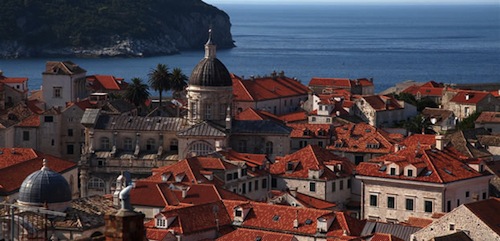
Dubrovnik Dubrovnik will soon enable its visitors to more easily find out all about the tourist offer of the city. The information guide “GUIDOO – Info Guide System”, a touch sensitive (touchscreen) standalone interactive information pillar, which will also be available via the Internet and mobile applications, will be set up at busy urban locations. The system will allow visitors direct access to all information and offers in real time.

The Tourist Board of Dubrovnik-Neretva County

source: http://www.TravelVideo.tv / March 08th, 2012