Category Archives: Medical Tourism/Health Tourism

Thailand and Phuket Tourism Chases Health and Wealth

Phuket:
The Thai government is aiming to develop Thailand into the status of a ”World-Class Health Provider” by 2014, with total projected earnings of US$11.5 billion over the five-year period of 2010-14.

The new strategic plan will be a substantial upgrade over the successful project to establish Thailand as “Spa Capital of Asia” which was achieved in 2008.

It will involve a holistic collection of curative medical treatments, preventive spa and wellness services, and sales of herbal products and other supplies for the global health and wellness industry.

Broken down further, the earnings projection is for medical treatments to generate US$8 billion over the 2010-14 period, spa and wellness services US$2.23 billion, and sales of products and supplies US$1.3 billion.

According to Mr Apichai Jearadisak, Advisor, Federation of the Thai Spa Association, Thailand already leads the regional spa market.

”With more than 1200 registered spas, 400 of which are high-end luxury facilities, and all of them together employing some 25,000 professionally trained therapists, Thailand undoubtedly has a claim to call itself the ‘Spa Capital of Asia’.”

He said there were many factors that make a Thai spa experience unique; such as service-minded spa personnel, traditional Thai massages, spa therapies and recipes, high operational standards, and a broad range of multi-cultural spa concepts.

He noted that people came to spas to relieve stress, enhance their personal appearance and well-being, and reduce pain. Much business is also being generated in the form of a spa experience being offered as a ‘gift’ for birthdays and other personal celebrations.

Mr Apichai said that the Thai spas were working to upgrade the standards of their services and products, as well as the hygienic standards in the spas themselves. Efforts were also being made to improve the quality of their communications and marketing.

On the medical side, Dr Med. Prapa Wongphaet, President of the Thailand Medical Tourism Cluster said, ”Thailand has more than 30 international accredited hospitals in Bangkok and various tourist destinations; such as, Pattaya, Phuket, Samui, Hua Hin, Chiang Mai, Chiang Rai and more”.

She said two leading Bangkok hospitals are already well-known for their ability to service medical tourists from the Middle East countries.

Dr Prapa, who also chairs the Health Services Business Committee of the Board of Trade said, ”Thailand could offer a complete combination of advanced medical treatments and other health related services, plus a good vacation”.

The most popular are health vacations, anti-aging vacations, beauty vacations, spa vacations and more mind-body wellness vacations. The most favorite adjacent services are dental treatments and dental cosmetics, medical check ups, aesthetic skin treatments, body shape up treatment, weight management programmes and life-style modification programs.

Dr Prapa said that more than 200 private and public hospitals have received the ”Hospital Accreditation Certificate” issued by the Healthcare Accreditation Institute (public organisation). ”Today, it seems that Thailand has the most JCI accredited hospitals in Asia,” she said.

She said that since 2010, the ”Thailand Medical Tourism Cluster” concept has involved the collaboration of five government agencies and five leading business associations to support all aspects of medical and health and wellness tourism to Thailand.

source: http://www.phuketwan.com / Phuket Wan Tourism News / by Media Release / Friday, February 24th, 2012

Health care bargains abroad: Patients willing to pack their bags can find significant savings

By Anne Kates Smith, Kiplinger Personal Finance
Premium Health News Service

Bruce Pearson owns a nursery, raising orchids and other lush flora in Boynton Beach, Fla. But it was painful sciatica that made his back as delicate as a hothouse flower. While leading an eco-tour in Thailand a few years ago, Pearson experienced back pain so severe that it put him in a local hospital. The treatment he received converted him into an enthusiastic medical tourist. In six months, Pearson was back in Bangkok, at renowned Bumrungrad International Hospital, for a laminectomy–spinal surgery to relieve the pressure on a nerve.

The cost, including a five-day stay in a private room, was $4,700, compared with quotes of $70,000 and higher that Pearson had received in the U.S. Even with insurance, Pearson would have paid nearly $20,000 out-of-pocket here. In Bangkok, his biggest problem, he says, was “choosing between the tuna in red wine sauce and the lobster salad.”

Since the 2005 surgery, Pearson, now 65, has been back to Bumrungrad for follow-up back care and three comprehensive physicals–at a cost of about $400 each–that he believes were more thorough than he’d get here. Travelers on Pearson’s eco-tours to Thailand now often seek medical attention, too.

If you’re willing to hop on a plane, you can find significant savings abroad. India is a top destination for orthopedic procedures and heart surgeries. Singapore and South Korea are well known for cancer diagnosis and treatment, Malaysia for painstaking executive health screenings. Israel is emerging as a popular destination for in vitro fertilization, and Latin America, already the cosmetic-surgery capital of the world, is becoming renowned for its dentistry.

The cost differential between U.S. and foreign medical procedures can be staggering. Compare a coronary valve replacement and bypass surgery in Taiwan, at $18,000, with the U.S. equivalent at $85,000.

This year, more than a half-million U.S. residents will get medical care abroad, according to Patients Beyond Borders, a consumer advisory service. That number is likely to grow at a 25 percent to 35 percent annual rate. But that’s far fewer jet-setters than experts had predicted just a few years ago, when a 2008 report from the Deloitte Center for Health Solutions foresaw six million medical tourists by 2010.

In an abysmal economy, many have indefinitely postponed the elective dental and cosmetic procedures not covered by insurance that are medical tourism’s staples. Employers that might have included a medical-travel option in their benefit plans are waiting to see how health reform plays out, says Deloitte’s Paul Keckley.

SERIOUS SAVINGS

Some procedures lend themselves to international travel, while others are best left to local docs. The five most-popular overseas procedures, according to Patients Beyond Borders, are cosmetic surgery, dentistry, orthopedics, in vitro fertilization and other reproductive services, and weight-loss surgery. Some experimental drugs and procedures, such as stem-cell therapies, are, for the most part, available only overseas–and should be undertaken only with extreme caution.

Complex procedures that require lengthy recuperation (think bone-marrow transplants) are problematic. Cancer is a gray area, with travel dictated less often by potential cost savings and more often by the desire to undergo treatment close to friends and family. Even with lower-stakes procedures, costs can add up.

It makes more sense to travel for four dental implants than for two because you have to make a second trip to get crowns on the implants. A good rule of thumb, according to experts, is that cost savings should be at least $5,000 to $6,000 to make a trip worthwhile.

Medical care overseas is cheaper in many places because the cost of living is lower than in the U.S.–which figures into everything from surgeons’ fees to the costs of building a hospital and hiring the semiskilled labor to staff it. Efficiencies are often greater overseas, as well. In Singapore, you’ll find few general hospitals, for instance; most medical procedures are performed in specialized centers.

Many hospitals abroad are world-class facilities that roll out the red carpet for medical tourists. Bumrungrad is one of the biggest, boasting more than 400,000 international patient visits per year. Many of its 900 doctors completed fellowships or residencies in the U.S.; some 200 are U.S. board-certified, and nearly all speak English. The hospital’s International Medical Coordination Office will schedule procedures, attend to family logistics and coordinate follow-up care. Bumrungrad will even send someone to pick you up at the airport.

More than 20 percent of the patients at Hospital Clinica Biblica, in Costa Rica, are from other countries. Ben Schreiner, 65, from Camden, S.C., went there in 2008 to have a hernia repaired.

“Doctors, staff were all first-rate,” says Schreiner. “I recuperated there for five days, in a small hotel. The hospital furnished an English-speaking nurse who visited daily.”

Facilities don’t have to be huge to be attractive. The Barbados Fertility Centre is the smallest hospital to receive accreditations by the Joint Commission International, the global arm of the Joint Commission, the major hospital accrediting body in the U.S.

The appeal of medical travel is obvious for the uninsured and under-insured. Travel is also appealing to workers with high-deductible health plans. Not only might they save a bundle abroad, but they can use tax-free dollars from a health savings account to pay for care (and some of the travel), provided the procedures meet Internal Revenue Service criteria for qualified medical expenses. Or you can always deduct the cost of qualified procedures that exceed 7.5 percent of your adjusted gross income. It’s rare that U.S. insurance is accepted by overseas care providers.

Some of the best deals go to workers at a small but growing number of employers–typically those funding their own health care expenses–that include medical travel as a benefit and are dangling incentives to get people to sign on. Patrick Follett’s wife, Tina, 51, had a hysterectomy last year at Hospital Punta Pacifica–which is affiliated with Johns Hopkins Medicine International–in Panama City, Panama.

“I didn’t pay a dime,” says Pat, who works for Snow Summit Mountain Resort, in Big Bear Lake, Calif. The company paid for travel and lodging, the surgery, the hospital stay, and attendant medical care–and even gave the couple spending money.

HOW TO FIND CARE

If you’re considering medical travel, your first stop should be the book Patients Beyond Borders, by Josef Woodman, a comprehensive guide to medical travel with information about the best international hospitals and clinics. A newly revised edition is due out this month (February), costing about $16 on Amazon.com. The organization also publishes several country-specific and hospital- specific guides, and it offers one-on-one advice in free 15-minute consultations or more in-depth advice for $250.

Some medical tourists prefer to arrange a trip with the help of facilitators, or brokers. Many work with networks of hospitals, doctors and clinics with which they’ve negotiated discounted rates. But be careful. The industry is unregulated, and anyone can hang out a shingle. Look for a long track record and satisfied customers; an affiliation with major insurers or employers; or safeguards against bias in recommendations.

Brokers should thoroughly inspect the facilities they recommend. Companion Global Healthcare is a subsidiary of Blue Cross Blue Shield of South Carolina.

“We physically visit every hospital in our network. Our on-site survey takes five to nine hours, and sometimes a couple of days for large hospitals,” says CEO David Boucher. Companion does not accept referral fees from hospitals. Patients pay a $700 case-management fee, in addition to the cost of travel and medical care. Planet Hospital typically recommends three or four hospitals for you to choose from, and although the company is paid by the hospitals in its network, staffers have no incentive to recommend one over another. Most patients pay for concierge service that costs $100 per day for the first three days and $75 a day thereafter.

Be aware that in some countries, doctors may use products that are of lower quality than ones required in the U.S., such as certain types of silicone implants and cosmetic injections. Infection is a leading cause of complications–as it is in U.S. hospitals.

Whether you travel for care on your own or with help, insist on a few things. JCI accreditation is a must. (More than 400 public and private health care organizations in 39 countries are accredited or certified by JCI.) Look for English-speaking patient representatives. And ask your doctor the same questions you’d ask a doctor anywhere: Where were you trained? How many of these procedures have you done? Who makes the implants you’ll use? Ask if you can contact the doctor before, during and after care. Before you go, arrange for the transfer of medical records and for after-care in the U.S.

Insurers, facilitators, and clinics and hospitals may try to reduce or eliminate their liability in case of malpractice, so read the paperwork carefully. Foreign medical arbitration systems often drag out the process, and if you do get compensation, don’t be surprised if it’s much smaller than what you’d expect in the U.S.

Copyright © 2012, Tribune Media Services
source: http://www.ChicagoTribune.com / Home> Health / February 22nd, 2012

Budget 2012 needs to promote health & wellness sector: PVR Murthy

P V R Murthy, Group Finance Director, Yash Birla Group shared pre-budget expectations for the upcoming Union Budget 2012-13. The same is as follows:

> Government has no option but to raise both excise and service taxes this year.

> There are issues with respect to withholding taxes that need to be taken care of.

> Education – Learning is the way to Growth. Growth and education cannot be decoupled from each other. Education leads to higher employment and paves way for inclusive growth across the country. Over the last couple of years, education as a sector has seen various reform measures both at primary and higher education levels. The adoption of public-private partnership (PPP) model in the education sector could go a long way in establishing success and creating a sustainable momentum in long-term. While the government`s role could be that of funding the projects, it is the execution ability of the private sector which needs to be banked upon for the ultimate delivery of the model.

> Infrastructure – Without any dichotomy – the future growth prospects of the Indian economy lingers primarily on the infrastructure investment and timely execution of the projects. Thus, one such initiative would be to develop a huge amount of long-term corpus towards infrastructure development through dedicated debt funds (the most recent example being tax-saving infra bonds).According to RICS India, in order for India to achieve its envisaged 10% growth during the coming financial year, the requirement for sustainable infrastructure development is crucial to provide impetus to the economic activities and achieve optimum resource utilization. To overcome slow growth, the government should take steps to up its allocation for the infrastructure sector from the 2011-12 budgetary allocation of Rs 2,140 billion. The sector, which saw a muted growth in 2011, hurt by the double whammy of slow policy-making and low private sector investment, hopes growth will be there in the year 2012. Increase infrastructure spending in urban areas with a view to unlock the value of neglected and hidden land assets in suburban and peripheral districts`. Increase outlay to Jawaharlal Nehru National Urban Renewal Mission (JNNURM). Grant industry status to real estate, since the sector is a major driver for economic growth and generates countless jobs across its various verticals and associated industries. Relax norms for repatriation of FDI in real estate. The market environment needs to be rendered more investment-friendly. Enact legislation on REITs to provide exit opportunities to real estate investors. Bring out strong and convincing evidence of intention to implement the proposed real estate regulator in 2012, and provide single-window clearance for real estate development projects.

> Wellness Health Tourism – To encourage the growth of medical tourism, the government should provide a variety of incentives, including lower import duties and higher depreciation rates on medical equipment, as well as expedited visas for overseas patients seeking medical care in India. “Budget 2012 needs to promote Health & Wellness sector by rendering service tax on all fitness & Spa services. Ayurvedic treatments need to be included in medical insurance claim“

> Real estate sector – Relax FDI upto 51% into multi-brand retailing. Indian retail will benefit greatly from increased spending in back-end logistics infrastructure and growth of organized retail Increase infrastructure spending in urban areas with a view to unlock the value of neglected and hidden land assets in suburban and peripheral districts.

Disclaimer: IRIS has taken due care and caution in compilation of data for its web site. Information has been obtained by IRIS from sources which it considers reliable. However, IRIS does not guarantee the accuracy, adequacy or completeness of any information and is not responsible for any errors or omissions or for the results obtained from the use of such information. IRIS especially states that it has no financial liability whatsoever to any user on account of the use of information provided on its website.

source: http://www.MyIris.com / News / source: IRIS , February 22nd, 2012

35% growth in outbound Healthcare Tourism expected in 2012/2013

1.6 Million Americans Expected to Head Overseas for Healthcare in 2012
The Deloitte Center for Health Solutions predicts that approximately 1.6 million Americans will travel outside the country for medical care in 2012, with an anticipated yearly growth of 35%. Increased sophistication of medical tourism operations, demand for cosmetic surgery, and access to low-cost global transportation are cited by Deloitte as the major factors for growth. The firm also forecast that inbound medical travel will experience slower growth, totalling approximately 561,000 medical tourists by 2017.

Medical Schools Jumping Into Tourism Frey

Look for U.S. medical schools and teaching hospitals to be among the major players vying for medical tourism dollars, according to a recent report by National Public Radio (NPR). As an example, NPR said Vanderbilt University Medical Center in Nashville, Tenn., recently launched a national advertising and marketing campaign promoting its cancer and heart disease treatments based on an individual’s DNA. Others with national campaigns include the University of Michigan Health System and the MD Anderson Cancer Center at the University of Texas in Houston.

Shrinking reimbursements from Medicare and Medicaid account for much of this new focus among teaching hospitals, according to Joel English of the Milwaukee-based marketing firm BVK. “To sustain their research and education and patient care, they have to extend beyond their traditional geographic boundaries,” he told NPR.

Destinations Keep Wellness Resolutions on Track

New Year’s health resolutions tend to falter by late January. So the travel site Cheapflights (www.cheapflights.com) came up with a Top 10 list of destinations that may help clients keep their wellness resolutions on track. 1) Reduce Stress: Body Holiday LeSport resort, St. Lucia; 2) Exercise More: Italy’s Dolomites region; 3) Spend More Time With Family: Quebec City; 4) More Time for Oneself: One & Only Reethi Rah resort in the Maldives; 5) Eat Better: Tokyo; 6) Lose Weight: Nubeginings retreat, Razines, France; 7) Save Money: Bucharest, Romania; 8) Watch Less TV: Great Ocean Ecolodge, South Australia; 9) Live a Healthier Life: Med Hot Springs Resort in Turkey’s Samson Mountains; 10) Stop Smoking: SHA Wellness Clinic, Alicante, Spain.

Healthcare Travel More Regional Than Global in 2012

Medical tourism is more about regional and cross-border healthcare than it is about traveling long distances – and this is not going to change during the year ahead, according to a recent article in the International Medical Travel Journal (IMTJ) on projected medical tourism trends in 2012. In fact, if travel costs continue to climb this year, medical travel could become even more regional. IMTJ also concluded that medical tourists, like vacationers, will be more likely to rate and review their experiences online. The big question for 2012, it said, is “whether corporate or insurer paid medical travel will get off the ground.”

Medical Tourism Can Boost Depressed U.S. Regions
“If regions in the U.S. – particularly depressed ones – can build a reputation for specializing in specific areas of treatment and surgery, the economic and social impacts could be significant. Medical tourism can generate diversified job opportunities for regions, not just in areas directly related to hospitality and catering, but also in terms of jobs for nurses, doctors and specialists which results in a much higher value added to the economy. If specialty clinics like the Mayo Clinic in Minnesota can draw patients from across the nation on the basis of their specialization, expertise, research, reputation and patient success, then there is no reason others cannot follow suit.” – Simon Hudson, Center of Economic Excellence Endowed Chair in Tourism and Economic Development, College of Hospitality, Retail and Sport Management, University of South Carolina, Columbia

Taiwan Launches App for Med Travel

Taiwan’s Department of Health launched a new app service for medical travel that provides information on tourist attractions and healthcare facilities around the country. The app, which has an English-language version, covers information ranging from health checkups to cosmetic medicine, with a map service for each listed facility. Users can access information on the 31 medical and healthcare facilities under the DOH’s international medical program. Now available for iPhone and iPad users, the App will expand to Android users in the first quarter of 2012.

. . . And Taiwanese Hospitals Strike Insurance Deal With Houston Firm
Four major hospitals in Taiwan have signed a cooperation agreement with Houston-based New Era Life Insurance Co. to provide medical services to the insurer’s American policyholders who choose to get treatment in Taiwan. The services covered includes health examinations and cosmetic surgery.

South Korea Ramps Up Med Tourism Measures

South Korea’s Ministry of Health and Welfare and the Korea Health Industry Development Institute launched a project to improve the country’s medical service system for foreign patients. They include incentives for the building and remodeling of lodging facilities for tourists at medical institutions; allowing drug dispensing in hospitals for foreign patients, and cultivating the medical workforce, including interpreters.

source: http://www.TravelMarketReport.com / Leisure Travel> Tips & Trends / by Maria Lenhart / January 12th, 2012

Expat guide to India: health care

In the latest of our country guides, we look at medical services in India – a country with a growing reputation for cheap treatment
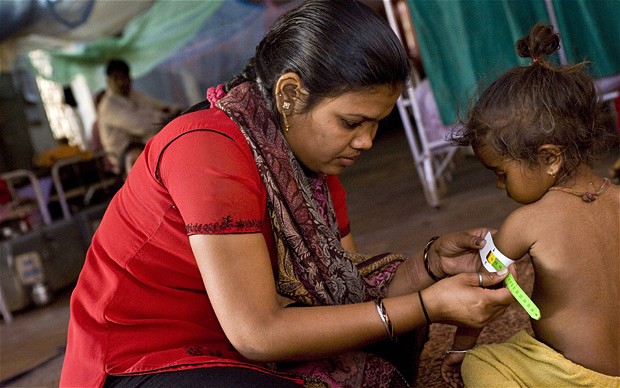
A child undergoes a mid-upper arm circumference test, which measures the extent of malnutrition, at a hospital in India. The country has been criticised for not doing more to tackle child deaths Photo: Nick Cunard/CHI-Photo/Rex Features

Ties between Britain and India remain something of a wonder. While relations with some of Britain’s former colonies have grown weak, or disintegrated, the bond with the world’s biggest democracy flourishes. Perhaps it’s the cricket. Perhaps it’s the large Indian population in Britain, many of whom – doctors, nurses and others – keep the NHS afloat.

But how is health provision in the subcontinent?

“Mixed” is the kindest answer. For while India has skilfully promoted itself as a medical tourism centre, attracting patients from the Middle East, Africa and Europe, services for the majority of the billion-plus population are poor. The smart private hospitals are out of reach.

Only a quarter of the population can afford Western medicine, with the rest relying on traditional remedies or alternative treatments, such as acupuncture and Ayurvedic medicine (which can at least boast fewer adverse reactions).

Eighty-one per cent of health care across India is paid from private funds, mainly individual pockets. To compound the problem, the booming economy has attracted millions into the cities and away from the country’s rural network of hospitals.

According to the Organisation for Economic Co-operation and Development, in 2009 lower-income groups in India had less access to health care than 15 Asian countries surveyed, where, on average, only 55 per cent of health care is paid from private funds.

Infants at risk

India has come under criticism for not doing more to tackle the problem of infant deaths, the chief marker of the efficacy of a country’s health care system.

Unicef, the children’s charity, pointed out that of all deaths of children aged under one across the globe in 2008, a quarter occurred in India.

At 47 deaths per 1,000 live births, on the latest figures, infant mortality is 10 times that in the UK. However, only three years ago, the toll was 57 deaths per 1,000 live births. So progress is being made. It’s not as if funds are tight. According to PricewaterhouseCoopers, Indian health care has grown recently at a compound annual rate of 16 per cent. The accountants put the total value of the sector in 2009 at $34 billion. This translates as $34 per head, or roughly 6 per cent of GDP. The estimate for the current value of India’s health care sector is thought to be $40 billion.

For comparison, the annual budget enjoyed by the NHS is £110 billion (taking some 9 per cent of GDP) and serving a very small population relative to India.

Outstripping China

There is no questioning the need for a hugely expanded health care sector. By 2050, India’s population is projected to hit 1.6 billion, overtaking China as the world’s most populous nation.

The growth projection is not just based on fertility in India’s population. Life expectancy is fast moving to Western levels. Government drives against hepatitis and polio in the young will give another twist to the population spiral.

The number of inhabitants aged 60-plus is estimated to reach 189 million by 2025 – three times the 2004 total.

Alongside the population spurt, India’s economy can be expected to grow by at least 5 per cent a year for the next 40 years, according to Goldman Sachs, the bank.

Factors behind the forecast include urbanisation, an expanding middle class, and a rapid increase in the number of well-educated women entering the labour market.

But India has much to do. A quarter of the population is below the national poverty line. Some 300 million live on less than $1 a day.

What’s the government doing?

A drive to increase rural health care provision began in 2005. The rural health mission is aimed at improving primary care in the countryside so that fewer patients overwhelm specialist services in the cities. To that end, general practitioners have been trained in basic surgery.

Another Indian initiative is the government-run health insurance plan. The Government Insurance Company has the greatest slice of a market that in total attracts only some 11 per cent of the population. Premiums exceed $120 a year. Policyholders do not benefit from direct settlement, as in many Western schemes. Instead, customers pay from their pocket and apply for reimbursement. That can take months.

Health tourism

If the medical tourist wants to go “cheap”, few countries beat India. Reports from various sources point to huge price differences:

Heart surgery is typically priced at $50,000 in America, $14,200 in Thailand and $4,000 in India.
For liver transplants, it’s $500,00 (America), $75,000 (Thailand) and $45,000 in India.
For bone marrow transplants, prices are closer – $62,500 in both America and Thailand. In India, the bill is roughly halved.

Clearly, with some of the treatment costs a fraction of the American rates, flights and a week or two staying in a top hotel are minor factors.

India has quickly developed a lively trade, despite the known hazards of medical tourism – variable infectious-disease rates, different medical-accreditation standards for staff, and exposure to organisms against which the patient has no built-in resistance.

This last point is a particular hazard for people in fragile health. Dysentery and mosquito-borne diseases such as malaria, dengue and chikungunya fever are widespread and could derail recovery. Long flights in cramped airliners are a known risk for circulatory problems.

Most of the possible risks do not apply to established expats, who have a range of Western-level hospitals to pick from. Staff speak English, have the most modern equipment and direct links with Western hospital chains.

One such, Wockhardt Hospitals Group, is partnered by Harvard Medical International. Hospitals in this group, based in Mumbai and Bangalore, are among the best. The 400-bed Bangalore unit specialises in cardiology, orthopaedics, neurosciences and women/child care.

Wockhardt Mumbai claims very high diagnostic facilities among the usual range of services, including orthopaedics. It advertises total hip replacement at $6,500 (compared with about £12,000 in a private hospital in UK). A total knee replacement also costs $6,500.

Dr Sneh Khemka, medical director of Bupa International, knows the country well. “There are medical centres in the cities that really are truly excellent, especially Mumbai, Chennai and New Delhi.” Other cities with top-class hospitals include Hyderabad and Bangalore. But there are not enough new facilities outside the urban centres.

One exception is the Rajiv Gandhi Super Specialty Hospital, a public-private partnership, opened in 2000. It involved the Apollo Hospitals Group and the government of Karnataka, with support from the Opec fund for international development.

Dr Khemka said: “The tier-one cities are world class, with international patient clientele, and the tier-two – the Hyderabads and so on – are certainly able to cope with their metropolitan communities. But clinics and hospitals are still underinvested by government and are a massive problem.

“Sometimes the uninformed perception is that India is a dirty place and there is a higher rate of infection. But if you look at outcome data – and we’ve done quite a few inspections of hospitals in India – you’ll see they have much better outcome records than many places in Western Europe. They have meticulous attention on quality and safety.”

Bupa International has close ties with the Max hospital chain in India. Newly qualified consultant surgeons in such hospitals were about a third more experienced than their European counterparts because they were not hampered by the EU’s working time directive, Dr Khemka said. And “hotel” services in leading hospitals were outstanding.

Medical insurance


The Foreign & Commonwealth Office
urges Britons going to India to buy holiday or international medical cover. It states: “You should take out comprehensive travel and medical insurance before travelling. Check exclusions, and that your policy covers you for all the activities.”

The FCO adds: “Local medical facilities are not comparable to those in the UK, especially in more remote areas. In major cities private medical care is available, but expensive. For psychiatric illness, specialised treatment may not be available outside major cities. ”

International premiums

The insurer Aviva comes out well in a list of insurers recommended by brokers Medical Insurance Services of Brighton. Aviva International Solutions, a comprehensive plan but with reduced outpatient cover, costs £715 a year for a 25 year-old in India (£643 budget).

AxaPPP comprehensive with a £100 excess costs £866 for the same person (£670 budget), while Medicare International is £1,203 (£912 budget).

For a couple (aged 34 and 31), the Aviva scheme is again cheapest at £1,615 (£1,450 budget). Again, outpatient caps apply – but no two schemes are fully comparable, as with all medical insurance plans.

Hazards

Usual hygiene advice applies strongly. The FCO says: “Take care with your water and food hygiene. Drink or use only boiled or bottled water and avoid ice in drinks. If you suffer from diarrhoea seek immediate medical attention.”

Bird flu outbreaks have occurred most recently in the north-eastern states of West Bengal and Assam. “As a precaution avoid visiting live animal markets, poultry farms and other places where you may come into close contact with domestic, caged or wild birds,” says the FCO. “Ensure poultry and egg dishes are thoroughly cooked.”

Prevalence of HIV/Aids is greater in India than in the UK: 0.3 per cent of the adult population as opposed to 0.2 per cent in Britain.

Patchwork

Europeans in rural India are unlikely to find health care to Western standards. But Indian cities are very different. As Bupa’s medical director puts it: “If you are going for elective or emergency treatment, it is absolutely fine to go to the centres in the big cities.”

This article was originally published in The Telegraph Weekly World Edition
source: http://www.Telegraph.co.uk / Home> Health> Expat Health / by Peter Pallot / Sunday, February 19th, 2012
