Category Archives: Medical Tourism/Health Tourism

Group seeks dialogue with DoH

The Philippine Organizations of Wellness Establishments and Resources (POWER) Inc., a confederation of professionals and business groups and individuals directly and indirectly engaged in the promotion and development of health and wellness and wellness tourism in the Philippines, yesterday sought a dialogue with Health Secretary Enrique T. Ona to discuss Department of Health (DoH) Administrative Order 2010-0034.

POWER President Cynthia Carrion sought the dialogue to avoid future problems and prevent expected unemployment once the order is fully implemented by January 2015.

The order that POWER strongly opposed requires that all masseurs in the Philippines should undergo 60 hours of training prior to issuance of a certificate of registration and license to be a practicing masseur.

Carrion said that the directive contradicts President Aquino’s call for job creation and employment.

The former Undersecretary of Tourism and Development said that the order requiring masseurs to undergo 60 hours of extensive training module will result in loss of jobs aside from the fact that most masseurs cannot afford the training cost of P8,000 to P11,000 per masseur.

She explained that wellness tourism was launched in the Philippines purposely to generate employment to those on the grassroots level who are mostly not properly educated but has the skill of touch and dedication to service to all customers.

According to POWER, the approximate number of masseurs nationwide has reached 100,000 and if the regulation will be fully implemented by January, many of them will lose their jobs simply because they cannot afford the expensive fees.

“The fees are very high and the training modules are not even related or important for practicing masseur,” Carrion said.

source: http://www.tempo.com.ph / Tempo / Home> News Roundup / May 25th, 2015

Tourism: Pilot-programme carried out in spa resorts to capitalize on the Ana Aslan brand

The Spa Tourism Employers Association (OPTBR), backed by the National Tourism Association (ANT), has recently, initiated in partnership with the National Institute of Gerontology and Geriatrics and the Ana Aslan Foundation a pilot-programme meant to promote treatments of this type and to revitalize the famous Romanian brand Ana Aslan.

According to a press release of the initiators, the Romanian Medical Tourism Association (ARTM) and the despreSpa.ro team have also participated in the realization and promotion of this project.

At the inauguration event, organised in the Baile Tusnad resort (central Romania), participants talked about the power of the Ana Aslan brand, about the effects of geriatric treatments and also about geriatric treatments as a new opportunity for development of the spa tourism.

‘The development of this geriatric programmes for attracting Romanian and foreign tourists, by capitalizing on the notoriety and the efficiency of the Ana Aslan brand, is part of the national strategy of development of the spa and health tourism. That’s why we hope that we will be able to expand the geriatric programme that we launched at the O3Zone hotel to other hotels in the OPTBR network too,’ it was said in the abovementioned release.

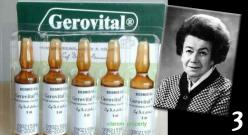
GeroVitalCF03jun2014
The pilot-programme includes two programmes in fact (‘Live Young’ and ‘Relaxation. Rebalancing. Revitalization’) and it will be carried out at the O3Zone Hotel, whose guests will benefit from free access to the swimming pool, jacuzzi, dry and wet sauna and to the gym all at the SPA centre.

The Ana Aslan therapy includes preventive or curative treatment with products from the Gerovital H3 range, personalized depending on the age and pathology of the patient.

‘A biologist and a physician, Ana Aslan recommended her patients to begin the therapy at the age of 40. Treatment is recommend for a wide range of problems associated with the degenerative process specific to the aging women: rheumatism, peripheral circulatory disorders, depression, hypertension, atherosclerosis,’ according to the ARTM.

Ana Aslan (1897-1988, born in Braila) studied at the Faculty of Medicine in Bucharest (1915-1922). She was professor of Cardiology at the Faculty of Medicine in Timisoara (1945-1949). Between 1949 and 1952 she was head of department at the Institute of Endocrinology in Bucharest. Starting in 1952 she became General Director of the Institute of Geriatrics. As one of the pioneering scientists in the world on medical gerontology, Ana Aslan focused also on social gerontology.

She discovered the anti-aging effects of procaine, based on which she developed the drugs Gerovital H3 and Aslavital.

The Gerovital H3 is the first Romanian original biotrophic product and also the first medicine designed to delay human aging processes. It was developed between 1946 and 1956 by Prof. Ana Aslan and her followers, as a result of numerous clinical and experimental studies.

source: http://www.actmedia.eu / actmedi – Romanian News Agency / Home> Economic / Tuesday – May 20th, 2014

National : Number of foreign medical patients soars in 2013

Number of foreign medical patients soars in 2013 

A growing number of foreigners are coming to Korea, not for vacation, but for medical treatment, namely plastic surgery.

The number of foreign tourists visiting the country for medical purposes surpassed the 200-thousand mark last year, for the first time ever, according to the health ministry.

That’s a jump of nearly 33 percent on-year.

And when they come, they spend money.
Foreign patients spent more than 3-hundred-80 million dollars on medical treatments in Korea in 2013.

A quarter of all medical tourists last year came from China, which topped the list, followed by those from the U.S., Russia, and Japan.

source: http://www.arirang.co.kr / Arirang News / Home> National / May 21st, 2014

Reporter : Lian.yoo@arirang.co.kr

High end tourists looking at Sri Lanka’s Ayurveda

SriLankaCT27may2014
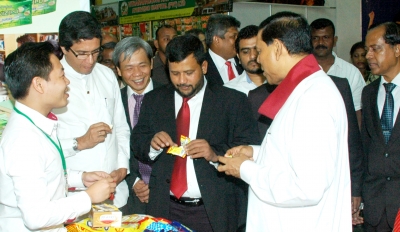
Sri Lanka’s Ayurveda healthcare is garnering the attention of high end tourist market. “Lately, the Japanese travel sector has shown stronger interest in Sri Lanka’s Ayurveda tourism. Last week a Japanese Member of Parliament touring Sri Lanka also has expressed of Japan’s interest in Sri Lanka’s Ayurvedic care for Japanese medical tourists” revealed  Rishad Bathiudeen (Minister of Industry and Commerce) on 16 May.
Minister Bathiudeen was addressing the simultaneous launch event of AROGYA 2014 and INTRAD 2014 at BMICH on 16 May. The twin expo is scheduled to continue through 18th May. The AROGYA series of exhibitions were introduced by the National Chamber of Commerce of Sri Lanka in partnership with the Ministry of Health and features indigenous medicinal products and services. As for INTRAD, this year’s is the eighth in the INTRAD series. Attending the twin expo were delegations and participants from Vietnam, Thailand, India, Maldives and China. Also present on the occasion were Economic Development Minister Basil Rajapaksa, Deputy Minister of Health Lalith Dissanayake, and Sunil Wijesinha (President National Chamber of Commerce) as well as representatives from the diplomatic community in Colombo. This is the first time that the twin events are held at once.
Since the end of conflict in 2009, Japanese tourists to Sri Lanka have doubled. In 2013, more than 31,500 Japanese tourists visited Sri Lanka. In the same year, Japan ranked 11th in arrivals to Sri Lanka as per tourists’ country of residence, immediately below USA, which ranked 10th.
“Already a Sri Lankan Ayurveda product brand has earned global reputation with its treatment centres being located in Europe. Today’s Arogya also takes place along with good news for this industry. I am given to understand that Japanese travel sector has shown stronger interest in Sri Lanka’s Ayurveda tourism. Last week a Japanese Member of Parliament touring Sri Lanka also has expressed of Japan’s interest in Sri Lanka’s Ayurvedic care for Japanese medical tourists.
Our tourism sector reported more than 1.2 million arrivals in 2013. I wish to commend the Economic Development Minister  Basil Rajapaksa for this growth” said Minister Bathiudeen and added: “Since medical tourism is at the middle of several sectors such as tourism, healthcare and inbound travel packaging, we believe that Public Private Partnerships are a good way to strengthen this promising sector so that our government’s goals in tourism related hub synergies are leveraged well. These twin events have been, gaining gradual recognition, among our business community, as successful networking events, in Colombo.  With only a per capita healthcare expenditure of $ 175, at first Sri Lanka does not appear to have an advanced healthcare infrastructure similar to the developed countries. However, this does not show us the full picture. Due to the support of well-trained, high quality healthcare professionals we are witnessing the emergence of a new sector-that is medical tourism. Studies show that around 15% of patients in Sri Lanka are foreign patients, such as from Maldives.
“I am pleased to say that two healthcare companies already have active programs for foreign medical tourists. In fact the Export Development Board under my Ministry, which is also partnering for INTRAD and Arogya, believes that medical tourism is a promising service sector to drive our foreign exchange earnings. Developing a strong identity in medical tourism in western and Ayurveda can result in a special tourism brand for Sri Lanka in the long term. I am given to understand that INTRAD is a wide ranging exhibition including industries, imports and even exports. As the Minister in charge of exports I commend your efforts to promote our exports through this series. In fact I am pleased to share the good news with you on our exports.
“In that, the encouraging news is that we have identified 16% provisional export growth in the first quarter of this year from January to March, compared to last year’s January-March exports. Accordingly this year’s first quarter provisional exports totalled $ 2.80 Bn while the comparative 2013 first quarter total exports stood at $ 2.36 Bn, showing a 15.7% quarterly growth. This year’s first quarter provisional export growths is led by fisheries, agricultural and industrial exports. The increase in provisional exports only for the month of March this year is a strong 27% from February exports. This year’s March only exports totalled to a record $ 1.06 Bn. These strong growth rates are reported at a time when we target national exports goal of $ 20 Bn by 2020 under the committed vision of  President Mahinda Rajapaksa.} Minister Bathiudeen said.
Several international participants at the expo expressed that for them, Sri Lanka is a new opening. “Coming here from Vietnam for the first time, we did not know that Sri Lanka market has big such potential for our line of products” said Le Viet Anh (Business Director of Alpha International Food JSC) based in Yen Phong, Vietnam. “We have now decided to find and set up an authorised agent in Colombo to represent us. We are interested in potential joint ventures at distribution level here for our health confectionaries, which are based on tropical fruits.” Business Director Anh’s Alpha International Food is a top confectionary producer in Vietnam reporting annual revenues exceeding US $ 80 Mn.
source: http://www.news.lk / News.Lk / Home> News> Latest – Defence / May 18th, 2014

Nigeria : Orji has made Medical Tourism attractive in Abia says Okechukwu Ogar

NigeriaCT25may2014
Okechukwu Samuel Ogar Abia State Commissioner for Health and eminent Consultant Cardiologist has been the driving force behind Governor Theodore Orji’s quest in turning Abia state to a medical tourist destination. Ogar took time off his busy schedule to explain to Emma Ugwu how the Jewish business philosophy of minimum inputs and maximum returns has offered the citizens of the state a healthcare sector that gives cause for cheer
What were the challenges on your assumption of office?
I was first appointed Commissioner for Health September 2010 prior to my position as Consultant Cardiologist at the University College Hospital (UCH).  I had left the shores of Abia 17 years earlier on this journey and it was good coming home to serve. On assumption of office, I realised the problems on ground in the health sector were not peculiar to the state. However, on a comparative note, we had an edge over many other states considering our good network of hospitals inclusive of our teaching hospital  and a Federal Medical Centre. The game plan was to exploit this advantage and use it as a spring board for evolving a 21stcentury medical tourism state; our template included locating a General Hospital that would meet the national standard in each LGA with primary health care clinics in the 291 political wards in tandem with the national health policy, a target we have long exceeded.
Orji’s MDG Programme
His Excellency Governor Theodore Ahamefule Orji used the MDG programme to put in place over 200 health care centres.  An Indian company Me-Cure Diagnostics, in a PPP project with the state government built a Specialist Hospital in Umuahia equipped with CTI, MRI, Digital Radiography and laboratory facilities as well as the Teaching Hospital in Aba. The emphasis has always been to develop ultra-modern diagnostic centres in the state capital and the commercial town of Aba commissioned last July by the Minister of Health, Prof. Onyebuchi Chukwu. The centre in Umuahia now has a dialysis sector for patients with renal problems and conducts medical tests of various magnitudes for a varied number of complex ailments.
The problem at inception was expectedly one of infrastructure decay, some of the hospitals were there before the war and some came on stream in the 1970s, all in different states of decadence. The primary health centres even after being equipped needed to be populated with well trained medical personnel.  The General Hospitals were also suffering from inadequate distribution of manpower especially in the hinterland. By and large, we have provided the relevant medical facilities and the progression continues
 
What did you do?
We started with the renovation of existing secondary health care facilities before proceeding with the primary health sector at the LGAs as a complement to the efforts of the Federal Government. The strategy was one of revival, renovation, expansion and re-designation beginning with the Amachara General Hospital, then the Ohafia General Hospital, a strategic hospital in the South of Abia, down to other general hospitals. We had hospitals for mother/child aimed at reducing mother and child mortality rate while setting up a best practice immunisation structure, encouragement of breast-feeding, provision of adequate nutrition, clean water, basic sanitation, oral de-hydration therapy and family planning with Aba taking the lead. Our aim is to ensure access to appropriate and quality healthcare services to children at all levels.
Still in the area of primary health, over 200 health centres, have been built across 17 LGAs. Many of them have been furnished while others are yet to be fully equipped.
The Government has also upgraded the Amachara General Hospital in Umuahia to a specialist hospital with corresponding facilities. Chevron in partnership with other oil firms- FAMFA, Statoil and Petrobras built an ultra modern Chest Clinic inside the premises fitted with state-of-the-art facilities and has since opened to the public.
We have also embarked on the construction of eight 100-bed hospitals in nine LGAs including Arochukwu, Okeikpe, Ohafia, Umuahia, Ikwuano, Aba, covering the three senatorial districts just as the emphasis on training and personnel build up has necessitated the construction of a big lecture theatre at the Abia State University Teaching Hospital (ABSUTH) to accommodate more medical students.  There are two tertiary hospitals, the Federal Medical Center in Umuahia and the Abia State University Teaching Hospital in Aba, which serve as referral hospitals in the state.
As His Excellency Governor Theodore Orji stated in his 2014 budget address, Government is committed to ensuring quality health delivery to the citizenry and this is because we are already aware of the critical health concerns and targets in the MDG goals. Based on these, the emphasis is to sustain efforts in equipment procurement, renovation and upgrading of some of the healthcare institutions in the state through the on-going transformation of structures in the health sector.
Renovation work of the Abia is also on ground for the School of Nursing/Midwifery, Aba General Hospital, and the General Hospital/Leprosy Centre in Uzuakoli. We have also completed action on the process for commencement of Abia State Health Insurance Scheme. This scheme which ensures growth in the general well-being of our citizens is aimed at the improvement in the quality of lives of the people.
How about funding?
It has all along been a very expensive business but we had to go ahead with it and this also meant our over 250 health centres needed the right staff with the right salary package comparable with what was obtainable at the federal government level, and adequately distributed across the states. The idea was to put a plug at migration to federal medical centres. The game plan turned out to be a resounding success.
Have you reduced the traffic for referral cases abroad?
There are illnesses which need genuine treatment abroad primarily because there are no options for such treatments and this has always milked the government to the extent that malaria treatment overseas attracted estacode until government at the centre put a stop to this excessive medical tourism. Here in Abia, our medical facilities have been so upgraded that we have minimum consideration for overseas sponsorships like heart related diseases requiring a by-pass.  At least over 80 percent of complex cases have no reason to be treated abroad.  Cases like high blood pressure, cataract, exhaustion et al can be handled here. Healthcare provision is an expensive business but must be provided and that is what the Theodore Orji administration has been able to do for the people of Abia State these past five years because he knows not everyone will have the opportunity to be flown abroad. I must say medical tourism outside the shores of the country is not healthy for us as a people.
The other aspect the governor has invested so much on is in drug administration and dispensation. We early in the day established a central drug store located in Umuahia with some partnership coming from Neimeth and Emzor, an arrangement that allows them to store their drugs here while the hospital management buys from them on behalf of the ministry, minimising the incidence of fake drugs with a constant tab by the Pharmaceutical Society of Nigeria.
What is the state of your Infectious Diseases Hospital?
The extent of the health and medical revolution here is such that there is hardly a case of leprosy on record. We have also successfully combated cholera outbreak in some parts of the state especially in the north most prominently Aba, where water-borne diseases could have created such an epidemic. The war against non-communicable diseases was brought to the fore by the World Health Organisation (WHO), which identified it as a global issue and this included hypertension, chronic lung diseases, diabetes and risk factors. In Abia we did a survey of non-communicable diseases and how to tackle each case. We have a boundary with six states in the South east and Aba being a thriving commercial city in the sub-region of West Africa, is paying the price of HIV/AIDS epidemic, which over the years under Governor Orji has been drastically reduced through the State Action Committee on Aids (SACA), which is directly supervised by the office of His Excellency. We keep educating the people through churches, the electronic media and women programmes on the dangers of HIV/AIDS.
We have remained faithful in the payment of all the counterpart funds that concern the HIV/AIDS programme that is run in the state and for other health agencies that have anything to do with AIDS.
How are you executing your health enlightenment campaigns?
Each LGA has a health education unit where all the environmental health offices have been strengthened with experienced and dedicated health workers and the emphasis here is on health education and sanitation. Of course we have also invested resources on research with a road map whose emphasis is on secondary health care while strengthening our primary, tertiary health sector.  In Abia 60 percent of healthcare facilities is owned by private individuals in partnership with the state government. The partnership arrangement extends to such global institutions as the WHO, UNICEF, IPEAS, Society for Family Healthcare, all providing assistance for our primary health care programmes and the rehabilitation of our health systems
How has this impacted positively on citizens?
I was called to service and the mission has been to develop a strong, healthcare system where quality and efficiency is the watchword. I can tell you that here in Abia, the people can go and get what they want, not necessarily in terms of free medical care but an effective, efficient and affordable service to the people.
source: http://www.codewit.com / Codewit World News / Home> News> Nigeria News / by Agency Reporter / May 10th, 2014