Category Archives: Medical Tourism/Health Tourism

Out-of-box suggestions on Kerala tourism from panel of MPs

House panel says cruise tourism should be part of Incredible India campaign
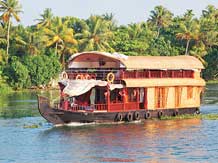
HouseboatCT05sept2013

Spice route tourism and tea tourism are among the options suggested by a Parliament panel for Kerala , to attract international and Indian travellers.
A place where tourism makes for nine per cent of the gross state domestic product, Kerala is being projected as a one-stop location for at least eight types of tourism.

A report by Parliament’s standing committee on transport, tourism and culture, headed by CPI(M) leader Sitaram Yechury, has listed cruises, wellness, medicine, wildlife, tea, spice route, heritage and film shooting as areas for developing tourism in Kerala.

Cardamom, pepper, nutmeg, tea, coffee, clove, ginger and turmeric might assume a new meaning if spice route tourism is promoted. The committee has backed an initiative in this regard from the state. It would not only revive India’s heritage but give “a larger foothold for garnering world tourism revenue”. The other countries in the spice route would include Afghanistan, Myanmar, China, Denmark, Egypt, France, Germany, Greece, Indonesia, Iran, Iraq, Malaysia, Pakistan and Portugal. Kerala Tourism has proposed to link 31 spice destinations in the world, to create a new travel experience.

Also, the cruise potential of Cochin port could be included in the Incredible India campaign’, the panel has recommended. Other ports should also be explored for cruise tourism opportunities, it has said.

Pitching Munnar as one of the prime tourist destinations in India, the committee has said the widespread tea plantations are the region’s unique selling proposition. Tea tourism could be a niche area in Kerala to woo tourists for a special experience. “The tea estates and the bungalows just add another tweak to this perfect serenity.”

Although wellness tourism is already there in the state, the committee says this should be developed as a unique brand to attract tourists from over the world. “The committee would like the state and central government to come up with solution-providing ideas so that wellness tourism in Kerala is developed as a brand.”

To promote medical tourism, the panel has sought support from the Centre, especially around areas such as ayurveda, sidha and unani treatment. Also, medical visa issues need to be addressed.

While praising the state government initiative to develop wildlife and ecological tourism in Kerala, the committee wants vehicular traffic to be restricted inside the Periyar Wild Life Sanctuary. It has also recommended pollution-free and less noisy boats at the sanctuary.

As for film shooting in the state, the committee has recommended a directory of potential locations. The state should also hold workshops and tours for film production executives.

Seeking reduction in tax levels, the committee has noted that Kerala’s tourism revenue in 2012 was Rs 20,430 crore with foreign exchange earnings of Rs 4,548 crore.

ATTRACTIONS AT GOD’S OWN COUNTRY
A report by Parliament’s standing committee on transport, tourism and culture has listed these areas for developing tourism in Kerala

* Cruises
* Wellness
* Medicine
* Wildlife
* Film shooting
* Tea
* Spice route
* Heritage

source:  http://www.business-standard.com / Business Standard / Home> Economy & Policy> News / by Nivedita Mookerji / New Delhi – August 29th, 2013


MEDICAL TOURISM TO BRAZIL : Your vacation in a Brazilian hospital

Is it a resort or a hospital? Tourists and patients from all over the world think it’s both.

Forget the beach. How about going to Brazil to visit a hospital? Growing numbers of tourists are doing just that.

This is one of the most reputable and expensive hospitals in Brazil. It’s out of reach for the vast majority of Brazilians, but like other top medical centers here it’s been attracting a growing number of foreign patients. Medical tourism is growing worldwide and Brazil wants a bigger chunk of this market.

BrazilhealthCT04sept2013

Kelly Matos Idelfonso, Hospital Sirio-Libanes, said, “Health services have been growing a lot over the last years. Hospitals invested a lot in technology, so we are have some of the best facilities in our part of the world. Most foreigners come to Brazil for cosmetic surgery, but our hospital is also a reference in cancer treatment.”

Tourists traveling for medical reasons spend between 40 and 60 billion dollars a year—and the market is growing around 20 percent a year. Brazil receives about 50 thousand medical travelers a year from different parts of the world—mostly from neighboring Latin American countries like Ecuador, Bolivia and Uruguay and mostly for cosmetic surgery.

Reporter: “Foreign patients who come to Brazil for treatment can be roughly divided into two groups. There are those from rich countries – mainly Europeans and North Americans who come here because medical procedures are cheaper – and there are those from poor and developing nations, from Latin America and Africa, who come because of the top quality hospitals that exist here for those who can pay.”

Currently Brazil has 25 hospitals accredited by the Joint Commission International—an organization that certifies the quality of medical services worldwide. Sao Paulo is the most sought after destination.

Bernardo Ignarra, Sao Paulo Turismo S.A., said, “We have an occupancy rate between 80% and 100% in the eight JCI accredited hospitals of Sao Paulo. So this is actually something that has to be sorted – this health system needs to be expanded if we are to grow in medical tourism. But we now these hospitals are planning to invest about one billion dollars over the next two years to expand their facilities and services.”

Brazil is still far from able to provide quality health care for most of its people, but in yet another reminder of this country’s stark income inequality, Brazil has become a popular destination for wealthy foreigners looking for good medical services.

source: http://www.eturbonews.com / eTN Global Travel Industry News / August 21st, 2013

AEC will boost medical tourism

Bangkok : 

Thailand’s health authorities say more Cambodians will use Thailand’s hospitals services once the ASEAN Economic Community begins in late 2015.

Ministry of Public Health made the comments, last week at a seminar on health services, attended by medical staff working in provinces bordering Cambodia. The conclusion suggested there would be a boom in Cambodians seeking medical services in Thailand. They would cross the border at overland checkpoints and check-in the larger hospitals operating out of provincial capitals.

Officials suggested that AEC would prompt a growth in medical tourism from Laos, Cambodia and Myanmar once the new era of free trade kicks in December 2015.

The borders are already open for residents in neighbouring countries to visit Thailand for medical services, but most of them are wealthy and head for private hospitals in the Thai capital.

CT02sept2013

But the seminar concluded there were business opportunities for private hospitals in provinces bordering Laos, Myanmar and Cambodia. Government hospitals are not encouraged to go into the lucrative regional medical tourism business as they are already overcrowded looking after citizens seeking medical care.

According to Public Health Minister,  Pradit Sinthawanarong, 370 medical staff from Surin, Buriram, Si Sa Ket and Ubon Ratchathani provinces and 400 medical representatives from Cambodia participated in the meeting where they listened to the Public Health Department’s policy on AEC and medical practice.

Thai hospitals situated near the Thai-Cambodian border would need to achieve high standards of safety, medical technology and service if they wished to serve medical tourists from Cambodia.

There are currently 152 hospitals in Thailand that have met the requirements that would allow them to serve the market. However, many of them are already overcrowded dealing with local cases and are not geared to treating foreigners. Language is the main drawback for hospitals when dealing with medical tourists from Cambodia.

Last year, there were over 2 million medical tourists who sought treatment in Thailand.

Meanwhile, Malaysia is already promoting its medical services in Cambodia competing head-on with Thailand’s top hospitals.

Cambodia Association of Travel Agents president, Ang Kim Eang, said earlier that Malaysia was becoming a popular tourism destination for Cambodians. The nearest tourism office is in Bangkok, but promotions in Cambodia are conducted directly by the Malaysia Tourism head office in Kuala Lumpur.

Actually, about 50,000 Cambodians visit Malaysia annually and some of them go for a medical check-up, he said.

“Now, the Malaysian government sees the need to promote this travel segment, I definitely think more people will go there for medical treatment as it competitive with prices in Singapore and Thailand.”

Malaysian hospital fees are 25% below the United States, although Thailand is slightly lower at 30% off the same benchmark, Singapore 35% and India 20%, according to Malaysia Healthcare Travel Council.

source: http://www.ttrweekly.com / TTR Weekly / Home> News> Thailand / by Wanwisa Ngamsangchaikit / August 26th, 2013

Nigeria partners MTA to check medical tourism

To stem the tide of capital flight and increasing numbers of Nigerians seeking medical treatment abroad, the Nigerian Tourism Development Corporation (NTDC) is to enter into partnership with the Medical Tourism Association (MTA), an American-based non-profit organisation, as the body has expressed strong interest in helping to brand Nigeria as a viable destination for medical tourism and check the prevalence of Nigerians of all ages and status from seeking medical care abroad.

This formed the crux of agreement reached by the association and NTDC when the representatives visited the Nigeria stand at the recently concluded international travel and tourism trade exhibition – ITB, in Berlin. The partnership agreement brokered by the association team led by Jonathan Edelheit, executive officer, and Cristina Cardona, global congress manager, would see the body with membership in over 100 countries across the world, dedicated to promoting medical education and enlightenment through workshops, seminars and training sessions among others. MTA would also work through hospitals, medical personnel, health service providers, governments and tourism bodies in the realisation of their aims in Nigeria.

“Our organisation works with governments and hospitals in over a hundred different countries and we would like to help brand Nigeria and train personnel with a view to help bring in medical tourists to Nigeria,” said Edelheit. The body through NTDC, according to him, is seeking to come into the Nigerian market to create awareness of it services and help to midwife the Nigeria branch of MTA, which would be saddled with the responsibility of helping various medical service providers and the government in creating and promoting a health and conducive environment for medical tourism to thrive in the country.

He explained that Nigerian hospitals would benefit from specialising in medical procedures that take advantage of the products and services that the country has to offer while also analysing what types of patients from which specific markets to target. “Presently patients travel round the world looking for value, quality and affordability. What the MTA is offering is to come to Nigeria to provide education on where the country’s competitive advantage lies and help develop it,” Edelheit continued.

Responding, Olusegun Runsewe, director general, NTDC, revealed that the apex tourism body in Nigeria is happy about this development and share the enthusiasm of MTA even as he pledged the commitment of NTDC in helping to introduce this initiative to Nigeria and help bring all the stakeholders together. According to him, Nigeria is in dire need of such body to help check the growing numbers of its citizens travelling abroad for medical treatment under the slightest appearance of any life threatening disease.

OBINNA EMELIKE, with agency report

source: http://www.businessdayonline.com / Business Day / Home> Health Business & Living> Training> Stay Connected / by The Editor / March 22nd, 2013

Goa to promote health-and-wellness tourism

Goa needs more high-end hotel rooms to hope for big-ticket tourists, says a draft investment policy prepared by a government-appointed task force that says the state can position itself as a health and wellness tourism destination.

(Goa to promote health-and-wellness…)

(Goa to promote health-and-wellness…)

The Goa Investment Policy 2013 that has just been put into the public domain for suggestions has also outlined the importance of medical tourism in taking forward Goa’s story.

“The government  targets granting permissions to starred hotels, across categories, to a cumulative additional capacity of around 8,000 beds in the next five years,” says the policy, authored by a task force headed by Atul Pai Kane, the Goa chairman of the Confederation of Indian industry (CII).

The report also says that attracting high-end visitors will also mean creation of infrastructure and facilities which in turn will provide gainful employment for the state’s youth. The current disparity in the proportion of low-end to high-end hotels  will be made up by encouraging more boutique and luxury hotels in the state, the draft policy says.

The increased focus on high-end tourists also comes with the inevitable requirement of creating high-value tourism products, which should include oceanariums, theme parks, shopping malls, entertainment centres, high-end water sports and adventure sports, the policy says.

At present Goa attracts nearly 2.8 million tourists annually, out of which over half a million are foreigners.

Setting its sights on the emerging segment of health and wellness tourism, which attracted over 1.3 million people to India in 2013 alone, the draft policy suggests that Goa has “good basic healthcare infrastructure” to cater to the segment.

But more needs to be done, the draft policy says.

“While medical tourism is growing in Goa, the government is keen to attract investments  in new facilities and draw more medical tourists to Goa for high-end and complicated procedures. For medical tourism to take off in a big way, uniformity and quality of services offered are critical,” the report says, recommending several steps which the Goa government could take to beef itself up in the medical tourism sector.

The recommendations include setting up of large healthcare facilities to meet the needs of increasing medical tourists, mandatory registration with the Directorate of Health Services and the Goa Medical Council for facilities offering medical tourism and a rate card and details of facilities to be offered.

Also meted is a government portal with details of each healthcare facility and which will serve as a liaison between patients and doctors and medical facilities.

source: http://www.articles.timesofindia.indiatimes.com / The Times of India / Home> Life & Style> Travel> Medical Tourism / by IANS / August 19th, 2013