
Category Archives: Reports,Features, Statistics

35% growth in outbound Healthcare Tourism expected in 2012/2013

1.6 Million Americans Expected to Head Overseas for Healthcare in 2012
The Deloitte Center for Health Solutions predicts that approximately 1.6 million Americans will travel outside the country for medical care in 2012, with an anticipated yearly growth of 35%. Increased sophistication of medical tourism operations, demand for cosmetic surgery, and access to low-cost global transportation are cited by Deloitte as the major factors for growth. The firm also forecast that inbound medical travel will experience slower growth, totalling approximately 561,000 medical tourists by 2017.

Medical Schools Jumping Into Tourism Frey

Look for U.S. medical schools and teaching hospitals to be among the major players vying for medical tourism dollars, according to a recent report by National Public Radio (NPR). As an example, NPR said Vanderbilt University Medical Center in Nashville, Tenn., recently launched a national advertising and marketing campaign promoting its cancer and heart disease treatments based on an individual’s DNA. Others with national campaigns include the University of Michigan Health System and the MD Anderson Cancer Center at the University of Texas in Houston.

Shrinking reimbursements from Medicare and Medicaid account for much of this new focus among teaching hospitals, according to Joel English of the Milwaukee-based marketing firm BVK. “To sustain their research and education and patient care, they have to extend beyond their traditional geographic boundaries,” he told NPR.

Destinations Keep Wellness Resolutions on Track

New Year’s health resolutions tend to falter by late January. So the travel site Cheapflights (www.cheapflights.com) came up with a Top 10 list of destinations that may help clients keep their wellness resolutions on track. 1) Reduce Stress: Body Holiday LeSport resort, St. Lucia; 2) Exercise More: Italy’s Dolomites region; 3) Spend More Time With Family: Quebec City; 4) More Time for Oneself: One & Only Reethi Rah resort in the Maldives; 5) Eat Better: Tokyo; 6) Lose Weight: Nubeginings retreat, Razines, France; 7) Save Money: Bucharest, Romania; 8) Watch Less TV: Great Ocean Ecolodge, South Australia; 9) Live a Healthier Life: Med Hot Springs Resort in Turkey’s Samson Mountains; 10) Stop Smoking: SHA Wellness Clinic, Alicante, Spain.

Healthcare Travel More Regional Than Global in 2012

Medical tourism is more about regional and cross-border healthcare than it is about traveling long distances – and this is not going to change during the year ahead, according to a recent article in the International Medical Travel Journal (IMTJ) on projected medical tourism trends in 2012. In fact, if travel costs continue to climb this year, medical travel could become even more regional. IMTJ also concluded that medical tourists, like vacationers, will be more likely to rate and review their experiences online. The big question for 2012, it said, is “whether corporate or insurer paid medical travel will get off the ground.”

Medical Tourism Can Boost Depressed U.S. Regions
“If regions in the U.S. – particularly depressed ones – can build a reputation for specializing in specific areas of treatment and surgery, the economic and social impacts could be significant. Medical tourism can generate diversified job opportunities for regions, not just in areas directly related to hospitality and catering, but also in terms of jobs for nurses, doctors and specialists which results in a much higher value added to the economy. If specialty clinics like the Mayo Clinic in Minnesota can draw patients from across the nation on the basis of their specialization, expertise, research, reputation and patient success, then there is no reason others cannot follow suit.” – Simon Hudson, Center of Economic Excellence Endowed Chair in Tourism and Economic Development, College of Hospitality, Retail and Sport Management, University of South Carolina, Columbia

Taiwan Launches App for Med Travel

Taiwan’s Department of Health launched a new app service for medical travel that provides information on tourist attractions and healthcare facilities around the country. The app, which has an English-language version, covers information ranging from health checkups to cosmetic medicine, with a map service for each listed facility. Users can access information on the 31 medical and healthcare facilities under the DOH’s international medical program. Now available for iPhone and iPad users, the App will expand to Android users in the first quarter of 2012.

. . . And Taiwanese Hospitals Strike Insurance Deal With Houston Firm
Four major hospitals in Taiwan have signed a cooperation agreement with Houston-based New Era Life Insurance Co. to provide medical services to the insurer’s American policyholders who choose to get treatment in Taiwan. The services covered includes health examinations and cosmetic surgery.

South Korea Ramps Up Med Tourism Measures

South Korea’s Ministry of Health and Welfare and the Korea Health Industry Development Institute launched a project to improve the country’s medical service system for foreign patients. They include incentives for the building and remodeling of lodging facilities for tourists at medical institutions; allowing drug dispensing in hospitals for foreign patients, and cultivating the medical workforce, including interpreters.

source: http://www.TravelMarketReport.com / Leisure Travel> Tips & Trends / by Maria Lenhart / January 12th, 2012
Expat guide to India: health care

In the latest of our country guides, we look at medical services in India – a country with a growing reputation for cheap treatment

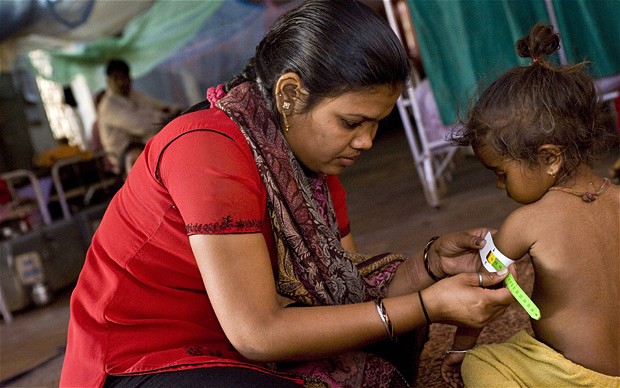
A child undergoes a mid-upper arm circumference test, which measures the extent of malnutrition, at a hospital in India. The country has been criticised for not doing more to tackle child deaths Photo: Nick Cunard/CHI-Photo/Rex Features

Ties between Britain and India remain something of a wonder. While relations with some of Britain’s former colonies have grown weak, or disintegrated, the bond with the world’s biggest democracy flourishes. Perhaps it’s the cricket. Perhaps it’s the large Indian population in Britain, many of whom – doctors, nurses and others – keep the NHS afloat.

But how is health provision in the subcontinent?

“Mixed” is the kindest answer. For while India has skilfully promoted itself as a medical tourism centre, attracting patients from the Middle East, Africa and Europe, services for the majority of the billion-plus population are poor. The smart private hospitals are out of reach.

Only a quarter of the population can afford Western medicine, with the rest relying on traditional remedies or alternative treatments, such as acupuncture and Ayurvedic medicine (which can at least boast fewer adverse reactions).

Eighty-one per cent of health care across India is paid from private funds, mainly individual pockets. To compound the problem, the booming economy has attracted millions into the cities and away from the country’s rural network of hospitals.

According to the Organisation for Economic Co-operation and Development, in 2009 lower-income groups in India had less access to health care than 15 Asian countries surveyed, where, on average, only 55 per cent of health care is paid from private funds.

Infants at risk

India has come under criticism for not doing more to tackle the problem of infant deaths, the chief marker of the efficacy of a country’s health care system.

Unicef, the children’s charity, pointed out that of all deaths of children aged under one across the globe in 2008, a quarter occurred in India.

At 47 deaths per 1,000 live births, on the latest figures, infant mortality is 10 times that in the UK. However, only three years ago, the toll was 57 deaths per 1,000 live births. So progress is being made. It’s not as if funds are tight. According to PricewaterhouseCoopers, Indian health care has grown recently at a compound annual rate of 16 per cent. The accountants put the total value of the sector in 2009 at $34 billion. This translates as $34 per head, or roughly 6 per cent of GDP. The estimate for the current value of India’s health care sector is thought to be $40 billion.

For comparison, the annual budget enjoyed by the NHS is £110 billion (taking some 9 per cent of GDP) and serving a very small population relative to India.

Outstripping China

There is no questioning the need for a hugely expanded health care sector. By 2050, India’s population is projected to hit 1.6 billion, overtaking China as the world’s most populous nation.

The growth projection is not just based on fertility in India’s population. Life expectancy is fast moving to Western levels. Government drives against hepatitis and polio in the young will give another twist to the population spiral.

The number of inhabitants aged 60-plus is estimated to reach 189 million by 2025 – three times the 2004 total.

Alongside the population spurt, India’s economy can be expected to grow by at least 5 per cent a year for the next 40 years, according to Goldman Sachs, the bank.

Factors behind the forecast include urbanisation, an expanding middle class, and a rapid increase in the number of well-educated women entering the labour market.

But India has much to do. A quarter of the population is below the national poverty line. Some 300 million live on less than $1 a day.

What’s the government doing?

A drive to increase rural health care provision began in 2005. The rural health mission is aimed at improving primary care in the countryside so that fewer patients overwhelm specialist services in the cities. To that end, general practitioners have been trained in basic surgery.

Another Indian initiative is the government-run health insurance plan. The Government Insurance Company has the greatest slice of a market that in total attracts only some 11 per cent of the population. Premiums exceed $120 a year. Policyholders do not benefit from direct settlement, as in many Western schemes. Instead, customers pay from their pocket and apply for reimbursement. That can take months.

Health tourism

If the medical tourist wants to go “cheap”, few countries beat India. Reports from various sources point to huge price differences:

Heart surgery is typically priced at $50,000 in America, $14,200 in Thailand and $4,000 in India.
For liver transplants, it’s $500,00 (America), $75,000 (Thailand) and $45,000 in India.
For bone marrow transplants, prices are closer – $62,500 in both America and Thailand. In India, the bill is roughly halved.

Clearly, with some of the treatment costs a fraction of the American rates, flights and a week or two staying in a top hotel are minor factors.

India has quickly developed a lively trade, despite the known hazards of medical tourism – variable infectious-disease rates, different medical-accreditation standards for staff, and exposure to organisms against which the patient has no built-in resistance.

This last point is a particular hazard for people in fragile health. Dysentery and mosquito-borne diseases such as malaria, dengue and chikungunya fever are widespread and could derail recovery. Long flights in cramped airliners are a known risk for circulatory problems.

Most of the possible risks do not apply to established expats, who have a range of Western-level hospitals to pick from. Staff speak English, have the most modern equipment and direct links with Western hospital chains.

One such, Wockhardt Hospitals Group, is partnered by Harvard Medical International. Hospitals in this group, based in Mumbai and Bangalore, are among the best. The 400-bed Bangalore unit specialises in cardiology, orthopaedics, neurosciences and women/child care.

Wockhardt Mumbai claims very high diagnostic facilities among the usual range of services, including orthopaedics. It advertises total hip replacement at $6,500 (compared with about £12,000 in a private hospital in UK). A total knee replacement also costs $6,500.

Dr Sneh Khemka, medical director of Bupa International, knows the country well. “There are medical centres in the cities that really are truly excellent, especially Mumbai, Chennai and New Delhi.” Other cities with top-class hospitals include Hyderabad and Bangalore. But there are not enough new facilities outside the urban centres.

One exception is the Rajiv Gandhi Super Specialty Hospital, a public-private partnership, opened in 2000. It involved the Apollo Hospitals Group and the government of Karnataka, with support from the Opec fund for international development.

Dr Khemka said: “The tier-one cities are world class, with international patient clientele, and the tier-two – the Hyderabads and so on – are certainly able to cope with their metropolitan communities. But clinics and hospitals are still underinvested by government and are a massive problem.

“Sometimes the uninformed perception is that India is a dirty place and there is a higher rate of infection. But if you look at outcome data – and we’ve done quite a few inspections of hospitals in India – you’ll see they have much better outcome records than many places in Western Europe. They have meticulous attention on quality and safety.”

Bupa International has close ties with the Max hospital chain in India. Newly qualified consultant surgeons in such hospitals were about a third more experienced than their European counterparts because they were not hampered by the EU’s working time directive, Dr Khemka said. And “hotel” services in leading hospitals were outstanding.

Medical insurance


The Foreign & Commonwealth Office
urges Britons going to India to buy holiday or international medical cover. It states: “You should take out comprehensive travel and medical insurance before travelling. Check exclusions, and that your policy covers you for all the activities.”

The FCO adds: “Local medical facilities are not comparable to those in the UK, especially in more remote areas. In major cities private medical care is available, but expensive. For psychiatric illness, specialised treatment may not be available outside major cities. ”

International premiums

The insurer Aviva comes out well in a list of insurers recommended by brokers Medical Insurance Services of Brighton. Aviva International Solutions, a comprehensive plan but with reduced outpatient cover, costs £715 a year for a 25 year-old in India (£643 budget).

AxaPPP comprehensive with a £100 excess costs £866 for the same person (£670 budget), while Medicare International is £1,203 (£912 budget).

For a couple (aged 34 and 31), the Aviva scheme is again cheapest at £1,615 (£1,450 budget). Again, outpatient caps apply – but no two schemes are fully comparable, as with all medical insurance plans.

Hazards

Usual hygiene advice applies strongly. The FCO says: “Take care with your water and food hygiene. Drink or use only boiled or bottled water and avoid ice in drinks. If you suffer from diarrhoea seek immediate medical attention.”

Bird flu outbreaks have occurred most recently in the north-eastern states of West Bengal and Assam. “As a precaution avoid visiting live animal markets, poultry farms and other places where you may come into close contact with domestic, caged or wild birds,” says the FCO. “Ensure poultry and egg dishes are thoroughly cooked.”

Prevalence of HIV/Aids is greater in India than in the UK: 0.3 per cent of the adult population as opposed to 0.2 per cent in Britain.

Patchwork

Europeans in rural India are unlikely to find health care to Western standards. But Indian cities are very different. As Bupa’s medical director puts it: “If you are going for elective or emergency treatment, it is absolutely fine to go to the centres in the big cities.”

This article was originally published in The Telegraph Weekly World Edition
source: http://www.Telegraph.co.uk / Home> Health> Expat Health / by Peter Pallot / Sunday, February 19th, 2012

Hope rekindled for medical tourism industry

Local promoters have talked for a decade about creating a medical tourism industry, but have little to show for it beyond talk.

Yet another panel discussion on the topic on Tuesday night gave the concept’s backers hope that tangible progress might finally be near.

“What we did was get all the right people in the room at the same time discussing it and showing interest,” said Doug Geinzer, the CEO of the Southern Nevada Medical Industry Coalition, which sponsored the event.

However, the approximately 100 medical professionals still have widely differing ideas about what will bring out-of-town patients to Las Vegas: an extension of a big-name institution or something homegrown, a broad-based practice or individual specialties, marketing just Las Vegas or the entire state, or focusing more on Americans or foreigners.

Since becoming the dean of the University of Nevada School of Medicine in July, Dr. Thomas Schwenk noted the that the local doctors display a “certain sense of individualism and passion and a tendency to head in 20 different directions at the same time.”

Moreover, the meeting included only a handful of people from the tourism industry. In the past, they have looked at medical treatment as another avenue to fill hotel rooms and restaurants, while medical professionals view tourism as taking a back seat to their work.

Without a unified agenda, said state Sen. Valerie Wiener, D-Las Vegas, securing help from the Legislature next year would be unlikely.

One step toward medical tourism was unveiled in the form of the Las Vegas Health & Wellness Guide, co-produced by Medical Tourism Magazine and the Las Vegas Convention and Visitors Authority. Although it carries a $15.95 price, it will largely be handed out at conventions and meetings with 21 pages of clinical listings at 65 pages of hotels and attractions.

But broadcast executive Jim Rogers noted, “Tourism cannot be most of what we are going to do. It’s got to be the quality of medicine.”

He, along with some others who have looked at the issue, believe that a comprehensive medical institution is the biggest draw. People travel to places they would otherwise shun, such as Rochester, Minn., Cleveland and Baltimore to check into the Mayo Clinic, the Cleveland Clinic and Johns Hopkins. If a procedure or a checkup discovers something unexpected, the right specialist is close by; the patient doesn’t have to be sent to another side of a city.

Based on the infighting he saw during his five years as the chancellor of the Nevada System of Higher Education, he said, “I have great doubts about the ability to put a system together. We don’t have any great large medical groups here and that doesn’t sell.”

The university and University Medical Center of Southern Nevada have started down the path of closer collaboration, but that will take time.

Some individual practices have said they have been able to draw patients from elsewhere, such as the local office of the Sher Institutes for Reproductive Medicine. Others have run into trouble, such as the Nevada Cancer Institute. Once touted as a major medical tourism draw, it financially collapsed and has become a branch of the University of California, San Diego Health System.

But enough elements are in place to make the medical tourism work, Geinzer said.

“We have great health care in this town,” he said. “But we don’t do a great job of marketing it.”

Contact reporter Tim O’Reiley at toreiley@reviewjournal .com or 702-387-5290.

source: http://www.lvrj.com / by Tim O’Reily / Las Vegas Review Journal / February 02nd, 2012

Wellness & Travel: 2012-2020 Forecast

Los Angeles, CA, January 28, 2012 –(PR.com)– The first global report from WTW, the 4WR: Wellness for Whom, Where and What? Wellness Travel 2020 Full Report is a research report presenting the biggest opportunities in wellness tourism (including international and domestic travel) over the next 10 years. 4WR collected information from 140 visionaries representing stakeholders from wellness, tourism, spa and healthcare industries in over 50 countries worldwide.

Wellness tourism is one of the fastest growing forms of international and domestic tourism. This trend is not expected to change in the coming 5-10 years. There is one major risk, however: the globalization of standardized and uniform products and services. Key findings of the 4WR Full Report help developers, managers and policy makers and others vested in wellness tourism build on or develop individual competitive advantages and as importantly, avoid costly common mistakes. The report exposes the biggest opportunities over the next 10 years, to better define new product development strategies.

Key findings of the 4WR are as follows:
W – Wellness is about much more than just spas
E – Ecological and green products and services will become more and more important and popular
L – Local assets (e.g. natural assets, traditions, rituals) will re-define wellness products and services
L – Lifestyle-based wellness activities and wider access, i.e. democratisation will shape up the future of wellness travel
N – New, cross-over and fusion products and services should be further created
E – Evidence-based wellness services are essential in the development of local wellness services
S – Spirituality will play an important role in wellness tourism
S – Segmentation and winning new segments are essential key factors to make wellness accessible to wider groups

Further contents of the report:
Health, Wellness, Well-being & Travel
Global Health Tourism Service Grid
What? – Current Assets (2011)
What is Hot Now?
What is Hot Now – By Regions
Where? – Regional Hotspots 2020
For Whom: Consumer Preferences
Who Should Pay?
Conclusion
Key Findings/Recommendations for Planning
Country Best Practice – Hungary
Glossary of Terms

The report is accessible via the website of Wellness Tourism Worldwide: http://www.wellnesstourismworldwide.com/reports.html. The 4WR: Wellness for Whom, Where and What? Wellness Travel 2020 Full Report is prepared for Wellness Tourism Worldwide by Xellum Ltd. (Hungary) and Global Spa and Wellness (USA). This report would not have been possible without the cooperation with the Hungarian National Tourism Plc. (Budapest, Hungary).

Camille Hoheb, WTW Founder, states, “4WR exposes the biggest opportunities in wellness tourism over the next 10 years. Wellness tourism can and should be developed as a sustainable business and product and in a responsible manner in which well-being can be accessed by many. WTW believes the democratization of wellness can be achieved through collaboration of policymakers and the tourism industry.” WTW fully integrates all aspects of wellness in a cohesive and balanced manner without over emphasizing one or several of the domains of wellness and quality of life indicators. Adds Ms. Hoheb, “The WTW approach expands opportunities for travel agents and the tourism industry to fully leverage existing tourism products and strategically develop initiatives specific to a destination’s natural assets, cultural heritage and social orientation.”

States Laszlo Puczko, WTW Co-Founder, “As a Hungarian, I am pleased to shine a spotlight on Hungary as an emerging market leader in health and wellness tourism. Hungary has unrivalled natural assets and wellness tourism service and fully leverages its rich spa history.”

Wellness Tourism Worldwide (www.wellnesstourismworldwide.com) is an international trade alliance comprised of wellness and tourism related businesses, organizations and institutions.

Founded in recognition of the wide gap between health, well-being, leisure, tourism and sustainability, WTW is based on the domains of well-being and Quality of Life (QoL).

We bring together key stakeholders from across countries, regions and sectors who share the collective goal of accelerating wellness tourism growth.

source: http://www.pr.com / press-releases / 386787

Opportunities abound for health tourism

The Thai tourism industry’s efforts to promote more niche-market visitors is set to take a step forward when the Global Alcohol Policy Conference convenes in Bangkok between Feb 13-15 this year.

Jointly organised by the Ministry of Public Health, the World Health Organisation, the Global Alcohol Policy Alliance and the Thai Health Promotion Foundation, the conference is part of worldwide follow-up efforts to implement the WHO Global Strategy on Alcohol, which was adopted by the Global Health Assembly in May 2010. The conference will bring together policymakers, advocates, academics, and campaigners who are committed to working towards the development and implementation of effective alcohol policy free from commercial influence.

Speakers will discuss a broad range of detrimental impacts of alcohol abuse and misuse, such as on health, economies, families and societies. A Kenyan delegate is to discuss the impact of alcohol use among police officers and a Laotian delegate will discuss the linkage between alcohol and domestic violence.

Alongside the main event, conference delegates will be offered a choice of six field trips to alcohol prevention and control initiatives or models in Thailand. These include the Santi Asoke Community, the Sum Rae Community and the Phra Mongkut 9 Hospital.

Although Thailand is not exactly known as a place for programmes to control alcohol-related problems, the fact that such facilities exist in the country and are being exhibited to international delegates, could open up a whole new world of opportunity for promoters of health and wellness tourism.

According to the conference website, One of the most exciting moments of GAPC will be the eye-opening field trips showcasing advocacy and community actions designed to explore the successful and on-going policy approaches covering proactive and reactive prevention interventions for alcohol-related problems in various settings.

The six sites have been chosen because the combine a number of different solutions for alchol-related problems. For example, the Santi Asoke is alcohol-free community based on religious beliefs and strong leadership; the Sum Rae community has a community-based “Reduce and Quit” programme where role models who have quit drinking and other community members encourage and offer support to other drinkers to quit, and the Phra Mongkut 9 hospital offers treatment of alcohol-use disorders and rehabilitation, including Alcoholics Anonymous programmes.

Three other field trips include the Klong Lat Mayom Floating Market, an alcohol- and smoking-free market; the Thai Health Promotion Foundation (ThaiHealth) which has an innovative financing mechanism for well-being including the reduction of alcohol consumption and Asia Precision Co Ltd where all workers and staff are encouraged to good deeds for His Majesty the King by reducing, refraining and quitting the three vices _ drinking, smoking and gambling.

Although the tourism industry itself is a major consumer of alcohol and contributor to alcohol-related problems, such as drunk-driving deaths in the resort islands, refraining from alcohol consumption is a very important part of existing health and wellness programmes. Paradoxically, people come to Thailand both to drink, as well as to break away from drink.

According to the World Health Organisation, the harmful use of alcohol results in 2.5 million deaths each year, with 320,000 young people between the age of 15 and 29 die from alcohol-related causes, resulting in 9% of all deaths in that age group.

Harmful drinking is also a major avoidable risk factor for non-communicable diseases, in particular cardiovascular diseases, cirrhosis of the liver and various cancers. It is also associated with various infectious diseases like HIV/AIDS and TB, as well as road traffic accidents, violence and suicides.

Says the WHO, “In emerging markets and among younger groups increased consumption is apparent. Effective policy is not implemented as widely as is needed. A concerted effort in controlling alcohol-related harm is greatly needed and will involve multiple partners, including academia, civil society organisations and government bodies. Global cooperation can play a significant role in supporting and complementing worldwide national and local actions.”

In May 2010, the WHO adopted the resolution by unanimous consensus of all 193 member states of the WHO. In addition, a global strategy developed in collaboration with member states provides a portfolio of policy options and interventions for implementation at national level with the goal to reduce the harmful use of alcohol worldwide. The resolution endorses the strategy and urges countries to complement and support national responses to public health problems caused by the harmful use of alcohol.

Ten recommended target areas for policy options include health services’ responses, community action, pricing policies and reducing the public health impact of illicit alcohol and informally produced alcohol. WHO was also requested to support countries in implementing the strategy and monitor progress at global, regional and national levels. “The resolution and the strategy set priority areas for global action, provide guidance to countries and give a strong mandate to WHO to strengthen action at all levels on reducing harmful use of alcohol,” says WHO assistant director-general Dr Ala Alwan.

Imtiaz Muqbil is Executive Editor of Travel Impact Newswire at www.travel-impact-newswire.com. Twitter: @travelimpact

source: http://www.BangkokPost.com / Business> Tourism / TRAVEL MONITOR / Newspaper Section> Business / January 30th 2012