
Category Archives: Reports,Features, Statistics

Naira under pressure as medical tourism, foreign education rise

Nigerians’ growing demand for foreign exchange for health and education purposes abroad is putting pressure on the naira at both the foreign exchange market and interbank offered rate (NIBOR) BusinessDay investigations have revealed.

The high demand for foreign exchange at the bi-monthly Wholesale Dutch Auction System (WDAS), under the invisible sector is putting pressure on the Central Bank of Nigeria (CBN) to continue to defend the naira.

The 2013 budget allocation to both the health and education sectors at 12 percent is regarded by analysts as inadequate to check foreign travels for these services.

“The citizenry have no confidence in the services rendered by these sectors, thereby they will continue to seek alternatives by going abroad,” said analysts at Afrinvest.

The CBN in its latest quarter report said, “the invisible sector accounted for the bulk (42.4 per cent) of total foreign exchange disbursed in the first quarter of 2013 followed by industrial sector (18.9 per cent), mineral and oil sector (15.0 per cent),

manufactured products (10.5 per cent), food products (8.9 per cent), transport sector (3.9 per cent) and agricultural products (0.4 percent).”

Indeed, the CBN estimated foreign exchange demand by authorised dealers in the first quarter at $ 4.79 billion, is 11.7 percent above the level in the preceding quarter.

Consequently, the pressure on the naira has brought about a rise in NIBOR rates, typified by call moving from 10.8750 to 12.7083; 7days, 12.4583 from 10.5933 and 60 days to 13.1250 from 11.4167 as at Monday.

Similarly rates at the Nigerian Interbank Foreign Exchange Market (NIFEX) are now hovering between N158/59 to the dollar.

CBN’s intervention in WDAS had moved beyond $300 million in recent times to $371 million for May 25 and $350million for June 3 biddings at WDAS respectively.

According to Bismarck Rewane in his recent bulletin on the economy “exchange rate volatility continued in the forex market since the last MPC meeting which resulted in an increase in CBN intervention to keep the naira stable. CBN forex sales at the WDAS rose by 78% to $4.1bn since the last MPC meeting and resulted in a stable exchange rate of N155.74/$ at the official market.

Responding to BusinessDay enquiry, analysts at Afrinvest said, “this perfectly reflects the poor state of the Nigerian economy. Afrinvest Research attributes this to increased reliance on foreign services, which has led to the huge foreign exchange

outflow from the invisible sector, given that foreign currencies will be required to pay for the services (especially health and education) that Nigerians demand from the developed countries”.

They observed that the development would continue to pose serious challenges for the economy and by implication, build pressure around the naira, adding that “the way forward is for government to design policies that would curb frequent repatriation of profits. Profit made by foreign companies can be reinvested in the country for certain periods before repatriation. This will help boost economic growth in the long run.

“Also, there is the need for government to invest more in the health and education sectors (only 12% of total aggregate expenditure in 2013 budget). The present state of the aforementioned sectors is appalling.”

source: http://www.businessdayonline.com / Business Day / Home> Markets / by John Omachonu / June 06th, 2013

Clark Howard: ‘Medical tourism’ is a growing trend

by Nedra Rhone

Fed up with the high cost of health care, some companies are giving incentives to employees to travel across the country to get the surgeries they need.

Smaller companies like newspaper publisher Stephens Media and mega-employers like Kroger and Walmart are now or will soon offer airfare and a waiver of out-of-pocket expenses for their employees to travel to medical centers around America, according to The Los Angeles Times. In some cases, the employers are even putting up family members at hotels in distant cities as you go in for your surgery.

This is a reversal of the medical tourism I’ve long talked about. Traditional medical tourism has involved Americans going out of the country for cheaper health care in Mexico, Costa Rica, Thailand or Hungary, among other places. Hungary and Costa Rica, in particular, are hot spots for cheap reconstructive dental procedures. The savings can be extraordinary — up to 75 percent.

The big question with medical tourism abroad has always been, “What kind of care do you get overseas?” If you are considering going overseas for a procedure, check first with the Joint Commission International to see which facilities are fully accredited.

Of course, there are also other things to consider before going overseas. Bringing malpractice litigation can be difficult; there are fewer regulations; you may face a lack of adequate follow-up care; and the culture shock and jet lag can sometimes be too much for patients.

Another big problem is isolation from your family. Try free video chat on your smartphone — just remember to buy an unlocked world phone and a SIM card for your country of destination to avoid getting hammered on the data rates.

Consumer expert Clark Howard’s column appears here each Thursday in conjunction with Deal Spotter, a weekly print section in The Atlanta Journal-Constitution. Find more answers to your consumer questions at Clark’s website.

source: http://www.ajc.com / The Atlanta Journal – Constitution / Home> Business> Personal Finance / by Nedra Rhone / Thursday – September 19th, 2013

Rupee fall may inject health into medical tourism: Study

Lucknow :

Though the fall of rupee vs dollar has impacted many sectors of the economy, it has proved to be advantageous to the patients from the Middle East, Africa and SAARC countries to the extent of getting 35% to 45% on complex surgeries at affordable rates this year, reveals the Associated Chamber of Commerce and Industry of India (ASSOCHAM).

Releasing the ASSOCHAM paper on “Falling Rupee: Lower Cost of Medical Travel,” DS Rawat, secretary general of ASSOCHAM said, “The information gathered by ASSOCHAM Social Development Foundation (ASDF) from the various private hospitals, nursing homes etc. It reveals that the inflow of patients has also gone up around 40% during the last six months.”

Rawat also said, “The cost of medical treatment in India is already considered to be about the lowest of any medical destination, the current decline in the rupee may bring even more medical tourists to India’s top hospitals.”

The paper further stated that the current market size of the Indian medical tourism sector is about Rs 7,500 crore and likely to touch Rs 12,000 crore by 2015 with 2015 with the growth rate of about 25% per annum.

The inflow of medical tourists in India is also likely to cross 45 lakh by 2015 from the current level of 25 lakh, the report states. The country attracts large number of medical tourists from the Middle East, America, and Europe and also from neighboring countries like Bangladesh, Pakistan and Afghanistan, adds the paper.

“Top-notch healthcare facilities like cardiology, joint replacement, orthopedic surgery, transplants and urology at a low price are certain key factors making India a favoured destination in terms of medical tourism,” the study further states.

States like Andhra Pradesh, Karnataka, Kerala, Tamil Nadu, Maharashtra and New Delhi are fast emerging as India’s best medical centres with several hospitals and specialty clinics coming up in the cities, added the study.

India is also offering other medical services like yoga, meditation and ayurveda, which is increasingly becoming popular as a non-surgical treatment for various ailments among the foreign patients, adds the paper.

Rawat further added that India is witnessing hoards of patients from abroad, who are coming here to undergo complex surgeries at pocket friendly rates, adds the ASSOCHAM recent assessment.

The medical procedure that cost a medical tourist US $10,000 in 2010 would now cost around $7,000- a 30 per cent difference. An Australian having the same procedure would also pay 45 per cent less today. Similarly, anyone paying in Euros would save around 25% to 35% in this current scenario, states the ASSOCHAM paper.

source: http://www.articles.timesofindia.indiatimes.com / The Times of India / Home> City> Lucknow> Medical Tourism / by Arunav Sinha, TNN / September 14th, 2013

Najib launches RM320m Parkcity Medical Centre

Malaysia has seen a 20 per cent growth in health tourism over the past 3 years, generating almost RM600 million in revenue last year, says Prime Minister Datuk Seri Najib Razak.

Malaysia’s medical tourism succeeds because of effective government regulation and Japan is one of the countries which has shown great interest in our medical tourism industry, said the prime minister.

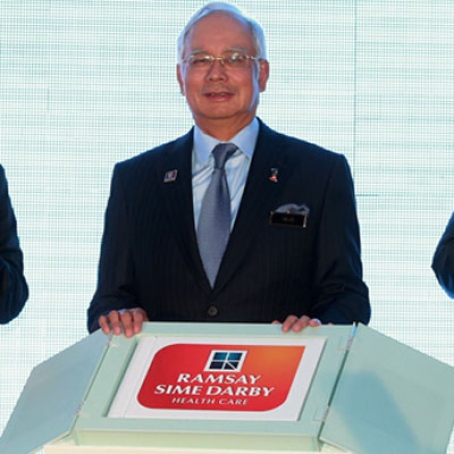
Najib officiated the RM320 million 300-bed Parkcity Medical Centre at Desa Park City today, a joint venture between Sime Darby Bhd and Australia’s Ramsay Healthcare.

Meanwhile Bernama reported, Najib said at the officiating ceremony, local healthcare service providers need to regularly reinvent themselves and create opportunities for doctors and nurses to work without unnecessary barriers to stay relevant in dynamic healthcare marketplace.

The Prime Minister said it was the role of these professionals to be the catalysts for improvement, whilst ensuring that the needs and quality of care of patients remain the primary consideration.

He noted that strategic alliances between healthcare service providers would help advance the industry through the adoption of best practices and cross border clinical collaboration.

“As borders between countries become blurred with international cooperation, the potential gains are immeasurable. I urge healthcare service providers to leave no stone unturned in pursuing this potential.

“Becoming a regional healthcare hub ultimately creates more job opportunities and wealth, which benefit the economy and country as a whole,” he said in his speech when openeing the ParkCity Medical Centre (PMC) and the unveiling of Ramsay Sime Darby Health Care (RSDHC) logo, at Desa Park City here, today.

RamsayCT25sept2013
Najib also said the Sime Darby and Ramsay Healthcare partnership would further boost Malaysia’s aims to be a regional healthcare provider and provided a solid platform for expansion in the Asian healthcare sector.

Najib said the prospect of reversing the international brain drain of medical professionals through medical tourism was also very positive.

“Local healthcare providers should leverage all the advantages on offer such as the government’s support, political stability, accessible travel, innovative and pioneering forms of treatment, readily available information over the internet, as well as pristine tourist destinations,” he added. — BERNAMA

source: http://www.nst.com.my / New Straits Times / Home> Latest News / September 17th, 2013

DHCC receives delegation of 55 top travel agents from Eastern Europe to promote medical tourism in Dubai

Dubai Healthcare City (DHCC) has received from a delegation of over 50 leading travel agents from across Eastern Europe.

The visit, organised by the Department of Tourism and Commercial Marketing, was aimed at promoting Dubai as a leading tourism destination, and an opportunity for both parties to discuss DHCC’s Medical Tourism strategy.

DHCC is an established, internationally recognised centre of healthcare excellence, and has a particular focus on improving education and research and promoting medical tourism. In 2012, Dubai welcomed over 101,000 visitors from Eastern Europe, and the visit provided an opportunity for DHCC to promote Dubai as a destination for medical tourism, as well as discuss ways to attract more visitors from Central and Eastern Europe.

During the visit, the delegates toured DHCC and were given a presentation on DHCC’s Medical Tourism initiatives at the Mohammed Bin Rashid Academic Medical Centre, the education and research arm of DHCC, to further understand the world-class facilities available to both local and international patients, which are highly regulated and comparable to international standards.

DHCC also invited a number of its leading medical institutions to network and discuss medical tourism with the delegates, and highlight the importance of the industry for the UAE. Alongside its wide range of medical services, DHCC provides a range of benefits for medical tourists including Medical Indemnity Insurance and agreements with hotels.

Speaking about the visit, Marwan Abedin, CEO DHCC said, �We are delighted to welcome the delegation to DHCC. DHCC has established itself as a world-class destination for medical tourism, and we want to see the continued growth of this thriving industry. We want to ensure DHCC grows to become one of the world’s leading major international medical tourism hubs catering for the medical needs and wellbeing of international patients.’ Dr Wajdi Al Daghma, MD Strategy and Business Development for DHCC said, �DHCC has witnessed unprecedented growth in the past decade and has seen the inclusion of a large number of new medical facilities and professionals. We are constantly expanding and improving our health services and Dubai has all of the right elements to attract foreign patients.’ WAM/MN

source: http://www.wam.org.ae / wam – Emirates News Agency / Wam Dubai / September 14th, 2013