Category Archives: Reports,Features, Statistics

New rules issued on “surrogacy tourism”

India has issued new rules barring foreign gay couples and single people from using surrogate mothers to become parents, drawing sharp criticism from gay rights advocates and fertility clinics.

Commercial surrogacy is a booming industry in India and in recent years ranks of childless foreign couples looking for a low-cost, legally simple route to parenthood have been joined by gay couples and singles.

The measures, circulated to Indian missions abroad in late 2012, which only came to light in the Indian media on Friday, mark the first step to the regulation of “surrogacy tourism” in India.

The rules say foreign couples seeking to enter into a surrogacy arrangement in India must be a “man and woman (who) are duly married and the marriage should be sustained at least two years”.

The rule changes, posted on the Indian home ministry’s website, were denounced by fertility clinics and gay rights activists as “discriminatory”.

“Parenting is everybody’s right and now we’re withdrawing that right,” said Dr Rita Bakshi, who heads the International Fertility Centre in New Delhi.

“These rules are definitely not welcome, definitely restrictive and very discriminatory,” she told AFP. “This is a huge heartbreak for homosexual couples and singles,” commented fertility doctor Anoop Gupta.

Gay rights campaigners also denounced the changes to the rules on surrogacy, which was legalised in 2002.

“It’s totally unfair — not only for gay people but for people who are not married who may have been living together for years and for singles,” Mumbai gay rights advocate Nitin Karani told AFP.

India is a popular destination for gay couples seeking children even though it remains a largely conservative country and only decriminalised consensual sex between homosexuals in 2011.

The home ministry would not comment on the changes which stipulate that would-be parents provide proof that their home country will give citizenship to any baby born of a surrogate mother.

There have been several publicised cases of babies born through cross-border surrogacy in recent years who have been trapped in citizenship limbo because their parents’ countries refused them passports.

Surrogacy is banned in some European countries and is subject to strict regulation in the United States.

The new India rules, which also state applicants must apply for a medical instead of a tourist visa, come as legislation to regulate the industry has yet to be passed by parliament.

The bill says only women aged between 21 and 35 can act as surrogates but sets no minimum payment for the mother.

Critics have said a lack of legislation governing surrogacy encourages “rent-a-womb” exploitation of young, poor Indian women.

While the government has been pushing the country as a medical tourism destination, the issue of wealthy foreigners paying poor Indians to have babies has raised ethical concerns in many Indian minds.

Clinic owners deny ill-treatment of mothers, saying it is in their interest to treat the women well in order for them to have healthy babies,

The cost of surrogacy is about $18,000 to $30,000 in India, said Bakshi, of which around $8,000 goes to the surrogate mother. The figure is roughly a third of the US price.

Hari Ramasubramanian, founding partner of Indian Surrogacy Law, said the new measures were introduced without “proper consultation” and needed to be challenged in the courts.

“A lot of people who will be affected had seen India as a wonderful option for getting into parenthood and now this option is closed. It’s quite sad,” he said.

source: http://www.KhaleejTimes.com / Home> International /AFP  / January 18th, 2013
200 farmers among trainees in health, tourism, fisheries, renewable energy , airport security, air space security and road maintenance

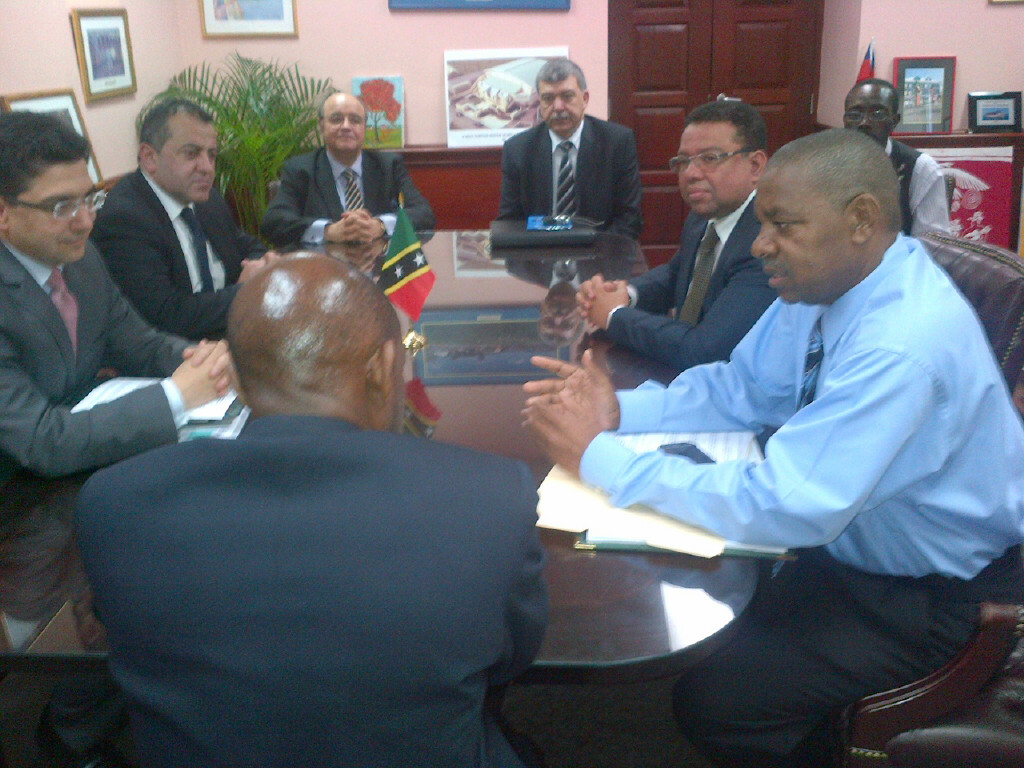
Photo: St. Kitts and Nevis’ Prime Minister the Rt. Hon. Dr. Denzil L. Douglas (back) and Chief Secretary and Permanent Secretary in the Ministry of Foreign Affairs, Mr. Elvis Newton (right) with delegation from the Kingdom of Morocco.

Basseterre , St. Kitts , FEBRUARY 20TH 2013 (CUOPM)

Kittitians and Nevisians are to benefit from up to 20 scholarships and numerous training courses as a result of an agreement between the Federal Government of St. Kitts and Nevis and the Kingdom of Morocco.

The agreement, signed by Prime Minister the Rt. Hon. Dr. Denzil L. Douglas on behalf of St. Kitts and Nevis, states that persons taking up the scholarships will attend public schools and universities in Morocco.

The Moroccan side has expressed its willingness to develop its cooperation with St. Kitts and Nevis in the fields of higher education and scientific research, according to the needs expressed by the St. Kitts and Nevis side.

The Kingdom of Morocco will also invite the St. Kitts and Nevis high officials and executives of higher education institutions for working visits and workshops with the first visit scheduled for the month of June 2013.

Morocco’s Office of Vocational Training and Employment Promotion (OFPPT) is committed to provide annually, on official quota, for ten (10) young people to enroll in its technical vocational training schools. In this regard OFPPT will provide accommodation and food services in its boarding schools while the Moroccan Agency for International Cooperation will provide scholarships for the students.

The OFPPT has also committed itself to organize annually, in concert with AMCI, training sessions (one (01) to two (02) months) aiming at developing the technical skills of trainees. The two sides have also agreed to examine jointly the memorandum of understanding in the field of vocational training submitted by OFPPT for the development of partnership projects.

According to the needs expressed by St. Kitts and Nevis, the Moroccan Ministry of health will organize training courses for the benefit of five persons in various fields; provide trainings in public health or health administration at the National Institute of Health Administration (two-year teaching full-time); Paramedical staff in the Training Institutes for Health Careers; Pharmacy in the National Laboratory of Drug Control and training of pharmacists inspectors.

Morocco has agreed to provide St. Kitts and Nevis with expertise in crop production, livestock, animal health and veterinary, agricultural valorisation and marketing, mechanisation, irrigation and water management.

The Moroccan Agency for International Cooperation (AMCI), in cooperation with the OCP Foundation and INRA, will implement a pilot integrated agricultural development project for the benefit of up to and maximum of 200 small farmers.

Within this project, one training scholarship including return tickets and living expenses in Morocco will be covered annually for capacity building in needed priority fields for St. Kitts and Nevis. This one to three months training will be carried at INRA and financed by OCP foundation.

Within this pilot integrated agricultural development project, the Kingdom of Morocco via AMCI is committed to provide annually, for the 2013-2015 St. Kitts and Nevis with ninety (90) tons of fertilizers. The types of fertilizers are the same than the ones provided in 2011.

The Moroccan side, through the National Office for Electricity and Potable Water, has committed itself to annually provide up to 2 training sessions in favour of 10 people in the fields of water treatment, quality control and wastewater treatment.

The Kingdom of Morocco is keen to assist St. Kitts and Nevis in the development of expertise in electricity branch, particularly in supervision of the construction of thermal power plants (coal, fuel, diesel etc, studies and assistance in the construction of national grid of electricity networks and in the planning of electricity networks and in rural electrification, and development of electric interconnections capacities, renewable energies and rehabilitation of distribution networks.

In the area of tourism, the Moroccan side have agreed to provide two to three seats by sector training institutions in hospitality and tourism under the Ministry within the overall quota reserved by International of  Cooperation of the Moroccan Agency and Moroccan experts are to visit St. Kitts and Nevis assess the needs and priorities in the field of tourism. Moroccan is also committed to provide annually an official quota of 16 scholarships to the applicants wishing to enrol in schools of vocational training, as follows: 10 seats for the technician and 6 seats for the qualification level.

St. Kitts and Nevis is to send nationals in training courses that is held in Morocco within the framework of triangular cooperation, in the field of fisheries.

Moroccan will also provide two scholarships annually to enrol in technical schools for infrastructures (two years) and to offer internships in airport certification, airport security, air space security and road maintenance.

Morocco and St. Kitts and Nevis also agreed to exchange annually a group a 30 young children during the moths of July and August.

source: http://www.gov.kn / Saint Christopher (St.Kitts) and Nevis / Wednesday, February 20th, 2013

Medical tourism potentials eyed

THE TOURISM department is studying potential new areas of specialization for medical tourism, an official said.

“The Tourism and Health departments are working on a medical tourism program. We are trying to see which are areas or services we can offer and where we can excel,” said Tourism Secretary Ramon R. Jimenez, Jr. in an interview after the Philippine Economic Briefing on Wednesday.

He added that based on studies, there is “tremendous demand for areas like orthodontology, dentistry, cancer treatment and retirement.”

The department said on Feb. 6 that it is targeting 5.5 million foreign tourists this year.

For local tourism, the department is targeting 56 million. Tourism accounted for 7% of the country’s economy last year and the Tourism department hopes to increase that to 11% by 2016.

It is targeting 44 million domestic trips by 2016.

Already there are foreign firms interested in possibly setting up medical facilities in the country that will both cater to local patients and international tourists.

Indian firm DM Healthcare LLC said on Feb. 12 that it is looking at the business potential of the Philippines.

“Bringing in foreign investments is the next step in medical tourism. We have sent some of our health care professionals and then we enticed foreign patients here so investments are the next step,” Joyce Socao-Alumno, country representative of DM Healthcare in the Philippines, said.

source:  http://www.bworldonline.com/ Business World Online / by Emilia Narai J. David, Senior Reporter  / Manila, February 14th, 2013

Oman, Thailand ties ride medical tourism wave

Dr.Pornchai Danvivathana is Ambassador of the Kingdom of Thailand to the Sultanate of Oman

Thailand has become a well-known medical tourism destination, thanks to the collaborative efforts of the public and private sectors in response to the rising demand for medical treatment.

Over the years, medical tourism has proven to be a lucrative business for a number of countries in Asia as it generates a lot of income for all stakeholders in tourism and its related industries.  In order to remain competitive in these services sector, Thailand has relaxed its immigration law to promote medical tourism, and at the same time to facilitate treatment of premium quality, including tourist attractions, for patients coming to Thailand.

Taking effect on January 5 this year, the new regulations allow nationals from Bahrain, Kuwait, Oman, Qatar, Saudi Arabia, and the UAE, member states of the Gulf Cooperation Council (GCC), to stay in Thailand for medical treatment up to a period of 90 days without a visa.  A tourist-cum-patient falling into this category may be accompanied with no more than three individuals of GCC nationals (i.e. parents, children, spouse or maid), who will likewise enjoy a 90-days visa exemption.

It should be noted that those wishing to get the benefit of the 90-days visa exemption shall present certain documents required for their eligibility.  Nationals from South Korea, Argentina, Brazil, Chile and Peru are also eligible for the present scheme due to the respective agreements on a 90-day visa exemption concluded between Thailand and those countries.

Other than medical tourism, Thailand has gained a lot of recognition in spa and wellness. The government agencies concerned have worked with all stakeholders in Thailand to set appropriate standards and criteria for Thai masseurs and masseuses and for businessmen who are offering Thai spa and/or wellness within the country and abroad.

In this regard, Thai herbal medicine may be infused with massage and spa to offer tourists and the local people the best quality of services of this kind. Extra-entrepreneurial skills, as well as integrity and accountability, to run the business are additional elements Thailand has taken steps to enhance for meeting international standards.

To put it simply, Omani people and other GCC nationals, except Saudi nationals, who can apply for a visa on arrival for a stay of 15 days, may go to Thailand and are eligible to the 30-days visa exemption as usual.  They may now enjoy the 90-days visa exemption, if proof of medical purpose is presented at the airport.

I would like to underline that Thailand has more to offer to non-Thai visitors, in addition to hospitality and friendship it has never failed to provide.  Communication and travel as a result of medical tourism could be the prevailing avenue to promote people-to-people connectivity, thus strengthening ties between Oman and Thailand in the years to come.!
Dr.Pornchai Danvivathana is Ambassador of the Kingdom of Thailand to the Sultanate of Oman.

source: http://www.timesofoman.com / Home / by Dr. Pornchai Danvivathana / Friday, February 22nd, 2013

It’s time for Kenya to position itself as hub for medical tourism

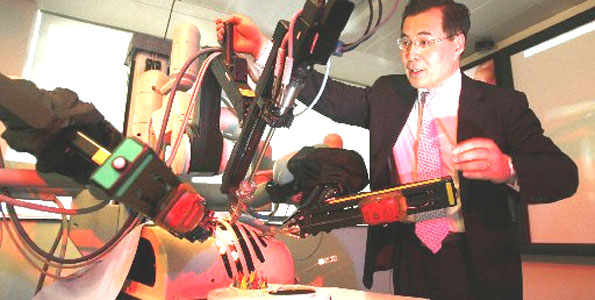
Director of medical imaging Prof Guang-Zhong Yang with a mechanical snake that can perform operations. Photo/FILE  REUTERS

A few weeks ago I attended an event sponsored by an international medical supplier. The event was part of a marketing tour by the officials in Kenya.

The highlight of the day was Kenya’s lack of cutting edge medical equipment and procedures. Robotic surgery and liver transplants are some of the procedures that are yet to be done locally.

The local representative made an important observation; 10 years ago mobile phones cost about Sh150,000 a piece, an amount that was beyond the reach of millions. Fast forward to today and the explosion of mobile phone use and opportunities that have arisen are there for everyone to see.

Despite the high investments that will be required in hospitals to acquire state of the art health care technologies, these will open doors to untapped medical tourism.

Many Kenyans are travelling abroad because of lack of high-tech facilities and some perceive hospitals in countries like USA and South Africa as a sure bet to receiving quality healthcare. This has seen countries like India turn into top medical tourism destinations.

For the financially endowed, USA and Germany has become the destination of choice where “softer chemotherapy” is used and marketed to cancer patients.

In the spa village of Bad Salzhausen in Germany, for instance, a combination of medical, spiritual care and even ethno botanical pharmacology are incorporated with cutting edge science to offer more tolerable doses and regimens of treatment for cancer.

The increase in number of Kenyan medical travellers to countries like India has opened an investment window for entrepreneurs.

Previously, patients had to rely on their own research or recommendations to choose a hospital. However, some faced challenges as they didn’t have a contact person to deal with before travelling for medical care.

To address this, services providers like Simon Karo are now handling patient logistics bookings and medical billing issues mostly for those travelling to India.

Access loans

He says the country should have a similar programme where organisations link patients from African countries to Kenyan hospitals to boost medical tourism.

A second challenge was the financial costs. Some providers are now partnering with insurance and banks to provide financing options which may be hard to get as an individual.

As entrepreneurs take advantage of the increase in number of patients travelling abroad, it is time investors injected more cash in upgrading hospitals to woo foreign clients.

Kenya has some of the best private hospitals in East and Central Africa. With growth in technology, there is no reason why it cannot be a hub for specialised medicare in the region.

source: http://www.BusinessDailyAfrica.com / Business Daily / Home / by Edward Omete / Tuesday, February 19th, 2013