Medical tourism expanded in 2011 — association

Amman:

The Kingdom’s medical tourism sector expanded in 2011, the Private Hospitals Association (PHA) announced on Sunday.

PHA figures made available to The Jordan Times showed that 240,000 visitors came to the Kingdom last year either to receive treatment in private hospitals or to accompany a patient, compared to 220,000 in 2010.

Previous PHA figures showed that the sector brought in 220,000 visitors in 2009, 200,000 in 2008, and 190,000 in 2007.

The PHA last year repeatedly warned that regional unrest was hurting medical tourism in Jordan, and announced in January that the number of medical tourists had fallen to 180,000 in 2011.

It now appears, however, that turmoil in the Middle East has brought more business to the sector, not less.

PHA Executive Director Abdullah Hindawi on Sunday attributed the increase in the revised figures to the influx of injured patients from regional countries that witnessed civil conflict last year, particularly Libya.

Hindawi noted that 58,000 Libyans came to Jordan for medical care in 2011, while Palestinian, Iraqi, Sudanese and Yemeni patients made up the bulk of the remainder.

In a previous statement, PHA President Fawzi Hammouri said the association’s figures only include inpatients and that the number of outpatients, if calculated, might double the total figure.

Meanwhile, a source familiar with the matter told The Jordan Times that Libya’s outstanding dues to the Kingdom’s hospitals are expected to be paid after the formation of the new Libyan government within two weeks.

The source, who spoke on condition of anonymity, said the outstanding debts stood at JD120 million as of August 31.

source: http://www.JordanTimes.com / Home> Local> article details / by Khetam Malkawi / October 07th, 2012

Simple technologies that make healthcare affordable

While India has become a hub for affordable and quality healthcare and is seeing growing medical tourism, the per capita expenditure on, and penetration of, quality healthcare is still incredibly low.

To address the challenge, new semiconductor technologies have emerged that make equipment smaller, more energy-efficient, and cut the total cost of ownership while also providing quality results even in less-than-ideal conditions.

Globally, healthcare also has started to move from hospitals to home.

For patients this means easier access to healthcare, fewer hospital visits and reduced medical costs.

In India, it might not directly translate to equipment at home, but a central facility or a doctor in the neighbourhood that we go to for regular check-ups.

It might mean a doctor visiting a remote village with these affordable and small healthcare devices and setting up a mobile health check-up clinic. However, in order to be effective at home or at a simple clinic, medical devices must be easy to use, safe even under misuse, and able to distinguish between correct results and those obtained by incorrect procedures.

Much of today’s semiconductor development is targeted at home and handheld consumer devices for entertainment and communication.

This design expertise and even some of these devices directly can be made useful in the implementation of a generation of affordable solutions for self-use at home or by semi-trained staff at neighbourhood clinics or rural locations. These consumer devices, coupled with quality sensors and data acquisition devices, would result in medical-grade systems that can be readily deployed at a fraction of the cost of high-end equipment used in hospitals.

The precision of these devices is medical-grade, but cost structure is of consumer gadgets. These devices are exemplified by reliable, high-performance sensors, amplifiers and data converters that extract and digitise a precision signal relevant to a particular clinical condition, and then the powerful processors in handheld devices and tablets perform sophisticated analysis of the acquired signals.

Beyond the local measurement and analysis, a cloud-based Software as a Service (SaaS) system can be enabled at the back end with the handheld device sending it back via mobile/Wi-Fi connectivity to a central backend server to store, further analyse and make it available for any doctor to view and advise.

So what are the key components of such a system and what would they do?

Sensors

Today’s medical diagnostic systems monitor specific target substances of clinical relevance. The measurement recognises the substance and generates a signal that is measured by an electronic transducer. An example of this is blood glucose detection, in which enzymes on glucose strips convert glucose to a measurable product.

In this process, an electrical pulse is generated corresponding to the level of glucose in the blood. Similarly, pulse oximeters used on fingertips in hospitals use a unique blood-flow measurement sensor and algorithm to find the level of oxygenation in the blood.

A wide variety of electronic transducer solutions exists today, such as capacitance to digital converters (like the touchscreen you see on your tablet or mobile phone), impedance to digital converters, LED-based photonic systems (like in the pulse oximeters), photodiodes, MEMS-based motion sensors for acceleration, gravitational pull and inclination, and gyroscopic sensors for rotation sensing (just like when you switch between your portrait and landscape mode on your tablet).

Data converters

Often used in combination with high accuracy amplifiers, this converter takes the analogue electrical signal coming from the sensor and digitises it or converts it to a binary. The higher the accuracy required for measurement, the higher the precision of analogue-to-digital converters required.

The processor

High performance, minimum power consumption and low cost are necessary to enable compact, battery-powered medical diagnostics and monitoring devices for use outside hospital environments.

The consumer world has the processor ready. Powerful processors in mobiles and tablets can analyse the acquired signal to first verify the quality, turn it into medically useful information, then deliver the results to the patient or clinic staff in a useful format, while also controlling the device. (Think about a pulse monitor app running on a tablet connected to a miniaturised diagnostic equipment on its USB port.)

Connectivity

Sending the results to a central server via available Wi-Fi or cellular infrastructure ensures that the patient data is communicated back to a central repository for further analysis, or expert opinion or simply to be viewed by the physician.

A new generation of such miniaturised, portable and affordable medical devices include monitoring of the heart rate, blood pressure, blood glucose, blood oxygen content, portable ultrasound or scanner, diagnostics kits for common ailments and many more.

(The author is managing director, Analog Devices India)

source: http://www.TheHindu.com / Home> S & T> Technology / by Somshubhro Pal Choudhry / October 07th, 2012

State of the art hospital coming for GB

A new state-of-the-art hospital is coming to Grand Bahama over the next few years.

This announcement was made by the Minister for Grand Bahama, Dr. Hon. Michael Darville, as he officially opened the 12th Annual Medical Conference of the Grand Bahama Medical and Dental Association.

“There is no question that the residents of Grand Bahama have out-grown the Rand Memorial Hospital and if the truth be told, in spite of the upgrades done by the last administration, the facility is still lacking and does not meet the necessary requirements to implement the government’s plan for state of the art health care delivery or make up the drive necessary to drive the lucrative medical tourism product,” said Minister Darville.

“Therefore in response to our research and findings, this administration is committed to constructing a new state of the art hospital on Grand Bahama during our term in office. We will do this using Bahamian contractors and upgrading all existing clinics throughout Grand Bahama.

“I would also like to commend the former Minister of Health Dr. Marcus Bethel, who paved the way through land preparation necessary for construction of our new state of the art hospital under the last Christie Administration.”

The Minister said that his government is also committed to national health insurance and that they are driving policies to ensure that it is implemented during their term in office.

He further stated that the health and safety of Grand Bahamians is paramount to his administration, “and as Minister of Grand Bahama I am committed to leading the charge to ensure that the residents of this community have access to modern, state of the art medical facilities that are adequately staffed, with trained medical personnel.”

He noted that just this year, as part of his administration’s commitment to doubling the investment in education, some 60 scholarships were awarded to medical students and other health care providers as part of the government’s plan to prepare for the expansion at both the Rand Memorial Hospital and the Princess Margarette Hospital.

He said that the increased funding for training nurses and other health care professionals is done in order to meet the demands for the current upgrades and improvements in medical infrastructure in Nassau and the construction of the new hospital here on Grand Bahama.

“As Minister of Grand Bahama, it is my mandate to ensure that medical infrastructure for Grand Bahama advance and I assure you that I am firmly committed to accomplishing this important mandate during our term in office,” added Minister Darville.

“So I invite you all to continue to partner with the Ministry of Grand Bahama in the fight to control and alleviate all forms of diseases that is threatening the lives of Grand Bahamians, especially our women.”

Minister Darville began his address to the Medical Conference by bringing greetings from the Prime Minister, Hon. Perry Christie, and the Member of Parliament for West End and Bimini and Minster of Tourism Hon. Obie Wilchcombe, who has partnered with the Grand Bahama Ministry to revive the island’s tourism sector, by bringing to the forefront both the legislation and the framework necessary to jumpstart the medical tourism product here on the island. The Minister also brought greetings from the Minister of Health, Hon. Perry Gomez, who is expected to join the Medical Conference later this week.

Minister Darville said that as policy makers in this administration, they must review the current Medical Act, put forth recommendations that would certainly make all licensed physicians in The Bahamas Medical Council to participate in continuing medical education as part of the requirements for renewal of licenses going forward.

This shift in policy, he said, will enable those on this island to bring modernized clinic practice by creating the infrastructure necessary to provide adequate care for all patients.

“Colleagues, the explosion of non-communicable diseases throughout our country, coupled with the escalating health care costs, calls for public health care practitioners to remain focused on training and re-training, particularly at the primary health care level,” the Minister added.

“We must also have an aggressive preventative strategy to ensure that we improve health care delivery from Sweeting’s Cay to West End.

“We must certainly fight to save this generation and the ones to follow through preventative strategies, aggressive consultation, and medical education, which would certainly reduce the incidence of morbidity and mortality brought on by diseases associated with lifestyles.”

He added that as a government they must revisit the breadbasket items and all Ministries, he stated, must synergistically work together to lower the costs of wholesome foods throughout this country, giving Bahamians affordable choices.

This he said, must be a part of the national preventative plan going forward.

“Let me assure you, this administration is committed to doing so,” he said.

“We must all be minded of the fact that the delivery of health care services is an expensive business. Therefore, as health care professionals we must collectively address the inadequacies of our primary health system, prevent wastage, while providing quality, but cost effective services to all the residents of Grand Bahama irrespective of race, class or socio-economic background.”

source: http://www.freeport.nassauguardian.net / Local / National News / by Yasmin Popsecu / Freeport News Reporter <yasmin@nasguard.com  / Saturday, October 06th, 2012

Puerto Vallarta Medical Tourism

With the development of short-stay units, high quality services and specialty innovation,Puerto Vallarta offers medical services and hospitals which can make the city a magnet for international medical tourism.

This was the statement of Dr. Maximilian Andrew Greig, Rector of the University Center of the Coast (CUCosta), during a special presentation entitled “Mexico: A World-Class Destination for Medical Tourism“.

A book on the theme will be officially presented next December 1st at the Guadalajara International Book Fair.

Dr. Greig unveiled details of the project on which he shares credit with Rodrigo Lopez–Becerril, Carlos Arceo Realand Jesus Araiza Cabral. The presentation was held under the context of celebrating of World Tourism Day and included CUCosta researchers and book presentations.

He added that medical tourism is not just a passing trend; it is a potential long-term tourism market. With reality and foresight, the book provides information and comments that serve mainly to guide tourism and health specialists to the services that Puerto Vallarta can provide.

For more news from Puerto Vallarta, click here.

source: http://www.visitpuertovallarta.com / Home> News> Convention

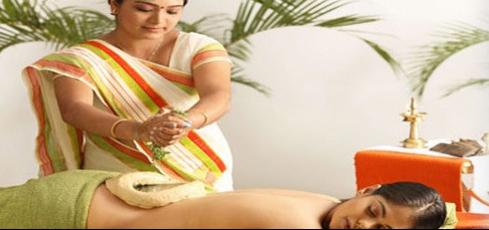
Kerala Emerging As The Best Destination for Ayurveda Tours in India

Indian tour operators offer wide range of Ayurveda India packages and Kerala Ayurveda & Spa Tours are more in demand. Kerala is known for having maximum numbers of Ayurveda treatment centers that offer packages for every need and budget

According to a recent report medical tourism in India is booming. Tourists from almost all the countries are flying in India to enjoy the mesmerizing locations as well as unique health benefits. Sensing this tourism potential, Indian tour operators offer wide range of Ayurveda India Tour and packages but Kerala Ayurveda Spa Tours are more in demand because of marvelous exotic locations. The Manager of India Travel Tours says, “Majority of tourists are from developed countries like US and UK. Indian government too has acknowledged this opportunities; and thus, it is trying its best to make this trade more attractive. Several initiatives taken by the Government to promote the health tourism industry enable us to offer much better Ayurveda & Spa India Tours now.”

Sometimes tourists succeed to save even up to 50 % to 60 %. Kerala is known for having maximum numbers of Ayurveda treatment centers that offer packages for every need and budget. Somatheeram Ayruveda Resort – Kovalam, Keralyeem Ayurvedic – Allepey, Kottakkal Arya Vaidya Shala, Surya Samudra Spa Niraamaya -Tivandrum, Ayurkshethra – Kumarakom  and Beach and Lake Ayurveda Resort etc are major Kerala Ayurveda & Spa centers that deliver more than a tourist expect from India Tours package.

Operation manager at India Travel Tours says, “Aswagandha, Brahmi, Bharangi, Amalki, Katphal, Yashtimadhu, Shankhupusham, Turmeric, Cinnamon, Kilukillapa, Koduveli and Keezharnelli are just few to name that are local produce and are available at very reasonable cost. And, this makes the Ayurveda & Spa tours to kerala more popular.”

source: http://www.justluxe.com / Home> Travel / by Dinesh / October 03rd, 2012