Patients coming to India for fertility treatment leading to country’s Muslim baby boom

New Delhi, India

Business is booming at Dheerendra Singh’s New Delhi-based medical tourism outfit, CureMax. But his biggest client base — Afghanistan — might come as something of a surprise.

“Every month, we do IVF [in vitro fertilization] for around 50 patients from Afghanistan,” Singh said. “They also come for other infertility-related procedures. And in the peak [winter] season [when the weather is more comfortable], we have 60-70 patients a month.”

Afghanistan isn’t the half of it. Though infertility is commonly associated with the changing lifestyles of the West — where more and more women are putting off childbirth until their late 30s — India’s IVF clinics are testimony that the trend is growing in developing countries and conservative societies as well.

Along with the much-talked-about medical tourist trade from the US and Europe, India is seeing an influx of patients from Muslim countries in Africa and the Middle East, thanks to a thriving, low-cost domestic fertility industry and cultural connections that make India a comfortable place for conservative Muslims, medical tourism professionals say.

Statistics aren’t readily available on the total number of patients coming to India for fertility treatments from predominantly Muslim countries. But anecdotal evidence from various doctors and other agents like Singh — as well as a thriving business in the Afghan refugee colony in New Delhi — suggests that the phenomenon is significant.

According to  India’s Outlook magazine, for instance, fertility experts like Dr. Kaberi Banerjee number their patients from places like Iran, Iraq, Uzbekistan and Tanzania in the hundreds. Meanwhile, companies like Care Medical say they see 10-15 foreign patients from Islamic countries every month, according to managing director D. Mahendran.

“Overall, we see [medical tourism] growth of about 15-20 percent annually, and I believe roughty the same kind of number holds for IVF,” said P.R. Ramesh, the chief executive of Aaarex Medical Services, another medical tourism firm. “But we’re seeing a larger number of Muslim people than previously, including Muslims from Arabic countries and Muslims from countries like Nigeria and Tanzania and so on.”

Various factors help explain the baby boom. Because of India’s massive population, and the cultural importance of bearing children here, private fertility clinics have mushroomed in recent years — until there’s an IVF signboard on virtually every street in the upscale neighborhoods of New Delhi.

Reputable clinics offer a high standard of care for a small fraction of the cost of IVF in the West. A typical IVF procedure, for instance, runs to $3,000 in India, compared with $8,000 in the US or Europe, said CureMax’s Singh. And patients receive more attention from doctors.

To regulate fly-by-night outfits that have begun sprouting up, the Indian Council of Medical Research recently drafted regulations and began to crack down.

“Here in India, people take IVF very serious, and they give personalized care,” said Mahendran.

But there are other reasons India is attracting patients from Muslim countries.

Proximity and historical ties link India with Iran, Iraq, Afghanistan and other countries of Central Asia in ways that are impossible for other medical tourism hotspots, like Thailand, to match. Standards of dress and behavior are similar, for instance. And the long dominance of Bollywood movies in the target region means that patients there are comfortable with Indian culture, and, especially in Afghanistan, can often already speak Hindi.

Because fertility treatments can be time consuming, the low cost of living, and the ease of blending in and finding halal meat and other familiar foods, is also a factor. In New Delhi, for instance, CureMax and other medical tourism outfits connect IVF patients with landlords operating serviced apartments in neighborhoods in Lajpat Nagar and Jangpura, which are already home to Afghan refugees who migrated here to escape the fighting at home. By cooking their own meals — and buying Afghani naan from the local shop — they avoid exorbitant hotel costs.

Similarly, certain Iranian and African communities have ties with India that make it a more familiar destination than its competitors.

“India has got a large Muslim population, and there are many communities in Africa which relate very closely to their counterparts in India,” said Aaarex’s Ramesh.

“For example, there is a community called the Ithna Asheri community in Tanzania, with strong connections to the same community in India. Many of these communities are Indian in origin. To some extent there are also family links.”

source: http://www.alaskadispatch.com / by Jason Overdorf / GlobalPost.com / September 14th, 2012
Passport to health

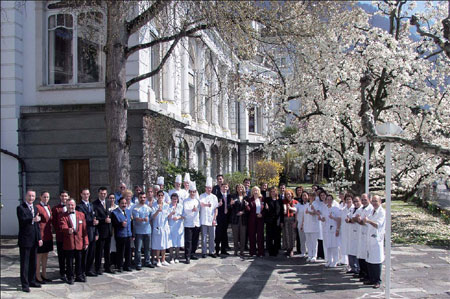
Clinique Biotonus Bon Port in Switzerland is attracting Chinese clients who want anti-aging treatment. Provided to China Daily

More and more affluent Chinese are heading overseas in search of a wide variety of treatments

Twice a month Li Aobo, a private trip consultant, flies 12 hours in each direction to accompany a few clients from Beijing to the Clinique Biotonus Bon Port in Switzerland, which treated former South African president Nelson Mandela in 1992.

“My clients sit in the business-class or first-class cabins while I always get an economy ticket and have to get ready to take orders at any time,” says Li.

Li works for Lavion, a Beijing-based travel agent focusing on private medical tourism. The growth of the company’s membership, which went from zero to more than 1,000 in fewer than five years, is demonstrative of the business opportunity in the sector.

While China is emerging as a hot destination among medical tourists for its affordable prices and its fusion of modern medical practices with traditional Chinese therapeutic techniques, increasing numbers of affluent Chinese are traveling abroad for better medical procedures, regardless of their price.

In China, nearly 60,000 people go abroad annually for healthcare services, especially for anti-aging therapy, cancer screening, to give birth and to get treatment for chronic diseases, said Yang Jian, CEO of the Shanghai Medical Tourism Products and Promotion Platform, in a China Daily report from November 2011.

The figure was just several thousand in 2006, he said.

Bearing in mind China’s huge population and rising middle class, the outbound medical-tourism market seems a good bet for companies such as Lavion.

“We have been working with Lavion for six years. We started with about 50 patients in the first year and now have more than 200 patients every year,” says Dr Reza Tavassoli at Clinique Biotonus Bon Port, who was also Nelson Mandela’s chief doctor.

In the future, he says the clinic hopes to receive as many as 500 Chinese clients each year as he sees more Chinese people paying attention to longevity and anti-aging treatments.

On his latest trip to Switzerland, Li Aobo’s clients were three women real estate entrepreneurs around 40 years of age. They were mainly going to the clinic to receive treatment for intensive fatigue, burnout and problems linked to age.

After the therapy, Li took them to Lucerne, Geneva and Zurich to help with his customers’ needs for shopping and sightseeing.

“Some of our clients are not used to Western-style food, especially during the therapy. I often make porridge with a rice cooker and prepare some simple Chinese dishes,” says Li.

“Each time, we bring six people at most to the center on the shore of Lake Geneva to ensure the quality of our customized service. I am not only a medical translator, but also a private butler who is in charge of all the details of their daily life during the seven-day trip.”

The lowest price for such a trip is 200,000 yuan ($31,500, 25,000 euros). Some clients ask for private jets for the journey, which can be arranged for about an additional 1.5 million yuan, says Zhou Kaiwen, founder of Lavion.

With more than 10 years of experience in the incentive and business-travel department of China International Travel Service, a leading Chinese travel enterprise, Zhou has plenty of exposure to high-end tourism.

“When we were consistently receiving upmarket overseas clients, I was wondering whether Chinese people have sophisticated needs in outbound travel,” says Zhou.

When he founded Lavion in 2006, Zhou did not rush into doing business. He hired a consulting company for market research, which selected 3,000 high-income customers to answer a questionnaire.

Upon discovering that their top concern was health, Zhou decided to make healthcare tourism the focus of his business to differentiate it from competitors.

“Although we spent much money and energy in the first year, it seems to be worth it. In 2007, we had about 100 members and began to make money, and our turnover has a growth rate of 30 percent every year,” he says.

Apart from the trips to Switzerland, other travel programs include diabetes and chiropractic-treatment tourism to Germany, major-disease screening in Japan, and beauty-treatment trips to South Korea.

“Local hospitals and companies are not familiar with the Chinese market, and we are playing the role of an agent for them,” Zhou says.

“But about 70 percent of our customers choose Europe as their destination as they have more trust in the superior healthcare there.”

Most of his clients are successful entrepreneurs in their early 40s. In the beginning, women accounted for 60 percent of his clients, but as men are also paying attention to their health, the proportion has become almost equal. Zhou also mentions that returning customers account for 40 percent of his clientele.

“Anti-aging, insomnia, depression and face-lifting are long-term rehabilitation projects, one trip cannot solve the problem once and for all,” he says.

Other medical-tourism agents have since joined the market, including Pure Blue International, which is working with four clinics in Switzerland; LuckTour Medical Tourism, providing tourism to Japan and Singapore; and Rigii, which is cooperating with Swiss medical institution Centre de Sante Helvetique S.A.

“More rich people are willing to pay for outbound medical expenses, not only for health, but also to enjoy the relaxation during the trip,” says Li Yuyang, business director of Ogilvy Health.

He says these people are realizing the importance of health and they are tired of seeing a doctor in traditional hospitals.

However, Li points out that while more companies are rushing into the business, they are providing very similar routes, projects and services.

“I think they have to develop more projects or product portfolios to cater to different needs and also build their own characteristics,” he says.

But Li says expensive medical tourism will be primarily targeted at rich people.

“If it expands into a service that everyone can enjoy, the quality of the service will not be guaranteed,” he says.

When it comes to the increasing number of competitors, Lavion’s Zhou says the market is not mature, but he is confident in his company’s position and reputation in the industry.

“We will stick to high-end and tailor-made services in the future,” he says.

yaojing@chinadaily.com.cn

source: http://www.europe.chinadaily.com.cn / Home> E-Paper/Business / by Yao Jing (China Daily)/ September 07th, 2012

Gallery

World Spa & Well-being Convention 2012

This gallery contains 1 photos.

Bangkok, 6 September 2012: Health & Wellness tourism is a significant contributor to the economies of many Asian countries, particularly Malaysia, Singapore & Thailand. With approximately a third of the world’s spa operators located in Asia, the annual industry growth … Continue reading →

Gallery

Tourism and health sectors seek to boost medical tourism in Costa Rica

Companies will link with solidarista associations this week in San José. Health and tourism companies will present their products and services to some 50 solidarista associations on Thursday at the Radisson Hotel Europe, west of San José. Solidarista associations are worker-managed … Continue reading →

Health tourism as an attraction in city

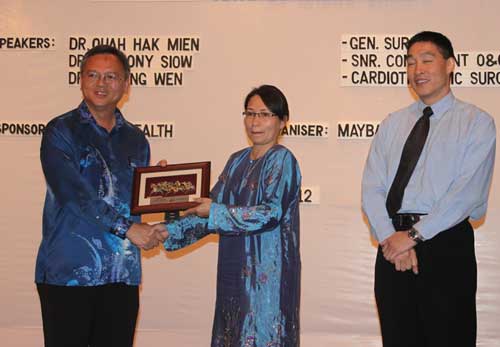
FOR YOU: Connie (centre) presents a souvenir to Lo.

Kuching:

Kuching can include health tourism as one of its attractions through the collaboration of hospitals with Singapore-based Parkway Pantai Limited (PPL).

Padawan Municipal Council chairman Lo Khere Chiang said health tourism was a lucrative business in many countries.

He said there is market for health tourism in Kuching as many Indonesians come here for treatment.

“If there is collaboration between experts in Singapore and Kuching with more seminars and dialogues held, I believe it will be an advancement for medical tourism,” Lo said at the opening of the Public Health Seminar yesterday.

The seminar was organised by Maybank Berhad Pending Branch and sponsored by Parkway Health.

Topics presented were ‘Colorectal Cancer: Early Detection and Treatment’ by Gleneagles Medical Centre Singapore general surgeon Dr Quah Hak Mien; ‘Abnormal Menstruation: Diagnosis & Treatment’ by Gleneagles Medical Centre Singapore senior O&G Dr Anthony Siow and ‘Advance Treatment in Lung Cancer’ by cardiothoracic surgeon Dr Su Jang Wen.

Lo commended those who turned up for the seminar as it shows the people are aware of the importance of health.

PPL is one of Asia’s largest healthcare providers with branches in Singapore, Malaysia, China, Hong Kong, India, Vietnam and Brunei.

In Singapore, PPL is the largest private healthcare provider with over 1,200 specialist doctors. In addition to four hospitals in Singapore, PPL also has a large network of medical centres, clinics and numerous research organisations.

In Malaysia, PPL is the second largest private healthcare provider in terms of the number of licensed hospital beds. It owns and operates 11 hospitals across Malaysia.

PPL also has a huge presence in China, India, Hong Kong, Vietnam and Brunei and has achieved big strides in terms of creating public health awareness at home and abroad.  These and other projects represent a significant commitment and contribution from PPL to the healthcare of the people in these countries, he said.

Also present were Parkway Health Corp Marketing assistant vice-president Samuel Tan and Parkway Health regional office manager (Sarawak) Connie Tan.

source: http://theborneopost.com / Home> News> Local /bu Irene C / August 27th, 2012