Hot spot in medical tourism

Dimitri K (full name withheld at request) flew all the way from Ukraine to Dubai for a complicated reconstructive dental surgery.

After the doctors in his home town left his teeth in what he calls ‘a horrible state’, Dimitri decided to come to Dubai because “a friend once mentioned in passing that there are a lot of good dental clinics in Dubai. I don’t know much about the cost, but I am happy with the outcome,” said Dimitri. A businessman by profession, Dimitri is not new to the UAE. He knows all the tourist hot spots in the country.

When Khaleej Times asked him if he would consider the UAE the next big potential hub for medical tourism, he said: “Yes, maybe.”

Taking advantage of the several cost-saving opportunities that exist beyond our immediate neighbourhood is what medical tourism is to most people.

Government authorities, private firms, and experts have come forward to suggest that the UAE might just be the next big cost effective medical tourism destination. According to figures provided by the Dubai Health Care City (DHCC), the city welcomed more than 9.3 million visitors and tourists in 2011 and is projected to grow at an annual 7.2 per cent through 2015.  Health tourism in the city is expected to generate Dh6.1 billion by the end of 2012.

Ayesha Abdullah, Managing Director of DHCC, said: “At DHCC, we have recorded a sharp growth in medical tourism over the past three years.  We received over 502,000 patients in 2011 including 15 per cent medical tourists, as compared to 10 per cent of a total of 412,000 patients in 2010. We believe that there is potential for further growth.”

Meanwhile, the Director-General of Dubai Health Authority (DHA,) Qadhi Saeed Al Murooshid, said that they have been working on this in the background for a while, building up on other initiatives linked to medical tourism, such as the clinical services capacity plan.  “The revenues from Medical Tourism are estimated at $30 billion. We believe that medical tourism is a space that involves and impacts various sectors within Dubai. Its growth would lead to a positive impact on the economy as well as be a driver for trade and investment in healthcare, tourism and hospitality services,” 
said Al Murooshid.

Currently, Dubai has over 4,750 doctors/physicians speaking over 40 languages. Experts in the medical field believe that the emirate is ready for medical tourism.

Cost of medical tourism

“The UAE, and particularly Dubai, offers quality healthcare solutions that largely measure up against cost-competitive destinations such as Thailand and India.

The figures show that a cardiac bypass costing around $130,000 in the US can be had for $44,000 in the UAE,” said Abdullah. Adding to which, Laila Al Jassmi, CEO of Health Policy and Strategy Sector at the DHA, said: “The costs here are definitely cheaper than the US for comparable quality of services. However, many people believe that medical tourism means lower cost which isn’t necessarily true. Price of services is an important component but not the only component in making the choice for the medical tourism destination,” said Al Jassmi.

She added that people travel abroad for different reasons for different types of services.

In Dubai itself, there are various facilities that offer the same services at different prices and their services are targeted at different market segments.

Also, we do not intend to compete with ‘low cost’ destinations for medical tourism.

Popular treatments

“In the past we have noticed that medical travellers have come to Dubai for cosmetic procedures, dental treatment and even hip-replacements. Today, Dubai has strategically positioned itself as a leading provider of top-quality care in diverse areas with a focus on niche services,” added Abdullah. In the long term, DHCC seeks to provide high-end tertiary care.

“In line with our mission to respond to emerging healthcare needs, we plan to add centres for oncology, genetic disorders and diabetes in an effort to expand the medical tourism segment. We are also in the process of closing gaps in services by adding facilities such as rehab, paediatrics and integrated medicine,” she added.

Adding to this, DHA officials said that there are various opinions on this from health professionals considering their areas of expertise.  “The specialties that Dubai is well suited to medical tourists include a host of medical, cosmetic and dental procedures along with wellness treatments and health check ups.

Dubai gets tourists from over 120 different nationalities and a number of them are utilising healthcare services in Dubai for various reasons.

There is a considerable growth in the demand for these services by tourists from the GCC, North and East Africa, Central Asia as well as for certain health and wellness services by tourists from Europe and South Asia,” said Al Jassmi.Scope for Alternative treatments Over the last few years we have seen a growing trend in patients choosing Complementary and Alternative Medicine (CAM).  “To date, DHCC is home to 12 CAM medical centres, more than 50 CAM-licensed professionals who offer treatment in 14 areas including homeopathy, Ayurveda, traditional Chinese medicine, Unani medicine, osteopathy, therapeutic massage, naturopathy, guided imagery, Thai Chi, Pilates, chiropractic, and yoga,” said Abdullah.

Al Jassmi assured that DHA would look into the growth of alternative medicines very seriously. “The growth of alternative treatments in the region is definitely something that we’ll look at and consider seriously.

There are many successes in this space in parts of Europe and South Asia and some of these services are going to be promoted to the extent they tie up with Dubai’s Medical Tourism Strategy,” she added.

dhanusha@kahleejtimes.com

source: http://www.KhaleejTimes.com / Home> Health / by Dhanusha Gokulan / July 04th, 2012
Gallery

Medical Tourism Event

An exciting medical tourism event, the Medical Director Summit, will take place during the 5th World Medical Tourism & Global Healthcare Congress (WMT & GHC), from October 24-26th at the Westin Diplomat Resort & Spa in Hollywood, Florida. This summit … Continue reading →

Lebanon’s love affair with plastic embellishment

Beirut:

Summer seems to bring out some of the stereotypes most closely associated with Lebanon: street fighting, beach parties, fresh cosmetic surgery scars.

In this latter category, surgeons are saying the demand among Lebanese is higher than ever, but a huge client base, Gulf and Arab tourists, are shying away this year, due to the recent string of security incidents, and warnings issued from their embassies.

At the Hazmieh International Medical Center, general manager, medical director and facial cosmetic surgeon Dr. Elias Chammas says demand among Lebanese has risen consistently since the center opened in 1998.

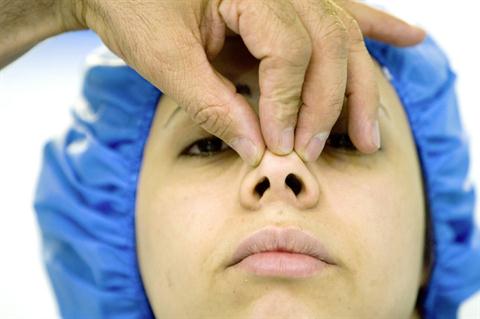
Rhinoplasty remains the most popular  surgery performed on men and women

Rhinoplasty, or the nose job, has remained the firm No. 1 favorite, performed on girls from the age of 16, and followed, he says, by breast augmentation, liposuction and eyelid lifts. Less common, but still conducted, are hymenoplasty and anterior vaginal wall repair surgery, usually carried out, Chammas says, “if you have delivered four or five babies, you have a wider vagina and the husband or boyfriend is not happy with it.”

The only new trend that he can discern is the increase in male customers.

“At the beginning we had very few men coming in; now they account for around 30 percent of surgeries,” he says, adding that the most common procedures are hair transplants, rhinoplasty, liposuction, face lifts and breast reductions, this last surgery being performed at the center once or twice every month.

Penis enlargement surgery is less common, with one procedure performed every three or four months.

But this summer, patient numbers have fallen drastically.

“When it is stable, we have a lot of patients coming from the Gulf, around 40-45 percent,” Chammas says. “When the situation is bad, people don’t come.”

“This is the first time in 13 years when countries are actually telling their citizens not to come; usually they just tell them to be careful.”

In May, the United Arab Emirates, Kuwait, Qatar and Bahrain urged their citizens to consider leaving Lebanon, after deadly clashes in the northern city of Tripoli left 11 dead, although some of the warnings were later downgraded.

The Lebanese diaspora, while not quite as cautious as the Gulf medical tourists, are still not coming in the same numbers, Chammas adds.

Dr. Antoine Abi Abboud, who has an office at the Beirut Beauty Clinic in Zalka, and who routinely travels to the Gulf to work, agrees with Chammas’ assessment.

Last year around 35 percent of his patients were from the Gulf and Iraq, but now, “It doesn’t look so good, this is normally the most popular time of year for these clients. They are not coming these days due to the circumstances.”

Lebanon has traditionally been a favored cosmetic surgery destination among regional medical tourists due to the reputation of the country’s doctors, mostly trained in the United States, and the price of surgeries here.

Whereas a nose job could cost about $10,000 in Australia, here the price is around $2,500, Abi Abboud says.

Like Chammas, Abi Abboud has also seen a rise in male patients, with hair transplants and rhinoplasty again the most common procedures, and breast reductions increasingly popular.

While perhaps surprisingly, given its reputation, Lebanon fails to grace the rankings for highest rates of cosmetic surgery procedures per capita – Hungary and South Korea topped a 2010 survey – it is thought that this country has the highest number of plastic surgeons per head.

The background to this, some believe, lies with the Civil War and the need at that time for plastic surgeons capable of dealing with physical disfigurements.

But there are concerns the industry has spun out of control, due to a lack of enforced regulation. While there are only around 80 members of the Lebanese Society of Plastic Reconstructive and Aesthetic Surgery, which self-regulates, there are another 300 operating outside this syndicate.

All of the cosmetic surgeons at the Hazmieh center are members of the LSPRAS, Chammas says. “If you are related to this syndicate, it means you are good,” he says. “Otherwise, they could chuck you out.”

Recently there has been an increase in doctors of other branches of medicine – physiotherapists or pharmacists, for example – who buy up ad time on TV, promoting their clinic, and then they “bring a plastic surgeon in who they pay maybe $1,000 and then they charge the patient maybe $4,000,” Chammas says.

“You have a physiotherapist giving a lecture about face-lifts on TV. They are not qualified to do that.”

“There should be more control on who should do what,” Chammas adds, but he says he cannot pinpoint where the blame should lie.

The industry has come under increasing scrutiny recently, on charges that the proliferation of cosmetic surgery in Lebanon is creating an unrealistic standard of beauty, and contributing to the objectification of women, but Chammas denies that too many people are getting plastic surgery.

“Everybody is saying that, but I don’t understand the problem,” he says. Comparing cosmetic procedures to wearing makeup, Chammas believes it hypocritical to criticize the industry unless one is prepared to “have a bath and then walk in the streets like that. Don’t put makeup on, don’t put eye shadow on, don’t pluck your eyebrows.”

“You want to look at ease with yourself, [and] you either do it by wearing makeup, or clothing, or, if there is a physical deformity in the face, you come and correct it with plastic surgery. It’s the same.”

In the U.S., which has the highest overall number of cosmetic procedures in the world, every patient seeking treatment must first undergo a psychiatric screening.

For Chammas, such a process is unfeasible in Lebanon.

“We cannot do that. If you tell the patient that he has to see a psychiatrist, you will never see him again. The attitude toward psychiatry in the States is completely different … in Lebanon if you tell someone they have to see a psychiatrist they would say, ‘What? You think I’m crazy?’ So we don’t do that.”

It is up to each surgeon to act as the psychiatrist here, he says.

“If the woman is asking to humiliate herself, we’re not going to do that,” Chammas says. “Or she brings me a photo of an artist and she wants the same nose. We can’t do that.”

For Abi Abboud, he will refer certain patients for psychiatry, as he has done in the past with male patients seeking breast augmentation as part of a sex change process.

“If I can see that the person is asking for things I do not want to do, then I send them to a psychiatrist. Then if I receive an OK, I will do it.”

For Myra Saad, an art therapist who works with body image and self-esteem issues, and who is this summer running a series of workshops on the issue, it would be a positive step for every cosmetic surgery procedure to be preceded by a psychiatric assessment.

“Each surgeon has his own ethics, but as a counselor, I think it should be required,” she says.

Of patients who keep going back for multiple surgeries, a phenomenon both surgeons defend, Saad says that while this may not be a symptom of body dysmorphia, it may indicate issues relating to self-esteem and identity.

“It’s so obvious that a lot of plastic surgery is about business, not about health,” she says.

She also thinks that the cosmetic surgery trend in Lebanon can be seen, in a way, as a rejection of local heritage, and an attempt to emulate Western norms of beauty.

“Media promotes this idea of what beauty is … beauty is no longer subjective,” she says.

The root problem, she believes, should be targeted at a young age, with “more media literacy classes, and empowerment and self-development workshops which teach confidence in the way you are.”

source: http://www.dailystar.com.lb / The Daily Star, Lebanon / Home> News> Lifestyle / by Olivia Alabaster / June 30th, 2012

Panchkarma of Banaras Hindu University to promote medical tourism

Varanasi:

The revamped Panchkarma division under the Department of Kayachikitsa, Faculty of Ayurveda in Banaras Hindu University is all set to bolster medical tourism in the city, which is believed to be home of Ayurveda greats like Sushruta and Charak.

While BHU V-C, Dr Lalji Singh would unveil the revamped Panchkarma centre on Sunday (July 01), the centre is gearing to provide healing touch to number of patients from near and far away places in the country and abroad.

It may be mentioned here that Institute of Medical Sciences (IMS), BHU has signed an agreement with Kerala based Ayurvedic company to extend expertise in the field of manufacture of ayurvedic drugs and Faculty of Ayurveda, BHU would ensure monitoring under public private partnership (PPP) model. While over three-decade-old division (established in 1980) is witnessing collaboration with Kerala Ayurvedic Ltd (a century-old Kochin-based pioneering Ayurveda centre that has over 40 international ayurvedic outlets in the world), the move is promising to expand the potential of one of the oldest components of medical system besides paving the way for garnering revenue through medical tourism in the city, which is already one of the favorite destinations for domestic and foreign tourists.

According to Prof TM Mohapatra, director, IMS, BHU, the agreement has already witnessed infrastructural development at Panchkarma unit under the Faculty of Ayurveda. He also emphasized that initiative would ensure availability of quality raw materials and processed materials to come up with quality ayurvedic medicines in the region.

It is also worth mentioning that Kerala has already emerged as major centre for medical tourism, attracting a large number of foreign and domestic visitors to the state. The field has made significant contribution for promoting tourism potential in the region with specialization in Panchkarma and other practices of Ayurveda.

As per Prof SK Tiwari, head, Department of Kayachikitsa and co-ordinator, Panchkarma division, BHU, the age-old practices involved in Panchkarma have already attracted a number of chronic patients across the country to the centre and the collaboration with Kerala company would definitely bolster the potential of the discipline with attractive packaging. The practice promises to provide respite from chronic pain including cancer and disc-prolapse and better packaging and facilities at the centre would attract even foreign visitors and patients, making it a truly global centre for medical tourism, he added.As per reports from the department, the unit has made rapid strides in the age-old practices of Panchakarma, carving a niche in different methods and techniques practiced by Ayurveda greats like Sushruta and Charak.

Now, cases of chronic pain including disc prolapse, cervical spondylitis, lumbar pain, arthritis, elephantiasis and others are successfully treated with Panchakarma. Apart from patients from neighbouring regions including East UP, Bihar, MP, Chhattisgarh, a number of patients from West UP and Delhi also visit the unit.

Some of the special treatment methods offered at the unit include Agnikarma (shalaka treatment) involves precise touch of red hot metal tube (pointed at one end) at specific points to give relief from pain. Besides, leaves of Aloevera and Trifala are also used to provide instant relief in superficial burn.

Conditions like arthritis, spondylitis, filaria, sciatica and muscular spasm are also treated using Agnikarma.Similarly, special methods including kativasti that witness placing of lukewarm medicated oil in metallic pan over the body that is fixed in a mixture of wheat and gram flour, is also used for treating disc prolapse, muscular spasm and ligament injury. Other practices including Nariswedan that involves treatment with vapours of medicated decoction passed through tubular pipe also provides respite from chronic pain.

source: http://www.timesofindia.indiatimes.com / Home> City> Varanasi / TNN / July 01st, 2012

Medical Tourism Is on the Rise ?

These “medical tourists” seek procedures ranging from root canals to knee surgeries and hip replacements — at a fraction of what they would cost at home.

The Bumrungrad hospital in Thailand treats about 400,000 foreign patients each year, and Malaysia had nearly 600,000 medical tourists last year. South Korea had more than 100,000, nearly one-third of them American, and Costa Rica and Mexico also have become popular destinations for American patients, according to the New Yorker magazine.

The reason, of course, is cost. Hip-replacement surgery in Costa Rica costs around $15,000, compared to $90,000 at a U.S. hospital, and cash-paying surgery patients are taking advantage of packages that are one-fifth to one-third of the U.S. cost.

Health insurance companies have been leery about reimbursing patients for medical care overseas — they already receive large discounts with American hospitals and they risk a public-relations disaster if something goes wrong with a medical procedure in another country.

Patients have been wary as well, concerned about the lack of legal recourse for malpractice and the quality of care.

More: http://www.newsmax.com/InsiderReport/Soaring-Disab…

source: http://www.sodahead.com / News> by The Rebel / posted June 25th, 2012