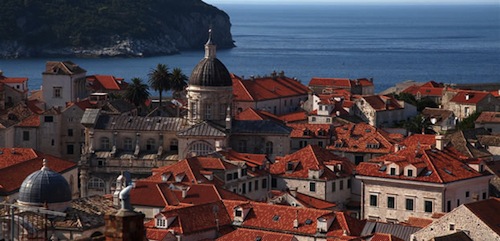
Gallery

Romania to organize an international conference on balneary and medical tourism, this autumn

Romania will organize, in the autumn, together with the World Tourism Organization (WTO), an International Conference on balneary and health care tourism in our country, announced in a press release the Regional Development and Tourism Minister Cristian Petrescu. ‘We had … Continue reading →

FEATURE: Taiwan draws Japanese tourists

Following the powerful earthquake and tsunami that struck northeast Japan on March 11 last year, a nuclear crisis further damaged the country, along with its tourism industry, while boosting the number of Japanese traveling to Taiwan.

Over the past year, the number of Taiwanese tourists visiting Japan shrank by 17.5 percent compared with 2010, yet Japanese tourism to Taiwan rose by 19.9 percent, or about 210,000 visitors, to 1.29 million travelers, Tourism Bureau statistics showed.

The statistics also showed that in the first half of last year, average daily expenditures per Japanese tourist in Taiwan reached US$354, a 30 percent increase from the same period in 2010. Both numbers shot to their highest in 56 years.

Japanese tourists’ expenditures were 1.48 times that of the average of overall tourists to Taiwan and 1.66 times that of Chinese tour group tourists.

Travel Agent Association of the Republic of China secretary–general Roget Hsu (許高慶) estimated that Japanese tourists to Taiwan generated NT$53 billion in foreign exchange revenue for the country last year, an increase of almost 50 percent.

Japan’s population is 5.5 times that of Taiwan, but for the first time in nine years, the number of Japanese tourists to Taiwan exceeded the number of Taiwanese visitors traveling to Japan last year, Hsu said.

He said that several reasons contributed to the change, including a drop in the number of Taiwanese travelers to Japan, the yen’s appreciation and the nation’s generous post-quake donations to Japan.

Tsai Ming-ling (蔡明玲), director of the Tourism Bureau’s planning and research division, said that after launching direct Taipei International Airport (Songshan airport)-Haneda flights in October 2010, the country had seen Japanese visitors to Taiwan increase by 17 percent in January last year from the same month in 2010, followed by a 45 percent rise in February last year.

Even with the occurrence of the earthquake in March last year, the number rose by 2 percent, Tsai said.

Following Taiwan’s strong show of support to the tragedy-hit country, which left a lasting impression on many Japanese, Tsai said total arrivals from Japan were up in August, September and December last year by 29 percent, 34 percent and 27 percent respectively.

She said that the nation’s post-quake assistance and care had received widespread media coverage in Japan and have brought about a rise in the number of Japanese tourists.

After the March 11 earthquake, Tsai said the bureau had withdrawn its tourism promotion in Japan and replaced it with images showing Taiwanese making post-quake donations to the earthquake-stricken country, as well as children from Taiwan writing consolation letters to its victims.

Aside from efforts by the Taiwanese authorities, the nation’s airline companies and travel agencies also joined hands to allow 1,000 earthquake victims from northeast Japan to visit — free of charge — Nantou County, which was most severely hit by the 921 Earthquake in 1999, to witness its reconstruction accomplishments from September to November last year.

The free tours were so well received by Japanese victims that the actual number of participants was 1.5 times higher than expected, with many saying the tours had given them hope during a desperate period, she said.

Sunrise Travel Service president Ko Mu-chou (柯牧洲) said the travel agency had seen a 25 percent increase in tour groups from Japan last year.

After the natural catastrophes and Taiwan’s strong support, Japan’s Ministry of Education, Culture, Sports, Science, and Technology said that high school students planning a study tour abroad should make Taiwan their top choice, while some Japanese corporations also chose Taiwan for their incentive tours, Ko said.

The upward trend was therefore expected to continue both this year and next year, he said.

Taiwanese tourism to Japan has trended downward since the earthquake, until in January, the number returned to normal with a 22 percent increase.

Commenting on the revival of Japan’s tourism industry, Tsai said that with resolution of the country’s mounting nuclear crisis, Japan would once again become the most favored destination for Taiwanese tourists.

This month, Japan extended Taiwan’s air rights over its territory, Tsai said. In light of this, China Airlines has proposed adding destinations including Kagoshima, Shizuoka and Toyama in Japan, with eight more destinations, including Osaka, likely being added to TransAsia Airways’ routes.

Taiwanese tourism to Japan is expected to peak during the cherry blossom season next month, she said.

In the past, tour groups from Japan generally centered their itineraries around food and accommodation, Tsai said, but the emphasis switched to shopping and entertainment after the March 11 earthquake.

Statistics for the first half of last year show that Japanese tour groups’ expenditures on shopping rose 14 percent and their entertainment spending surged 218 percent, which could likely stem from the yen’s appreciation and a desire to seize the day after the horrific catastrophe last year, Tsai said.

Based on a survey conducted by the bureau, the top five draws for Japanese tourists in Taiwan were local delicacies, beauty spots, the amiability of its people, the short flight and cheap prices, in that order.

Japanese tourists stay an average of 3.9 days, with their most frequently visited sites being night markets, the National Palace Museum, Taipei 101, Jiufen (九份) in New Taipei City (新北市) and National Sun Yat-sen Memorial Hall.

source: http://www. TaipeiTimes.com / Home> Taiwan News / by Hsieh Wwn-hua , Staff Reporter / Monday, March 12th, 2012

Translated by Stacy Hsu, Staff Writer

Tourism News in Croatia Includes Health Tourism in Split, New Flights & A New Interactive Guide to Dubrovnik

Split The first medical tourism center in Dalmatia and Croatia, which should be completed in the second half of this year, is being constructed in Split. This will be the the residence for pensioners in which some 15 million euros will be invested. The luxury accommodation will include clinics with diagnostic and specialist centers situated within the same facility.

At their disposal within the center, users will have a restaurant, an internet corner, a piano and lounge bar, a cinema and a library. Located on the roof there will be a green oasis with a promenade, an outdoor swimming pool with a sundeck and a wellness and fitness center. The residence will have 54 accommodation units, 40 rooms and 14 suites, with an option to rent them out for the period of five days to 99 years, and will be able to accommodate up to 100 people, which will have 35 employees at their service. The seven-story building will have an underground garage with 105 parking spaces and several business premises – a shop, a bank and a gift shop. The new health tourism center is located almost in the center of the town and is only a 15 minute walk from the beach, promenade and the old town.

The Tourist Board of Split-Dalmatia County

www.dalmatia.hr

The Tourist Board of Split

www.visitsplit.com

New air lines from Dubrovnik, Split, Rijeka and Pula to European cities

Vueling, the Spanish low budget airline, will be introducing a new line to Croatia, alongside the already existing line from Barcelona to Dubrovnik, from 23 June until the end of October this year.

Dubrovnik – An interactive tour guide

Dubrovnik Dubrovnik will soon enable its visitors to more easily find out all about the tourist offer of the city. The information guide “GUIDOO – Info Guide System”, a touch sensitive (touchscreen) standalone interactive information pillar, which will also be available via the Internet and mobile applications, will be set up at busy urban locations. The system will allow visitors direct access to all information and offers in real time.

The Tourist Board of Dubrovnik-Neretva County

source: http://www.TravelVideo.tv / March 08th, 2012

Costa Rican Medical Tourism Continues to Grow in 2012

Costa Rica continues to lead the way as a leading medical tourism destination as more and more people are learning the many benefits of traveling to Costa Rica for dental and healthcare.

These internationally accredited medical and dental providers can save you 30% to 70% over US prices.

Costa Rican medical providers are reporting an increase in patients over last year. Some of the medical procedures done recently in Costa Rica were knee and hip replacements, meniscus repairs, gastric sleeve and gastric bypass and plastic surgeons are reporting cosmetic surgeries such as breast implants, face-lifts, tummy tucks and lipo suction. Costa Rican Dental care has always been popular, as people have been coming to Costa Rica to save money on dental care for implants, crowns and veneers for many years.

If you are an employee benefit advisor, TPA, health underwriter, employer, insurance advisors, self-insured group or just an individual interested in, please consider attending the 3rd Annual Medical Travel Conference in San Jose, Costa Rican on April 22-26.

Are you considering Medical Tourism for yourself, your company or your clients? Then this is the only Medical Tourism conference you need to attend. Taking the short flight to Costa Rica you will visit the hospitals and dental clinics, meet the dentist, doctors and their staffs and experience what Costa Rican Medical Care has to offer first hand.

Health care costs in the United States have exploded in recent years, and costs will continue to grow as more people’s health and dental benefits are cut and the number of doctor’s drop out of the system. However, these same procedures are very affordable in Costa Rica. Working with the finest private hospitals and physicians in Costa Rica will help people save hundreds if not thousands of dollars on certain dental and medical care procedures.

You need to see, feel and touch the quality of care Costa Rica offers for yourself. This is something you cannot experience in a convention hall in the states.

With healthcare costs up for grabs in the US and Medicare being slashed, offering a medical tourism option should be on your list. This is a great way for US doctors to expand their practice by forming partnerships with the Costa Rican providers.

source: http://www.InsideCostaRica.com / Costa Rica News/ Thursday, March 08th, 2o12

Promoting medical tourism

By Maryna Khorunzha

In a new world where the sick are no longer “patients” but rather “tourists,” they travel to another country in search of cheaper or more qualified medical care.

Therefore, when getting an all-inclusive package while undergoing plastic surgery in Israel, one should expect a little more than hospital bills, consultation and recovery care; the package will most likely include tours to religious sites, or a few days of sunbathing by the coast.

Taiwan already welcomes tourists for seven-day health tours, including personalized consultations, CT scans and a number of other tests. Who said you cannot have a leisurely holiday with sightseeing before or shortly after going under the knife? Welcome to the world of medical tourism!

Nowadays a number of countries around the world claim that medical tourism is one of their major “industries,” some making a real go for it. For instance, South Korea seems to be prominent with top-notch hospitals and clinics, mostly targeting Chinese clients.

The capital city of Seoul can boast Joint Commission International (JCI) accredited hospitals with VIP rooms and physicians fluent in English, Korean, Japanese, French and Chinese, according to MedicalTourism.com. In addition to its premium medical care, the country attracts medical tourists with thousands of Buddhist temples and national parks.

Recently Southern Korean coastal city of Yeosu headed CNN’s 2012 Top Places to Visit list. (Yeosu was followed by Antarctica, Ukraine and Poland). The city will host this year’s marine-focused World Expo from May 12 to Aug. 12, which alone can give a boost to medical and health tourism in the country.

As for other destinations, Mexico is becoming the number one priority for U.S. citizens seeking dental care, Costa Rica ― for joint replacement, and South Africa ― for plastic surgery.

As of today, the three leading destinations in the world are Thailand with its low prices, beautiful nature and amazing food; India, by far the cheapest destination, famous for heart surgery; and Singapore (no bargains, though it offers world class medical facilities and fluent English).

As for the European countries, Eastern Europe is coming into play. Hungary is probably the leader in the region. Without being extremely cheap or offering major surgery, Hungary wins as a great combination of medical treatment (dental, cosmetic) and extended travelling offers.

If traveling far away, medical tourists should definitely look for outstanding sightseeing options, which can pay off the price of the ticket. Nonetheless, even given the price of transatlantic flights U.S. citizens can still save up to 90 percent of their medical expenses.

For some, travelling for medical care abroad is the first time they leave the country. This is the case of Robert, who left Orlando, Fla., for Costa Rica, where he had both of his knee joints replaced. Such a medical procedure would have cost him around $100,000 at home, whereas in Costa Rica he paid a fraction of the price ― $20,000 ― the Medical Tourism Association reported.

Moreover, the World Health Association deems Costa Rica as a better destination for joint replacement than the United States. If that is not enough, Robert could also enjoy six days of physiotherapy with an English speaking physician as well as to travel to the rain forest.

With the world tourism trend developing rapidly, new countries are coming on stage; some of them doing better at promoting their services rather than providing high quality care, like India.

The Daily Mail India has recently reported that the hype over medical tourism in the country was not backed by substance. The Indian Tourism Ministry announced that the absence of niche health products together with crooked pricing policy have made the “much hyped medical tourism a near flop show,” the Daily Mail cited ministry officials.

With African and Asian patients, who rarely speak English, being the target group, Indian medical staff can rarely make themselves understood. Attracted by extra low prices for medical care, bargain seeking tourists often have to deal with obsolete equipment and overcrowded facilities. On the contrary, there are countries failing to promote their affordable, if not conventional, treatments.

For instance, post-Soviet Ukraine located in Eastern Europe (visa free regime with the U.S., the EU, Former Soviet republics, Japan and South Korea, etc.) is hardly doing a good job of advertising its medical care. However, the country boasts prominent specialists in such unconventional areas as pediatrics, especially childhood nephrology, and orthopedics.

It is a matter of individual preference whether one should go for cheaper price in combination with attending ancient castles and witnessing natural wonders, though using sign language with one’s doctor, or overpaying for major surgery abroad; yet making sure you will get the highest quality treatment, or use your urge for liposuction or a facelift as a reason to discover a new country while hiding your post-surgery bruises from friends and colleagues back at home.

Pick and choose; there is a multitude of options in the world of medical globalization.

Maryna Khorunzha is project manager of Worldwide News Ukraine. Contact the writer at mk@wnu-ukraine.com.

source: http://www.KoreaTimes.co.kr / Home> NewsZone> Opinion> Times Forum/ by Maryna Khorunzha/ March 09th, 2012