
Categories
- Associations/Organisations/Government/NonGovernment
- Dental Tourism
- Events/Exhibitions/Conferences/Forums
- Fertility Tourism
- Health /Medical Treatment For Overseas Treatment
- Health/Medical Tourism Boards
- Health/Medical/Wellness Marketing And Management
- Healthcare Cities
- Healthcare Service Providers
- Healthcare/Medical Insurance/ Loans
- Interviews
- Medical Tourism/Health Tourism
- Medical Treatment/Health Treatment Subject By Speciality
- Others
- Reports,Features, Statistics
- Top Tips (all)
- Travelling For Surgery Abroad / Medical Surgery Overseas
- Uncategorized
- Wellness Tourism
-
Recent Posts
-

Tags
asia health tourism asia medical tourism Care tourism care tourism india costa rica medical tourism dental tourism dental tourism in asia Dental tourism in Costa Rica dental tourism in europe dental tourism in hungary Dental tourism in india dental treatment abroad global health tourism global medical tourism health care tourism health tourism health tourism asia health tourism costa rica health tourism in asia health tourism india health tourism in thailand health tourism malaysia health tourism mexico hip resurfacing surgery in india india medical tourism liver transplant surgery india at low cost medical tourism medical tourism asia medical tourism facilitator medical tourism in asia medical tourism india medical tourism in thailand medical tourism malaysia medical tourism mexico medical tourism philippine medical tourism philippines medical tourists medical travel medical treatment abroad medical treatment overseas travelling abroad for surgery travelling overseas for dental surgery travelling overseas for health treatment travelling overseas for surgery wellness tourism
Govt to issue e-visa for medical tourists
Medical tourism in India estimated at $3 billion and projected to grow to $7-8 billion by 2020.
Foreigners seeking medical treatment in India will soon have a hassle-free travel as the government is all set to roll out e-medical visas for them.
The move comes amid medical tourism in India estimated at $3 billion and projected to grow to $7-8 billion by 2020. “E-visa facility for foreigners who want to undergo medical treatment will be offered soon,” a senior Home Ministry official said. TVoA (tourist visa on arrival), enabled by Electronic Travel Authorisation (ETA), popularly known as e-tourist visa scheme, was launched on November 27, 2014.
Under the e-tourist visa scheme, an applicant receives an email authorising him or her to travel to India after it is approved and he or she can travel with a print-out of this authorisation. On arrival, the visitor has to present the authorisation to the immigration authorities who would then stamp the entry into the country. Till now, the scheme has been extended to 150 countries at 16 Indian airports designated for providing e-tourist visa service.
Yesterday, the facility was offered to those willing to undergo short term course on yoga. According to a survey of a leading business chamber, the primary reason that attracts medical value travel to India is cost-effectiveness and treatment from accredited facilities at par with developed countries at much lower cost.
Foreign patients travelling to India to seek medical treatment in 2012, 2013 and 2014 stand at 1,71,021, 2,36,898, and 1,84,298 respectively. The official said government is also planning to allow foreigners to apply for e-tourist visa four months in advance from the current one month.
source: http://www.dnaindia.com / DNA / Home /Friday – June 03rd, 2016
Comments Off on Govt to issue e-visa for medical tourists
Posted in Associations/Organisations/Government/NonGovernment, Medical Tourism/Health Tourism, Reports,Features, Statistics, Top Tips (all), Travelling For Surgery Abroad / Medical Surgery Overseas
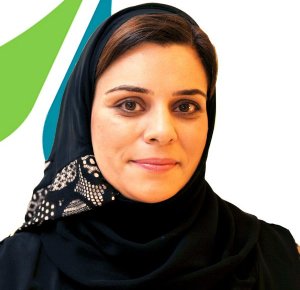
Five minutes with… Linda Abdullah, head of Dubai Medical Tourism Office
Linda Abdullah explains Dubai’s medical tourism ambitions following the launch of the Dubai Health Experience brand
What are the targets of Dubai Health Experience?
As part of the ‘Dubai, a Global Destination for Medical Tourism project, our target for 2020 is to attract half a million international medical tourists. The number of medical tourists are projected to increase by 13 per cent for the next five years. This means that by 2021 1,313,360 medical tourists are expected to visit Dubai, out of which 692,191 would be internal and 621,169 from abroad, going by the current trends.”
How many of these do you expect to come through the health experience site?
The Dubai health experience project aims to strengthen medical tourism in the Dubai and making Dubai a preferred global destination for medical tourism. It’s a concerted effort of Dubai Health Authority along with our strategic partners, whether it’s the governmental strategic partners from Dubai Tourism and Commerce Marketing, the immigration department, Dubai Statistics Centre, Dubai Airports and our strategic partner Emirates Airline.
We’re all working together with the consortium of the private healthcare facilities we have in Dubai, which we have chosen carefully to be with the DXH group. All of us, whether it’s through the DXH website itself or through the other channels of communication, will be marketing for Dubai and this will attract the medical tourists.
What countries are you expecting medical tourists to come from?
The strategy is to focus mainly on attracting our brethren from the Gulf Cooperation Council and then we are also focussing on the Asian market, particularly India and Pakistan, because we already have medical tourists coming from there.
We also have the United Kingdom as a target as well as Africa, including Nigeria and Angola.
What types of procedures do you see being most popular?
Dubai caters to a wide array of elective, minor or complex medical procedure. . We’ve got a strong regulatory system, good healthcare services, high standards of care and we have the right infrastructure in terms of quality – 80 per cent of our hospitals are internationally accredited.
The focus of the strategy itself of DXH at this stage is the elective procedures. So it’s basically things that the tourists would like to come and do in Dubai like aesthetics and bariatric surgeries. Our focus is also on osteology, dental, orthopaedics and sports medicine – a growing sector. And we’re looking at IVF which also one of the biggest reasons for people to travel for treatment.
At the moment, orthopaedics is proving to be one of the biggest attractions. We’ve got a high percentage of visitors who plan to do orthopaedics procedures in Dubai. One of our specialities is also wellness and healthcare check-ups.
How much of a discount on treatments is available through the DXH site?
There is not a percentage I can say, the packages under each speciality are provided by the DXH group members, so it depends on the facility. Through our website, the medical traveller can review packages listed by different healthcare facilities, ask for information to make the right and informed choice. We provide them with those options and they can make the decision that is more convenient for them.
There are also comprehensive packages listed by travel partners, that offers flights, hotels and health packages.
Do you plan to sign up more partners?
Emirates Airline is our strategic partner, being our national carrier, and we’ve signed a memorandum of understanding with them. In terms of hotels, travel agencies and healthcare facilities, yes many more are requesting to be members. For any healthcare facility to join our DXH group, have to go through our process of selection. This starts off with filling in a form for eligibility and then there are checks by a special committee. We have the quality assurance section that will help us as well as the Clinical Governance office in the Health Regulation Department. They help us to choose the right candidates to represent DXH.
What is the process for obtaining a medical tourism visa and what has been done to prevent abuse of the system
An individual cannot apply; it needs to be applied for via the healthcare facility. When the hospital applies for the patient, they will have to upload his medical reports that are attested from the other end. That way our immigration department are sure that they are granting a legitimate patient and the person who will accompany them legitimate tourist visas.
How long can medical tourists stay?
The maximum cap for the medical tourism visa is 90 days, renewable for another 30 days, but it depends on the procedure. That will be more decided by the healthcare facility itself.
In terms of numbers, there is a certain quota that is worked out depending on many factors.
Is there anything you would like to add?
Our initial expectation for 2016, when we submitted the strategy to the Executive Council in 2014, was to attract 170,000 medical tourists. However, our reports for 2015 show that we exceeded our milestone for 2016 in the previous year. Last year we attracted 630,000 medical tourists, domestic and international. Out of these, 47 per cent, or around 296,000, were international. So we have exceeded the number we initially had in mind. That is a big achievement for Dubai.
The 500,000 target is international so technically we are still working towards that, but we have exceeded the target for 2016 – and this is only from 26 hospitals. We haven’t included all the medical facilities in Dubai. The prospects are very high and we are confident that we are going to achieve our number in 2020.
source: http://www.gulfbusiness.com / Gulf Business / Home> Healthcare> Interview / by Robert Anderson / June 04th, 2016
Comments Off on Five minutes with… Linda Abdullah, head of Dubai Medical Tourism Office
Posted in Uncategorized
Ethiopia: Local Investors in Promoting Medical Tourism
By Girmachew Gashaw
Development of the preventive and promotive components of health care, development of an equitable and acceptable standard of health service system that will reach all segments of the population within the limits of resources, among others, are the two general principles of Ethiopia’s health policy.
After the onset of the aforesaid policy and strategy, private medical service institutions have been increasing both in quantity and quality. Due to the attractiveness of the policy, both local and international investors have been enjoying the policy and contributing their share for the improvement of the sector investing a huge amount of capital.
The situation helps investors to upgrade levels of investment time and again. Among the investors, who contribute more in health sector, Prof. Getachew Adreraye, is taken as a standard-bearer.
Until the end of 2009, he had been serving the Medical Faculty under Addis Ababa University as lung unit head. After serving the university for over 25 years, he decided to work privately. Earlier, he had been working in Hallelujah clinic and finally he established the grand Hallelujah hospital together with his family.
“Unfortunately, I have lived equal share of my life in three governments,” said professor Getachew, he remembered that he was 24 years old when the imperial regime was overthrown. “When something goes down, everything follows it suit. And when it rises all things also rise.” Especially at the regime of Haile-seillase, there were some signs the country could take off. The system seemed good even though it was crippled by an archaic order.
On the other hand, a number of educated Ethiopians introduced new ideologies. But the system failed following the objections made by students, farmers etc.
Finally, the nation embraced socialism, the fad of the time. Unfortunately, the system brought serious failure for the nation. It made the nation backward compared to neighboring countries. “When they go forward, we lapsed two steps backward. And the gap between us was widest. Be it economically, socially and politically. The system was weak.”
It was with a lot of messes the incumbent received the nation . When the new government put in place its structures it brought about good things. At least, in health sector, in deed, during the Haile-selassie regime , services were not expanded that much. But in the Derg regime, the private health sector had been literally ignored.
This is because the system that regime pursued did not allowe private investors to participate in the economy. “Let alone, opening private businesses, it was unthinkable to work at private health hospitals. The existing situation didn’t allow room to do that. Even though the system knew that working in a spare time was decisive for the improvement of the society, the health system was gasping for air under the crushing weight so many debilitating rules and regulations.
“But now, a change for the better is conspicuous.” The government mainly focuses on primary health care. Which is quite right. When a breath of fresh air comes, it has to make people beneficial. On the other hand, it encourages the private sector to support the upper superstructure of the economy.
For instance, ” I recall when I was constructing this hospital, in importing necessary inputs the government had facilitated duty free privileges to me. The move is a remarkable one. I did not say that there is no problem at all. For instance, I think there is a problem of acquisition of land in this country, I feel it should be a bit relaxed in some points. But it is heartening to note that the health sector is enjoying preferential treatment that allowed it better achievements.”
But the bureaucracy prevalent in the area of land acquisition is patience exhausting. Sometimes, it is an issue to loose hope on. But you find useful things in principle. “Unfortunately, we are beneficiaries of that project. in this case, I thank the government. There is a duty free incentive and there is no factor that prohibits investor to engage in any investment venture.”
Regarding economic growth, a middle class is created. In tandem with this, good opportunities have been expanding for private investment especially to those engaged in the health sector. The start up is promising. There are weaknesses particularly in land provision. As the system allowed it a go ahead, encouraging investors in this regard is critical. “That is why we invest over 300 million Birr without any fear.”
Based on the success stories registered and lesson got from wrong turns, over the past 25 years, preparation of plan is continuing. The plan had been implemented over the first GTP period. It will be further translated into action in the second GTP period in a strengthened manner. For this to happen, the government works focusing on investors. According to health minister , Dr. Kesetebirhane Admassu, much is expected from investors to realize the plan especially improving quality and specialized health services.
Primarily, health institutions have to strengthen their internal work system. If it is possible to ensure the desired quality, beyond benefiting out of the medical tourism, the nation can slash down the number of patients, who go abroad in search of better medical services. Thus, investors can fulfill gaps in areas where the government has not provided focuses- specialized medical services. For this, the government facilitates various incentives to investors, the minister underlined.
Among others, the health policy places high emphasis on manpower development . A task not given special attention 25 years back. For instance, health professionals working in the health sector did not exceed the 40,000 mark. But, these days, their number at national level, has reached over 180,000 of which 39,000 are health extension workers while 46,000 nurses, 6,000 health officers, over 8,000 midwives, as well as over 8,000 medical doctors. But there remains a lot to be done.
On government’s side, producing health professionals as per the population size is critical said professor Getachew, adding that with regarding to quality of professionals, it has to provide special attention. As to him, the government aggressively works in producing teachers who train health professionals. It as well gives emphasis to strengthening institutions by furnishing them with modern technological equipment. Explaining that his next plan is creating an institution to produce qualified and specialized health personnel.
Dr. Kesete-birhane also seconds the above statement. “Though the status of the university hospitals ,where we offer training, is higher, it is not up to the desired level.” Thus, he calls international and local investors to invest in the area.
Regarding medical service, Dr. Kesete said, such service is directly related to human life. Thus, the issue of medical ethics should be a key agenda of health institutions.
They have to work professionally to provide respectful, compassionate and ethical health care service to their patients. Pertaining to this, ” A physician who violates medical ethics today gets accused on the morrow,” said, professor Getachew. Until the fulfillment of legal gaps, strengthening professional association is critical.
In sum, the nation has registered internationally accredited achievements the task has to be strengthened by producing specialized medical doctors.
It also needs to expand the construction of building for the sake of expanding primary, secondary, tertiary and even Quaternary hospitals through the participation of both government, local and international investors. As it is the focus of second GTP, much is expected from professionals in providing quality and equitable service that satisfy the public’s need.
source: http://www.allafrica.com / All Africa / Home / The Ethiopian Herald / by Girmachew Gashaw / June 02n d, 2016
Comments Off on Ethiopia: Local Investors in Promoting Medical Tourism
Posted in Medical Tourism/Health Tourism, Reports,Features, Statistics
Medical tourism, more elderly flyers among reasons for airport medical crises
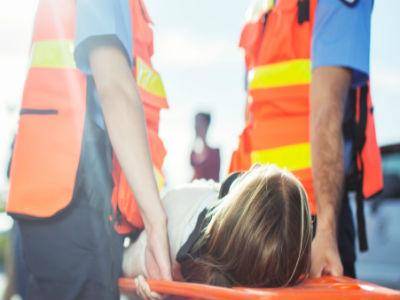
Not that the heart gives a choice, but had it been considerate enough to do so, the safest place to have a cardiac arrest, outside of a hospital, would surely be the Mumbai airport.
(Photo Courtesy: Getty Images)
Not that the heart gives a choice, but had it been considerate enough to do so, the safest place to have a cardiac arrest, outside of a hospital, would surely be the Mumbai airport.
The domestic and the integrated terminal 2 have a total of 106 automatic electronic defibrillators (AED) installed in well-marked locations for quick access in areas such as the terminal halls, departure gates, baggage retrieval sections, passenger coaches, interterminal coaches and even the toilets and elevators. It’s the largest number of AEDs installed at any airport in India. And the defibrillators are used more often than one would think.
Last year, the Mumbai airport medical team handled an average of 45 cases a day, with a majority being heart attacks and cardiac arrests.
Between 2010 and March 2016, over 200 million passengers passed through the Mumbai airport. In these five years, it handled more than 85,000 medical cases.
Despite the Delhi airport handling a larger passenger traffic, Mumbai faces the largest number of medical emergencies. There are a number of reasons for the high number of medical cases reported here, says an airport official. For one, it is a popular entry point for medical tourists. Then again, Mumbai has the Tata Memorial hospital, which attracts cancer patients from across the country . And lastly , the steady rise in the number of senior citizens who board international flights, especially the 15-16-hour ultra-long haul, non-stop flights from Mumbai to Newark.
“Out of 85,000 cases handled in the past 5 years, 1,814 were serious medical cases, largely cardiovascular emergencies, where patients were shifted to hospital by the airport team,” said a Mumbai International Airport Pvt Ltd (MIAL) official.
That’s where the defibrillator programme comes in. It follows the international gold standard, the “3-minute drop to shock” rule. That is, within 180 seconds of a passenger dropping or collapsing following a heart attack or cardiac arrest, he/she should start receiving the defibrillation shock. “The large number of AEDs ensures that at any point during a passenger’s journey through the airport, a defibrillator can be retrieved and used in less than 3 minutes,” said a senior doctor with MIAL’s medical team.
Besides, given the location of Mumbai, there is the occasional detour by international aircraft overflying India in case of a medical emergency . A fortnight ago, an Emirates A380 flying from Dubai to Brisbane landed in Mumbai after a 73-year old Australian passenger suffered a cardiac arrest on board.
Apart from the serious cardiac emergencies, the other medical cases handled involve senior citizens who disembark from long-haul flights with symptoms of deep vein thrombosis that sets in if one sits for hours in cramped airline seats, people whose blood pressure shoots up, asthma attacks, cargo handlers who get injured, airline crew, staff who collapse from fatigue.
And then there are cases like children who run on to conveyor belts or elevators and get injured. Every once in a while comes an unusual case. Like last August, when a young Saudi transit passenger waiting to board a flight to Riyadh went into labour and delivered a boy in the airport’s washroom. That rare birth apart, mostly the serious medical emergencies at the airport are about fighting death.
source: http://www.health.economictimes.indiatimes.com / ETHealthworld.com / Home> Industry / by Manju V. / TNN / June 02nd, 2016
Comments Off on Medical tourism, more elderly flyers among reasons for airport medical crises
Posted in Health /Medical Treatment For Overseas Treatment, Medical Tourism/Health Tourism, Reports,Features, Statistics, Travelling For Surgery Abroad / Medical Surgery Overseas