
Categories
- Associations/Organisations/Government/NonGovernment
- Dental Tourism
- Events/Exhibitions/Conferences/Forums
- Fertility Tourism
- Health /Medical Treatment For Overseas Treatment
- Health/Medical Tourism Boards
- Health/Medical/Wellness Marketing And Management
- Healthcare Cities
- Healthcare Service Providers
- Healthcare/Medical Insurance/ Loans
- Interviews
- Medical Tourism/Health Tourism
- Medical Treatment/Health Treatment Subject By Speciality
- Others
- Reports,Features, Statistics
- Top Tips (all)
- Travelling For Surgery Abroad / Medical Surgery Overseas
- Uncategorized
- Wellness Tourism
-
Recent Posts
-

Tags
asia health tourism asia medical tourism Care tourism care tourism india costa rica medical tourism dental tourism dental tourism in asia Dental tourism in Costa Rica dental tourism in europe dental tourism in hungary Dental tourism in india dental treatment abroad global health tourism global medical tourism health care tourism health tourism health tourism asia health tourism costa rica health tourism in asia health tourism india health tourism in thailand health tourism malaysia health tourism mexico hip resurfacing surgery in india india medical tourism liver transplant surgery india at low cost medical tourism medical tourism asia medical tourism facilitator medical tourism in asia medical tourism india medical tourism in thailand medical tourism malaysia medical tourism mexico medical tourism philippine medical tourism philippines medical tourists medical travel medical treatment abroad medical treatment overseas travelling abroad for surgery travelling overseas for dental surgery travelling overseas for health treatment travelling overseas for surgery wellness tourism
Bioscience Americas Is Poised to Lead the Global Medical Tourism Market
The Company unveils its plan to significantly expand its number of global locations.
Bioscience Americas, LLC (http://www.bioscienceamericas.com), the leading international developer of autologous stem cell treatment centers, has positioned itself to capture a significant share of the global medical tourism market.
Estimated to reach $120 billion in two years, the market for medical tourism is projected to continue to increase substantially over the next decade.
Bioscience Americas and its scientific research partner the Global Institute of Stem Cell Therapy and Research (GIOSTAR) are currently involved in implementing autologous, or adult, stem cell clinics in Colombia and Costa Rica. Additional clinics are projected to be opened in Brazil and Chile in South America and on Native America tribal land within the United States. The goal is to open these additional clinics within the next twenty-four months.
The company has developed a medical tourism marketing program that is multi-faceted and is designed to attract a significant patient count.
Bioscience Americas CEO Eric Stoffers said that the program is entitled “Solutions for a Healthier World” and reflects the company’s mission to lead a worldwide healthcare revolution in the delivery of treatment protocols.
“We are experiencing a paradigm shift in healthcare away from surgery and medications. Our stem cell procedures treat autoimmune diseases without resorting to these costly alternatives,” Mr. Stoffers noted.
He continued that the company’s vision is to “take the treatments and therapies out of the lab and bring them to the marketplace. We have done this by focusing our marketing plan on several key components.” These components include affiliated and unaffiliated hospital referrals, physician referrals, medical professional continuing education programs, patient support networks, and an expanded social media presence among other strategies.
Bioscience Americas President Bill Deegan added that “as the plan unfolds we expect to see a significant increase over time in patient counts.
The Bioscience Americas/GIOSTAR partnership treats autoimmune diseases using regeneration technologies. More than 4,000 patients have already been treated at the GIOSTAR clinic in India.
Bioscience Americas is the development partner of GIOSTAR. They joint venture with GIOSTAR to develop stem cell treatment clinics.
The Global Institute of Stem Cell Therapy and Research is a worldwide consortium of renowned stem cell scientists and researchers. Based at the University of California in San Diego, it maintains research affiliations with major universities and institutions around the world. It has been the recipient of more than $400 million in research funding.
source: http://www.prweb.com / PRWeb.com / Home> News Center / Sunday – April 17th, 2016
Comments Off on Bioscience Americas Is Poised to Lead the Global Medical Tourism Market
Posted in Medical Tourism/Health Tourism, Medical Treatment/Health Treatment Subject By Speciality, Reports,Features, Statistics
Tijuana’s medical tourism gets a facelift enticing more Americans in for cheap luxury surgery
Shedding its American-teen Spring Break reputation, the famed low-cost medical treatment industry is classing up.

Developers intend to build a one-stop shop for visiting American patients
It’s after dark on Avenida Revolucion, Tijuana’s main tourist drag, and beneath the garish neon of a late-night storefront, a mannequin in a skin-tight nurse’s outfit stands beckoning potential customers inside. Americans have been travelling to this border city for at least a century to sample its nocturnal charms. Hollywood stars mingled with mobsters here during the Prohibition era. Underage college kids came to drink themselves silly on Spring Break, before they were scared away by the violence of the local drug cartels.
Avenida Revolucion runs directly into the red light district, where other vices await, but the mannequin in the medical get-up is here to flog something a little less seedy: cut-price Viagra. There’s at least one discount pharmacy per block, selling cheap, generic medications from sleeping pills to sex aids, with – and occasionally without – a prescription. Tijuana’s biggest draw for Americans, before even the night-life, is its low-cost medical treatment: dental care, cosmetic surgery, stem-cell transplants, hip replacements and more.
Now, the city’s thriving medical tourism industry is classing up. The developers of a cluster of luxury high-rises just across the border from California intend to build a one-stop shop for visiting American patients. The 26-storey New City Medical Plaza will house facilities for doctors from a broad range of disciplines, a 140-room hotel and a food court featuring Baja California cuisine from top local restaurants. Construction has already begun on the tower, which the developers hope to open by the end of 2018.
Even if President Trump succeeds in building his infamous border wall, the complex will be clearly visible from the US side. Inside one of New City’s existing luxury residential towers, there are marble floors, private security guards, a fake miniature waterfall and a private members club on the penthouse floor, with a clear view back over the border to Downtown San Diego. Sitting in the bar at sunset, Isaac Abadi, New City’s chief executive, said travelling south for treatment should be a no-brainer for Californians.
“Here, you’ll pay a dentist 40 or 50 bucks to treat a cavity that you’d pay 200 bucks for in the US,” he said. “It’s irresponsible going to the dentist in San Diego when you can drive down here in 15 minutes and get the job done for a quarter of the price. Some people are scared of coming to Tijuana. But with this view, you feel like you’re still in San Diego!”
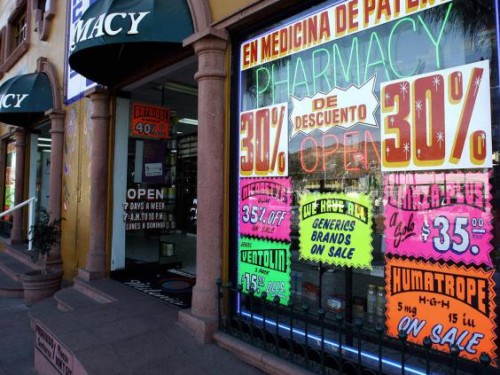
Around 85 per cent of Tijuana’s medical tourists are from Southern California (GETTY)
Around a million Americans cross the border to Baja California every year for healthcare. Some lack suitable insurance coverage in the US, some have insurers who will cover their cut-rate treatment in Mexico, some are taking advantage of shorter waiting times for tests, some want to avoid the exorbitant cost of elective procedures such as plastic surgery or weight-loss. According to the medical tourism bible Patients Without Borders, US patients can expect to pay an average of between 40 and 65 per cent less for treatment than they would at home.
A so-called medical “fast-pass” programme allows US patients of registered Mexican doctors to pass through the San Ysidro border crossing in a special fast lane, avoiding the notoriously long queues. Around 85 per cent of Tijuana’s medical tourists are from Southern California, Ives Lelevier, Baja California’s undersecretary of tourism, recently told the Los Angeles Times, adding: “We believe that we can bring people from areas that are farther away, something that in the medium term can turn into a greater revenue generator for the state.”
Rafael Alcaraz, a bilingual psychologist who specialises in family, child and marriage therapy, and who treats clients from both sides of the border, said business is back on the rise after a decade of devastating narco violence. “Back in 2007 it was horrible,” he said.
“By six in the afternoon, nobody was on the streets, nobody was in the restaurants or cafes, and if you saw any traffic you’d get paranoid that you were being followed. There were always rumours that someone you knew had been kidnapped or killed. But about five years ago the violence all died down, the restaurants filled up again, and now there’s a huge boom in tourism, including medical tourism.”
Many of his patients, Dr Alcaraz said, plan their appointments to coincide with a weekend mini-break in Baja, or a trip to see the local football team the Xolos. “I have patients that come to me on a Friday afternoon, then they go to the football stadium, tail-gate, watch the game, sleep over and go down to Ensenada for the weekend.”
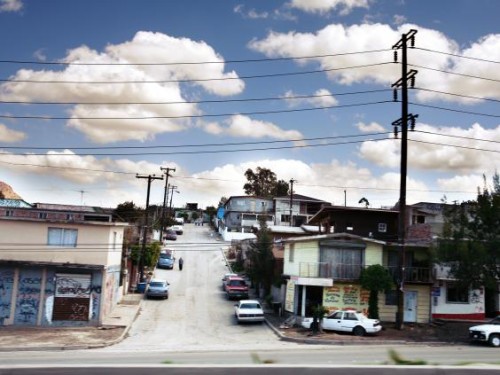
A medical “fast-pass” allows US patients of registered Mexican doctors to pass through the border (Rex Features)
Dr Alcaraz’s office in Tijuana’s Zona Rio neighbourhood is upstairs from the plastic surgery clinic where his wife, Marie-Helene Chabrier, offers anti-ageing treatments such as Botox, fillers, chemical peels, hormone replacement and enzyme therapy. (Medicine is a family business: Dr Chabrier’s brother is a plastic surgeon, Dr Alcaraz’s father is a dentist.)
Some 90 per cent of Dr Chabrier’s patients are American, and she has regular clients from as far away as Las Vegas and New York. “The procedures can be a couple of hundred dollars cheaper than they are in the US,” she explained. “They mostly used to come for the price, but now they come for the quality of service.” Her clients even kept visiting during the bad years, she said. “Women would still come down from California for treatment during the violence, but only if it was urgent. ‘I’m hosting a party! I have to get my Botox!’”
source: http://www.independent.co.uk / Independent / Home> Lifestyle> Health & Families / by Tim Walker, Tijuana / Friday – April 15th, 2016
Comments Off on Tijuana’s medical tourism gets a facelift enticing more Americans in for cheap luxury surgery
Posted in Health /Medical Treatment For Overseas Treatment, Medical Tourism/Health Tourism, Medical Treatment/Health Treatment Subject By Speciality, Reports,Features, Statistics, Travelling For Surgery Abroad / Medical Surgery Overseas
Number of health tourists in Latvia rises 10.5% in 2015
14 clinics of the healthcare alliance Baltic Care in Latvia had 8,868 patients from abroad in 2015, which is 10.5% more than in 2014, while the total amount of services provided by the clinics increased 6.5% to EUR 1.346 million.
The alliance’s board member and CEO at Health Center 4 (Veselibas centrs 4),Maris Revalds told LETA that most health tourists visiting Latvia last year were from Russia, Ukraine, Belarus, Scandinavian countries, Great Britain, Ireland, Germany, Lithuania and Estonia.
The most popular services with health tourists include checkups, specialists’ advice and diagnostics, phlebology, infertility treatment, traumatology and orthopedics, plastic surgery and dermatology, dentistry, and ophthalmology.
Most of health tourists last year were from Russia, said Revalds.
“While the total number of tourists from Russia fell 31% in 2015, the number of Russian patients at our clinics rose 10%. Residents of C.I.S. countries, including Russia, appreciate the transparent pricing policy – in Latvia prices are available to the general public, and the prices for local residents are the same as for foreigners. Just as in the past years, about half of foreign patients come to Latvia from Western Europe and Scandinavian countries, and the other half from C.I.S. countries,” said Revalds.
Most say they chose to come to Latvia because of convenient transport to Riga, safe environment, and modern healthcare services for prices that are three to seven times lower than prices in the capitals of Western Europe, Scandinavia, and also Russia.
According to Revalds, the development of healthcare services in Latvia, availability of latest medical equipment and quality services are all in Latvian residents’ interest. In addition, health tourism to Latvia also means that more healthcare specialists wish to stay and work in Latvia.
source: http://www.baltic-course.com / The Baltic Course / Home> International Internet Magazine> Baltic States & Analytics / BC- Riga / April 15th, 2016
Comments Off on Number of health tourists in Latvia rises 10.5% in 2015
Posted in Medical Tourism/Health Tourism, Reports,Features, Statistics