Strong H1 Keeps Dubai Medical Tourism On Track for 2020

DubaiTourismCT14sept2015

Medical tourism is a key component of the UAE’s tourism strategy leading up to the year 2020

Dubai’s government has claimed its medical tourism industry generated 1 billion dirhams ($272 million) in revenue in the first half of the year, keeping it on track for its 2020 targets.

According to Dubai Health Authority, 260,000 medical tourists visited the emirate during the period, up 12 per cent from a year earlier. The government body is tasked with growing the medical tourism industry into a 2.6 billion dirhams industry by the year 2020, and authorities hope to increase the number of medical tourists to 500,000 per year by then.

“Overall medical tourism is set as a key component of the UAE government’s long-term strategy of diversifying its economy away from oil and gas,” says Diana Jarmalite, an analyst with research firm Euromonitor International. “It is one of the fastest growing tourism categories in the region over the last few years,” she says.

A majority of medical tourists in the UAE come from other emirates, but around 40 per cent come from neighbouring countries like Pakistan, India, and Saudi Arabia. Jarmalite says infertility treatments, cosmetic surgery and dental procedures are the most popular treatments sought by medical tourists in the UAE.

Jarmalite says the government of the UAE has “actively, aggressively and very successfully invested in developing a first class infrastructure to support the country’s positioning as a medical tourism destination,” with hotel and flight packages and new visa policies.

In August of last year the UAE government implemented changes to visa regulations to facilitate medical tourism. The changes include allowing hospitals to sponsor visas for individuals in other countries who are seeking treatment in the UAE, as well as allowing visas for multiple trips. A medical treatment visa costs 550 dirhams, with a repeat entry medical visa priced at 1400 dirhams. A new visa was also introduced to allow repeated entry for medical doctors, in an attempt to attract top talent from outside the UAE.

source: http://www.businessweekme.com / Bloomberg BusinessWeek, Middle East / Home> Companies & Industries> Travel & Tourism / by Leila Taha / UAE – September 14th, 2015

Thailand remains attractive to tourists from Qatar

ThaiAmbassadorCT13sept2015

Thai Ambassador Piroon Laismit says Bangkok is normal after last month’s bombing.

Last month’s bombing incident in Thailand’s Erawan shrine will not affect the influx of tourists from Qatar, especially during Eid al-Adha, ambassador Piroon Laismit has said.
“In the beginning, many people were stunned by the incident but they should not worry anymore because police are on top of the situation and the necessary investigations are ongoing,” he told Gulf Times.
Similar to conditions after the May 2014 protest actions, Laismit said tourism activity in Bangkok had normalised just a few days after a bomb blast killed 22 persons and injured 120 others at the popular Hindu shrine.
Records from the Thai embassy showed 31,534 tourists from Qatar visited Thailand in 2014. Out of last year’s total figures, 23,052 were Qataris while 8,482 were Qatar-based expatriates, who applied for visas from Doha.
“From January to July this year, the embassy processed 5,000 visa applications for expatriates. For the same period, 17,429 Qataris had already visited Thailand.
“We are expecting an additional 10,000 tourists from Qatar to visit Thailand from September until the end of the year,” Laismit noted.
He stressed that the embassy cannot provide the exact number of tourists from Qatar since some expatriates like the British, Americans, Japanese, and other tourists from Southeast Asian countries are not required to present visas in Thailand.
According to Laismit, Thailand is attractive to most Qataris for its medical tourism industry. “Many Qataris see Thailand as a medical hub and they have a high regard for the services of our medical practitioners, who were trained and schooled abroad. Their services are efficient,” he explained.
“Because of our medical tourism industry, Qataris go to Thailand all year round. But the peak season for both Qataris and expats is during summer and Eid holidays.”
Aside from medical tourism, Laismit said Qataris also visit Thailand’s many tourist destinations. “We have an abundance of tropical fruits and Arabic food, as well as a range of international cuisine. The cost of living is low and transportation services are convenient making it conducive for tourists to travel to our shrines and cultural sites,” the ambassador said.
According to Laismit, Thailand received a total of 26mn tourists in 2014. “We are targeting to get 28mn visitors this year. Currently, 24.5mn tourists have already arrived in Thailand. Hopefully, by year’s end we could meet our target,” he said.

source: http://www.gulf-times.com / Gulf Times / Home> Qatar / by Peter Alagos, Business Reporter / September 12th, 2015

Gallery

TAT organises Thailand Health and Wellness Tourism Showcase 2015

This gallery contains 1 photos.

The Thailand Health and Wellness Tourism Showcase 2015 will consist of a trade conference and business matching meeting day on 14 September at the Plaza Athénée Bangkok, A Royal Méridien Hotel. The one-day event will highlight why Thailand has become the premier destination … Continue reading →

Health care tourism

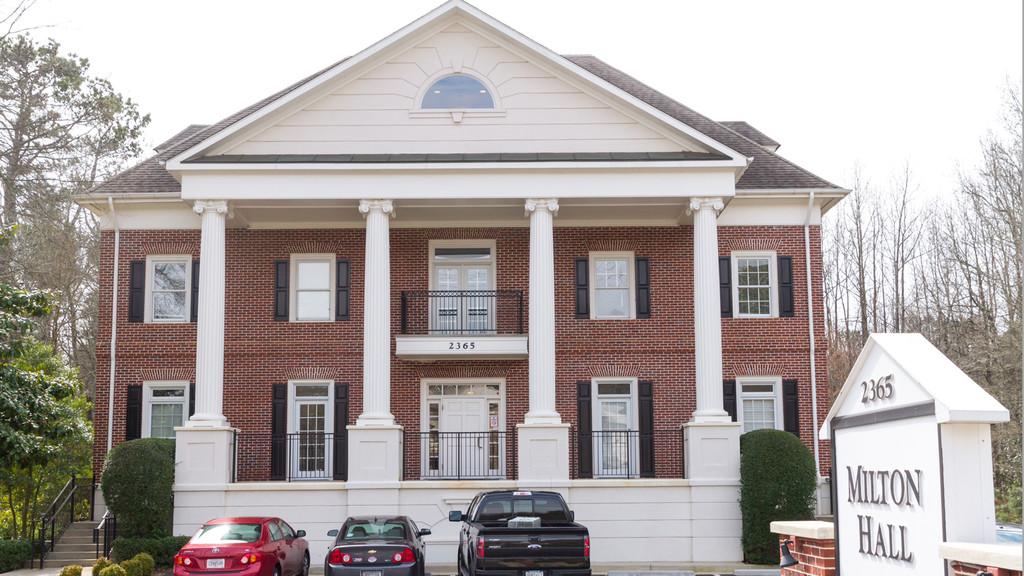
The Ear, Nose and Throat Institute has two surgery centers in Atlanta. The Milton Hall Surgery Center (above) is on Old Milton Parkway in Alpharetta. On the south side of Atlanta, the ENT Institute offers state-of-the-art surgical facilities in East Newnan.

The Ear, Nose and Throat Institute has two surgery centers in Atlanta. The Milton Hall Surgery Center (above) is on Old Milton Parkway in Alpharetta. On the south side of Atlanta, the ENT Institute offers state-of-the-art surgical facilities in East Newnan.

An Alpharetta physician has launched what he hopes will revolutionize consumer-based health care for thousands of patients.

Dr. Jeffrey Gallups, a double board-certified physician specializing in nasal and sinus disorders, opened the Ear, Nose and Throat Institute three years ago after more than a decade of planning. Like the name implies, ENTI provides specialty treatments for disorders of the ear, nose and throat at 17 facilities in Georgia – and does it with the price tag affixed.

“Now is the dawn of medical consumerism, just like consumerism for any other product,” Gallups said. “Medicine has been this giant black hole, where you don’t know what it’s going to cost.”

Medical services vary from place to place, but most hospitals use what are called charge masters, which are detailed charts listing prices for services. These prices often vary depending on whether the patient has private insurance, no insurance or Medicare. And, sometimes, the charges vary within each category.

In addition, some clinics associated with hospitals charge what are called hospital facility fees which are tacked on to bills even though the service never took place at the associated hospital. In some cases, hospital facility fees can run more than the procedure itself.

Gallups said under his business model, doctors control every aspect of a patient’s care.

“We have our own surgery center, our own doctors, our own facilities, our own anesthesiologist, our own pathologist,” he said. “In fact, there’s no other practice like it outside of a hospital pretty much in the Southeast.”

Because of these controls, ENTI is able to keep expenses down and determine exactly what the costs are.

“We cut out multiple people in the process and still make a profit that lets us hire – we have 200 employees – it lets us maintain them as well as provide the public with transparent pricing,” Gallups said.

The facilities are structured to have staff consulting with patients before the procedure, informing them of all the costs and steps.

“To me it’s really simple,” Gallups said. “What does something cost? How can we hire people to provide that, and then make a small margin?”

Gallups said although the system is fairly simple, it took a lot of courage to break out from the traditional model doctors function under. He operated a traditional medical practice until about three years ago. Then he bought out his partners and hired them as employees.

John Ditto, a board-certified otolaryngology head and neck surgeon, is one his newest hires.

Ditto, who practices in Stockbridge, came to Georgia after working for HCA in Richmond, Va., where he was named Richmond’s Top Docs in Otolaryngology six times.

Ditto said he grew frustrated with the hospital business model and welcomed the chance to practice medicine in an open environment. He also said services are much more affordable at ENTI, by far.

“When I take a patient to the surgery center at ENTI for a tonsillectomy, they’re having to pay out much less than what they’d have to pay if they went to the hospital, and that’s across the board,” he said. “It’s much better for me because, even though I don’t handle the financial aspect of it, when they do ask me, I can tell them.”

People seem to be asking. ENTI has already seen a 10 percent growth this year, and Gallups said he expects another 10-20 percent jump next year.

The practice sees close to 100,000 patients a year from across the country and the Caribbean who have shopped the services, he said.

“You’d think it would be more prevalent nowadays, but people still are not really taking advantage of available consumerism in medicine,” Gallups said. “They can’t do it, because their standard of what to do is based on a hospital. Hospitals have no reason to give up the mega-amounts of money that pours into them from the insurance companies and federal government.”

Gallups said that while hospitals serve a vital function, consumers need to delegate certain procedures to less costly providers. Outpatient surgery, he said, should never be performed in a hospital and under the payment rates hospitals charge.

“The American way is for people to go out there and bargain for the best price they can get,” he said. “But the average consumer today does not feel empowered to be able to do that.”

source: http://www.northatlantabusinesspost.com / North Atlanta Business Post / by Patrick  Fox / September 10th, 2015

27