
Rhineland ready for medical tourists

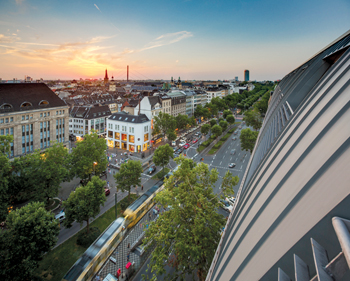
A view of Düsseldorf Old Town from the executive suite of Briedenbacher Hof

A view of Düsseldorf Old Town from the executive suite of Briedenbacher Hof

With 25,000 beds across 90 clinics, North Rhine-Westphalia region of Germany has more treatment capacity than anywhere else in the country, and is ready with halal food, on-hand translators and concierge services

Germany continues to enjoy the steadfast reputation of being a leader in medical tourism. It already attracts a significant number of Arab patients from the Middle East such as the UAE, Saudi Arabia, Kuwait, Qatar and Oman.

North Rhine-Westphalia (NRW) region, in particular, is gaining popularity not only as a business and holiday hub but increasingly as a medical tourism destination. With a focus on Düsseldorf, Cologne and Bonn, the NRW region attracts a fifth of the international patients headed towards Germany, according to figures released by the Federal Statistical Office (Destatis).

A 2010 research paper, issued by Bonn-Rhine-Sieg University of Applied Sciences revealed that the NRW region ranked third among German states in attracting Arab patients from the Middle East, with Düsseldorf being a favourite destination.
The treatment capacity of the NRW region is higher than other regions in Germany, with 25,000 beds in 90 clinics.

In 2010, the Health Region Cologne Bonn and Bonn-Rhine-Sieg University of Applied Sciences initialised a project called ‘Health Destination Rhineland.’ The goal of the project is to position the NRW region as the prime location for top-notch treatments for diabetes and obesity in addition to other specialist areas such as cardiology, oncology, ophthalmology as well as rehabilitation.

Already, the NRW region boasts the highest concentration of prominent pharmaceutical and biotechnology players as well as life science research and development facilities in Germany. One of these ‘BioRegions’ in the NRW region, called BioRiver-LifeScience, is collaborating with the Health Region Cologne Bonn to ensure a continual knowledge transfer between hospitals and top-notch German universities so that patients get the best specialist treatment possible.

The University Hospital Düsseldorf is another hospital in the NRW region that ensures there is an intimate integration of optimal patient care, clinical research and medical training available under one roof. In West German Diabetes and Health Centre, Düsseldorf, in addition to treating patients with diabetes mellitus and high blood pressure in-house, the team use telemedicine to monitor blood tests and deliver therapy adjustments after the patients return home to the Middle East, thus saving them additional trips to the health centre.

Meanwhile, university hospitals and doctors involved in the Cologne-Bonn Centre for Integrated Oncology Association work closely on the latest treatment processes of cancer. Many oncologists use ‘Cyberknife,’ an appealing state-of-the-art non-invasive alternative to traditional radiation surgery that targets the radiation beams on the tumour itself, thus saving surrounding healthy tissue.

Maria Amaral

Maria Amaral

Maria Amaral, director, Marketing & Sales Office Gulf Countries, German National Tourist Office, Dubai, says, “The medical system in Germany is robustly structured and the doctors well-trained, which is why Arab patients from the Middle East countries continue to visit Germany for treatment. The confidence that the doctors have built in Arab patients make Germany quite irresistible for them to travel there for specialist treatments that are not offered here.”

As Arab patients mostly travel with their family members to NRW, the health-care industry needs to work seamlessly with the luxury hospitality industry. “For Arab patients seeking treatment in Germany, it will always be a combination of treatment for them, and a holiday for their families who accompany them but stay at luxury hotels,” Amaral points out. “Taking into consideration the cultural traditions of the travellers, these institutions provide halal food, ensure that Arabic translation services are available, and offer concierge services to the family members while the patient is recuperating.”

Düsseldorf’s Briedenbacher Hof, a Capella hotel, is a prime example of a hotel that offers luxurious suites that connect into larger units if required, for a maximum degree of privacy and comfort of the families. Not only do they have Arabic speaking staff, they are also connected to two clinics, Preventicum and Clinic of Medical Experts. Similarly, Le Méridien Dom Hotel in Cologne and Kameha Grand Bonn has built strong networks with clinics in those cities.

For a spot of culture and high fashion delight, family members can shop at Armani or Prada at Düsseldorf’s often sought designer fashion boulevard called Königsallee, visit Cologne’s Chocolate Museum, enjoy Bonn’s Rehnaue Leisure Park’s ‘Rhine in Flames’ festival of fireworks and more. With non-stop flights from Dubai and Abu Dhabi to Düsseldorf and excellent onward connections to Cologne and Bonn, life is made easier for Arab patients who choose the NRW region for specialist treatment.

“The reliability of doctors and the strong medical infrastructure in Germany will never change and the Arab patients will continue to trust the medical system and travel there for treatments,” Amaral concludes.

source: http://www.ttnworldwide.com / TTN, Travel & Tourism News Middle East / Home> Health Tourism / by Jan D’Sa
Big need for biomed engineers

biomedCT26jul2015

The medical and healthcare sector will see a greater need for professionals in the biomedical field, since it is poised to grow and generate even more revenue in the years to come.

BIOMEDICAL engineers in developing countries have been in high demand because of the massive growth in the healthcare sector.

Graduates who are well-equipped with biomedical engineering knowledge play key roles in meeting challenges and making significant contributions in various healthcare related professions; for example, in clinical applications, manufacturing and production industry, medical act regulations, and research and development of medical devices.

The facts presented by the Health Ministry in 2012 show that there were 138 government hospitals and 220 private hospitals as well as many different clinics and home care centres in Malaysia.

A sum of RM23bil was allocated by the government to the healthcare sector in 2015 as operating and development expenditure.

With the promotion of medical tourism in Malaysia, the Malaysian-German Chamber of Commerce and Industry (MGCC) estimates that there will be around two million medical tourists by 2029 and this is expected to generate 10% of the annual revenue growth for the Malaysian economy.

To accommodate the huge numbers of medical tourists, hospitals are expected to recruit more professionals such as doctors, specialists, nurses and biomedical engineers.

CT26jul2015

Some high-technology medical equipment such as the computerised tomography (CT) scanner, magnetic resonance imaging (MRI) machine, operating theatre equipment and intensive care unit equipment, require professionally trained biomedical engineers to properly maintain the functionality and quality of the equipment.

The employment of biomedical engineers can help to reduce maintenance costs for the hospitals. Biomedical engineers can assist in setting up proper practices on usage and maintenance that would ensure good performance of the equipment parts for a longer lifetime and more hassle-free maintenance.

Development of the medical engineering industry requires the support of professional biomedical engineers.

A survey presented by the Selangor State Investment Centre Berhad indicated that the current estimated market value for Malaysian medical devices is RM3.7bil (US$1.2bil) which is only equivalent to about 1% of the total market in the United States (US).

The statistics indicate that there is still a large market share on medical devices that are unexplored in Malaysia.

Another survey conducted by the Association of Malaysian Medical Industries (AMMI) states that there are about 180 medical device manufacturers in Malaysia including some major foreign multinational corporations (MNCs).

They are involved in high value medical products such as orthopedic products, dialysers, surgical instruments, medical electrodes, and others.

It shows that the engineering-support industry in Malaysia is capable of producing quality products and solutions to meet the stringent requirements of the medical devices industry.

Some of them are for instance, sutures by Vigilenz Medical Devices Sdn Bhd, spinal implants and joint replacement products by Straits Orthopaedics (Mfg) Sdn Bhd and hospital beds by LKL Advance Metaltech Sdn Bhd.

With the growing national interest on quality medical services and production of support equipment, the role of biomedical engineers is expected to increase significantly.

Regulations

Regulatory affairs are always a must for ensuring the safety of medical devices.

In 2011, the Malaysian Parliament approved the Medical Device Act 2012 (Act 737). As part of the effort from the Malaysian government on regulating medical devices, the Medical Devices Bureau (MDB) was established in September 2005 to develop and implement the medical devices regulatory programme.

Under the Act, the MDB is given the authority to regulate the various ranges of medical devices including pre-market, placement on the market, post-market, usage and disposal.

The Malaysian medical devices regulatory framework endorsed by MDB is based on the global harmonisation trend as promoted by the Global Harmonisation Task Force, Asian Harmonisation Working Party and Medical Device Product Working Group of the Asean Consultative Committee for Standards and Quality and supported by the World Health Organisation.

Before the products are marketed, biomedical engineers are expected to carry out risk analysis and clinical evaluation at the design and development stage.

This is to ensure the parameters of devices are compliant with the safety standards and risk acceptance criteria.

For the post-market surveillance, with recognised engineering competency, the biomedical engineers are to conduct investigations in identifying and determining the root cause of the problematic medical devices and to provide advice and remedial action for improving the design of medical devices.

With the Act and with the relevant authorities in charge of certification of the medical equipment, we expect more biomedical engineers to provide support in these areas. In addition, biomedical engineers can opt for research and development.

A lot of clinical needs and patient-related problems require multi-disciplinary knowledge in order to develop sustainable and unique solutions to assist clinicians in providing an efficient and effective treatment to patients.

One common example is the treatment of cardiovascular disease that requires implantable devices such as a pacemaker or stent to restore the heart function.

The effort to guarantee the functionality, efficiency, biocompatibility and safety of the device before implantation, and after implantation, require knowledge and methods in engineering and biomedical science, which is exactly the scope of study in biomedical engineering.

Government incentives

The Malaysian government in fact, has given more than 50% tax allowance as incentives for research and development (R&D).

However, there is still not much funds allocated for R&D on medical devices despites calls from those in the medical industry.

In this aspect, academicians from universities who are aware of the clinical needs and inadequacies can take the lead in research and development of medical devices for improvements.

Universiti Malaya with another four public research universities have set up the biomedical engineering programme. Universiti Tunku Abdul Rahman (UTAR) has also established a biomedical engineering programme to ensure enough graduates are available to support the biomedical engineering and human resource requirements of the industry and for research.

Devices used in diagnosis, monitoring, and therapy are developed based on the principles and fundamentals of medical science and engineering, by biomedical engineers.

They can help develop diagnostic instrumentations and explore new materials to be used for implantation.

The current research strengths of Malaysian universities focus on the following fields: Prosthesis and orthosis, regulations, signal processing, tissue engineering, MEMS, cardiovascular devices, medical imaging, biofluid modelling , bioinformatics, brain-computer interface.

Another research topic for biomedical engineers to explore is rehabilitation especially for the benefit of the disabled population.

A total number of 277,509 disabled Malaysians with various disabilities had registered with the Department of Social Welfare and only a small percentage of them are employed in the public and private sectors.

Disabled people have less chances of contributing their abilities to the workplace.

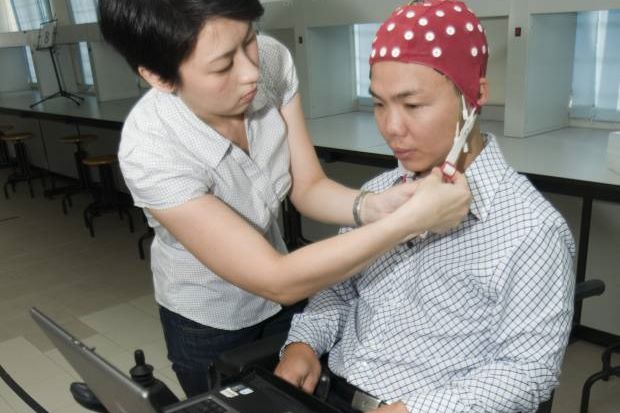
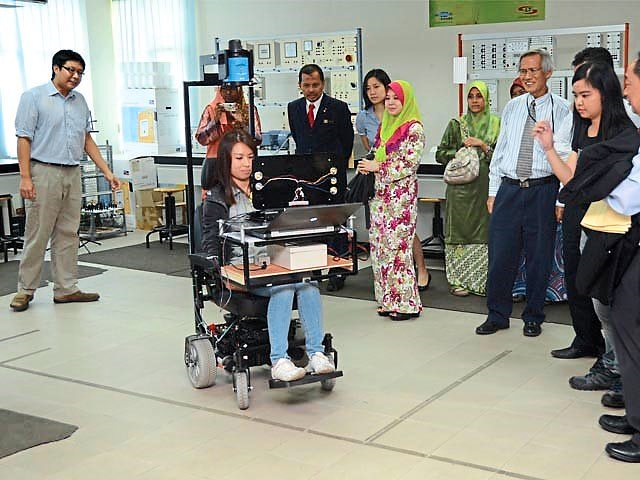
Biomedical engineers should explore how to develop a technological solution and invent devices for disabled people to regain their physical body functions and how to improve their quality of life. By doing so, disabled people will rebuild their confidence and continue to contribute to national development. The integration of medical science and engineering to revolutionalise healthcare in the developing world is the duty of biomedical engineers.

According to the report published by the United Nations Economic and Social Commission for Asia and the Pacific (Unescap), Malaysia is predicted to have an ageing population by 2030, in which 15% of the populations will be the elderly.

With a growing elderly population and quality device servicing needs, a more sustainable healthcare technology solution is needed to cope with the high living cost.

Biomedical engineers can design and develop solutions to address these shortages of the current healthcare system. With the promising outlook, we can foresee that sustainable and affordable healthcare solution will be the next challenge for biomedical engineering to meet the demands of the transformation of Malaysia into a developed country in 2020.

Dr Tan Lee Fan is an Assistant Professor in Universiti Tunku Abdul Rahman’s Department of Mechatronics and Biomedical Engineering, while Lee Kong Chian is with the Faculty of Engineering and Science. This is a series of articles on Science, Technology, Engineering and Mathematics from Universiti Tunku Abdul Rahman.

source: http://www.thestar.com.my / The Star Online / Home> News> Education / Sunday – July 26th, 2015

Gallery

Why has Oklahoma City become a ‘medical tourism’ destination?

This gallery contains 1 photos.

Oklahoma City has become a medical tourist destination, according to an industry expert, leading the charge for a different method of healthcare delivery, specifically one that embraces the principles and fundamentals of the free market. Dr. Keith Smith is a … Continue reading →

Turkey’s growing medical tourism industry to grow even faster

Turkey’s growing medical tourism industry has been growing quickly, but the sector is eyeing even greater profits over the next decade, hoping to become the destination for the 650 million living in the region, according to the head of the Turkey Health Tourism Development Council

With a know-how already well in advance of its neighbors, Turkey’s health sector is now aiming to attract 2 million patients and earn incomes of $20 billion by the country’s centenary in 2023, according to Meri İstiroti, the president of the Turkey Health Tourism Development Council.

“We have been telling the economy, tourism and health ministries that if we can make Turkey a brand, we will become a sector that can help decrease the current account deficit,” she said.

Give us an overview of Turkey’s place in the world health sector.
Globally, good health care and best practices were concentrated in the United States, in Europe or countries like Israel and the United Kingdom. In the last decade, it has been moving to the East and Far East.

Turkey is in a strategic position. We are in the center of a region covering the Balkans, Eurasia, Middle East and North Africa.

Now our know-how is far more advanced than our neighbors.The surgeons’ capabilities, the physicians’ medical education status and the infrastructure has been promising in the interests of getting good medical for regional patients. We started with more elective cases, like plastic surgery, dental surgery and infertility. We have now moved to higher-risk patient treatments like colorectal cancers, brain tumors, robotic utilization, stem-cell applications and organ transplants. And we are making our investments not only for 80 million [people] but for 650 million in our region.

What is the financial dimension?
In terms of per patient income, regular tourists bring around $700. The medical tourism income average is $8,000. This does not include the accompanying people’s income, but they come as a family. So from a 2,000-euro per excimer laser operation to a 150,000-euro cancer treatment or organ transplant, when we also include the outpatients, the average is $8,000.

There has been a steady increase since 2005 when we received 126,000 international patients. In 2010, we reached $2.4 billion in income with 487,000 international patients. The numbers for 2014 were 727,000 patients and $5.5 billion. Our target is 2 million patients and $20 billion in income. We have been telling the economy, tourism and health ministries that if we can make Turkey a brand, we will become a sector that can help decrease the current account deficit.
The government at the beginning did not realize the significance of the contribution we can make. It said our responsibility is just to take care of our own nationals. But when they saw the numbers, they recognized the importance of the sector and they want to be in the game.
Currently, Turkey is internationally recognized as a medical destination. We have reached that point in 10 years’ time.

What has been the contribution of the state?
The Economy Ministry has put forward a lot of incentives regarding marketing capabilities abroad. These have helped us to move in the international marketing area more intensively.

Turkey’s touristic attractions must have been an additional advantage to lure international patients.
Indeed, Turkey is a country people like coming to as tourists. India is also a player in health tourism, but the moment you leave the hospital, you don’t see a hygienic environment. Turkey is a country where people are pleased to visit.
If we could maintain political stability, which has been done so for the past 10 years, that would bring with it economic stability. Health has become one of the sectors foreign investors want to invest in. That’s how our investment scales have changed and become bigger. The hospital chains have developed faster, and they have done what they would have in 10 years in the span of two-three years. And with increased investments, we started looking abroad.

Can you attract patients from the West? Europeans must still have prejudices against Turkey as a developing country.
The prejudices are down compared to the past. But I can’t say that all the Turkish medical facilities are making tremendous business in terms of good quality. The patient has to search for good care and good medical outcomes on the internet, but the internet does not show the reality all the time. As institutionalized corporations in health care, we have the responsibility of providing the correct information, helping intermediate institutions like insurance companies and digital marketing offices. We have to put forward the good data so they will have the means to compare the good and the bad.

Turkish hospitals not only compete with the world but also with each other. In 2002, there were 271 private hospitals; currently there are more than 600.

Our biggest competitors in the region are the Germans and the South Koreans. Actually, all have seen what needed to be done in the developing countries, but it was the Germans and the South Koreans who have been the most successful. We are just behind them. In a few years’ time we have made tremendous progress.

One of our advantages is that we are the number-one country with the highest number of hospitals accredited with the Joint Commission International (JCI), which measures and shares best practices and patient safety with the world. We have 56 institutions accredited with the JCI.

The hospitals that receive patients are not just concentrated in Istanbul. Erzurum, Gaziantep and Diyarbakır receive patients from the east, while the [Black Sea province] of Samsun [receives patients] from the north. The Central Anatolian town of Afyon is another one. In the east busloads of patients come to the hospitals.

What are the problems you face as a sector?
There are not enough human recourses, from doctors in certain high-expertise areas, to nurses and support personnel for all these hospitals.

Another issue is the lack of a system whereby ethical work can be traced. Health is such an area that unless you have the necessary education, you can’t separate the good from the bad. In addition, there is never one type of treatment. We need a mechanism to register and monitor the medical results.

So what are your proposals for the development of the sector?
We need to have an independent accreditation institution which can keep the list of the medical results of all hospitals private and public, so you can trace the results in a transparent way.

Obviously, this requires a separate budget, measuring criteria, software and the like. But if we are to make progress in this sector, we can’t just do it by just investing in equipment, for instance.

We need to change the current vision.

The region wants to see us investing there, transferring know-how and training people. These are the issues for the future. Turkey can’t become a major player just by securing a certain number of patient transfers to the country.

But first we should not neglect the human resources dimension. We need to give the utmost importance to the training of good doctors by providing good education in medical faculties. The fundamental key to success lies in having good doctors. We should also give importance to learning foreign languages.

hurriyetdailynews

source: http://www.balkans.com / Balkans.com / Home / Balkans.com Correspondent / July 20th, 2015

Gallery

Jamaica to host Spiritual Wellness Conference in 2016

This gallery contains 2 photos.

Spiritual Wellness Experts combine talents to provide healing of the nation Negril, Jamaica  : Spiritual Wellness is an emerging sub-sector of Wellness Tourism which comes to Jamaica in 2016. The growth of Spiritual Wellness is pervasive worldwide. Wellness is a … Continue reading →