Gallery

Stress on promoting medical tourism in India

India has made a big leap in the creation of medical facilities both in the Government and private sector and there is an urgent need to create awareness about the same to promote medical tourism, observed speakers at a two-day … Continue reading →

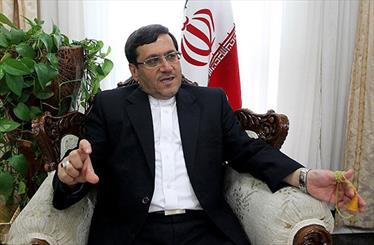
Iran safest country for tourists: Deputy FM

Tehran (MNA) :

Foreign Ministry deputy for Consular, Parliament and Iranian Expatriates announced Iran is the safest country for tourists.

IranCT13jan2015

Hassan Qashqavi made the remarks in a news conference Thursday at the third gathering on health tourism in East and Northeastern provinces, stating that Iranians were naturally hospitable seeking to upgrade the number of foreign tourists.

About five to six million tourists enter Iran annually, Hassan Qashqavi said asseerting that no sad incident has happened to tourists vising the country in the past few years which indicates Iran is in excellent condition for the travelers.

Qashqavi emphasized that Iran would treat strongly with those trying to enter the country under the disguise of tourists, journalists and artists in accordance with international norms.

He pointed to Freign Ministry’s long-term and short-term plans for further attraction of tourists and said, “Iran is interested in removing or facilitating visa issuance for all countries especially the neighboring nations where they do the same for Iranian tourists.”

“Iran is ready to remove visa for the Kuwait’s tourists, on condition of the same action,” Qashqavi stressed.

In addition to visa facility for the countries interested mutually, he said Iranian Foreign Ministry aimed at encouraging its ambassadors to introduce Iran’s great potentials in the field of health tourism.

source: http://www.en.mehrnews.com / Mehr News / Home / LR-MNA-2461097 / Tehrah, January 09th, 2015

Kazakh Medical Tourism Efforts Beginning to Show Results

As Kazakhstan develops its medical competence, with advances in bariatric, cardiac and neurosurgery in the last few years, as well as laser eye surgery and general transplant surgery, a trickle of medical tourists are being drawn to the country.

Until recently, it would have been more likely to see Kazakhs travel abroad for medical care, and indeed, countries like India, Malaysia, South Korea, Israel and others are still courting the Kazakh market. But travellers seeking treatment in Kazakhstan are also on the rise. In December, the Ministry of Health and Social Development announced that patients from a significantly increased number of countries are being treated in Kazakhstan.

As Tengrinews reported on Dec. 8, Director of the Medical Aid Management Department of the Ministry of Health and Social Development Gulnar Kulkayeva said the most popular services provided to foreign patients in 2013 were microsurgical removal of spinal herniated discs, in-vitro fertilisation, heart valve surgery and treatments for uterine fibroids and adenomyosis.

Subsidiaries of the country’s public-private National Medical Holding have seen a rise in patients from the United States, Japan and Italy, she said, whereas foreign patients previously only came from Russia and Kyrgyzstan. Eight hundred and thirty-two foreign nationals were treated in National Medical Holding clinics in 2013, she said. The number includes foreigners working in Kazakhstan, so it is unclear how many actually travelled to Kazakhstan for care and how many simply chose to receive care in Kazakhstan rather than leave.

Most foreign patients, 260, came from the U.K., according to the ministry. The U.S. followed with 111, Kyrgyzstan with 51, Turkey with 50, Russia with 44, and others from Bulgaria, Sri Lanka, the Philippines and 23 other countries.

Low cost as well as increased quality would seem to be a driver of medical tourism to Kazakhstan. Per the Tengrinews story, the Ministry of Health and Social Development reported that bone marrow transplants, at $51,000 in Kazakhstan, cost half as much as they do in Russia, and kidney transplants at $16,000 cost less than half that in Kazakhstan’s northern neighbour. Liver transplants at $20,000 are much cheaper in Kazakhstan than they are in Turkey, a country that itself attracts medical tourists.

In addition to medical tourism, wellness or health tourism is also poised to grow. Kazakhstan’s new official tourism website, kazakhstan.travel, promotes traditional cures like kumyss therapy, mineral and other water treatments and traditional medicine treatments including deer antler therapy.

Pantotherapy – the therapeutic use of deer-antler velvet and extract – is being developed as part of a tourism destination project in Northern Kazakhstan’s Aiyrtau region. A new medical centre there, which opened in June, will use velvet harvested from the maral, a type of large deer native to Kazakhstan. The deer are farmed in the areas and the species is generally widespread.

The antlers contain biologically-active substances as well as female sex hormones and have been used in traditional eastern medicine for thousands of years. The antlers are used to treat a variety of conditions, including sexual dysfunction, the effects of menopause, liver and kidney problems and a host of others. Deer antler has recently been in vogue as a performance-enhancing substance among some athletes. The new medical centre anchors a tourism cluster in Northern Kazakhstan, part of the country’s efforts to develop pockets of tourism destinations in the regions.

Kazakhstan has a long way to go before catching up to global medical tourism hubs like Costa Rica, India, Thailand and South Korea. Global statistics on the number of medical tourists worldwide are hard to come by, but the Patients Beyond Borders website estimates that Thailand attracted up to 1.8 million medical tourists in 2013, and Malaysia 600,000 in 2012. India serves some 250,000 annually, it reports. Closer to home, Turkey is reported to have hosted 110,000 foreigners seeking medical treatment in 2012, and its wellness tourism industry of thermal and mud spas attracts half a million visitors per year.

Kazakhstan’s 800 or so patients are, comparatively, a drop in the bucket. However, for a country still in the early stages of developing both tourism and high quality medical care, with new direct flights being added each season and with the possibility of offering better care than some neighbours and cheaper care than others, the sector would certainly seem to hold some promise.

source: http://www.astanatimes.com / The Astana Times / Home> Kazakhastan Tourism / by Michelle Witte / January 09th, 2015

Campbell to co-own business in Bodrum

AFP Photo

AFP Photo

World-renowned top model Naomi Campbell will sign a partnership agreement with the owner of a detox center in the western province of Muğla’s popular resort city Bodrum. She has decided to become a partner after her attempt to acquire the entirety of the business, called The Detoks Bay, was rejected by its Turkish owner, Sedat Akdemir.

The partnership agreement is expected to be signed in the near future, when the British model arrives in Bodrum for another visit to the city.

Campbell and her colleague Kate Moss have visited The Detoks Bay on multiple occasions, and Campbell’s decision to buy the center came after she was highly pleased with her visits.

The center is frequented by renowned figures from Britain, Germany, Japan and the Netherlands.

Akdemir said that Campbell and Moss have visited the center a few times, adding, “She liked the center and said she wanted to buy it, but I told her that I will not sell this place because I want to make it one of the best health centers in the world. Then she offered me a partnership and I accepted it. She will come here in the next few months and we will sort out an agreement.”

Akdemir said that detox centers have been opened in Turkey one after the other and had succeeded in becoming some of the most popular health tourism alternatives. “We opened this center two years ago. It drew the interest of many world-renowned people. Detox centers have become one of the key segments of health tourism in Turkey. Also, the fact that customers of these centers are largely wealthy is very important for both Bodrum and Turkish tourism,” he said.

Renowned Japanese underwater photographer Masakazu Akagi and Osaka University Head of Photography Department Professor Mineko Orisaku have been shooting at The Detoks Bay for a special documentary program, made for Panasonic.

source: http://www.hurriyetdailynews.com / Hurriyet Daily News / Home> Life> Fashion / Bodrum – Dogan News Agency / December 29th, 2014

Medical tourism booming in Southeast Asia

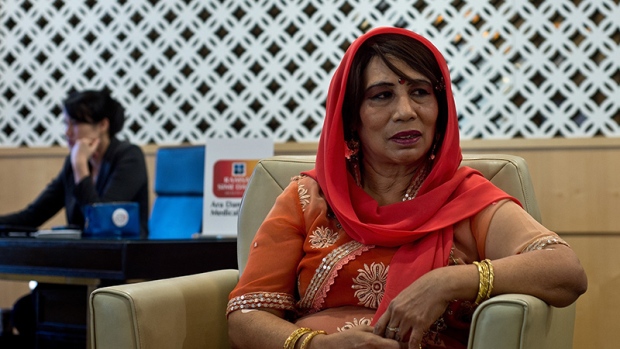
Bangladeshi Nusrat Hussein Kiwan poses in front of the International Patients Centre reception area at a private hospital in Kuala Lumpur on Dec. 9, 2014. (AFP / MANAN VATSYAYANA)

Bangladeshi Nusrat Hussein Kiwan poses in front of the International Patients Centre reception area at a private hospital in Kuala Lumpur on Dec. 9, 2014. (AFP / MANAN VATSYAYANA)

Kuala Lumpur – AFP :

The lines snaking into Bangladesh’s overwhelmed hospitals are often so long, says Nusrat Hussein Kiwan, that they extend into the street outside — too many patients seeking too few quality doctors.

So, through a Google search, the wife of a Bangladeshi construction executive chose a Malaysian hospital for her heart bypass surgery.

“It’s peaceful here, and my doctors are good,” Kiwan, 65, said during a post-op check-up at a Kuala Lumpur private hospital, looking full of life in an orange headscarf and sparkling gold bracelets.

“I didn’t expect to be as good as before. But I’m better.”

Kiwan spent $20,000 on the procedure earlier this year, joining a booming global medical tourism market that is seeing particularly rapid growth in Southeast Asia.

U.S.-based industry resource Patients Beyond Borders estimates the world market is expanding by 25 per cent per year — it reached $55 billion with 11 million medical tourists in 2013.

International medical tourism began to gain ground in the 1980s as Latin American countries such as Costa Rica and Brazil offered relatively cheap dental, cosmetic and other procedures to US and European patients driven south by high costs.

But the one-time niche market has developed into a multi-billion-dollar industry as developing-world health systems improve, global aviation links spread, and the Internet broadens patients’ horizons.

Procedures vary widely from fertility treatments in Barbados, to cosmetic surgery in Brazil, heart and eye operations in Malaysia, and gender-reassignment in Thailand.

 ‘Perfect storm’

The sector benefits from a “perfect storm of an ageing global population, rising affluence and greater choice in quality hospitals,” said Josef Woodman, CEO of Patients Beyond Borders.

“This is particularly true in Asia, where disparities in quality of care are driving millions of patients to countries such as Thailand, Malaysia, South Korea, Taiwan — and even the US and UK — in search of medical treatment not yet available in their homelands.”

“The near-term growth potential is significant,” he said.

Increasingly, major Asian players like India, Malaysia, Singapore and Thailand are aggressively promoting treatments at up to 80 per cent savings compared to developed nations, with some companies arranging package trips that combine a nose job with a little beach time.

Southeast Asia, in particular, is considered a medical-tourism “sweet spot,” with decades of solid economic growth creating high-quality medical systems that remain competitively priced.

Patients come from both rich and poor nations, the former driven by high costs at home, and the latter seeking better-quality care.

Malaysia’s market has nearly doubled since 2010, reaching 770,000 patients and $200 million in revenue last year, according to government figures.

“We are behind Thailand for sure, but we are giving Singapore a good fight,” said T. Mahadevan, head of the Association of Private Hospitals of Malaysia.

Thailand says it attracted 2.53 million medical tourists in 2012. Though its figures include spa tourists, that’s a one-third increase in just two years, a period in which revenues nearly doubled to around $4.2 billion.

In Singapore, medical tourists spent $630 million last year, a figure likely inflated by the modern city-state’s relatively higher costs. Patients Beyond Borders estimates Singapore draws more than a half-million treatment-seekers annually, mostly from neighbouring Indonesia, where health systems lag.

Malaysia set up a special body in 2009 to streamline and organise industry players.

Patients Without Borders calls Malaysia “medical travel’s best-kept secret”, noting the widely spoken fluent English and far cheaper medical costs compared to Japan, the United States, Europe and other key clientele sources.

“I would come back here again. I would definitely recommend it,” Alexandria Garvie, 61, said from her hospital bed in Kuala Lumpur after a tummy tuck.

The $5,000 procedure — around one-quarter of what she would have paid at home in Australia — was performed at the Beverly Wilshire Medical Centre.

The company also recently opened a new branch near the border with Singapore to entice patients from the more affluent city-state.

Most medical tourists to Malaysia, however, are well-heeled visitors from less-developed Indonesia, followed by Indians, Japanese and Chinese. Future growth is expected from the wealthy Middle East.

Sun and silicone

Ancillary businesses have sprouted.

Beautiful Holidays, based on the northern Malaysian island of Penang, connects overseas clients with local cosmetic surgeons, arranges their accommodations, and shepherds them to pre- and post-op check-ups.

But it also arranges drinks, dining and sightseeing in Penang, know for its historical sites, beaches and cultural melange.

“The idea is to have people come here for holidays — sun and silicone, that kind of thing,” said Tony Leong, the company’s program director.

Ashley Higgins, a 30-year-old American, has used the company twice, first for a breast augmentation, then a nose job.

She was initially wary of going under the knife on the other side of the globe, but price concerns won out.

“The hard part is trusting people when you are 1,000 miles from home. I felt comfortable coming here,” she said.

source: http://www.ctvnews.ca / CTV News / Home> My Health / Relax News / Monday – December 29th, 2014