Iskandar Malaysia to have at least 25 hospitals

Nusajaya  :

More foreigners, especially from Singapore, are expected to come to Iskandar Malaysia to seek medical treatment with the setting-up of at least 25 hospitals, including private specialists centres by 2016.

One of the health industry members involved – IHH Healthcare Bhd – has invested over RM400mil for the first phase of its Gleneagles Medini Hospital here.

Its CEO and managing director Dr Tan See Leng said that the 300-bed hospital, which is set to open its doors to the public by June next year, would have an initial capacity of 148 beds

“With the setting up of the hospital right at the heart of the Iskandar region here, we hope to attract foreigners, especially Singaporeans to seek medical treatment at our hospital.

“The rates will be relatively cheaper for Singaporeans to get medical treatment in Johor Baru compared to what they will be paying in the republic,” he said yesterday after the topping-up ceremony of the construction of the first phase of the hospital building.

It was also attended by Johor Health and Environment committee chairman Datuk Ayub Rahmat.

Dr Tan said other than Singaporeans, the company was also targeting middle-class Indonesians visitors.

“GMH will offer a comprehensive range of medical facilities, including cardiology, ear, nose and throat, obstetrics and gynaecology, oncology, ophthalmology and orthopaedics.

“A total of 138 medical suites will be leased for specialists who wish to set up their own clinics and practices within the hospital premises,” he added.

Dr Tan, who is also the group CEO and MD of Parkway Pantai Ltd, IHH’s largest operating subsidiary, added that the company was also set to open a Gleneagles hospital in Kota Kinabalu next year.

Meanwhile, Ayub said that the Johor government hoped that the new Gleneagles Medini hospital would help boost the state’s medical tourism activites.

“The Iskandar region will see development of some 25 government and private hospitals by 2016, in line with our focus to build a medical hub within the region here.

“Plans to construct two more government hospital, namely Hospital Sultanah Aminah II and Hospital Pasir Gudang, are also on track,” he added.

source: http://www.thestar.com.my /  The Star Online / Home> News> Nation / Sunday – November 06th, 2014

Rwanda: Call for More Private Investment in Healthcare

Medical tourism can only be possible if private health care services are expanded and revamped.

This call was made during an evaluation workshop aimed at finding possibilities of cooperation between the Swedish government and Rwandan health care actors in Kigali.

Rwanda has embarked on promoting medical tourism to help reduce on cases of Rwandans travelling abroad for medical care.

“There is need to avail world class health facilities through private investments. This way, we shall not only attract medical travelers but will also save the money our citizens spend on going abroad for treatment,” Hubert Ruzibiza, the head of services development at Rwanda Development Board (RDB) said at the forum last week.

Rwanda currently has two general private referral hospitals (Croix du Sud Hospital, commonly known as Kwa Nyirinkwaya; and Polyclinique La Medicale, commonly known as Kwa-Kanimba) all in Kigali.

Ruzibiza said in the past one year, about $50 million worth of direct investments were made in private health care, saying that much as this is substantial, more investments were still required.

He added that close to 1,000 foreign patients were registered in private hospitals as of 2013 alone.

“Rwanda has succeeded in fighting common diseases like malaria and HIV/Aids, the challenge now is to turn to non communicable ones like cancer, diabetes and heart ailments,” said Dr Jean Nyirinkwaya, the chairperson of Rwanda Healthcare Federation (RHF).

Recent years have also seen more specialised private hospitals open shop, for instance in January 2013, one of the major global eye care centres, Dr Agarwal’s Eye Hospital (from India) opened in Rwanda.

The facility, which cost about $6 million, handles complicated eye cases like retina surgery, hi-tech cataract surgery, glaucoma, paediatric ophthalmology and corneal transplantation.

Quite similarly, in April this year, the country got its first fertility clinic.

The facility, that cost $350,000 (Rwf237 million), offers services like; in vitro fertilisation (IVF), a fertility treatment procedure that enables an egg to be fertilised by a sperm in the laboratory, HIV/Aids sperm washing, Intra-uterine Insemination (IUI), egg freezing and storage, among others.

source: http://www.allafrica.com / The New Times / Home> Rwanda / by Ivan Ngoboka / November 17th, 2014

Luxury, glamour and a nip’n’tuck

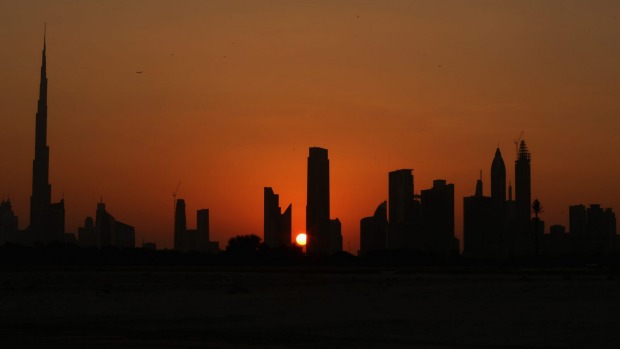
TRAVEL FOR A NIP'N'TUCK: After splashing out on medical infrastructure over the past years, Dubai already ranks globally and aims to move up the list of top international destinations for medical tourism.

TRAVEL FOR A NIP’N’TUCK: After splashing out on medical infrastructure over the past years, Dubai already ranks globally and aims to move up the list of top international destinations for medical tourism.

Dubai, the emirate known for its celebration of over-the-top glamour and luxury, is racing ahead to dominate the Middle East’s plastic surgery market with plans to attract half a million medical tourists in six years.

Where cosmopolitan Beirut was once the region’s best-known city for going under the knife, turmoil in Syria and violence often spilling into Lebanon is driving away wealthy Arab tourists. After splashing out on medical infrastructure over the past years, Dubai already ranks globally and aims to move up the list of top international destinations for medical tourism.

It plans to attract 20 million tourists by 2020 – with half a million medical tourists bringing in revenues of 2.6 billion dirhams (NZ$919.8 million). The Dubai Health Authority says about 120,000 medical tourists visited in 2013, generating revenue of about $240.9 million – a 12 per cent boost from the previous year.

That already puts it ahead of Turkey, with 110,000 medical travellers, and Costa Rica, with 40,000 to 65,000, according to 2013 figures from Patients Beyond Borders, a US group that collects data on the industry.

Lebanon does not rank among top countries for medical travel, but Beirut was once the region’s premier spot for nips and tucks, notably drawing many Arab celebrities.

Globally, medical tourism is big business. It is estimated to generate $60.13 billion to $72 billion a year and grow to an annual $120 billion in the next decade.

To cash in on the boom, Dubai has introduced three-month renewable visas for medical tourists and their companions and launched a campaign to brand itself as the Middle East’s top destination for wellness and plastic surgery.

Vasilica Baltateanu, who started up the United Arab Emirates’ first plastic surgery consultancy, Vasilica Aesthetics, said Dubai’s glamour factor is driving the trend among the region’s well-heeled tourists who want to shop, indulge in spas and relax in opulent hotels.

“You don’t find them going anymore to Beirut and (they) are coming to Dubai. Why? It’s much safer in Dubai,” she said. “I think they also choose Dubai because there are the best restaurants here, the best hotels. So you do a surgery and at the same time you can have a nice holiday.”

The World Travel & Tourism Council says in its 2014 report the UAE is expected to attract 12.2 million international tourists this year, with Lebanon welcoming just 1.3 million.

A company specialised in laser treatments, Silkor, says it brought its business to Dubai instead of waiting for Gulf clients to come to Lebanon, where it has opened eight branches since its founding 15 years ago.

In less than half that time, the company established six branches in the UAE and has plans to open two more.

“Gulf clients would come to Lebanon in the past,” said Owner Representative Sylva Wayzany, adding that now “unfortunately the situation in Lebanon doesn’t help” to make it attractive for medical tourists.

To cater to the Gulf’s demand for cosmetic procedures, Dr Luiz Toledo, one of the world’s most famous plastic surgeons in liposuction and the “Brazilian butt lift”, closed his practice in Brazil and moved to Dubai in 2006 because he saw less competition in the Gulf and an opportunity to keep quality and prices up.

“If you think about 20 years ago, nobody in the world heard about Dubai. And today there is not a person in the world that hasn’t heard about it,” said Toledo.

Last year, he saw patients from 73 different countries. His new practice has a private wing for high-rolling Arab clientele.

Dubai has rapidly become home to one of the world’s highest saturations of plastic surgeons. Toledo says the US has 20 plastic surgeons for every 1 million people, compared with 52 per million in Dubai. The Emirates Plastic Surgery Society, a group where he is a board member, says its membership has more than doubled to 150 in the past eight years.

The Dubai Health Authority says about 150 licensed plastic surgeons are in Dubai alone.

Emma Jordan, a 33-year-old British resident of Dubai and mother of three, chose to undergo breast augmentation and stretch mark removal here instead of in London, because while the price was similar – about $A9,95 – waiting times were shorter and the procedure more personal.

“I think possibly back home, it’s more clinical. You have a consultation; you don’t always see the surgeon before and after. Sometimes you see a nurse (instead),” she said. “It’s a huge difference.”

 – AP

source: http://www.stuff.co.nz / Stuff.co.nz / Home / by Aya Batraway / November 07th, 2014

Gallery

Four Seasons triumphs at the Spafinder Wellness 365® Global Wellness Travel Awards

Spafinder Wellness 365® has announced the winners of the inaugural global Wellness Travel Awards, which were presented at a press event held at the World Travel Market in London. The new awards reflect the significance of the $494 billion worldwide … Continue reading →

Can the Adirondacks tap into “wellness” tourism?

A group of Adirondack businesses and organizations wants the region to explore becoming a destination for the new “wellness” movement. And it’s not all about exercise and eating right. A conference on Thursday, November 13th, at the Lake Clear Lodge and Retreat will explore developing the Adirondacks as a wellness travel destination that will tap into tourism, health, outdoor recreation, arts and culture, education, and local food.

Todd Moe spoke to Ernest Hohmeyer, with the Adirondack Wellness Initiative, about the growing wellness industry.

To listen http://www.northcountrypublicradio.org/news/story/26559/20141106/can-the-adirondacks-tap-into-wellness-tourism

source: http://www.northcountrypublicradio.org/ ncpr – north country public radio / Home> Regional News / by Todd Moe, Canton NY / November 06th, 2014