Wellness tourism worth $500bn as it starts to enter ‘all aspects of our lives’

The wellness tourism economy grew by 12.5% in 2013, according to new figures presented at this year’s Global Spa and Wellness Summit.

A Hotel Wellness and Hotel Spa forum discussion, called Imagining the Future, was moderated by Edie Weiner

A Hotel Wellness and Hotel Spa forum discussion, called Imagining the Future, was moderated by Edie Weiner

The sector is now worth around $494 billion, compared with $439 billion in 2012, and now takes up 14.6% of overall tourism spending, up from 13.7%.

“Wellness tourism is positioned at a profitable intersection between two massive and growing industries – wellness and tourism – each one currently estimated at around $3.4 trillion,” said Ophelia Yeung of research institute SRI International.

The global tourism industry grew by 7% while the global wellness industry rose by 20%.

This year’s study suggests that a number of areas in the sector have grown over the past 12 months. Domestic wellness trips have increased by 12.1% with international wellness trips up 10.7%.

“What surprises many people is that domestic tourism is the predominant portion of the market. It makes up over two-thirds of wellness tourism expenditures and 84% of wellness trips. Domestic wellness tourism is growing faster than international,” said Yeung.

There were also increases in both “primary” wellness trips (11.2%) and “secondary” wellness trips (11.9%).

“Another interesting note is that secondary wellness travellers represent the biggest share of the market, accounting for over 85% of all wellness trips and expenditures,” added SRI’s Katherine Johnston.

“These travellers have an interest in maintaining wellness during travel, although it’s not the sole purpose for taking a trip.”

While wellness tourism only accounts for 6% of all tourism trips the study suggests it is a high yield sector. Wellness travellers spent 59% more than average on an international trip and 159% more on a domestic trip.

North America accounts for $196.5 billion of all wellness tourism expenditures with Europe in second place at $178.1 billion. The US is the number one country and accounts for a third of the total market.

The UK is also in the top 10 as is China for the first time. “One notable change since last year is that China has moved into the top 10, with overall strong tourism growth and a growing wellness tourism market linked with massive investment in hot springs resorts and strong spa market growth,” said Johnston.

Strong growth in the sector is also coming from emerging markets such as India, Vietnam, Indonesia, Thailand and Turkey. Morocco, where this year’s conference was held, also saw wellness tourism trips and expenditures more than double in 2013.

“The strong growth we’re seeing in wellness tourism is part of a broader trend – a growing interest globally in wellness and a healthy lifestyle, which people are incorporating into all aspects of there lives,” added Yeung.

source: http://www.ttgdigital.com / TTG Digital / Home> News / by Patrick Whyte / September 19th, 2014

Dubai, The World’s Hospital?

The UAE’s amended visa policy is a step forward in Dubai’s goal of attracting 500,000 medical tourists per year by 2020.

DubaiCT28sept2014

The UAE recently announced an amended visa policy with new options specifically introduced for medical tourists. Under the new rules, a medical treatment visa costs Dhs550, with a multiple entry visa priced at Dhs1,400 and a visa for a patient’s escort also priced at Dhs1,400.

The move is part of the UAE’s and specifically Dubai’s strategy of becoming a medical tourism hub within the next few years. The emirate aims to attract up to 500,000 people per year for medical tourism by 2020, with a goal of the sector contributing Dhs2.6 billion to its GDP by then.

The introduction of the new visas is a positive step towards the fulfillment of the target set for 2020, according to Sandeep Sinha, VP, Healthcare Practice, Middle East, North Africa and South Asia, Frost & Sullivan.

The visas will also help in measuring the number of medical tourists entering the UAE (from countries that require visas), which in turn can help support future planning and improvement in the emirate’s medical tourism offerings, added Dr. Fatma Al Sharaf, Strategy and Partner Development manager at Dubai Healthcare City (DHCC).

However, Nikhil Idnani, principal with Strategy&, formerly Booz & Company, opined that the move would not necessarily provide a major boost to medical tourism. “It will not be a big driver as it is fairly easy to obtain a UAE visa already,” he said.

“Those who can afford to travel to UAE for medical reasons, would anyhow be able to get a visit/ tourist visa to Dubai relatively easily.”

What is required is a combined effort from all the stakeholders – including the healthcare sector, the tourism industry and government officials to ensure that patients have a hassle-free experience, according to experts.

“A combination of efforts from healthcare and other sectors will generate the required amount of push to achieve the targets,” said Sinha.

A wider strategy is already in place – Dubai Health Authority (DHA) officials have confirmed that emirate’s first medical tourism package for overseas patients, which will cover treatment costs, visa, accommodation and recreational activities for families who accompany the patient, will be launched later this year.

Hospitals that wish to participate will be evaluated and will need to pass stringent verification measures.

Essa Al Maidoor, director-general of the DHA, said: “Dubai is the world’s leading destination for tourism and leisure and since it offers excellent health-care facilities, medical tourism is an extension of the hospitality that Dubai is synonymous with.

“Ensuring that all players work hand-in-hand with us and are aligned with the overall medical tourism strategy will ensure smooth functioning of a dynastic health sector and will benefit both medical tourists as well as the health-care providers,” he said.

The DHA plans to build 22 hospitals including 18 private and four public hospitals in the next few years to support the high volumes of medical tourists.

“These initiatives are more focussed on enhancing the private sector infrastructure, with the number of private-sector healthcare staff expected to increase by more than 3,800,” said Sinha.

The authority will also be launching a dedicated website for medical tourism later this year.

WHY IT COULD WORK

According to a survey conducted by DHCC, 80 per cent of medical tourists come to Dubai for quality of care, 61 per cent said it is for the city’s experienced physicians, while 48 per cent highlighted the availability of specialist treatments.

The emirate benefits from accessibility to healthcare with shorter waiting times, safety and security, tourist attractions, state-of-the-art infrastructure and a robust hospitality industry, said Dr. Al Sharaf.

Another huge advantage is the UAE’s strategic location between the east and the west, which can also play a big role in helping the country compete with traditionally strong medical tourism markets across the world, including cheaper destinations in Asia, such as Thailand and Singapore.

“The country’s location is an advantage compared to Asian countries that are further away from Europe and hence European/ UK tourists would have to travel quite some distance to Asia for medical tourism,” said Idnani.

“Additionally, the marketing done by the UAE on positioning itself as a medical tourism hub, is also helping this cause,” he added.

In terms of costs, even if a location like Dubai is more expensive, it stands out in terms of its brand, supplementary attractions and relatively shorter commuting times from its main markets, added Sinha.

The numbers also seem to substantiate these facts – DHCC, which had up to one million patients in 2013, claims up to 15 per cent of its patients are medical tourists. It has catered to people from the GCC countries, Libya, Iraq, Iran, Nigeria, Tunisia and Djibouti, confirmed Dr. Al Sharaf.

BIGGEST HURDLES

One of the main challenges in the region is to reverse the outbound medical tourism trend, and provide specialised services in line with the required capacity and the prevalence of lifestyle diseases, experts suggest.

“Currently the UAE lacks many highly specialised facilities, i.e. those providing the highest levels of care (quaternary care) – things like brain surgery, robotic heart surgery, specialised oncology surgery, etc,” explained Idnani.

“Although the volume for such cases is small, and given the low population of the UAE, such specialised services can only be sustainable if patients are attracted from abroad. So it is a chicken and egg story,” he added.

The UAE, which is new to the industry in comparison to countries with older, developed health systems, requires a more focused approach to promote its available services, stated Dr. Al Sharaf.

“With inbound medical tourism strengthening in the UAE, patients increasingly seek quality assurance. One way to build this assurance is through international medical tourism accreditation organisations.”

She also highlighted that industry problems such as patient education and awareness of services, quality, licensing and patient rights. “Another challenge is the spectrum of care after a patient leaves the destination to his home country,” she said.

“When healthcare is no longer confined by geographical borders, challenges of policy and regulation are at the forefront. Factors of accreditation, medical visas, and follow-up care, among others are all crucial,” she added.

source: http://www.gulfbusiness.com / Gulf Business / Home> Analysis> Dubai> Healthcare> Insights / by Aarti Nagaraj / September 20th, 2014


Gallery

City to Host International Meet to Create Awareness on New Medical Technique

This gallery contains 1 photos.

Chennai  : If detection and diagnosis continue to be challenges in the treatment of cancer, gastroenterologists can zero in on even a two-mm malignant growth now, thanks to endoscopic ultrasonography (EUS) technology. In a concerted effort to spread awareness about … Continue reading →

EDB starts first ever medical tourism push

As service exports edged towards $3B, Sri Lanka’s apex export body EDB has stepped up its effort to open a new forex source on 11 September. And the 2015-‘20 National Masterplan Initiative on Medical Tourism has taken off, spearheaded by the EDB.

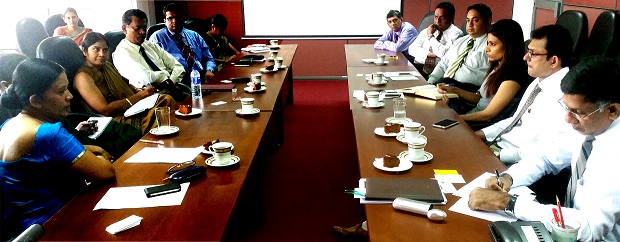
ujatha Weerakoone (DG-EDB-seated left) addresses the kick-off session of 2015-‘20 National Masterplan Initiative on Medical Tourism, on 11 September at EDB, Colombo.

ujatha Weerakoone (DG-EDB-seated left) addresses the kick-off session of 2015-‘20 National Masterplan Initiative on Medical Tourism, on 11 September at EDB, Colombo.

“Professional service exports present a tremendous opportunity and can speed up government’s ‘$20B exports by 2020’ goal. Medical Tourism is one of the most promising sub-sectors in this. We are ready to work with any and all stakeholders to get this off the ground” said a keen Sujatha Weerakoone (DG-EDB) on 11 September in Colombo.

EDB DG Weerakoone was addressing the kick-off session of EDB’s 2015-20 National Masterplan Initiative on Medical Tourism held at EDB on 11 September. The pioneering session saw top reps from Hemas Hospitals, Asiri Group of Hospitals, Lanka Hospitals, Durdans Hospital, Nawaloka Hospitals PLC, the Health Ministry as well as M.K.S.K Maldeniya (ICT Sector Director-EDB) joining the session. The private sector reps also represent Sri Lanka’s Private Hospital Association (PHA). PHA hosts the majority of Sri Lanka’s private hospitals, nursing homes and private healthcare providers as its members. 55% of country’s outpatients and 15% of the country’s in-house patients, are treated by members of PHA -the rest being treated by state sector hospitals & healthcare facilities.

__________________________________________________

• • Lanka’s top Pvt hospitals join new drive
• • ‘Huge forex potential’–EDB’s Sujatha
• • ‘Great initiative’-Private Healthcare
• • 2013 Service exports at $2.9B, up by 7.5%

__________________________________________________

Global Medical Tourism industry annual turnover is not definitive but Patients Beyond Borders, the oft-referenced consumer information source about international medical and health travel estimates that by 2014, the worldwide medical tourism market to be $47B (median value, $55 B at highest), growing 20% annually with 11 Mn cross-border patients worldwide, and $4250 median spending per visit! These visit costs “include all medically-related costs, cross-border and local transport, inpatient stay and accommodations.”

Speaking on the promise of medical tourism, Rishad Bathiudeen (Minister of Industry and Commerce of Sri Lanka) at February 2014’s launch event of Intrad 2014 & Arogya 2014 at Hilton Colombo, said: “With only a per capita healthcare expenditure of $ 175, at first, Sri Lanka does not appear to have an advanced healthcare infrastructure similar to the developed countries. But due to the support of well-trained, high quality healthcare professionals, availability of treatment centres as well as pharmaceuticals, we are witnessing the emergence of a new sector, that is medical tourism, contributing to our service exports. Studies show that around 15% of patients in Sri Lanka are foreign patients, such as from Maldives. The EDB under my Ministry believes that medical tourism is a promising service sector to drive our foreign exchange earnings.”

“Professional service exports present a tremendous opportunity and can speed up government’s $20 B exports by 2020 goal. Medical Tourism is one of the most promising sub-sectors in this” said EDB DG Weerakoone at 11 September session, and added: “Realising the importance of this, EDB, which strongly believes in Private Public Partnership approach, has decided to make the first ever national initiative to rally the healthcare providers as well as stakeholders and formulate a common voice for 2015-20 National Master plan Initiative on Medical Tourism. I am pleased to see all the leading private hospitals are represented in today’s session. In fact we are ready to work with any and all stakeholders to get this off the ground. We need to map out such factors as availability of hospital facilities, accreditations, specialisations, ‘centre of excellence’ areas, post-surgery and wellness packages, packages medical tourism as well as tie ups with global medical travel facilitators. The EDB can shape the future roadmap of this sector based on the collective voice healthcare operators.”

The private healthcare reps at the session pledged prompt support, even declaring this to be a ‘much needed initiative’. Dr Lalith Peiris (CEO-Lanka Hospitals), addressing the session said: “We are very happy that the EDB is taking a lead role in this much needed initiative specially at a time when many medical tourism destinations such as Thailand, Singapore, Malaysia etc are competing and out-pricing themselves. The PHA is a good starting point and together with EDB, a master plan for country’s medical tourism could be developed. This initiative can also help bring high net worth tourists instead of budget tourists and the ‘wellness medical tourism’ is a huge growth area. Through EDB we can make the stakeholders to understand how important medical tourism is.”

Responding to the comments of them, EDB DG Weerakoone stressed: “A Medical Tourism Committee and formal link with PHA could be priority steps in this effort. EDB is ready to allocate prominent space in its web portal’s “service exports” section for this initiative.”

According to the Central Bank of Sri Lanka, apart from tourism and foreign worker remittances, Sri Lanka’s total service export revenues surged by 7.5% to $2.9 Bn in 2013-60% derived from ‘transport’ (non-domestic), 24% from ICT/BPO services, 12% from both financial & insurance services and 3% from such sectors as ‘construction’ and ‘other businesses’.

At the 11 September session, EDB DG Weerakoone and the participants also mulled various other options as to how to position Sri Lanka’s medical tourism in the $47B global industry.

– Asian Tribune –

source: http://www.asiantribune.com / Asian Tribune / Home / Colombo – September 18th, 2014

Omanis opting for India as medical tourism destination

Dubai :

India is fast becoming a favourite destination for Omanis seeking advanced medicare, with the number of visas being issued by India witnessing a significant rise.

The number of visas issued to Omanis from January 1 to August this year has jumped to 61,000 which was only 3,400 in 2012, according to an official from Indian embassy in Muscat, the capital of Oman .

“Number of visas in a day varies as at times, it touches 600 and at times, we have even issued 350 visas”, the official was quoted as saying by the Times of Oman.

Tamil Nadu, Andhra Pradesh, Kerala, Maharashtra and New Delhi are the top five destinations where Omanis visit for medical treatment.
“Out of the lot, tourist visas top the numbers, followed by medical and business visas ,” the official said.

Factors like proximity, direct air connectivity, and cultural connect have helped establish India as a preferred destination for patients from the region.

India has emerged as one of the most sought after destinations for medical tourists across the globe owing to its high value proposition in terms of quality health care.

source: http://www.timesofindia.indiatimes.com / The Times of India / Home> India / PTI / September 17th, 2014