
Relax to the max in Latin America with wellness tourism on the rise

WellnessCT24may2014

Latin America is set to steam ahead in the coming years with its share of the ‘wellness’ tourism industry, according to new figures released by the Global Wellness Tourism Congress (GWTC), part of the Global Wellness Institute (GWI).

The figures, from the ‘Global Wellness Tourism Economy Report’ which monitors the growth of this increasing sector, reveal that Latin America (a region that covers Mexico/the Caribbean and Central and South America) is on the up, with a notable 13.4% annual growth predicted until 2017. These figures put Latin America behind only the Middle East in terms of wellness tourism growth, outperforming the long-established regions of the US and Germany, on track to record just 5% annual growth, as well as the predicted global average of 9.9%.

Wellness tourism is described as ‘all travel associated with enhancing one´s personal well-being’ and can encompass aspects such as spas, retreats, fitness facilities, yoga and beauty. It is a large part of the travel industry, currently taking up one in every seven tourist dollars, and sure to be a sector to watch for continued future growth as people work longer hours and focus their free time increasingly on relaxation and rejuvenation.

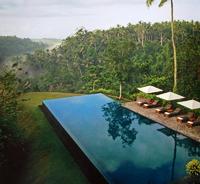
Taking Latin America’s market share to a predicted $42billion, one resort that is certain to enhance this figure is The Baymen Resort and Spa in the Cayo region of Belize. This luxurious rainforest resort has ‘wellness’ at its heart and features a sumptuous spa with infinity pool and hot tub, fed by stunning natural Maya spring pools and waterfall.

The Baymen’s eco-credentials are also central to its feeling of wellbeing, with the majority of the lodge sitting amongst the rainforest canopy, and an infinity pool that appears to float like a tablet of water suspended in mid-air, allowing guests to feel as though they are truly part of nature, making it easy to unwind.

Wolf Worster, MD of Wolf Wörster Associates, Inc, the global property consultancy specialising in the sale and rental of ultra-luxury villas in some of the world’s most sought-after locations, who are marketing The Baymen, explains,

“With the everyday stresses of modern life getting increasingly intense, it is no surprise that wellness tourism is on the up and with a great deal to offer the discerning traveller searching for true relaxation, it is easy to see why Latin America’s slice of this market is growing too. Belize is one location that is rich in ‘wellness’ attributes – a warm and sunny climate, a wealth of natural features, amazing wildlife – and it is these factors combined with the development’s focus on luxurious relaxation and revitalisation that make The Baymen the perfect wellness retreat.”

With a choice of deluxe suites or two-bed suites available, each individual residence encompasses the notion of old world colonial charm, with four-poster beds, the highest quality finishes, stunning bathrooms with indoor and outdoor shower areas, and a large outside deck, all utilising natural materials of the highest specification.

Investing in a property at The Baymen provides above-average potential to benefit from the growing wellness tourism market, but also the opportunity to use the hotel, or Belize Ocean Club (one of the other properties in the Wolf Wörster Associates, Inc collection) for 30 days personal use annually.

To find out more about The Baymen Lodge and Spa, visit thebaymen.com.

To discover Belize Ocean Club, which is part of the 30 days personal use, visit belizeoceanclub.com.

source: http://www.easier.com / Easier Property / Home> Property Overseas / May 13th, 2014
Slovenia gets yet another ayurveda centre

In yet another boost to the increasing popularity of the Indian alternative medicinal system, the tiny Central European republic of Slovenia got its fourth ayurveda centre in the picturesque town of Bled.

The inaugural ceremony Tuesday included a Bhartnatyam recital by two Slovenian dancers who performed a Thillana, Pushpanjali and Ganesha Vandana in natural surroundings overlooking Lake Bled. The ceremony was attended by dignitaries of Slovenia, India’s Ambassador to Slovenia, Sarvajit Chakravarti, and a number of other international guests, according to an Indian embassy statement.

Following the recital, those attending the event were given a guided tour of the new ayurveda treatment facility.

Overlooking the beautiful Lake Bled that is surrounded by the snow-clad Alps, including Slovenia’s national peak Triglav, the ayurveda centre is a collaborative enterprise of Ayur Ashram of Dharwad in the south Indian state of Karnataka and the Kompas Hotel in Bled.

India’s Department of Ayurveda, Yoga and naturopathy, Unani, Siddha and Homeopathy (AYUSH) has provided information support to the centre.

Treatment will be provided under the supervision of Indian-origin Slovenian Vaidya Samo Safic Gupta, president of the ayurveda section of the Association of Integrative Medicine of Slovenia, which promotes the use of traditional medicine and alternative therapies.

Ayurveda and yoga are highly respected and widely popular in this Balkan nation of two million people. Slovenia already had three ayurveda centres staffed by qualified Indian ayurvedic practitioners and therapists at capital Ljubljana, Portoroz and Lasko.

The University of Primorska at Koper organised a World Congress of Ayurveda in 2009 and is now working on creating a chair of AYUSH with support from the Slovenian government and AYUSH in India.

Many Ayurvedic texts have been translated into Slovenian. Ayurvedic herbal products are quite easily available here.

The launch of an ayurveda centre in Bled, which annually hosts the Bled Strategic Forum and has initiated the Bled Film Festival, is expected to boost awareness of ayurveda and its efficacy more widely across the world, as the little town hosts dignitaries and travellers from over a hundred nations every year.

Indian dignitaries have frequently participated in the annual Bled Strategic Forum, a platform for high-level strategic dialogue among leaders from the private and public sectors on key issues facing Europe and the world in the 21st century.

Former Indian prime ministers Jawaharlal Nehru and Indira Gandhi visited Bled several times.

source: http://www.business-standard.com / Business Standard / Home> News-IANS> Health-Medicine / by IANS / Ljubljana – May 07th, 2014

Middle East/North Africa is the Fastest Growing Wellness Tourism Market in the World, at 16% Annually

New Global Wellness Tourism Congress research: Middle East/North Africa market to more than triple by 2017; Sub-Saharan Africa will see strong 12.6% growth; UAE #1 growth leader across entire region.

New York, NY :

The Global Wellness Tourism Congress (GWTC), a division of the Global Wellness Institute (GWI), today released new data on the Middle East and African wellness tourism markets at the Arabian Travel Market (ATM) being held in Dubai. The research, undertaken by SRI International for the GWTC, reveals that although the region is currently the smallest global wellness travel market, it will be the world growth leader through 2017.

The report analyzed the Middle East/North African and Sub-Saharan African markets separately, and found that the former ranks #1 in the world for wellness tourism growth (16.2% annually), expanding the market from $5.3 billion USD in 2012 to $16.6 billion USD in 2017. And Sub-Saharan Africa will also see an impressive 12.6% annual growth, driving that market from $2 billion USD in 2012 to $5.07 billion by 2017.

South Africa is the current pan-regional leader in terms of both trips and expenditures. And the UAE will grow faster than any Middle East/African nation from 2012-2017: adding one million trips–and with a 17.9% annual growth rate that ranks sixth in the world.

Wellness tourism is defined as “all travel associated with enhancing one’s personal well-being,” and this newly-released data comes from the GWTC’s “Global Wellness Tourism Economy” report, the first research to analyze the $439 billion worldwide wellness tourism market that is growing roughly 50% faster than the tourism sector overall.

Anni Hood, tourism & government liaison for the GWTC, presents the findings at ATM on May 7, and noted, “Wellness-focused travel is growing fast across this vast, diverse region: in the Middle East/North Africa we have the luxury/spa hotel building boom across GCC nations, and the revitalization of indigenous practices, such as historic hammams and baths. And Africa is tourism’s next frontier: from the rise of healthy adventure/safari tourism in South Africa and Kenya–to continued growth for spa/wellness resorts on destination islands like Mauritius or the Seychelles–to just-emerging East African destinations like Ghana or Senegal. These many different ‘stories’ add up to one, big story: the fastest growing wellness tourism market in the world.”

KEY FINDINGS

To view the complete breakdown for the top 12 Middle East/African nations for wellness travel, click here.

Expenditures: The Middle East/North African wellness tourism market (domestic and international combined) is worth $5.3 billion USD annually. Sub-Saharan Africa market expenditures total $2 billion USD each year–for a combined $7.3 billion USD Middle East/African market.

Trips: The Middle East/North African region drives 4.8 million wellness-focused trips (inbound and domestic) annually, while Sub-Saharan Africa generates 2.2 million–for a combined regional total of 7 million trips.

Top Five Current Country Leaders (annual trips/expenditures in USD):

1)    South Africa: 1.5 mil/$1.5 bil

2)    UAE: 800,000/$1.4 bil

3)    Israel: 600,000/$1 bil

4)    Morocco: 800,000/$800 mil

5)    Egypt: 900,000/$700 mil

South Africa, with its well-established spa, wellness and hot springs destinations and robust domestic wellness travel, is the current regional spend leader. But the UAE, with its huge, recent tourism investments, that increasingly attract wealthy Asian, American, European and intra-GCC travelers, ranks #2–and is gaining.

Middle East/North Africa–The Global Growth Leader (Annual Growth Rate, 2012-2017)

Middle East/North Africa: 16.2%

Latin America: 13.4%

Asia Pacific: 13.4%

Sub-Saharan Africa: 12.6%

North America: 8%

Europe 7.3%

The top four fastest-growing nations in the region listed below (based on a combination of annual growth rate and trips added) also rank among the top 30 nations GLOBALLY for projected wellness tourism growth through 2017.

Fastest-Growing Middle East/Africa Wellness Tourism Countries (Trips Added/Annual Growth Rate, 2012-2017)

1) UAE: 1 mil/17.9%

2) South Africa: 1 mil/10.5%

3) Israel: 800,000/18.6%

4) Morocco: 800,000/14.7%

And Israel, the UAE and Morocco all rank in the top ten in the world for “pure percentage” growth in wellness travel through 2017, ranking #5, #6 and #10, respectively.

Inbound Wellness Tourism Crucial: Worldwide, domestic wellness tourism is dramatically larger than its international equivalent, representing 84% of trips and 68% of expenditures. But for the Middle East/Africa, the reverse is true: no global region’s wellness travel market is as dependent on inbound tourists. In the Middle East/North Africa, international tourists make up 63% of trips and 75% of expenditures. In Sub-Saharan Africa, inbound tourists comprise 60% of trips, and an overwhelming 94% of expenditures.

Top Five Inbound Country Leaders: (number of wellness-focused arrivals annually)

1)    South Africa: 665,900

2)    UAE: 603,600

3)    Egypt: 593,400

4)    Morocco: 464,200

5)    Tunisia: 354,500

Impact on Economy & Jobs: Wellness tourism is directly responsible for 200,000 jobs in the Middle East/North Africa, and 100,000 in Sub-Saharan Africa. And this booming travel segment has an estimated wider impact of $13.4 billion USD on the former’s regional economy, and a $6 billion USD impact on the latter’s.

To access the European and Latin American wellness travel market press releases, visit:http://www.globalspaandwellnesssummit.org/index.php/press-room.

For more info on the “Global Wellness Tourism Economy” report, contact Beth McGoarty: beth(at)rbicom(dot)com or (+1) 213-300-0107. Qualified media may request a copy.

source: http://www.intercooleronline.com / Intercooler Online / Home /New Youk – NY (PRWeb) – May 06th, 2014

Hungary showcases Health and MICE facilities

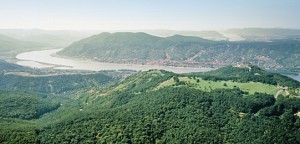
The recently concluded Arabian Travel Market witnessed a showcase from Hungarian Tourism to better educate the Middle East travel trade. A delegation from Hungarian Tourism launched a new marketing initiative to fuel visitor growth from the region.

Budapest in Hungary

Budapest in Hungary

Gergely Horváth, CEO of Hungarian Tourism said: “The Middle East market has been a growing and increasingly important source market of visitors to Hungary over the past couple of years. We see positive signs to suggest that this trend will continue and expect a further increase in visitors from the region.”

Hungarian Tourism will now focus its marketing efforts on highlighting destination and niche markets that target specific consumer segments – health tourism, MICE, honeymoon segments.

For health tourism, the country offers cosmetic procedures and spas along with Hungary’s traditional medicinal water therapies. The MICE facilities can be availed across its 5,000 room inventory of luxury accommodation

source: http://www.traveldailymedia.com / Travel Daily ME / Home> News / May 11th, 2014

Traditional treatments promoted as spa icons

The government and Indonesian Spa Association (ASPI) aim to promote nine traditional spa treatments as icons of the Indonesian spa trade in a bid to develop the country’s potential in wellness tourism.

The commitment was expressed during the National Conference on Traditional Spas organized by the Tourism and Creative Economy Ministry on Thursday, which was held on the sidelines of the Wonderful Adventure Indonesia: Asia Pacific Hash 2014.

“We’ll promote the nine treatments to be the icons of authentic Indonesian spas. So far, only Javanese and Balinese treatments are well-known, the other seven should be further developed and promoted,” said Akhyaruddin, the ministry’s director for meetings, incentives, conferencing, exhibitions (MICE) and special interest tourism.

Each of the nine treatments would be researched and developed by a team of traditional medicine experts, working together with spa businesses, he added.

The nine traditional spa treatments include two of the country’s most popular treatments: Javanese lulur and Balinese boreh, while the other seven are the Bugis treatment tellu sulapa eppa, bakera from Minahasa, the Batak oukup, Betawi tangas, Minang batangeh, Maduran so’oso and Banjar batimung.

Batimung, from Banjar, is known as the rejuvenating herbs of Borneo. The concoction uses rainforest plants, including jasmine, rose and pandanus. Used for body masks, steaming and exfoliation, these plants have been proven to help improve blood circulation and reduce body odor caused by the toxins of everyday living.

The so’oso treatment from Madura is proven to tremendously improve skin condition through exfoliation using egg protein. The old kingdom of Madura is a hub of traditional Indonesian remedies and healthcare. It is also famous for the long comforting strokes of its massage to enhance physical and spiritual energy.

The traditional Minang batangeh treatment has been clinically proven useful in detoxifying the body and aiding tissue recovery from long-term chronic illness. The Bugis ethnic group in Sulawesi has a philosophy of wellness traditions known as tellu sulapa eppa, which means living in harmony. The treatment is termed bedda lotong and uses a traditional body scrub made of mashed rice and rempah-rempah (spices).

Firmansyah Rachim, the ministry’s director general for the development of tourist destinations, said there were many areas nationwide with great potential for the spa and wellness industry in addition to Bali.

“Spas have always been associated with Bali. But what about other areas? In fact, we have a lot of other places to get authentic traditional treatments,” he said.

source: http://www.thejakartapost.com / The Jakarta Post / Home> Archipelago / by Desy Nurhayati, The Jakarta Post – Denpasar, Friday-May 09th, 2014