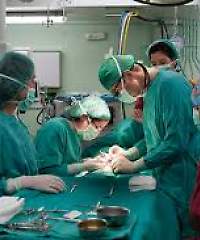
Rise of medical tourism shows impact on cosmetic surgery market

Would you consider traveling to Mexico or India for a less-expensive rhinoplasty or breast augmentation procedure? Many Americans are doing just that—and the trend is having an impact on the market for cosmetic plastic surgery, according to an article in Plastic and Reconstructive Surgery—Global Open, the official open-access medical journal of the American Society of Plastic Surgeons (ASPS).

The paper, by ASPS Member Surgeon Dr. Kevin C. Chung and Lauren E. Franzblau of the University of Michigan, discusses “the rise and transformation of the medical tourism industry, foreign and domestic forces that influence cosmetic surgical tourism, and the pros and cons for all involved parties.” Chung and Franzblau write, “The rapid globalization of the industry also marks a fundamental shift in the world’s perception of elective procedures: patients are becoming consumers and these medical services are being viewed as commodities.”

More ‘Medical Tourists’ Are Traveling for Cosmetic Surgery…

Traveling for medical care is nothing new—but in the past, people were more likely to travel from poor countries to obtain higher-quality care in wealthier countries. Today, prompted by the ease and relatively low costs of travel, more patients from the United States and other western countries are traveling to the developing world to access less-costly medical and surgical procedures. Because cosmetic plastic surgery procedures aren’t covered by insurance, they make up a major part of the burgeoning medical tourism market.

Figures vary, but there’s a consensus that medical tourism is growing rapidly: India alone may have more than one million medical tourists per year. Other countries with growing medical tourism industries include Mexico, Dubai, South Africa, Thailand and Singapore.

Prices for cosmetic surgery in these countries are typically much lower than at home. For example, a breast augmentation procedure that would cost $6,000 in the U.S. can be done for $2,200 in India. Even after the costs of airfare are factored in, having an operation overseas can be much less expensive.

In many countries, governments are working actively to foster their medical tourism industry. Some destinations even market procedures performed in resort-like settings, encouraging patients to combine a vacation with cosmetic surgery. Traveling abroad also lets patients recuperate privately, without anyone at home knowing that they’ve had plastic surgery.

…Raising Potential Concerns Over Safety and Quality

The growth of medical tourism may have a significant impact on the cosmetic surgery market in the U.S., but also raises concerns over physical safety and legal protection. Although destination countries promote the quality and safety of their procedures and facilities, there is often little evidence to support these claims.

“Because the practice of medical travel does not appear to be going away in the foreseeable future, plastic surgeons must understand the international market and learn to compete in it,” Chung and Franzblau write. Since U.S. surgeons may find it hard to compete on price, effective strategies may include emphasizing superior quality and safety of care, or developing “niche markets” of procedures that can be profitably performed at home.

The authors emphasize that medical tourism “is not purely good or bad”—neither for patients nor the countries involved. Patients may be drawn by lower costs, but must consider the potential risks of undergoing surgery in a foreign country, as well as traveling after surgery. ASPS provides information for patients considering travel abroad for cosmetic surgery, including risks and follow-up care.

For the U.S. and other developed countries, medical tourism means fewer patients and less revenue—but may also bring increased opportunities for collaboration with rapidly modernizing countries in other parts of the world. Chung and Franzblau conclude, “To retain patients and be competitive in a global market, U.S. plastic surgery must be vigilant of the changes in medical tourism and must adapt accordingly.”

source: http://www.thealmagest.com / The Almagest / More / http://www.plasticsurgery.org/news-and-resources/rise-of-medical-tourism-shows-impact-on-cosmetic-surgery-market.html

Experts: Regulation needed for medical tourism

Sub-industry helps pay bills for Israeli healthcare but still requires oversight, Knesset committee is told.

MK Haim Katz (Likud) Photo: Marc Israel Sellem

MK Haim Katz (Likud) Photo: Marc Israel Sellem

Medical tourism will be regulated through legislation, Likud MK Haim Katz, chairman of the Knesset Labor, Social Welfare and Health Committee, said on Monday during discussion of a Channel 2 investigation into the treatment of foreigners by three surgeons at Tel Aviv’s Sourasky Medical Center.

Health Minister Yael German added that medical tourism was beneficial because “it gives doctors experience” and can be shifted from the center of the country, where is it largely practiced, to the periphery.

Katz claimed that “unfortunately, both the Finance Ministry and the hospitals don’t listen to the Health Ministry’s instructions on the matter; thus regulation has to be legislated.

I have the impression that treating foreign patients well spreads the good name of Israel and serves as an ambassador of good will.”

However, health experts maintain that the ministry has not issued clear guidelines on what is and isn’t permitted for physicians who treat foreign patients, leading to findings by the investigative program Uvda on doctors who allegedly take payments for neurosurgery and cardiac surgery performed on foreigners at the medical center.

Over the years, while ministry professionals have long been in favor of regulation, politicians from the Prime Minister’s Office on down have pushed for encouraging almost unlimited medical tourism, they say.

German cited a “shortage of money” in the health system.

“In the coming years, we won’t get [from the Treasury] the NIS 8 billion we need for public health, so we need to consider additional sources of funds while carefully preserving equity and justice,” she said.

“The topic worked under the radar screen because there was no regulation,” she continued.

“It is clear that medical tourism cannot be abolished. Think of the possibility of an online system in which we could know where there are empty beds at any given moment in the hospitals, where we would refer foreign patients…. With proper regulation, we will be able to serve the Israeli pubic and enrich the public purse.”

Health Ministry director-general Ronni Gamzu – who previously was director-general of the Sourasky Medical Center’s Ichilov Hospital – said he bore some responsibility for the growth in medical tourism, although he admitted that this growth had become “problematic.”

“The pay for a surgeon who treats a tourist is three or four times what he gets for operating on an Israeli patient,” Gamzu said. “Already today, I will rush instructions to hospitals that they must not pay those who operate on foreign tourists any more than they get for operating on local residents.”

To this, Israel Medical Association director-general Leon Eidelman said: “You have killed it [medical tourism in the public hospitals]. They will all go for surgery to Assuta [Medical Centers, the chain of private hospitals].”

Sheba Medical Center director- general Zev Rotstein said that medical tourism “raises the level of Israel medicine,” thus benefiting all Israelis.

“The treatment is provided after the doctors’ regular working hours and not at the expense of Israelis,” Rotstein explained. “The share of foreigners compared to Israelis in my hospital is only 15 percent, and the income is only 6.36% of Sheba’s total income. But this money is important because I can’t get it from the government. Regulation is not the solution for everything.

Sometimes it interferes. Let the hospital managers run things.”

Labor MK Mickey Rosenthal said that funds from medical tourism must go the periphery, “where residents live a decade less on average than those in the center of the country.”

Meretz MK Ilan Gillon argued that he wanted the health ministry to finance “my healthcare, and not that of a tourist from Uzbekistan.”

Meanwhile, Katz – in a separate committee discussion on health fund deficits – said a proposed NIS 75 million for insurers was much too small.

“This is a pitiful sum that covers almost nothing, and it is due to be given only from next year,” he said. “The Treasury is smashing the health system. It can’t be that all the experts… say there is a huge deficit, and only the boys at the Treasury, who only yesterday graduated from university, say something else.”

Bank of Israel economist Eran Pulitzer said the gap in health funding was “liable to cause harm in the level of services.”

Zev Wurmbrand, director of Clalit Health Services, said that some NIS 700m. was needed by the health funds to cover deficits just from 2013.

“At the same time, there must be supervision to ensure that the money will go to improve services, and not to salaries,” he said.

source: http://www.jpost.com / Jerusalem Post / Home> Health & Science / by Judy Siegel-Itzkovich / December 23rd, 2013

1500 medical tourists seek treatment in Dubai every day

Emirates Airlines is said to fly in 1,500 medical tourists daily to Dubai airport before they take onward flights to destinations such as India, Thailand, Malaysia or Singapore. If Dubai can tap a share of such travellers, it has scope to be a destination for medical tourism, for which strategic initiatives have already been launched.

EmiratesCT01jan2014

Emirates is easily the most impressive success story about Dubai; if there is anything more successful, it is perhaps Dubai itself. Or the equation could be one of symbiosis, where one contributes or even leads to the betterment of the other in a continuous process.

So, the role played by Emirates in making Dubai what it is today needs no further explanation. But an interesting part is that the airline has acted as a change agent in innumerable other ways and in other parts of the world. It has helped the world discover hitherto unknown destinations and also connect travellers from around the world to Dubai, either through direct connections or by virtue of the emirate’s hub status.

In its inevitable march towards becoming the world’s biggest airline by 2020, a landmark in the evolution of Dubai on account of the Expo, Emirates has most effectively utilised the emirate’s geographical advantage, which brings over a third of the world’s population within four hours’ flight and two-thirds within an eight-hour flight.

Emirates already operates over 3,200 flights per week to over 135 destinations in more than 75 countries and hopes to fly 70 million passengers in the year of the Expo, pressing into service more than 250 wide-body aircraft.

Emirates is already a major catalyst of globalisation in many ways. A top Indian healthcare industry official pointed out the other day that Emirates’ flights alone bring 100 medical tourists daily to the group’s hospitals in four metropolises.

A major one was announced last year to unify all related procedures in Dubai in collaboration with Dubai Health Authority, Dubai Healthcare City, General Directorate for Residency and Foreigners Affairs (GDRFA) and Department of Tourism and Commercial Marketing (DTCM), among others. The Authority seeks to identify gaps in services, building capacity and raise the level of investments in the sector, including participation by the private sector.

The introduction of a three-month medical tourist visa was another important step. The visa, extendable twice, up to nine consecutive months, could be a major incentive for foreign patients to seek treatment in Dubai and other emirates. Similarly, the introduction of short-stay visas for specialist doctors for even a day has made it easier for hospitals to bring experts for consultations and special procedures.

The Dubai Health Strategy 2013-25 incorporates a masterplan aligned with the Dubai Strategic Plan 2015 to provide residents as well as visitors access to internationally recognised levels of healthcare and transform the emirate into a medical tourism hub.

The head of Dubai Health Authority (DHA) believes that by the end of the decade the number of medical tourists receiving treatment here will be in the millions annually. It estimates that their numbers to increase 10-15 per cent each year. About 15 per cent of patients in Dubai Healthcare City are already medical tourists. The City is planning to create new specialist centres to enhance the city’s appeal, while DHA has announced plans to build additional hospitals and clinics to strengthen healthcare delivery.

Dubai’s medical tourism plans are now expected to be calibrated with the Dubai Expo 2020 infrastructure development, which will further help position it as a medical tourism destination of some standing.

source: http://www.eturbonews.com / eTN Global Travel Industry News / Home> Middle East & Gulf / December 23rd, 2013

Healthcare financing in India – A challenging terrain

Health financing is beyond just figures on national policy documents. Ample and proper allocation of funds is crucial for strong infrastructure and delivery systems. India, despite emerging as a leading medical tourism hub, cuts a sorry figure in terms of meeting the twin challenges at home – access and affordability. It is supplemented by shortage of workforce and lack of infrastructure. The scene turns grim in rural areas , as against organised private infrastructure in metropolitan or Tier I cities. The doctor patient ratio in rural areas is 1:20,000, while the urban ratio is 1:2,000 against the statutory 1:250 ratio from WHO for which India requires 6 lakh doctors.

The Indian government has been making efforts to expand the reach, improve quality, reduce costs and remove socio-economic disparity apart from spreading awareness on health. There are schemes like the National Rural Health Mission and the Rashtriya Swasthya Bima Yojana – a national social health insurance scheme – which have significantly improved the system.

Yet, India’s expenditure on health as a per cent of GDP is very low compared to many emerging countries. Its private sector spending on health as a percentage of GDP is higher than that of public. The total expenditure on health as a percentage of GDP is much lower and the lowest among BRICS (Brazil, Russia, India, China and South Africa) countries.

The Government of India has decided to increase healthcare expenditure to 2.5 per cent of GDP by the end of the 12th Five Year Plan from the current 1.4 per cent.

To set the political economy of the public health expenditure right, India has to at least double its health spending and focus on its proper allocations. As the Indian challenges are unique and vast, the government alone cannot meet them. The scenario demands a consolidated effort by various stakeholders. This is imperative for new technological advancements, effective drug introduction, lowering costs, increasing awareness and preventive measures and strengthening healthcare financing.

Healthcare sector in India  is expected to witness an estimated annual growth rate of 19 per cent to touch USD 280 billion by 2020.  Over the last decade, the private sector has went on to become the major provider of healthcare services. As per NSSO 2008, the private sector accounted for 60 per cent of all in-patient admissions and 78 per cent of out-patient consultations. At the same time, private diagnostics market is growing at 20 per cent and the pharmaceuticals market at around 15 per cent per annum.

Collaboration among the various stakeholders can result in wide-range benefits to consumers. The country is scaling new heights and the boom in healthcare has increased the demand for hospital equipment, which attracts new players to the markets. The penetration of medical devices is also low and inadequate due to barriers.

Today, imports constitute around 75 per cent of the medical technology market with key items including imaging equipment, pacemakers, orthopaedic and prosthetic appliances, breathing and respiration apparatus and dental equipment.

India needs to bring down the import dependency to achieve its goal of quality healthcare for all by 2020. Modern healthcare can be made affordable and accessible through indigenous medical technological innovations. GE Healthcare has developed low cost ECG and ultrasound machines for  the Indian market. Such initiatives, when incentivised by the government, create a favourable environment for large-scale R&D/manufacturing initiatives.

As medical costs in India are cheaper compared to other developing nations, the medical tourism industry is flourishing. This has driven private healthcare providers to upgrade their infrastructure and provide world-class facilities. GE Healthcare Financial Services, offers healthcare equipment loans and leases that help medical practitioners, diagnostic centres, private clinics and super-specialty hospitals deliver better healthcare solutions.

Considering the increase in lifestyle diseases and lower per capita spending on healthcare, the demand for the sector’s expansion is sure to boost. Thus, healthcare providers need to maximise their capital budgets when acquiring the capabilities they need. GE Healthcare Financial Services partners with health-care providers and has helped over 5,000 providers through financing their capital equipment needs. It offers flexible financial solutions to help acquire a wide array of healthcare equipment.

The company, with its healthcare industry expertise, crafts financial solutions to help make latest technology accessible. Its rich experience and deep insights into the Indian healthcare industry help in quick evaluation of the underlying opportunities while maintaining budgetary goals.

To match fast-paced technological advancements, health-care providers need to constantly upgrade their existing set up. As medical equipment is expensive, GE Capital is also a preferred name which provides flexible finance options. It enables the stakeholders to meet challenges and also helps manage budget requirements, optimise cash resources and provide a solution for equipment obsolescence.

Know more about GE Capital – HFS

source: http://www.moneycontrol.com / MoneyControl.com / Home> GE Step Ahead

Medical tourism proves lucrative source of income for UK’s Health Service

Medical tourism is a lucrative source of income for the UK’s National Health Service (NHS), according to a major new study that contradicts many of the assumptions behind the government’s announcement that it will clamp down on foreigners abusing the health service.

The research flies in the face of assertions by Jeremy Hunt, the health secretary, that medical tourists cost the health service money.

Image via starmedical.co.uk

Image via starmedical.co.uk

Eighteen hospitals – those deemed most likely to be making money from overseas patients – earned £42 m in 2010, according to researchers from the London School of Hygiene and Tropical Medicine and York University. Medical tourists spent an estimated £219 m on hotels, restaurants, shopping and transport in the UK.

The researchers also found that more people leave the UK seeking medical treatment abroad than arrive in this country for care: about 63,000 people from the country travelled to hospitals and clinics abroad in 2010, while considerably fewer, about 52,000 people, came here.

The research flies in the face of assertions by Jeremy Hunt, the health secretary, that the tourists cost the health service money.

He said on Tuesday: “It’s time for action to ensure the NHS is a national health service – not an international one. With the NHS already under pressure from an ageing population, it cannot be right that large amounts of taxpayers’ money is being lost through treating people who should be paying from foreign countries.”

But the lead author of the new study, Johanna Hanefeld, from the faculty of public health and policy at the LSHTM, said the government-commissioned research published on Tuesday was “much more across the government immigration agenda than anything to do with health.”

Their work, published in the open access journal Public Library of Science (PLoS) One, looks at incoming and outgoing medical tourists. Those flying in to the UK include expat Britons living in countries such as Spain which have tightened up their own rules on access to healthcare, they say.

Some NHS hospitals earn substantial sums of money from medical tourists and others could join them in doing so, say Hanefeld and colleagues.

They used freedom of information requests to obtain figures from 18 hospitals. Great Ormond Street children’s hospital earned £20.7 m from foreign patients in 2010-11; Kings earned £7.9 m and the Royal Brompton earned £7.4 m.

People from the UK traveled abroad for procedures they could not get on the NHS or where the waiting lists were too long. The study looked at those travelling for fertility treatment, bariatric surgery (to reduce the stomach size in obese patients) and cosmetic surgery.

On Tuesday, Hunt published estimates of the amount of money that non-paying health tourism costs the NHS. This included notional sums for visitors working or studying in the UK, totaling £1.4 bn. He announced that in future there would be a charge of £150 for foreign students and £200 for temporary migrants, which would generate £200 m a year.

The government documents also attempted to put a figure on the cost of healthcare for what they admitted were the “very uncertain” numbers of “irregular migrants,” whom they estimated cost the NHS £0.3 bn. The third category was “health tourists” who had travelled with the intention of getting free treatment, said to cost the NHS between £70 m and £300 m.

But this approach takes no account of the increasing global mobility of patients, some of whom are lucrative paying customers and others who are saving the NHS money by going abroad, says Hanefeld.

“If we really want to address the issues around health tourism or patient mobility, we can’t do it as one country,” she said. “We would need international mechanisms.”

The NHS is not set up even to count the numbers of paying and non-paying health tourists, she said. “It would require a sea change in the NHS to begin challenging or following them up,” she said. Nobody had calculated how much it would cost the NHS to set up such a system.

Source: The Guardian
source: http://www.eturbonews.com / eTN Global Travel Industry News / December 20th, 2013