
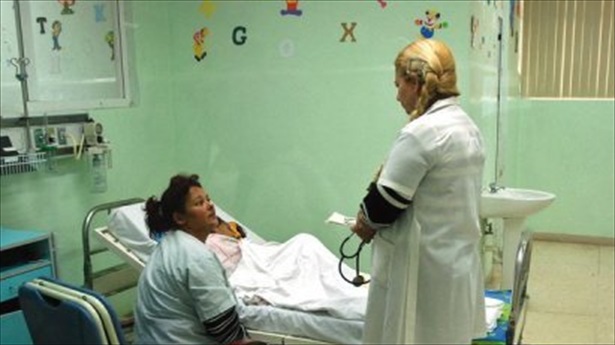
Cuba looks to medical tourism to entice international visitors

Topics: cuba /  [Image via Agence France-Presse]

Topics: cuba / [Image via Agence France-Presse]

Football legend Diego Maradona blazed a path for Cuba to become a medical tourism destination when he traveled to the island for drug addiction treatment in 2000.

Since then, thousands of other famous and not-so-famous faces have traveled here for help, and the government wants to build on that success.

Drug rehab, post-accident motor skills rehabilitation, treatment for eye diseases and plastic surgery — foreign patients can get all of these services and more in Cuba, and at competitive prices.

“I’ve improved tremendously. Now I can move my arms and my legs, and I can almost sit down by myself,” said Venezuelan Cruz Ramos, who arrived in Cuba two months ago, so injured after a car accident that he could only move his eyes.

In downtown Havana, at a clinic that specializes in eye procedures, fellow Venezuelan Carlos Armando Montana gushes about the services.

“Medical attention here is excellent, as much for the quality of the doctors as for the atmosphere and the facilities,” said Montana, 24, who underwent a retina transplant after losing the use of his left eye in a fireworks accident.

Cuba has long been known for producing quality doctors and providing excellent medical services, and as the communist government of President Raul Castro seeks to revive the island’s moribund economy, it is turning to medical tourism as a revenue generator.

Cuba’s main source of foreign income is the sale of medical services to other countries — legions of doctors and nurses, who are public employees, travel abroad to work following an agreement with the host country.

While this generates billions of dollars a year, the related field of medical tourism is still in its infancy.

Servimed, a government-owned for-profit medical services company that caters to foreigners, has website pages in Spanish, French and English, the last two aimed mostly at Canadians.

“Cuba is a poor country which has placed its priorities in the right places, which is to say, in education and health services,” reads the site.

“We offer the opportunity to be seen and treated by qualified doctors without the delays that one would encounter while trying to visit a doctor in Canada.”

Cuba welcomed 2.8 million tourists in 2012, according to official figures. There are no figures however on how many of those foreigners came specifically for medical treatment.

“Cuba has the best doctors in the world,” said Maradona after being treated for drug addiction.

The Argentine football legend, who befriended Fidel Castro, was so enamored with the island that he has a tattoo of Che Guevara on his right shoulder and an image of Fidel tattooed on his left ankle.

African and Latin American leaders have also sought medical attention in Cuba, including Ecuador’s Rafael Correa and — most notably — the late Venezuelan president Hugo Chavez.

At Havana’s Cira Garcia Clinic, reserved for foreigners, breast augmentation surgery costs $1,248 (940 euros), compared to around $6,000 in the United States, $4,350 in Britain and $2,500 in Mexico, according to figures from the Organization for Economic Co-operation and Development (OECD).

“In this clinic we handle all types of medical specialties,” said deputy director Maria Antonieta Gonzalez. And if an in-house expert is unavailable, one can be borrowed from another hospital, she said.

There are plenty to choose from: Cuba has the highest number of doctors per residents in the world — one per 148 inhabitants, according to the World Health Organization.

In other countries, “what makes procedures expensive are the doctors, but in Cuba, they are paid like everyone else,” Gonzalez said.

What adds to the cost however is the difficulty in obtaining medical supplies, which cannot be bought in the nearby United States due to a trade embargo in place for a half-century, Gonzalez said.

On any given day there are 2,000 patients at the Cira Garcia from around the world. Most come from Latin America, but there are also patients from places like Angola, Canada, Spain, and even Cuban-Americans from the US.

Other Havana hospitals, like the Hermanos Ameijeiras and the Gonzalez Coro, have opened “international rooms” to cash in on the influx of foreigners.

Hotels are getting into the business too, with places like El Viejo y el Mar (The Old Man and the Sea), Triton and Neptuno catering to medical tourists.

Aside from foreigners who pay in much-needed hard currency, thousands of Venezuelans travel to Cuba each year for free medical treatment, benefitting from an agreement that Chavez signed with Fidel Castro, then president, in 2000.

There are 43 health centers in Cuba that cater to Venezuelans, with the government in Caracas picking up the tab.

[Image via Agence France-Presse]  source: http://www.rawstory.com / The Raw Story / Home / by Agence France-Presse / Tuesday – July 30th, 2013
Penang medical tourism boom taxes state hospital

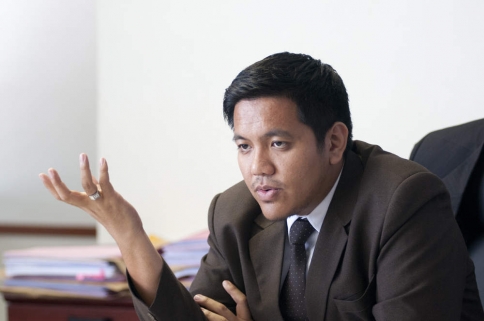
Dr Afif said foreigners are required to pay the full amount when they seek treatment at the Penang Hospital. — Picture by K.E.Ooi

Dr Afif said foreigners are required to pay the full amount when they seek treatment at the Penang Hospital. — Picture by K.E.Ooi

George Town:

The boom in Penang’s medical tourism is not only filling up private hospitals but has spilled over into the state’s general hospital and putting a greater strain on its overworked government medical practitioners.

Private hospitals in the state are referring some of their foreign patients to the Penang Hospital for treatment due to a lack of specialists in certain fields and this is stretching the government hospital’s resources even thinner, said state health executive councillor Dr Afif Bahardin.

“It is hard for them to deal with this. If there’s an emergency between two patients, one is local and one is foreign, which one should they save first?” he asked.

A government hospital’s main purpose is to provide subsidised healthcare to Malaysians, but with foreigners being increasing referred to it, locals will have to “fight” for an appointment with a specialist or for bed space in the wards.

Penang received more than 300,000 medical tourists in 2011 and the state accounted for 60 per cent of the total foreign medical tourists to Malaysia in the same year.

“The Penang Hospital keeps receiving referral cases of foreign patients from private hospitals, sometimes to see a specialist which the private hospital does not have,” Dr Afif said.

This issue is also due to a shortage of specialists in various sub-sectors of the medical field.

“There are specialists only available in Penang Hospital in the whole state such as the rheumatologist and the nuclear medicine specialist and there are specialists like a cochlear implant specialist only available at a private hospital here in the northern region so not all hospitals have all specialists in all fields,” he said.

A shortage in specialists is common as from a pool of 10 doctors, only five would go into a specialist field and out of the five, one or two would go into a sub-specialty like rheumatology.

A rheumatologist is a sub-specialty that deals with rheumatology diseases while nuclear medicine uses molecular therapy and radiopharmaceuticals for diagnosis and therapy.

Dr Afif said Penang Hospital had raised the issue recently with the hospital director and staff as foreign patients were taking up limited beds and filling up their appointments book with some of the hospital specialists.

Sometimes the foreign patients could not afford a longer stay at the private hospital to recuperate or even under the intensive care unit (ICU), so they transfer to the Penang Hospital instead, he added.

Dr Afif said the foreigners were required to pay the full amount when they seek treatment at the Penang Hospital but the bill is far cheaper than what it would cost at a private hospital.

Some foreign patients opted to transfer to the government hospital when they discovered they had to extend their stay as they could no longer afford the pricey private hospital.

“We can’t turn away medical tourists so that is why we have to arrange a dialogue session between the private and public hospitals to come to an amicable solution on this,” he said.

Dr Afif said one of the solutions that had been suggested was for private hospitals to take in medical tourists based on their respective resource capacities and capabilities so as to reduce future spillovers to the public hospital.

Source: http://www.themalaymailonline.com/ The Malay Mail Online.com /  Home> Malaysia / by Opalyn Mok / July 30th, 2013

Medical Tourism Association(R)-University of Miami Partnership Offering First Continuing Education Credits in Medical Tourism

Las Vegas , NV :
 Forward-thinking healthcare professionals can maintain competence and expand knowledge of policies and practices related to patients seeking medical tourism opportunities by earning up to 11 Continuing Medical Education (CME) credits at the 6th World Medical Tourism & Global Healthcare Congress, Nov. 3-5, in Las Vegas, through a joint partnership — the first such offered worldwide — the Medical Tourism Association® and the University of Miami Leonard M. Miller School of Medicine announced today.”Globalization of healthcare has opened opportunities for patients to travel for medical and surgical care — domestically and internationally — but few medical tourism resources exist in terms of CMEs or peer review medical journal articles,” said Eduardo de Marchena, M.D., professor of medicine and surgery and associate dean for the International Medicine Institute at the Miller School of Medicine. “Our goal in developing these CME courses is to educate and engage primary care physicians in pre-travel/preoperative and post-travel/postoperative patient care to decrease risk and improve treatment outcomes.”Topics approved for CME credit range from “Risk Mitigation and Management Policies and Practices for International Patients,” “How to Incorporate Technology and Staffing into Your Medical/Surgical Travel Healthcare Practice,” and “Importance of Cultural Competency in International Patient Care,” to “Corporate Wellness as an Integral Part of Your Medical/Surgical Travel Healthcare Practice,” “Role of Telehealth In Your Medical/Surgical Travel Healthcare Practice,” and “Roles and Responsibilities of Physicians in Patients’ Decisions about Unproven Stem Cell Therapies,” among others.

“Each year, we attract expert speakers who provide attendees with the most valuable content available, but this year, we wanted to give an added bonus by making these sessions count toward CME credit,” said Renee-Marie Stephano, president of the Medical Tourism Association®. “Having such a reputable external organization as the University of Miami approve each of these courses means that attendees — even non-physicians — can be confident that they are the receiving the most comprehensive and up-to-date information concerning best-practices and trends in medical tourism.”

No additional charge is required for attendees to apply for CME credit, which will also count toward the Certified Medical Tourism Specialist® program. For a complete list of CME topics and speakers, visit  http://www.MedicalTourismCongress.com, the industry’s largest education and networking platform, or contact 001-561-792-6676, or Info@MedicalTourismCongress.com. For more information, visit  http://www.medicaltourismassociation.com;

http://www.medicaltourism.com;

http://www.medicaltourismmagazine.com

source: http://www.newsmaker.com.au / NewsMaker / Marketwired / by World Medical Tourism Congress / Press Release / Monday – July 29th, 2013

Thailand Tourism Kicks Off Its “Find Your Fabulous” Campaign and an Array of Exclusive Deals for Medical Travelers

Bangkok : 

The Tourism Authority of Thailand (TAT) joins hands with Thai Airways International, Asia Web Direct, and more than 30 leading providers of health, beauty, and spa treatments to launch a digital marketing initiative promoting the country’s thriving health and wellness industry.

The campaign takes aim at women in the Asia-Pacific market, including Thailand, who are looking for ways to rediscover themselves. The offer is for a wide selection of exclusive deals on wellness and beauty treatments, spa packages, and hotel stays in Thailand.

According to TAT’s Governor, Mr. Suraphon Svetasreni, “From studies on medical tourists’ behaviors, we learned that most of them research and book reservations for health and beauty services online. So we launched the ‘Find Your Fabulous‘ digital marketing campaign to promote the health and beauty segment of Thailand’s tourism industry.

“Fortunately for us, and for medical travelers, over 30 leading providers of wellness-related services including clinics, spas, and health centers signed up to offer over 150 packages of exclusive health, beauty, and hotel deals that allow tourists from all over the world to book online and receive special pricing,” he added.

Mr. Suvadhana Sibunruang, Thai Airways’ Director Brand Management and Commercial Communications says, “Thai Airways has always put an emphasis on online marketing and we believe that with our strong network of online channels including websites and social media, as well as the many members of our Royal Orchid Plus (ROP) program, we will be able to expand the marketing and promotion efforts of this campaign and take it to a higher level of success.”

Mr. Olivier Dombey, Executive General Manager of Asia, Wotif Group and Asia Web Direct, adds, “Australia has really good potential for this sort of promotion and is one tourist market that beauty clinics would benefit from focusing on.  Asia Web Direct is a leading online travel agent with a huge Australian customer base, so we are confident that our network of websites, including www.bangkok.com  and  www.phuket.com , will be able to successfully promote the exclusive deals of the ‘Find Your Fabulous‘ campaign.”

TAT’s Governor adds that the “Find Your Fabulous” campaign will strengthen the image of Thailand as the leading beauty and wellness destination in Asia.  We estimate that the promotion will generate more that 50 million Baht of income for health, beauty, and wellness providers in Thailand.”

To learn more, visit www.FindYourFabulousThailand.com.

source: http://www.sacbee.com / The Sacramento Bee / by PR Newswire – The Tourism Authority of Thailand / Monday – July 29th, 2013

Gallery

Greece To Hold 2nd Medical Tourism Workshop In Russia

This gallery contains 1 photos.

This fall, Greek leading hospitals, incoming tourism offices and hotels will present the country’s medical tourism services in a workshop in Moscow to increase their clientele. This is the second workshop organized toshowcase Greece as a medical and health tourism destination to the … Continue reading →