Heritance Ayurveda Maha Gedara bags Global award for Best Resort

Heritance Ayurveda Maha Gedara was recognized as the “Best Ayurveda Resort” at the 4th FIT Health and Wellness Awards held at ITB 2013 in Berlin, the world’s largest travel trade fair. The FIT Health and Wellness Awards are presented in three categories- “Best Ayurveda Resort”, “Best Health and Spa Resort” and “Best Active Wellness Resort”. FIT Reisen is Europe’s largest tour operator for wellness holidays. The accolade was awarded based on guest experiences with similar resorts across the globe.

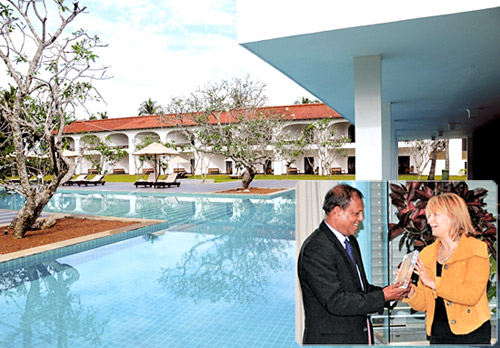
Heritance Ayurveda Maha Gedara and Malin Hapugoda (Managing Director, Aitken Spence Hotels ) receiving the award

Heritance Ayurveda Maha Gedara and Malin Hapugoda (Managing Director, Aitken Spence Hotels ) receiving the award

ITB Berlin 2013 is the world’s largest meeting point of international tourism decision- makers and business leaders. The global tourism industry acclaims this summits’ dual function of a travel trade fair, to be the largest in the world and it acts as a global platform for diverse resorts to present itself.

Since time immemorial, man has been engaged in the pursuit of achieving and maintaining an optimum state of health.

The emergence of Ayurveda in 600 BC as a natural way of healing has grown in global popularity as it has evolved into a scientific system of holistic healing.

The resorts novel delivery of a professional Ayurvedic experience without the compromise of luxury has enabled it to carve its niche in the minds of wellness enthusiasts globally. This has helped Heritance Ayurveda Maha Gedara pave its way to been regarded as the “Best Ayurveda Resort” per global standards.

“Ayurveda has evolved into a holistic lifestyle system and it is viewed as a system of treatment and comprehensive health care”, said Samantha Gunarathne, General Manager, Heritance Ayurveda Maha Gedara.

“The maintenance of constant innovation into adapting the traditional rituals of the Ayurvedic practice has helped Heritance Ayurveda Maha Gedara offer a differentiated unmatched experience.

A consistent trend across the Heritance portfolio is the ability to incorporate the rich culture and tradition into the processes adopted by our resorts”, said Malin Hapugoda, Managing Director, Aitken Spence Hotels.

Aitken Spence is Sri Lanka’s largest resort operator and one of the largest international hotel operators in the Maldives. The group also manages a portfolio of hotels in India and Oman. The company’s premier resorts operate under the brand Heritance.

source: http://www.dailynews.lk / Daily News / Home / Tuesday, April 23rd, 2013

Rwanda targets medical tourism

Investments in modern health facilities to help attract foreign patients
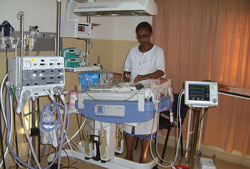
RwandaCT22apr2013

Joseph Uwimana, a resident of Kabuga, a Kigali suburb says that 2012 was his worst year.

“I had an eye complication which our local eye specialists couldn’t treat. Specialists recommended a transfer to India or South Africa where I ended up paying a lot of money to cater for transport, accommodation and treatment,” he says.

Cases like Uwimana’s are frequent in East and Central Africa and they are always referred to specialised medical attention abroad.

UP to 100,000 people; medical tourists, go to India for medical treatment from East Africa and the number is increasing by 4% annually.

Rwanda, whose expenditure on medical tourism is unknown but could be among those that are rapidly growing in the East African region, is looking at becoming a regional hub of inbound medical tourism.

The acting head of services development section at the Rwanda Development Board (RDB), Hubert Rutage Ruzibiza, says the institution believes that medical tourism is a new product suitable for developing countries like Rwanda.

“It strengthens linkages in the national economy and increases foreign exchange earnings,” he says.

Medical tourism happens when consumers elect to travel across international borders with the intention of receiving some form of medical treatment.

Rwanda is looking at options to sustain the budding tourism sector that registered high foreign exchange receipts last year, and tapping into medical tourism is one of the catalysts the government is employing.

There has been an increase in the steady health infrastructure mainly boosted by the public and private investments in decent health facilities which include specialised hospitals and state of the art medical equipment to boost medical tourism.

King Faisal hospital, Rwanda’s leading state-owned healthcare provider, has imported state of the art equipment, such as Computed Tomography (CT) scanner system, Magnetic Resource Imaging (MRI) systems, and other advanced imaging machines that may provide better healthcare for patients.

This kind of investment has led to an international accreditation of King Faisall hospital which is currently laying the ground to become a regional referral hospital in the East African region.

“Such investments have enhanced our local healthy sector and this means that Rwanda will earn more foreign exchange from patients from the neighboring countries like Burundi, DRC, Uganda and others,” says Ruzibiza.

Statistics from King Faisal Hospital indicate that in 2012 alone the hospital received 3,755 foreign patients from across the region and DRC sent the biggest number with 1,850.

Recently, another specialised foreign hospital opened in Rwanda to provide eye treatment across the region. Dr. Agarwal’s Eye Hospital from India is the first foreign specialist establishment in Rwanda, which is most likely to become a regional eye referral centre.

Dr. John Nkurikiye, a consultant ophthalmologist at Dr. Agarwal’s Eye Hospital, says that the facility is well equipped with state of the art technology for performing surgeries related to cataract, retina, Glaucoma and other eye ailments with techniques matching the international standards comparable with Europe and South Africa.

“These facilities and services are currently in Rwanda for the first time,” says Dr. Nkurikiye.

“Dr Agarwal’s eye hospital is aimed to be the centre of excellence in the field of ophthalmology, fulfilling the need for advanced eye care services of the Rwandan and people from neighboring countries.”

Setting up the hospital in Kigali has so far consumed over US$2 million and more investments are in the pipeline to ensure that the facility delivers the state of the art eye treatment to the regional patients.

Ruzibiza says that boosting medical tourism in Rwanda “is also an added advantage for citizens as they are to enjoy reduced cost, the availability of latest medical technologies, and a growing compliance of international quality standards.”

Dr Nkurikiye says that medical tourists generally pay higher, out-of-pocket rates than local patients and also offer the prospect of spending tourism dollars on hotels, meals and even tours and entertainment for themselves and family members.

Dr. Nkurikiye acknowledges that Rwanda could become a tourism hub only if it has world-class medical facilities, which would be difficult without the participation of private entities.

He says that Rwanda is in a good location in terms of climate, the security and quiet environment, which patients need when going through the healing process.

Tourism is Rwanda’s leading foreign exchange earner for many years. Last year, it registered strong performance compared to 2011 as the revenue generated increased by 17% to US$281.8 million compared to US$251.3 million in 2011.

source: http://www.independent.co.ug / Home> News> Regional News / by Godfrey Ntagungira / Monday, April 22nd, 2013

Gallery

Booming medical tourism woos NRI docs from UK

This gallery contains 1 photos.

Chennai , India : Tamil Nadu ranks third in  health tourism destination after Delhi and Mum­bai attracting around 6.65 lakh medical tourists eve­ry year. The medical in­f­rastructure in the state has been making remarkable strides to include in­creasing number of … Continue reading →

Coordination, next bet to scale up medical tourism in TN

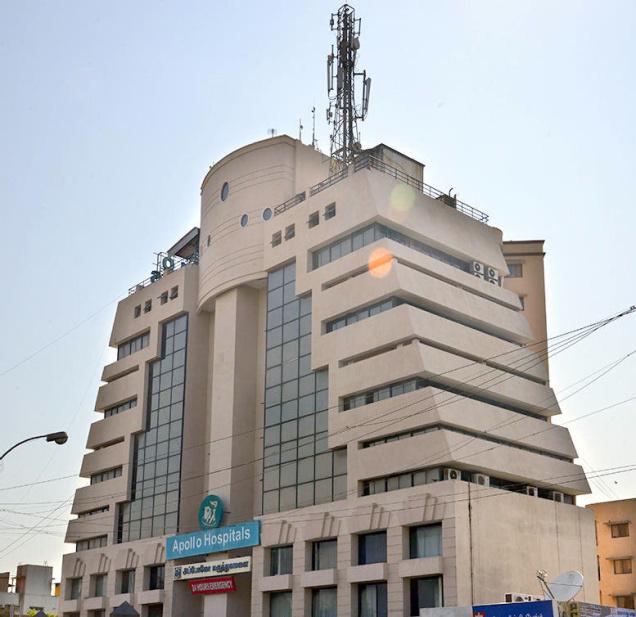
Ramping up: The Apollo Hospitals group is one of muchsought after destinations by medical tourists. / The Hindu

Ramping up: The Apollo Hospitals group is one of muchsought after destinations by medical tourists. / The Hindu

Healthcare players say airlines, airports, hotels should work together

Chennai :   

Healthcare practitioners in the State have urged all stakeholders for a coordinated effort to promote medical tourism.

While Tamil Nadu is already a hub, there is no coordination among hospitals, airlines, airports, hotels and resorts, said Srinidhi Chidambaram, Vice-President, Apollo Hospitals Group, at a CII conference on medical tourism. “All allied sectors must form a consortium to help medical value travellers.”

Raja Sabapathy, Director, Ganga Hospitals, said hospitals must also work together to share best practices and learn from one another.

Last year, the country earned revenues of $2.5 billion from health tourism, driven by factors such as affordable prices, shorter waiting period for patients, clinical excellence and high success rate. Around 1.1 million foreign patients are said to have visited India in 2012.

Growing at a compound annual growth rate of 26 per cent, health tourism is poised to cross $3 billion by the end of this year.

Tamil Nadu, with its well-known hospitals in Chennai, Coimbatore, Vellore and Madurai, contributes 40 per cent of India’s medical tourism industry. The state is especially sought-after for treatment relating to cardiology, oncology and neurology.

Mike Nithavrianakis, Deputy High Commissioner, British High Commission, said apart from corporate hospitals, Tamil Nadu also boasts of several not-for-profit institutions such as Sankara Nethralaya, CMC Vellore and Aravind Eye Hospitals.

Research institute IIT-Madras is also making headway in finding innovative solutions for cataract surgeries and cheaper ultrasound scanners. British specialists and universities are willing to collaborate with the State and country for more breakthroughs, said Nithavrianakis.

But India needs to watch out for competition from Cuba, Thailand, Malaysia, Singapore, Israel and Jordan, which are also keen on promoting medical tourism.

“Lack of uniform pricing among hospitals, lack of insurance coverage for overseas medical care and stringent visa norms are a few stumbling blocks,” said Srinidhi Chidambaram.

Widespread NABH accreditation (National Accreditation Board for Hospitals and Healthcare Providers) and standardised norms for alternative remedies will assure travellers of a positive experience in the country, she said.

source: http://www.thehindubusinessline.com / Business Line / Home> Industry> Travel / The Hindu Bureau / April 19th, 2013

Medical tourism: Remove red tape and provide bold support measures

The “creative economy’’ initiative presented by President Park Geun-hye as one of her election pledges is apparently aimed at making a breakthrough in the nation’s increasingly fixed trend of low economic growth. Given the visible limitations in the manufacturing sector amid ever intensifying global competition, the first female leader won’t deny the need to groom new growth engines in service industries, especially the medical sector in which many talented Koreans are employed.

In this regard, we welcome the news that the number of foreign medical tourists visiting here is rising at a steady pace and Korean medical systems will be exported to Saudi Arabia under the so-called “Twinning Project.’’

According to the Ministry of Health and Welfare, the number of foreign health tourists to Korea surpassed 150,000 last year, up 27.3 percent from a year earlier. The ministry expects the figure to reach 200,000 this year and 1 million in 2020. Last year’s revenues from medical tourism amounted to about 240 billion won ($212.4 million), a whopping 32 percent rise from 2011, with the nation’s health-related surplus estimated at $34.6 million.

Most notable is that Chinese medical travelers surged 63.7 percent to 31,472, outstripping Americans for the first time. While Japanese patients declined due largely to the yen’s devaluation, those from the Middle East continued to rise.

The landmark deal with Saudi Arabia on medical cooperation also carries significance in that the health care sector could be a new locomotive to spur the country’s growth momentum, as the construction industry did in the 1970s and 1980s. Under the agreement, Korea will export its medical knowhow and systems to the oil-rich Middle East country and the project will serve as a good occasion for our medical industry to raise its profile globally.

Medical tourism is a value-added service industry that can provide an answer to the ”jobless growth’’ that has been the painful norm since the currency crisis in the late 1990s. Given that the medical sector generally creates three times more jobs than manufacturing, Thailand sets a good example for Korea as it attracts more than 1.5 million medical tourists a year. India and Singapore also hosted 730,000 and 720,000 foreign patients last year.

Our reality is far from satisfactory, though. There has been much talk about the need to develop medical services as a next growth engine along with education, tourism and other key service industries, but little has been done, choked by administrative red tape and tough opposition arising from the possible weakening of public health care services.

The time is long overdue for Korea to act on this issue, given the desperate need to create more jobs. The “hallyu’’ or Korean wave in medical services can be realized through a two-track initiative by wooing foreign patients actively and encouraging hospitals and medical staff to go abroad. To that end, the government needs to have a forward-looking attitude toward for-profit hospitals, putting an end to the controversy that has been persistent over the past decade.

The point is to globalize our health care industry by removing outdated regulations and providing bold support measures.

source: http://www.koreatimes.co.kr / The Korea Times / Home> Opinion> Editorial / April 14th, 2013