
Categories
- Associations/Organisations/Government/NonGovernment
- Dental Tourism
- Events/Exhibitions/Conferences/Forums
- Fertility Tourism
- Health /Medical Treatment For Overseas Treatment
- Health/Medical Tourism Boards
- Health/Medical/Wellness Marketing And Management
- Healthcare Cities
- Healthcare Service Providers
- Healthcare/Medical Insurance/ Loans
- Interviews
- Medical Tourism/Health Tourism
- Medical Treatment/Health Treatment Subject By Speciality
- Others
- Reports,Features, Statistics
- Top Tips (all)
- Travelling For Surgery Abroad / Medical Surgery Overseas
- Uncategorized
- Wellness Tourism
-
Recent Posts
-

Tags
asia health tourism asia medical tourism Care tourism care tourism india costa rica medical tourism dental tourism dental tourism in asia Dental tourism in Costa Rica dental tourism in europe dental tourism in hungary Dental tourism in india dental treatment abroad global health tourism global medical tourism health care tourism health tourism health tourism asia health tourism costa rica health tourism in asia health tourism india health tourism in thailand health tourism malaysia health tourism mexico hip resurfacing surgery in india india medical tourism liver transplant surgery india at low cost medical tourism medical tourism asia medical tourism facilitator medical tourism in asia medical tourism india medical tourism in thailand medical tourism malaysia medical tourism mexico medical tourism philippine medical tourism philippines medical tourists medical travel medical treatment abroad medical treatment overseas travelling abroad for surgery travelling overseas for dental surgery travelling overseas for health treatment travelling overseas for surgery wellness tourism
Plastic surgery boom behind medical tourism in South Korea
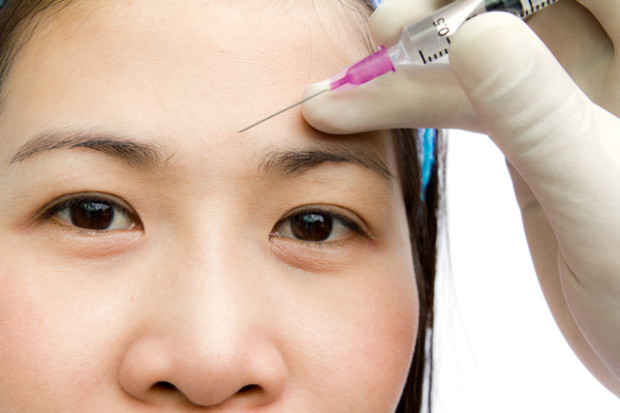
South Korea plastic surgery sparks a boom in medical tourism industry. (Photo Shutterstock)
Seoul , South Korea
A crowd of young women wait nervously in the lobby of a popular plastic surgery clinic in Apgujeong, the affluent neighborhood at the heart of Gangnam. Photographs of Korean pop singers and actresses line the walls, winsome customers who smile next to their cosmetic surgeons.
“It’s painful, but I really want a face like those Korean actress girls,” says a Chinese patient leaving a check-up—with her nose wrapped in a surgical bandage.
Many customers have traveled to this neighborhood—home to some 400 plastic surgery hospitals—all the way from China, Japan and Southeast Asia. They’re hoping to take home a little “Gangnam style” for themselves.
That isn’t just a Psy reference . Gangnam is popular from an Asia-wide trend made famous over the past decade: The popularity of Korean television shows and pop singers known as the “Korean Wave.”
Plastic surgery is a lucrative trade in South Korea, with citizens edging out Greece, Italy and the U.S. as the most cosmetically enhanced people in the world.
It’s also attracting a torrent of medical tourists. In 2011, the country’s income from medical tourism income reached $116 million, double from five years earlier, according to government statistics.
At the Grand Plastic Surgery Clinic, surgeons offer procedures for the rounded eyes and pointy nose—just a few examples—that are a standard of beauty in Asia.
The Grand Clinic is one of Gangnam’s most successful ventures, attracting celebrity customers and offering regular tours to Korean television crews. “A lot of people want to be like they are in Hollywood,” said Huh Chul, a cosmetic surgeon. “There is glamour to it.”
For a neighborhood that amounts to the Beverly Hills of Seoul, the prices aren’t ghastly. An eyelift costs around $1,500 to $2,000, while a nose job hovers around $3,000 to $4,000 depending on the hospital.
But don’t be mistaken. In South Korea, this is no longer a woman’s pastime. Men are getting their faces restructured in big numbers, too.
South Korea’s plastic surgery industry
In 1996, South Korea joined the club of developed countries, the OECD. It was the first major landmark that signified the country was gathering the expertise and technology to build a plastic surgery industry.
In the mid-2000s, as the “Korean Wave” picked up momentum, the nation saw a corresponding boom of travelers seeking medical procedures in Seoul. Grand Plastic Surgery Clinic started out with a single doctor working in a subway station, but grew to include some 30 doctors during those years, said Huh Chul, the doctor.
More recently, South Korea has been trying to appeal to medical tourists. Seoul is setting itself up as a hub competing with Thailand and India, but offering more reliable medical expertise and higher quality facilities.
For tourists, plastic surgery is the second most popular procedure behind internal medicine.
But the “Korean Wave” is only one factor boosting plastic surgery.
“Korea also offers price competitiveness and quality,” said Jiyun Yu, a senior researcher at the Korea Tourism and Culture Institute, a policy think-tank in Seoul. “We are not behind the American doctors in terms of expertise.”
Celebrity underworld: Propofol
The booming plastic surgery industry comes with a shady side. In late January, Seoul prosecutors announced they were launching a wide-reaching investigation into celebrities who abuse Propofol—a powerful anesthetic used in the operations.
The intravenously injected drug quickly puts patients to sleep after exhausting days of rehearsals, performances and fan pressure. Addiction to Propofol contributed to the death of Michael Jackson.
In December, police raided seven hospitals in Gangnam, alleging that several clinics have been prescribing Propofol illegally to celebrities for non-medical purposes. Bringing in celebrities is good for advertising.
So far, prosecutors have called in two prominent Korean actresses for questioning over their supposed abuse of the narcotic.
Even though one in five South Korean women admits to going under the knife, the practice hasn’t entirely shed its stigma.
South Korean men—especially older ones—revile the idea of dating or marrying a “sung-gui,” slang for “plastic surgery monster.” The lewd term refers to a person who has lost natural beauty to inappropriate botox injections and surgical treatments, giving off a fake and sometimes bloated appearance.
But given the pressures of this fiercely competitive society, others say an eye-tuck and facelift are prerequisites to getting ahead.
“You don’t understand!” exclaimed a university student at a pub, who asked not to be named after she went through three operations. “To be Korean is to get plastic surgery. You must do it, or young people will think you’re weird.”
source: http://www.voxxi.com / Home> LifeStyle / source: Geoffrey Cain / Global Post / February 26th, 2013
Comments Off on Plastic surgery boom behind medical tourism in South Korea
Posted in Medical Tourism/Health Tourism
Gallery
Inaugural Global Wellness Tourism Congress Announced; Will Be Held In Conjunction with 2013 Global Spa & Wellness Summit
Ministers of Tourism and Industry VIPs Will Gather in New Delhi, India to Shape Booming Wellness Tourism Market. SRI International To Present “Wellness Tourism Economic Impact Study,” First Research to Benchmark This Travel Category. The Global Spa & Wellness Summit … Continue reading
Comments Off on Inaugural Global Wellness Tourism Congress Announced; Will Be Held In Conjunction with 2013 Global Spa & Wellness Summit
Medical tourists are the best advocates for effective health solutions

Monte Carlo , MONACO :
Current trends in the medical tourism industry indicate that the needs of international patients are challenging health service providers to come up with advanced solutions for quality healthcare outcomes. The basic question of a medical traveler is always ‘Who is the best doctor?’ This new approach – benchmarking for outcomes – will ensure medical tourism is more focused on patient-centered medicine.
The topic of benchmarking of effective outcomes in the global medical travel industry will be one of the topics discussed at The International Medical Travel Exhibition and Conference (IMTEC 2013) which is a two-day conference that will provide a transparent platform for both consumers and service providers to understand the latest trends and drivers in the global medical tourism industry. Taking place for the first time on 22-23 March at the Grimaldi Forum in Monaco, IMTEC 2013 will host the leaders and thinkers in the medical travel arena to learn and discuss the latest developments in the medical travel market. IMTEC is organised by Informa Life Sciences Exhibitions, the organisers of the world’s second largest healthcare exhibition ‘Arab Health’, in strategic cooperation with the European Medical Travel Conference (EMTC).
According to Dr. Uwe Klein, Chairman of IMTEC 2013, “Within the medical travel industry, competition is not only for the most advanced hospitals, but increasingly for the best healthcare solutions associated with the competencies and skills of a particular doctor or medial team. If patients could learn more about their rights and entitlements in cross-border healthcare, they would be more easily converted into medical travelers. Patients need to have access to ‘neutral’ information about their medical travel options from non-commercial organizations so that they can be assured that they are being given impartial information when making decisions about cross-border healthcare options. Facilitators have a special responsibility here and IMTEC once more gives the opportunity to discuss and to challenge legal and ethical standards in medical travel.”
IMTEC 2013 is launching its Commissioners of Medical Travel (CMT) Programme at this year’s event. CMTs are qualified healthcare facilitators and purchasers from across the globe, who will be invited to attend the IMTEC exhibition. The confirmed institutions joining the CMT Programme who will be present in Monaco and seeking partners to add to their international network include New Patient Foundation, Dubai, UAE; Companion Global Healthcare Group, USA; ACE for Health Tourism, Kuwait; Outassurance Brokers, Tanzania; Ukraine Regional Network, Ukraine; Panorama Medica Group, Thailand; Metlife Amplico, Poland, and many more.
“I believe the market projections in medical travel are undervalued in the sense that they only include the cost of treatments availed by patients, what it is not able to measure are the investments that come with the development of the industry,” says Joyce Alumno, Executive Director & Chief Strategist of HealthCORE Research, Communications & Management, Inc. in the Philippines, and Advisory Board member for IMTEC 2013.
“Asian countries are still seen as the main players in medical tourism given the low cost of treatments and young demographic profile that pose bigger potentials in the years to come. If efforts are sustained, the number of medical travelers is expected to grow since the ageing population is increasing exponentially and the developed countries like the US, Canada, Australia and some European countries are experiencing the burden of healthcare costs. For attendees spending on their registration fees at IMTEC, they would like to get a return on their investments by being able to generate business by understanding the different markets better and knowing what strategies will work. Having someone talk from organized groups who have been steadily sending patients overseas will be a very interesting topic.”
Key speakers at IMTEC 2013 include Ms. Laila Al Jassmi, CEO of Health Policy and Strategy Sector, Dubai Health Authority (DHA), UAE; Dr. Paolo Giordano, Managing Director, European Union of Private Hospitals (UEHP), France; Josef Woodman, President, Patients Beyond Borders, USA; Dr. William Ruschhaupt, Chairman Global Health Center, Cleveland Clinic, USA; Ruben Toral, Founder and Director, Medeguide, Thailand; and Isabel de la Mata, Principal Adviser, SANCO – Heath & Consumers, European Commission, Luxembourg.
Source: http://www.traveldailynews.com/ Home> News> Special Interest Travel> Spa & Health / by Theodore Koumelis / February 27th, 2013
Comments Off on Medical tourists are the best advocates for effective health solutions
Posted in Medical Tourism/Health Tourism
New rules issued on “surrogacy tourism”
India has issued new rules barring foreign gay couples and single people from using surrogate mothers to become parents, drawing sharp criticism from gay rights advocates and fertility clinics.
Commercial surrogacy is a booming industry in India and in recent years ranks of childless foreign couples looking for a low-cost, legally simple route to parenthood have been joined by gay couples and singles.
The measures, circulated to Indian missions abroad in late 2012, which only came to light in the Indian media on Friday, mark the first step to the regulation of “surrogacy tourism” in India.
The rules say foreign couples seeking to enter into a surrogacy arrangement in India must be a “man and woman (who) are duly married and the marriage should be sustained at least two years”.
The rule changes, posted on the Indian home ministry’s website, were denounced by fertility clinics and gay rights activists as “discriminatory”.
“Parenting is everybody’s right and now we’re withdrawing that right,” said Dr Rita Bakshi, who heads the International Fertility Centre in New Delhi.
“These rules are definitely not welcome, definitely restrictive and very discriminatory,” she told AFP. “This is a huge heartbreak for homosexual couples and singles,” commented fertility doctor Anoop Gupta.
Gay rights campaigners also denounced the changes to the rules on surrogacy, which was legalised in 2002.
“It’s totally unfair — not only for gay people but for people who are not married who may have been living together for years and for singles,” Mumbai gay rights advocate Nitin Karani told AFP.
India is a popular destination for gay couples seeking children even though it remains a largely conservative country and only decriminalised consensual sex between homosexuals in 2011.
The home ministry would not comment on the changes which stipulate that would-be parents provide proof that their home country will give citizenship to any baby born of a surrogate mother.
There have been several publicised cases of babies born through cross-border surrogacy in recent years who have been trapped in citizenship limbo because their parents’ countries refused them passports.
Surrogacy is banned in some European countries and is subject to strict regulation in the United States.
The new India rules, which also state applicants must apply for a medical instead of a tourist visa, come as legislation to regulate the industry has yet to be passed by parliament.
The bill says only women aged between 21 and 35 can act as surrogates but sets no minimum payment for the mother.
Critics have said a lack of legislation governing surrogacy encourages “rent-a-womb” exploitation of young, poor Indian women.
While the government has been pushing the country as a medical tourism destination, the issue of wealthy foreigners paying poor Indians to have babies has raised ethical concerns in many Indian minds.
Clinic owners deny ill-treatment of mothers, saying it is in their interest to treat the women well in order for them to have healthy babies,
The cost of surrogacy is about $18,000 to $30,000 in India, said Bakshi, of which around $8,000 goes to the surrogate mother. The figure is roughly a third of the US price.
Hari Ramasubramanian, founding partner of Indian Surrogacy Law, said the new measures were introduced without “proper consultation” and needed to be challenged in the courts.
“A lot of people who will be affected had seen India as a wonderful option for getting into parenthood and now this option is closed. It’s quite sad,” he said.
source: http://www.KhaleejTimes.com / Home> International /AFP / January 18th, 2013
Comments Off on New rules issued on “surrogacy tourism”
Posted in Fertility Tourism, Medical Tourism/Health Tourism, Others, Reports,Features, Statistics, Top Tips (all)