Category Archives: Medical Tourism/Health Tourism

Health Tourism new source of revenue for Turkey

It has been reported by officials that 200,000 foreigners visit Turkey to receive medical care every year. Minister of Health Recep Akdag stated that the country’s medical tourism was also on the rise. The Turkish Tourism Industry is known to have been on the rise for a long while, as well and the country enjoys its biggest revenues from tourism.

The minister who attended the 5th International Health Tourism Congress, held in Ankara on Monday said that the number of foreigners who visit Turkey for medical treatment had been increasing every year. The minister said this was due to the improvement in quality of medical services offered by Turkish hospitals at affordable prices compared to competing countries.

It is a fact that Turkey has great potential for becoming one of the best health tourism destinations in the world currently whereas it was a country sending patients abroad for treatment ten years ago.

This success has been due to the Health Transformation Program, launched by the Ministry of Health in 2003 in part and the number of visiting foreigners who received treatment at Turkish hospitals reached 200,000 in 2011.

It is important to note that half of these foreign patients visit Turkey to receive medical service in particular.

Turkey has some 1,600 thermal springs known for their healing abilities which draw thousands of foreign visitors seeking alternative cures.

26.11.2012
BTT

source: http://www.BusinessTurkeyToday.com / Home> News Today / November 26th, 2012

MV way to boost medical tourism

Soft approach: Wong singing ‘Wo Men De Gu Shi’ along with fans at the launch of the song’s music video in Beijing. (Inset) A footage from the MV showing Wong with the MV female lead who is about to undergo surgery.

Malaysian singer-composer Michael Wong’s Mandarin hit song has been made the official music video to promote the country as a top destination for Chinese visitors to seek healthcare services.

MALAYSIA’S very own singer-composer Michael Wong really has the ability to touch his fans with his ballads.

Back in 2005, his hit Mandarin song Tong Hua (Fairy Tale) struck a soft spot on a tragic love for someone dying.

This time, the singer is back with Wo Men De Gu Shi (Our Story) which is about treasuring one’s health in pursuit of one’s dreams.

The music video of this song, his latest, has been made the official MV of the Malaysia Healthcare Travel Council (MHTC) in its bid to promote Malaysia as a top destination for Chinese visitors to seek healthcare services while enjoying their stay in the country.

Wong, who is the Malaysia Healthcare Travel Ambassador, said the MV was a soft approach not only to tell visitors from other countries what services Malaysia has to offer but also one to take good care of our health.

“During the filming of the MV at a hospital in Kuala Lumpur, the crew experienced an incident that stirred our emotions. The doctor who was involved in the shoot was suddenly called on to treat a patient with a critical heart failure condition.

“We had to clear the set for the medical workers to save the patient’s life. We later heard that the patient survived. We were thrilled because we thought that if the doctor was not with us at that moment and provided immediate treatment, the patient could have died,” he said at the launch of the MV in Beijing recently.

Prince Court Medical Centre sales and marketing manager Rachel Chan said the filming of the MV was halted for about an hour and the site where the hospital’s only biplane cath lab equipment was installed was then used by the medical workers to perform a coronary angiography on the patient.

She said after the surgery the crew resumed filming and finished their job in the wee hours the following day.

At first sight, viewers will surely draw similarities between the Tong Huaand Wo Men De Gu Shi music videos. They were both shot in the hospital and one of the scenes where Wong played the piano were quite identical.

“The representatives from the MHTC had watched the MV and hoped it would send a message on the philosophy of health via this new song.

“Perhaps you will feel that both music videos are quite similar as the female leading roles in the MV were hospitalised. That’s all, what the new MV and song want to express is different,” Wong said.

He said that unlike in Tong Hua where he lost the female lead, it was a happy ending for the new song where his “partner” was successfully treated.

Two weeks before the launch of its MV, the Wo Men De Gu Shi song was aired over radio stations, followed by the release of the MV on popular video portals such as Youku, Tudou, Sina and 56.com.

In January, the Ipoh-born singer will hold an “Our Story” concert at the Legacy@Huashan Creative Park in Taipei where he is currently based.

It’s still too premature to tell how successful this song will be in branding the Malaysian medical and healthcare industry and drawing Chinese medical tourists here.

In the past few years, MHTC has invited the Chinese media for familiarisation trips to report about Malaysian healthcare services.

MHTC chief executive officer Dr Mary Wong said since its establishment in 2009 under the purview of the Health Ministry, the council had participated in promotions in Hong Kong, Guangzhou, Shanghai, Chengdu and Guizhou and it would continue to be active in penetrating the Chinese market.

“A lot of Chinese like to visit Malaysia. Later, Malaysia became known as a medical tourist destination and more Chinese come here for cosmetic surgery and dental and cardiac treatment.

“We can work with travel agencies, insurance companies and big corporations in China. These days the Chinese corporations are giving benefits to their employees such as trips abroad that include healthcare screening,” she said.

Last year, the number of Chinese nationals visiting Malaysia for healthcare services increased by 50% from 7,357 in 2010 to 11,029. The number continues to surge with up to 10,000 visitors as of August this year.

source: http://www.thestar.com.my / Home> NEWS> Columnists> Made in China / by Chow How Ban <hbchow@thestar.com.my> / Saturday, November 24th, 2012

The rise of medical tourism

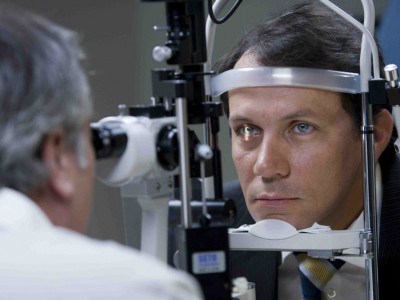
Reaserch shows that Australians are becoming increasingly comfortable with the idea of heading overseas for cheap medical and dental procedures. / Photo: Michele Mossop /

Australians don’t seem to need much of an excuse to travel. In the midst of endless complaints about the cost of living, many of us are finding the spare cash for a trip to Bali or Hawaii to relax and indulge in some overseas shopping, and perhaps some value-for-money dental work as well.

The Ipsos Global Advisor Study, conducted in August of this year, found a class of global citizens who are medically mobile. One in five of those surveyed (18 per cent) indicated they “definitely would” consider travelling to another country to receive medical or dental care if the costs were significantly lower than in their own country. The findings shed some light on medical tourism, an increasingly popular phenomenon that is becoming a formalised industry in many countries.

In terms of Australia, Global Advisor found that while only 11 per cent of us definitely would consider travelling for a medical procedure, 24 per cent probably would. That’s 35 per cent of Australians open to travelling for healthcare despite the fact we have a strong and affordable healthcare system in this country. We sit somewhere in the middle of the spectrum of countries in this regard; less eager than Indians (35 per cent of them said they would travel for healthcare) and more willing than the Japanese (only 3 per cent were interested in medical tourism).

We are finding increasing reference in our qualitative research to the cost of healthcare in Australia and the idea that travelling overseas for procedures (mostly cosmetic) isn’t a bad idea. In Ipsos’ recent Mind & Mood Report, we encountered a group of women exchanging stories about experiences and plans for trips to Asia that combined holidays with medical procedures.

Woman 1: “You know Steve? He went to Thailand to have his teeth done. It was going to cost him $10 000 to get it done here and it only cost $2000, plus he got a holiday.”

Woman 2: “I think I might get my nose job surgery there.”

Reflecting their obsession with travel and modest financial means, the Global Advisor Studyfound that younger adults were more open to going abroad to seek cheaper medical or dental work. On the global aggregate level, those under the age of 35 (19 per cent) and those aged 35-49 (19 per cent) were more likely than those aged 50-64 (15 per cent) to say they “definitely would” go.

UTS ethnographer and cultural studies researcher Meredith Jones – who is conducting an international study on cosmetic surgery tourism – is not surprised by this finding. “When I conducted a pilot study in 2009, agents were putting together packages for people who were travelling solo or with a spouse or friend to get cosmetic surgery in places like Thailand. These were people who had always wanted a particular procedure all their lives and just couldn’t afford it. When I returned for further research in early 2012, there had been a dramatic shift with agents putting together group packages of 10 travellers or less, mostly young women in their early 20s, wanting breast augmentation.” Jones reports that some agents told her that these group packages now account for about 80 per cent of their clientele. Her hypothesis is that these young women were keen rather than passionate about getting a procedure and the new, affordable, package tours make it easier to make the decision. “These tours are affordable and fun. It’s like a holiday with boobs at the end.”

And when you pass through customs you have nothing to declare but a new cup size..

source: http://www.brw.com.au / Blogs> Rebecca Hurley / November 22nd, 2012

Blogger

Rebecca HuntleyDr Rebecca Huntley is a director of the Ipsos Mackay Report, an author and social commentator with a background in publishing, academia and politics. She holds degrees in law and film studies and a PhD in Gender Studies. She is the author of books on social and food trends and is a sought after media commentator on radio, in print and on television.

DHA and GDRFA hold meeting with private hospitals to discuss medical tourism visa procedures

WAM Dubai, Nov 25th, 2012 (WAM)

In a move to streamline the medical tourism initiative for the Emirate of Dubai, the Dubai Health Authority (DHA) and the General Directorate of Residence and Foreigners Affairs (GDRFA) recently held a meeting with private sector hospitals at the DHA headquarters.

The meeting was aimed at providing the private sector with information on how to apply for a medical tourism visa for their overseas patients who are keen to utilize the health facilities in the Emirate.

Engineer Essa Al Haj Al Maidour, Director-General of the Dubai Health Authority, said: “In line with the directions of H.H. Sheikh Hamdan bin Mohammed bin Rashid Al Maktoum, Crown Prince of Dubai and Chairman of the Dubai Executive Council, we are working with all relevant stakeholders to streamline the medical tourism initiative for the Emirate. Dubai is the world’s leading destination for tourism and leisure and since Dubai offers excellent healthcare facilities, medical tourism is an extension of the hospitality that Dubai is synonymous with. Unification of policies and processes will ensure smooth functioning of a dynastic health sector and will benefit both medical tourists as well as the healthcare providers.” The DHA and GDRFA have designed a process for hospitals to comply with.

Laila Al Jassmi, CEO of Health Policy and Strategy at the DHA said: “Hospitals will have to request for a treatment visa service quota’ from the DHA. This will be applicable for those hospitals who intend to cater to medical tourists. The DHA will approve this quota and the hospital will be able to apply for only those number of medical tourism visas as stipulated in the quota. This is to ensure hospitals are not over or under utilize their services and it also protects the medical tourist.” She said that this is a one time requirement and hospitals need to reapply only if they expand their capacity.

Al Jassmi added: “The rest of the procedures for the hospitals remain the same. Hospitals still need to apply for a facility establishment card’ which is a requisite from the GDRFA. The card has all the details of the hospital, including number of employees and is used for prompt facilitation of medical tourist visas.” Major Jasim Ali Rashed Ahli, Director of Entry Permit Department at GDRFA, said: “In line with the directions of Major- General Mohammad Ahmed Al Marri, Director-General of the GDRFA, we will continue to provide patients who wish to seek treatment in Dubai, with easy visa services. The process for applying for a medical tourist visa remains the same. The hospitals will have to sponsor the patients.” Major Jasim added that this type of visa has been in place since 2008 and is only issued to hospitals that sponsor patients and their accompanying family members. He said, “The patient needs to get his or her medical report attested from the UAE consulate in the patient’s residing country and the hospital needs to submit this along with the requisite documents.” The visa is a three-month visa and is extendible twice, which means the patient can stay in the country for nine months at a stretch. Ahli said, “For this particular visa, we do not have a rule that the patient should remain out of the country for one month after his initial three months are over. We are dealing with the life of a patient and therefore these visas are given top priority and are issued or renewed immediately, as needed.” Al Jassmi added that this is the first phase of the initiative. She said: “Presently we are only inviting JCI accredited hospitals and those that are in the process for getting such international accreditations. In the next step, we will include specialized clinics as well as spas and wellness centres.” Marwan Abedin, Chief Executive Officer, Dubai Healthcare City, said: “This project is of vital importance to the overall health sector in Dubai as all relevant stakeholders including immigration, the aviation industry, the hospitality sector, public and private hospitals are coming together to position Dubai as a medical tourism destination and to streamline the process of bringing patients to Dubai.” Dr Ayesha Abdulla, Managing Director of Dubai Healthcare City, said: “Medical tourism is a growth engine and can contribute to the GDP of the overall country in due course of time. Dubai has excellent healthcare facilities and healthcare is a sector which has been witnessing significant growth and development over the last few years.” WAM/AM

source: http://www.wam.org.ae / Emirates News Agency / November 25th, 2012

Maldivian inks pact with Apollo Hospitals for Medical Tourism

Maldivian, the national carrier of Maldives, has signed a pact with the Chennai-headquartered Apollo Hospitals to give discounts to each others’ clients, thus promoting Medical Tourism in India, as per The Hindu Business Line report. For example, Apollo Hospitals will give a discount on its service charges for those who fly on the airline, and the airline will give similar discounts to the hospital’s patients on the airfare.

Abdul Harris, Managing Director, Maldivian, said it is keen on signing similar pacts with other healthcare service providers in India. He said the Indian healthcare industry attracts a bulk of Maldivian tourists every year. Every day, at least 200 Maldivians visit India, and a big chunk of Indians visit Maldives for medical care. Besides, quoting some statistics, he said, on an average, every Maldivian spends USD 600 in India.

source: http://www.travelbizmonitor.com / Home / by TBM staff, Mumbai / November 21st, 2012