Category Archives: Medical Tourism/Health Tourism

Nigerians spend $8bn annually on Medical Tourism – Expert

A Nigerian U.S-based cardiologist, Dr Kamar Adeleke, has said that influential Nigerians spend about $8 billion U.S. dollars annually on medical tourism.

Adeleke, who made this known in Ibadan on Tuesday, described as incredible the huge amount on foreign exchange being wasted on medical tourism by influential Nigerians.

He said that such funds should have been better deployed to the development of local health infrastructure and facilities.

Adeleke, who is the leader of a 50-member Free Health Mission from the U.S. to Ibadan, said his team was partnering with the Oyo State Government to further develop health infrastructure and facilities to boost healthcare delivery in the state.

“Most of the common ailments being diagnosed and treated by Free Health Mission included diabetes, high blood pressure, infections, fever, pneumonia, hernia, fibroid as well as varied degrees of eye problems.

“Our mission is also evaluating Oyo State Government’s health facilities to see what needs to be done to further help them and that is part of what we are doing.

“We are going to see how we can collaborate and upgrade the facilities by bringing more equipment.

“We will later bring more doctors, including ophthalmologists, dentists and general surgeons here for consulting services,” he said.

Adeleke, who is the Chief Cardiologist at St. Francis Hospital, Delaware, U.S.A., said the mission was invited at the instance of the wife of the state governor, Mrs Florence Ajimobi.

He said that the team had brought about 50 cartons of various medicaments, notably multi-vitamins and anti-biotic for free distribution to patients.

While decrying the high rate at which influential Nigerians went abroad on medical tourism, Adeleke advised the government to create a conducive environment for local healthcare delivery.

The state Commissioner for Health, Dr Muyiwa Gbadegesin, had told journalists that the five-day programme would be under-studied by the hospital’s management.

He said that the State Government was in the process of introducing a health insurance scheme.

“With the health insurance scheme, it means that anytime anybody falls sick, he goes to the hospital and does not need to pay anything. It will help our people greatly,” he said.

The commissioner commended the team for their contribution to humanity.

source: http://www.businessdailyonline.com / Home> Health & Fitness / Business Daily, Nigeria / Wednesday, November 14th, 2012

Robotic surgeries boost Bangalore’s medical tourism

Anjana, a 42-year-old woman diagnosed with tumour in her left kidney, was told by doctors that she needed to have it removed.

Since Anjana wanted to preserve her kidney and, at the same time, get rid of the tumour, she underwent a procedure called Robot-Assisted Partial Nephrectomy (kidney preserving surgery) wherein only the tumour was excised, leaving her kidney intact.She stayed in the hospital for just three days and was able to return to her job within two weeks. Till recently, the treatment of such tumours involved complete removal of the kidney and the tumour. Not anymore, thanks to robot-assisted surgeries.

Surgeries like this have not only cured thousands of patients but also helped boost Bangalore’s
image as a leading medical tourism destination in the country.

Patients with such condition come to bangalore from the world over including the Middle East, Africa, Australia, The Netherlands, Denmark, Russia and Sri Lanka.

Robotic radiation, that was introduced three years ago in the city, contributes to about 20% of the medical tourists. And robotic surgery is boosting medi-tourism in Karnataka.

In fact, not just urology, most of gynaecological surgeries can be done with the help of robots.
Over the past one year, Manipal Hospital has got patients from Africa, Maldives and Sri Lanka enquiring about robotic surgery.

“The robot can be used in the removal of fibroids — myomectomy, removal of uterus, hysterectomy, re-canalisation of fallopian tubes in patients with blocked tubes or when sterilisation is to be reversed, endometriosis surgery and surgery for cervical and uterine cancers,” said Dr Gayathri Karthik, consultant, gynaecology and obstetrics, Manipal Hospital.

She feels the city’s medical image has got a boost thanks to the progress made in this field.
Take the case of Caroline (name changed) from Nigeria, who recently underwent surgery on her uterus, in the city, after being diagnosed with fibroid.

She was advised removal of her uterus, which she was not comfortable with since she wanted another baby. She had heard of robotic surgery and decided to make a trip to Bangalore to undergo the same.She underwent a robot assisted myomectomy by Dr Karthik where two fibroids were removed. She recovered well and left for Africa in 10 days.

Radiation with the help of robots (also called Cyberknife) is another specialisation that has gained popularity among Indian and foreign patients over the past couple of years. According to Dr Sridhar PS, consultant, radiation oncologist, Healthcare Global (HCG), robotic surgery is the future and the country so far has done well to gain expertise in this. “Earlier, we faced the problem where we did not achieve accurate radiation. So if there is a tumour in the lungs, radiation would affect the surrounding areas. However, now with the help of robotic radiation, there is little damage done to the surrounding areas,” he said. Robotic radiation also helps in reaching areas where it is not possible to operate through human hands, he added.

Hence, increasingly for doctors, robotic surgery is becoming an alternative to normal surgery, especially in cases where tumour in pancreas, prostate and lungs is involved. HCG has treated more than 1,000 patients in the past three-and-a-half years. Going by the demand of robotic surgery, other city-based hospitals are also planning to procure this advanced technology.

For instance, BGS Global Hospitals plan to introduce the technology in their hospital shortly.
“The technology of robotic surgery is advancing and soon we are likely to have second generation robotic equipment,” said Dr NK Venkataramana, vice-chairman and chief neurosurgeon, BGS Global Hospitals. “Surgeons are resorting to more and more minimally invasive surgeries wherever possible. The advantages of this technology are minimal damage to tissue and less invasiveness, lesser hospital stay, speedy ambulation of the patient, less pain and cosmetically aesthetic with a smaller scar. Robotics will definitely help to achieve these goals with much more precision,” he said.

source: http://www.dnaindia.com  / Daily News & Analysis / Home> Bangalore> Report / by  Soumita Majumdar & Suparna Goswami Bhattachary / Place:Bangalore, Agency:DNA / Monday, November 12th, 2012

When hope is all that’s left

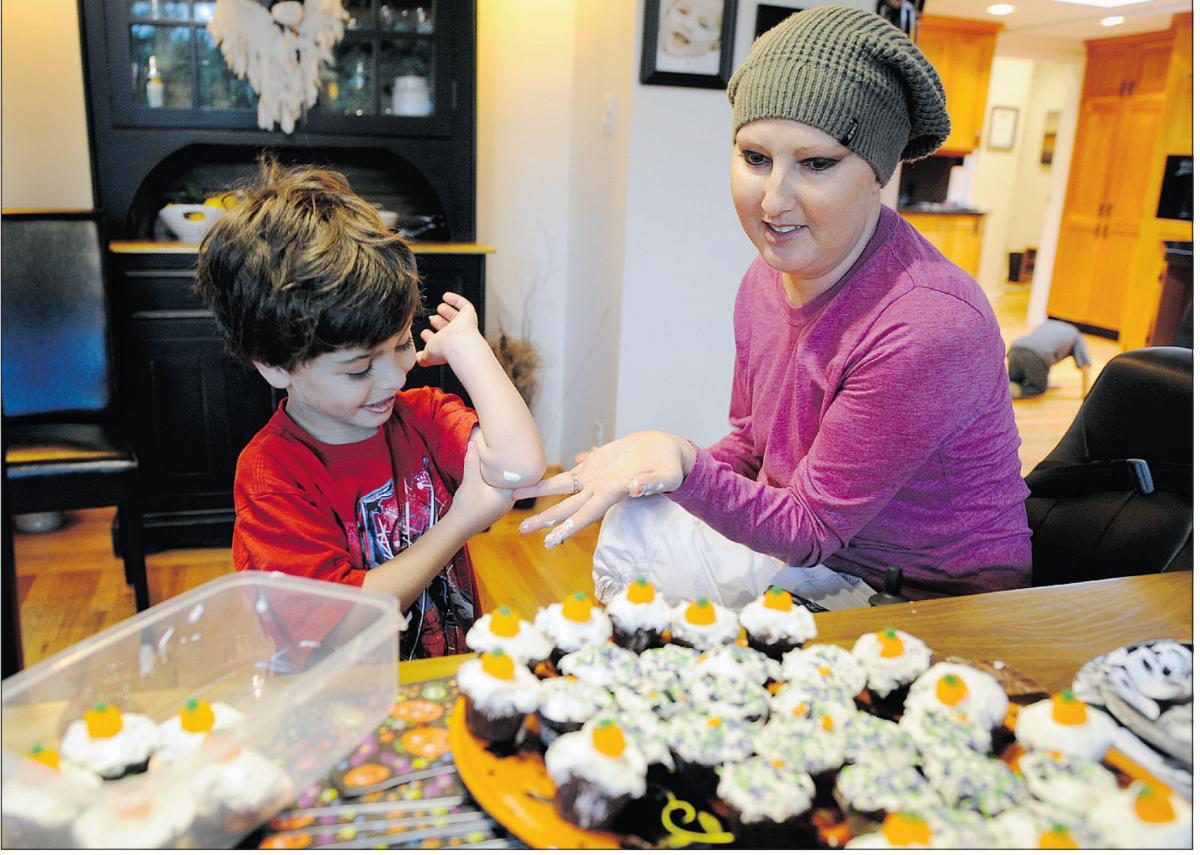
Chelsea Steyns and her son Owen are a mess of smeared icing as they arrange cupcakes for a Halloween party. Chelsea was diagnosed with inoperable brain cancer.

Photograph by: Gerry Kahrmann, PNG , Vancouver Sun

Faced with a terminal diagnosis, Chelsea Steyns decided to take extreme measures.

The family emails read like vacation postcards: jaunts to the beach, the world’s best guacamole, cool rental cars.

But the woman in the pictures is no ordinary tourist. She is 35-year-old Chelsea Steyns, a North Vancouver cancer patient.

The photos were sent from Houston, Texas, where Steyns sought treatment at a controversial clinic for a rare, inoperable brain tumour that has not responded to radiation.

The doctor to whom she turned, Dr. Stanislaw Burzyn-ski, has been branded both a dangerous quack and lauded as a life-saving saint.

This trip, and further treatment in the experimental program Steyns enrolled in, could cost up to $400,000. Her family hopes it will save her life, and the community of North Vancouver – where Chelsea, a mother of four, lives – has rallied in an effort to raise funds for this extraordinarily expensive quest.

With no further treatment options available in B.C., this is her family’s decision: would it be yours?

MEDICAL TOURISM

While an estimated 9,180 patients leave B.C. annually for medical treatment outside Canada, only a handful of those are seeking last-hope oncology care.

Medical tourism is a growing phenomenon. With easily accessible information on the Internet, many who can afford to nip across the border for hip revisions or joint replacements do so rather than join a waiting list.

Others, like Steyns, seek more experimental or unproven procedures.

Multiple sclerosis sufferers have travelled to seek “liberation therapy,” a type of balloon angioplasty that widens the jugular and azygous veins, which has yet to gain approval in Canada.

Although Canadian health authorities don’t keep statistics on patients who seek help outside the system, it is estimated that several thousand Canadian MS sufferers have travelled for this controversial treatment. (After considerable public pressure, the first Canadian study on the procedure was approved and patient recruitment began last week.)

Since 2003, Rick Baker of Timely Medical Alternatives has made a robust living as a medical broker, referring patients for treatments outside the border.

Through Baker, about 500 Canadian clients annually find their way to private hospitals in the U.S., mostly for hip and knee replacements.

Although Baker had one brain cancer client in 2006 who sought treatment at a hospital in New York state after being told he would have to wait eight months for surgery in Ontario, Baker likes to stick with “approved treatments.” For this reason, he doesn’t refer MS or oncology patients.

“I don’t want to be in a position of giving people false hope,” he said.

But for Steyns and her family, hope is everything.

TERMINAL DIAGNOSIS

Shortly after giving birth last January, Steyns, a dance teacher and mother of four, experienced temporary loss of vision and numbness on one side of her body.

After a barrage of tests, she was diagnosed with inoperable PMA, an extremely rare form of pediatric brain cancer hardly ever seen in adults.

She began a round of aggressive radiation therapy.

In August, Steyns learned the radiation had been ineffective. Her devastated family was told their only option was to begin palliative care.

They weren’t ready to accept that Chelsea would die; within a matter of days, they had heard through friends of the Burzyn-ski clinic; a quick search online brought them to his website. Steyns’ sister Emma filled out an online application, sent in a package of Steyns’ medical information, and two weeks later the sisters were on a flight to Texas.

They didn’t balk at controversy surrounding the doctor, or the cost: $35,000 up front and up to $30,000 a month for the targeted gene therapy treatment.

That doesn’t surprise Sarah Sample, patient and family counsellor at the BC Cancer Agency.

How a person handles a difficult diagnosis or prognosis is very individual, but it is common, said Sample, to want to spring into action. “Most people in the world want to do something.”

The younger a person is, the more difficult it can be to accept a terminal diagnosis. “What would drive someone as they decide on how they are going to cope would be their life stage. A young woman may be thinking I must do what I need to do to live longer for my children, for my career, for my dreams,” Sample said.

“I don’t dissuade anyone from taking extreme measures but I would want to ask them questions about the costs and benefits of something. It’s not just the cost of money, it’s the quality of life, the impact on their family, the time and energy and their caregivers’ ability to hold on.”

The BCCA doesn’t track the number of patients who seek oncology treatment outside their umbrella.

But when the doctors they employ try radical approaches, the response is swift.

TREATMENT DECISIONS

Questions about whether the BCCA is too conservative in its treatment protocols were raised earlier this year when Dr. Suresh Katakkar stepped outside of the bounds of B.C.-approved treatments in a last-ditch attempt to save the life of a terminally ill patient.

Katakkar, an American oncologist, had left his practice in Arizona to join the staff at the BCCA in 2011.

With the permission of patient Holly Hill, a 33-yearold Prince George woman with late-stage gastric cancer, Kat-akkar developed an experimental vaccine using her own cells, and gave her a chemo drug traditionally used to fight colorectal cancer.

Katakkar stated that he felt a “moral obligation” to provide this option to Hill, even if he had to step outside the cancer agency’s protocols. He was suspended by the BCCA and returned to the United States, where he continues to practice.

Although Hill died, the family remains unwavering in their support of his efforts to save her life.

“There is more leeway in the private system,” Dr. Katakkar told The Vancouver Sun. “Physicians can prescribe a lot more things even if that treatment has not yet been shown to be scientifically effective, as long as the patient can sign the consent of their own free will.

“It’s not that Health Canada is too conservative in approving drugs,” Katakkar said, there just isn’t enough freedom for doctors to try those drugs in new ways, new combinations.

Katakkar believes patients deserve more say in treatment options. “If the patient is desirous, if the quality of life is still good, they have not lost too much weight and they are not bedridden, and have gone through all conventional treatment, then yes.”

But terminal patients may be vulnerable to ambitious doctors and subject themselves to difficult and painful procedures in the process.

FEELING IN CONTROL

Dr. Chris Daugherty, an oncologist and international authority on medical ethics and end-of-life decision making at the MacLean Centre in Chicago, draws a line between patients pursuing treatments based on “real trials” and Burzynski, who he says is “off the bell-shaped curve 95 per cent of us practice on.”

Daugherty said it would be unfair to compare Burzyn-ski, whose treatments have not been shown in any randomized study to be effective, with doctors conducting clinical trials at more traditional medical centres, but in those cases Daugherty said, “Seeing patients make very difficult decisions we have to make sure we are not taking advantage of them for our own personal gain, fame or fortune. There are conflicts of interest any time research takes place.”

For Steyns and her family, finding an experimental treatment was the only option.

Her brother Dylan and sister Emma, a registered nurse, went to Texas and learned how to administer the treatment.

After several weeks in Texas, the family returned to Vancouver. Now they are working round the clock to care for her, fundraise and help her husband Todd manage their two sets of twins, Owen and Cooper, 4, and Maxine and Cash, nine months. Steyns is a fighter, and a straight shooter: “It’s a pain in the ass, really,” she said in a phone interview. “It’s not fun at all. To have to go that far away and do something so hard, it’s not an approved treatment. I’d rather be here and do something.”

She has had difficulty tolerating the treatment, and is experiencing severe side-effects including dangerously low potassium levels, temporary blindness and severe pain.

An MRI done at Lions Gate Hospital two weeks ago showed the tumour has stopped growing.

“That’s huge,” said Emma who is her sister’s primary caretaker – administering the treatment, helping with pain management and daily blood work.

“Before we went to Texas I was just sad all the time,” Emma said. “Texas really gave us a boost because the nurses and doctors are saying they’ve seen patients come in totally debilitated, as bad as Chelsea, and walk out.” That boost may be what Steyns needs.

“It’s challenging to be told that there isn’t standard treatment that will work; it’s easy to fall into despair in that context,” said Dr. Hal Gunn, co-founder of Inspire, B.C.’s integrative cancer treatment centre.

“Despair and loss of hope can be profoundly disempowering,” said Gunn. “It’s important to recognize that there is so much we don’t know about supporting health and well-being. Very occasionally, people do recover from even advanced cancer. We have to be open to the mystery of it.” Gunn said the majority of people who recover from “incurable” cancer share a range of characteristics that includes having a sense of responsibility and control in their own healing process.

COMMUNITY SUPPORT

Since going to Texas, Emma says, “We have something to focus on and work toward.”

In an extraordinary groundswell that demonstrates, perhaps, the health of the North Vancouver community in which Steyns lives, almost $200,000 has been raised through bottle drives, river-rafting trips, and car washes to support her treatment. Last Saturday, a dance gala in West Vancouver raised thousands more.

“A community coming together to raise money is an expression of love and support, and support is profoundly important to healing,” said Gunn.

Chelsea is buoyed by the gen-rosity of her supporters.

“I want to express a huge thank you to the community for all of their support. It’s totally overwhelming. I just wish I could meet them and hug them all.”

dryan@vancouversun.com

source: http://www.vancouversun.com / Home> News / by Denise Ryan, Vancouver Sun / November 10th, 2012


Algarve hosts inaugural congress on health tourism

The first international congress on health and tourism in the Algarve is being held until this Saturday (10 November) in Faro and has brought together specialists from all over the world to discuss this growing trend.

The event’s primary objective will be to promote the Algarve as a destination of excellence in the field of health and welfare.
“This initiative will reinforce the work already carried out in this area and will be the beginning of a new phase for the region, where health and wellness tourism will very soon assume importance as a destination product”, the event’s organising committee explained in a statement.
The conference will take place at the Algarve University’s Medical School and will cover a wide range of topics directed toward the link between health and tourism.
Among the speakers are international names such as: Renée-Marie Stephano (Chairman of the Medical Tourism Association), Felix Adatto of Godoi, Patricia Hernandez Ruiz, Zohra Mhamdi and Uwe Klein.
João Bacalhau, Chairman of the Administrative Board of the HPA Group, will be addressing the conference, as well as Constantine Sáclarides, João Viegas Fernandes, Teófilo Leite (Chairman of the European Association of Private Hospitals and of the Portuguese Hospitalisation Association) Paul Maló, Chitra Stern, among others.
The event has received major backing from national groups such as the HPA Group, which has several private hospitals across the region.
“We could not help but to join an initiative which is aimed at encouraging and promoting this strategic area of Tourism in the Algarve Region”, the HPA Group said.
According to the Chairman of the Organising Committee João Viegas Fernandes, not only national participants are expected but also participants from several foreign countries, including some numerous delegations as in the case of Nigeria with about thirty members.
Participants have already been confirmed from the following countries: Angola, Belgium, Brazil, Cameroon, Spain, USA, Philippines, Ghana, Gambia, Guinea-Bissau, Mexico, Nigeria, São Tome and Principe and Uganda.
For more information on the Congress or registration, contact
Débora Rêgo on mobile 962 044 291 or e-mail: debora
rego@hpalg.com

source: http://www.ThePortugalNews.com / Home> General / by TPN/ LUSA, in General / November 08th, 2012

Malaysia eyes attracting more foreigners for healthcare travel

Kuala Lumpur, Nov. 6

Malaysia is promoting its hospitals and clinics as new tourism attractions besides tropical islands, fascinating beaches and rainforest, in an effort to brand the country as a healthcare travel destination.

Malaysian Health Minister Liow Tiong Lai said on Tuesday that high-quality and reasonable rates of the country’s medical service is attracting more and more foreigner, with the number of foreign patients arrival achieved a impressive 48 percent increase to 583, 000 in 2011 compared with the previous year. The most appealing medical services is knee replacement, followed by cardiac care and cancer treatment, Liow said when opening the International Healthcare Travel Expo 2012, adding that Malaysia is “fast being recognized for the quality of its orthopedic treatment.”

Malaysian government is working to position the country as a preferable healthcare destination in the region. Liow said Malaysia Healthcare Travel Council, an agency established by the government to develop and promote the healthcare travel industry, had set up a hotline for global enquiry.

The agency has opened representative offices in Dhaka, Bangladesh and in Jakarta, Indonesia, while its Hong Kong office would be operational next year, Liow said. A medical gallery would also be set up at the Kuala Lumpur International Airport and similar facilities might be put in place at other important gateways to the country.

Liow later told a press conference that his ministry was looking at the Korea, Bangladesh, Nepal, Myanmar and China as increasing health tourists influx from these countries.

Meanwhile, Malaysia would promote traditional treatments like acupuncture from China besides modern medicine, he said.

source: http://www.NZWeek.com / Home> Business / source: Xinhua Publish / by Jane B. Hatcher / November 07th, 2012