Category Archives: Medical Tourism/Health Tourism

7/24 health service for foreigners

Ankara – Anatolia News Agency

Health consulting in English, German, Arabic, and Russian is available on the Turkish Health Ministry’s 24-hour foreign call center service.

Dursun Aydın, the head of the ministry’s health tourism department, said the health consulting service had been providing service 24 hours a day, 7 days a week in four languages at 444 4 728 since the beginning of the year.

English, German, Arabic, and Russian translators work at the call center, Aydın said. “In our country in the summer season, there is a drastic rise in the number of tourists. With this phone line, we serve tourists who have health problems.”

Within the scope of the Health Ministry’s “tourist health” project, foreign patients have been provided with health services at hospitals in Antalya, Muğla and Aydın. “Foreigners can use paid ground and air ambulances, while Turks use these services free of charge,” Aydın said.

July/13/2012

source: http://www.hurriyetdailynews.com / Homepage> Life> Health / Ankara – Anatolian News Agency / July 13th, 2012

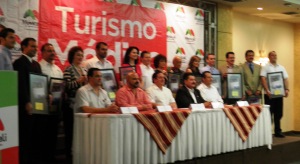
Mexicali and Medical Tourism

As I mentioned in a post earlier this week, the New York Times article by Jennifer Medina has really gotten Mexicali officials to sit up and take notice.  The NYT article was just one part of a ‘medical tourism plan’ outlined by the mayor of Mexicali and other government officials.

City of Mexicali

Right now the outline consists of several points:

1. Guide to medical services – they have published a book with the names and addresses of surgeons interested in participating in medical tourism.

2. Transportation – mainly by automobile and buses.  The medical tourism lane at the border was part of this.

3. A plan for a 32 block medical tourism zone.

A good start, and it shows forethought – but as I listened to their outline it prompted my own (humble) suggestions:

1. Medical guide – make this a ‘real’ guide not a phone book of surgeons and providers offering their services.  It should be comprehensive, and offer more than just names and addresses, ideally written as an independent review.. But then take the risk that maybe everything, and every service won’t come out shining..   (Admittedly, this is something I understand the best).

2. Transportation – consider approaching Volaris or another carrier to offer direct flights once or twice a week from Las Vegas, Dallas and Los Angeles.  Right now there are no direct flights from Mexicali to the United States.  By offering direct flights – Mexicali could be much more competitive with both Tijuana and Las Vegas (which is pursuing its own medical tourism strategy to make Las Vegas a medical tourism destination.)  This would play to Mexicali’s two biggest strengths:

1.  It’s proximity to the United States

2.  It’s reputation as a ‘safe’ destination in comparison to Tijuana and other border cities which have their own medical tourism ideas..

It would also open up Mexicali to a much wider market since both Dallas and Los Angeles is a hub for several American carriers serving Canada and the USA.

2. Consider changing the 32 block ‘medical tourism zone’ into one large facilityoffering dedicated service lines.  While all the small private hospitals in Mexicali will hate this idea – instead of fighting over patients, they would have the advantage of having one large facility with pooled resources.

This would also address the weaknesses of medical tourism in Mexicali: Right now each facility has five (or two) ICU beds, and just 10 or so post-operative beds.  It would also eliminate some of the waste caused by the costly duplication of services – since each hospital currently struggles to offer CT scans, cath facilities and other costly equipment.  As part of a long-range plan – this would better enable the providers and facilities in Mexicali to seek outside accreditation/ and certification of programs and service lines, which in turn would attract more patients.

In the meantime, participating hospitals could covert to specialty facilities (ie. an orthopedic hospital, and plastic surgery center etc.) while the new facility is being built.  This would also reduce the stress on doctors traveling all over town to see just one or two patients at each facility.. If medical tourism really gets going here – these doctors are going to need as much time as they can get; caring for patients..

The centralized large hospital would also enable people like Dr. Vasquez to really get his cardiac surgery program off the ground.  More specialized ancillary services like physical and rehabilitative services would also be pooled and would improve the quality of services in the city, for everyone, including the people of Mexicali who also suffer from the lack of large, comprehensive facilities.   This also brings me to my next point –

3.  Since the city and government of Mexicali is involved in the project – there needs to be a clear and comprehensive plan about how the revenue from this project is going to serve the people of Mexicali.  After all – their tax dollars are helping to fund this ingress into medical tourism, so they need to get something out of it.. Like a PET scanner or some other service that doesn’t currently exist in Mexicali.

4. Don’t forget the rest of Baja – there are an awful lot of retirees and such living in southern Baja – so make sure they know about what your city has to offer.  These people need hip replacements, heart surgery and a whole spectrum of services that are very limited in their geographic area.  Give them a reason to come to Mexicali instead of Ensenada or Tijuana by courting their business.

If anyone from Mexicali reads this post – I hope they can see my suggestions, in the spirit that they are given.  Mexicali has a lot of opportunity here, and the potential to be a great place for a wide range of medical tourism – not just bariatrics and plastic surgery, but they need more comprehensive, and long-range strategies to put their plans into action.

Today was a great example of how much the city has accomplished by working together – with a little more work, and a lot of vision – Mexicali could really go far, and provide great services to more than just a bunch of gringos..

source: http://www.cartagenasurgery.wordpress.com / by Cartagena Surgery / July 07th, 2012

Las Vegas Reinvents Itself as Medical Tourism Destination, Surgeon Says

The key to benefiting from the area’s flourishing medical community and its ideal setting for recuperation lies in finding inspired, innovative treatments and procedures, says Dr. Arthur Cambeiro, who practices plastic surgery in Las Vegas.

Las Vegas Reinvented for Medical Tourism Dr. Arthur Cambeiro, who practices plastic surgery in Las Vegas, praises the gambling capital as a prize for travelers seeking health care.

HENDERSON, NV, July 05, 2012 /24-7PressRelease/ — Southern Nevada’s economy could flourish even further if the area continues its two-pronged focus on tourism and quality medical care, says Dr. Arthur Cambeiro, who practices plastic surgery in Las Vegas and Henderson.

“If Las Vegas physicians can continue to establish ourselves as leaders in our fields while catering to a steady stream of out-of-town visitors, we can really put ourselves on the map as an oasis for travelers seeking genuinely advanced health care,” says Dr. Cambeiro, a board-certified plastic surgeon who performs facial surgery, body contouring and breast augmentation in Las Vegas.

“If we keep building on our reputation as a medical watershed, everyone wins–the doctors, the patients and, ultimately, the Las Vegas region as a whole.”

SurgiSpa , Dr. Cambeiro’s plastic surgery center in Henderson, has already established itself as a medical-tourism destination with its Fly in for Surgery program.

“Patients fly in from all over the United States, as well as Canada, South America, Europe, Asia, Africa and Australia, for treatments ranging from facial cosmetic surgery to breast implants in Las Vegas,” he says. “This is really the ideal destination, since our climate and tourism infrastructure allow visitors the opportunity to turn their surgical recovery time into a vacation.”

A Nevada native, Dr. Cambeiro is a highly respected plastic surgeon in Las Vegas. Featured in magazines such as Glamour and Allure and recognized as one of the “Top Docs 2011” by Las Vegas Life magazine, he established SurgiSpa after completing a 5-year residency followed by extensive training in plastic and reconstructive surgery at the world-renowned Mayo Clinic in Minnesota.

“My staff and I understand the particular needs of people who travel to Las Vegas for plastic surgery and cosmetic treatments,” Dr. Cambeiro says. “We work hard to create a comfortable, sensitive, collaborative environment where our patients receive optimal attention and guidance.”

Dr. Cambeiro exudes the inborn pride of a native son in extolling the benefits of seeking health care in his hometown.

“Our medical community is unique in its level of service to both the local and the visiting populations,” he says, “and I feel a deep commitment to making a positive contribution to health care in Clark County.”

Dr. Arthur Cambeiro a board-certified Las Vegas plastic surgeon. His practice, SurgiSpa Plastic and Cosmetic Surgery, offers surgical and non-surgical cosmetic procedures ranging from BOTOX Cosmetic to facelifts and breast augmentation. Dr. Cambeiro earned his medical degree from University of Colorado and received his surgical training from the Phoenix Integrated Surgical Residency Program and the world-famous Mayo Clinic. He is certified by The American Board of Surgery and The American Board of Plastic Surgery.

Website: http://www.surgispa.net

source: http://www.24-7pressrelease.com / July 05th, 2012

Rajasthan moots plan to boost medical tourism

Jaipur:

Rajasthan will soon attract patients from neighbouring countries as it is set to announce better healthcare packages for foreign nationals as part of its medical tourism package.

For the purpose, the state government has started working on formulating a separate policy on medical tourism. The idea of the policy, in its initial stage now, has been conceived by the state medical health and family welfare department recently.

“Provisions will be made in the policy to offer health packages for patients coming from neighbouring countries. Obviously, we are not targeting to attract patients from the West and other developed countries. But through this policy, we will offer better healthcare services to the patients coming from the neighboring countries like Bangladesh, Nepal, Afghanistan and other neighbouring countries. The policy is in the initial stage, it will take some time to implement the policy,” minister of state for health Rajkumar Sharma said.

Besides, the state government has plans to tap growing the tourist activities in religious places, including Ajmer dargah. Since a lot of tourists from neighbouring countries come to the Ajmer dargah every year, the department has an aim to offer lucrative treatment packages to the foreign tourists.

The department officials claimed that because of the free-medicine scheme, patients from neighbouring states have increased. Now the state government is targeting patients, who require ‘terminal care’ from the neighbouring states. But it remains to be seen how the state government takes it up or it will take help of private hospitals in the policy, which have spawned in the city in large numbers.

The state government is also helping private hospitals by allotting land on concessional rates or by allowing them set-up on public private partnership (PPP) basis. Manas Arogya Sadan Heartcare & Multi-specialty Hospital, which will run on a PPP basis with Metro Institute of Medical Sciences Private Limited for a period of 30 years, is expected to become operational from September 2012.

Besides, state government confirmed that Bombay Hospital would also come up in Jaipur as its land allotment process by the Jaipur Development Authority is in the final stages.

Private Hospitals and Nursing Homes’ Society president in Jaipur, Dr Sanjay Arya, said, “The government is allowing big private hospitals to enter Jaipur by offering land on concessional rates. These hospitals are mainly terminal care hospitals. But the government should also make better rules to boost the hospitals which are small and catering general patients in large numbers.

source: http://www.articles.timesofindia.indiatimes.com / Home> City> Jaipur / by Syed Intishab Ali, TNN / July 04th, 2012

Hot spot in medical tourism

Dimitri K (full name withheld at request) flew all the way from Ukraine to Dubai for a complicated reconstructive dental surgery.

After the doctors in his home town left his teeth in what he calls ‘a horrible state’, Dimitri decided to come to Dubai because “a friend once mentioned in passing that there are a lot of good dental clinics in Dubai. I don’t know much about the cost, but I am happy with the outcome,” said Dimitri. A businessman by profession, Dimitri is not new to the UAE. He knows all the tourist hot spots in the country.

When Khaleej Times asked him if he would consider the UAE the next big potential hub for medical tourism, he said: “Yes, maybe.”

Taking advantage of the several cost-saving opportunities that exist beyond our immediate neighbourhood is what medical tourism is to most people.

Government authorities, private firms, and experts have come forward to suggest that the UAE might just be the next big cost effective medical tourism destination. According to figures provided by the Dubai Health Care City (DHCC), the city welcomed more than 9.3 million visitors and tourists in 2011 and is projected to grow at an annual 7.2 per cent through 2015.  Health tourism in the city is expected to generate Dh6.1 billion by the end of 2012.

Ayesha Abdullah, Managing Director of DHCC, said: “At DHCC, we have recorded a sharp growth in medical tourism over the past three years.  We received over 502,000 patients in 2011 including 15 per cent medical tourists, as compared to 10 per cent of a total of 412,000 patients in 2010. We believe that there is potential for further growth.”

Meanwhile, the Director-General of Dubai Health Authority (DHA,) Qadhi Saeed Al Murooshid, said that they have been working on this in the background for a while, building up on other initiatives linked to medical tourism, such as the clinical services capacity plan.  “The revenues from Medical Tourism are estimated at $30 billion. We believe that medical tourism is a space that involves and impacts various sectors within Dubai. Its growth would lead to a positive impact on the economy as well as be a driver for trade and investment in healthcare, tourism and hospitality services,” 
said Al Murooshid.

Currently, Dubai has over 4,750 doctors/physicians speaking over 40 languages. Experts in the medical field believe that the emirate is ready for medical tourism.

Cost of medical tourism

“The UAE, and particularly Dubai, offers quality healthcare solutions that largely measure up against cost-competitive destinations such as Thailand and India.

The figures show that a cardiac bypass costing around $130,000 in the US can be had for $44,000 in the UAE,” said Abdullah. Adding to which, Laila Al Jassmi, CEO of Health Policy and Strategy Sector at the DHA, said: “The costs here are definitely cheaper than the US for comparable quality of services. However, many people believe that medical tourism means lower cost which isn’t necessarily true. Price of services is an important component but not the only component in making the choice for the medical tourism destination,” said Al Jassmi.

She added that people travel abroad for different reasons for different types of services.

In Dubai itself, there are various facilities that offer the same services at different prices and their services are targeted at different market segments.

Also, we do not intend to compete with ‘low cost’ destinations for medical tourism.

Popular treatments

“In the past we have noticed that medical travellers have come to Dubai for cosmetic procedures, dental treatment and even hip-replacements. Today, Dubai has strategically positioned itself as a leading provider of top-quality care in diverse areas with a focus on niche services,” added Abdullah. In the long term, DHCC seeks to provide high-end tertiary care.

“In line with our mission to respond to emerging healthcare needs, we plan to add centres for oncology, genetic disorders and diabetes in an effort to expand the medical tourism segment. We are also in the process of closing gaps in services by adding facilities such as rehab, paediatrics and integrated medicine,” she added.

Adding to this, DHA officials said that there are various opinions on this from health professionals considering their areas of expertise.  “The specialties that Dubai is well suited to medical tourists include a host of medical, cosmetic and dental procedures along with wellness treatments and health check ups.

Dubai gets tourists from over 120 different nationalities and a number of them are utilising healthcare services in Dubai for various reasons.

There is a considerable growth in the demand for these services by tourists from the GCC, North and East Africa, Central Asia as well as for certain health and wellness services by tourists from Europe and South Asia,” said Al Jassmi.Scope for Alternative treatments Over the last few years we have seen a growing trend in patients choosing Complementary and Alternative Medicine (CAM).  “To date, DHCC is home to 12 CAM medical centres, more than 50 CAM-licensed professionals who offer treatment in 14 areas including homeopathy, Ayurveda, traditional Chinese medicine, Unani medicine, osteopathy, therapeutic massage, naturopathy, guided imagery, Thai Chi, Pilates, chiropractic, and yoga,” said Abdullah.

Al Jassmi assured that DHA would look into the growth of alternative medicines very seriously. “The growth of alternative treatments in the region is definitely something that we’ll look at and consider seriously.

There are many successes in this space in parts of Europe and South Asia and some of these services are going to be promoted to the extent they tie up with Dubai’s Medical Tourism Strategy,” she added.

dhanusha@kahleejtimes.com

source: http://www.KhaleejTimes.com / Home> Health / by Dhanusha Gokulan / July 04th, 2012