
Category Archives: Medical Tourism/Health Tourism

Lebanon’s love affair with plastic embellishment

Beirut:

Summer seems to bring out some of the stereotypes most closely associated with Lebanon: street fighting, beach parties, fresh cosmetic surgery scars.

In this latter category, surgeons are saying the demand among Lebanese is higher than ever, but a huge client base, Gulf and Arab tourists, are shying away this year, due to the recent string of security incidents, and warnings issued from their embassies.

At the Hazmieh International Medical Center, general manager, medical director and facial cosmetic surgeon Dr. Elias Chammas says demand among Lebanese has risen consistently since the center opened in 1998.
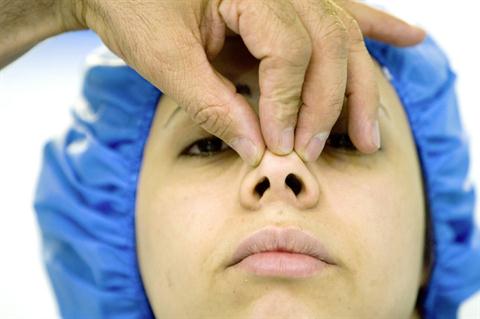
Rhinoplasty remains the most popular  surgery performed on men and women

Rhinoplasty, or the nose job, has remained the firm No. 1 favorite, performed on girls from the age of 16, and followed, he says, by breast augmentation, liposuction and eyelid lifts. Less common, but still conducted, are hymenoplasty and anterior vaginal wall repair surgery, usually carried out, Chammas says, “if you have delivered four or five babies, you have a wider vagina and the husband or boyfriend is not happy with it.”

The only new trend that he can discern is the increase in male customers.

“At the beginning we had very few men coming in; now they account for around 30 percent of surgeries,” he says, adding that the most common procedures are hair transplants, rhinoplasty, liposuction, face lifts and breast reductions, this last surgery being performed at the center once or twice every month.

Penis enlargement surgery is less common, with one procedure performed every three or four months.

But this summer, patient numbers have fallen drastically.

“When it is stable, we have a lot of patients coming from the Gulf, around 40-45 percent,” Chammas says. “When the situation is bad, people don’t come.”

“This is the first time in 13 years when countries are actually telling their citizens not to come; usually they just tell them to be careful.”

In May, the United Arab Emirates, Kuwait, Qatar and Bahrain urged their citizens to consider leaving Lebanon, after deadly clashes in the northern city of Tripoli left 11 dead, although some of the warnings were later downgraded.

The Lebanese diaspora, while not quite as cautious as the Gulf medical tourists, are still not coming in the same numbers, Chammas adds.

Dr. Antoine Abi Abboud, who has an office at the Beirut Beauty Clinic in Zalka, and who routinely travels to the Gulf to work, agrees with Chammas’ assessment.

Last year around 35 percent of his patients were from the Gulf and Iraq, but now, “It doesn’t look so good, this is normally the most popular time of year for these clients. They are not coming these days due to the circumstances.”

Lebanon has traditionally been a favored cosmetic surgery destination among regional medical tourists due to the reputation of the country’s doctors, mostly trained in the United States, and the price of surgeries here.

Whereas a nose job could cost about $10,000 in Australia, here the price is around $2,500, Abi Abboud says.

Like Chammas, Abi Abboud has also seen a rise in male patients, with hair transplants and rhinoplasty again the most common procedures, and breast reductions increasingly popular.

While perhaps surprisingly, given its reputation, Lebanon fails to grace the rankings for highest rates of cosmetic surgery procedures per capita – Hungary and South Korea topped a 2010 survey – it is thought that this country has the highest number of plastic surgeons per head.

The background to this, some believe, lies with the Civil War and the need at that time for plastic surgeons capable of dealing with physical disfigurements.

But there are concerns the industry has spun out of control, due to a lack of enforced regulation. While there are only around 80 members of the Lebanese Society of Plastic Reconstructive and Aesthetic Surgery, which self-regulates, there are another 300 operating outside this syndicate.

All of the cosmetic surgeons at the Hazmieh center are members of the LSPRAS, Chammas says. “If you are related to this syndicate, it means you are good,” he says. “Otherwise, they could chuck you out.”

Recently there has been an increase in doctors of other branches of medicine – physiotherapists or pharmacists, for example – who buy up ad time on TV, promoting their clinic, and then they “bring a plastic surgeon in who they pay maybe $1,000 and then they charge the patient maybe $4,000,” Chammas says.

“You have a physiotherapist giving a lecture about face-lifts on TV. They are not qualified to do that.”

“There should be more control on who should do what,” Chammas adds, but he says he cannot pinpoint where the blame should lie.

The industry has come under increasing scrutiny recently, on charges that the proliferation of cosmetic surgery in Lebanon is creating an unrealistic standard of beauty, and contributing to the objectification of women, but Chammas denies that too many people are getting plastic surgery.

“Everybody is saying that, but I don’t understand the problem,” he says. Comparing cosmetic procedures to wearing makeup, Chammas believes it hypocritical to criticize the industry unless one is prepared to “have a bath and then walk in the streets like that. Don’t put makeup on, don’t put eye shadow on, don’t pluck your eyebrows.”

“You want to look at ease with yourself, [and] you either do it by wearing makeup, or clothing, or, if there is a physical deformity in the face, you come and correct it with plastic surgery. It’s the same.”

In the U.S., which has the highest overall number of cosmetic procedures in the world, every patient seeking treatment must first undergo a psychiatric screening.

For Chammas, such a process is unfeasible in Lebanon.

“We cannot do that. If you tell the patient that he has to see a psychiatrist, you will never see him again. The attitude toward psychiatry in the States is completely different … in Lebanon if you tell someone they have to see a psychiatrist they would say, ‘What? You think I’m crazy?’ So we don’t do that.”

It is up to each surgeon to act as the psychiatrist here, he says.

“If the woman is asking to humiliate herself, we’re not going to do that,” Chammas says. “Or she brings me a photo of an artist and she wants the same nose. We can’t do that.”

For Abi Abboud, he will refer certain patients for psychiatry, as he has done in the past with male patients seeking breast augmentation as part of a sex change process.

“If I can see that the person is asking for things I do not want to do, then I send them to a psychiatrist. Then if I receive an OK, I will do it.”

For Myra Saad, an art therapist who works with body image and self-esteem issues, and who is this summer running a series of workshops on the issue, it would be a positive step for every cosmetic surgery procedure to be preceded by a psychiatric assessment.

“Each surgeon has his own ethics, but as a counselor, I think it should be required,” she says.

Of patients who keep going back for multiple surgeries, a phenomenon both surgeons defend, Saad says that while this may not be a symptom of body dysmorphia, it may indicate issues relating to self-esteem and identity.

“It’s so obvious that a lot of plastic surgery is about business, not about health,” she says.

She also thinks that the cosmetic surgery trend in Lebanon can be seen, in a way, as a rejection of local heritage, and an attempt to emulate Western norms of beauty.

“Media promotes this idea of what beauty is … beauty is no longer subjective,” she says.

The root problem, she believes, should be targeted at a young age, with “more media literacy classes, and empowerment and self-development workshops which teach confidence in the way you are.”

source: http://www.dailystar.com.lb / The Daily Star, Lebanon / Home> News> Lifestyle / by Olivia Alabaster / June 30th, 2012

Panchkarma of Banaras Hindu University to promote medical tourism

Varanasi:

The revamped Panchkarma division under the Department of Kayachikitsa, Faculty of Ayurveda in Banaras Hindu University is all set to bolster medical tourism in the city, which is believed to be home of Ayurveda greats like Sushruta and Charak.

While BHU V-C, Dr Lalji Singh would unveil the revamped Panchkarma centre on Sunday (July 01), the centre is gearing to provide healing touch to number of patients from near and far away places in the country and abroad.

It may be mentioned here that Institute of Medical Sciences (IMS), BHU has signed an agreement with Kerala based Ayurvedic company to extend expertise in the field of manufacture of ayurvedic drugs and Faculty of Ayurveda, BHU would ensure monitoring under public private partnership (PPP) model. While over three-decade-old division (established in 1980) is witnessing collaboration with Kerala Ayurvedic Ltd (a century-old Kochin-based pioneering Ayurveda centre that has over 40 international ayurvedic outlets in the world), the move is promising to expand the potential of one of the oldest components of medical system besides paving the way for garnering revenue through medical tourism in the city, which is already one of the favorite destinations for domestic and foreign tourists.

According to Prof TM Mohapatra, director, IMS, BHU, the agreement has already witnessed infrastructural development at Panchkarma unit under the Faculty of Ayurveda. He also emphasized that initiative would ensure availability of quality raw materials and processed materials to come up with quality ayurvedic medicines in the region.

It is also worth mentioning that Kerala has already emerged as major centre for medical tourism, attracting a large number of foreign and domestic visitors to the state. The field has made significant contribution for promoting tourism potential in the region with specialization in Panchkarma and other practices of Ayurveda.

As per Prof SK Tiwari, head, Department of Kayachikitsa and co-ordinator, Panchkarma division, BHU, the age-old practices involved in Panchkarma have already attracted a number of chronic patients across the country to the centre and the collaboration with Kerala company would definitely bolster the potential of the discipline with attractive packaging. The practice promises to provide respite from chronic pain including cancer and disc-prolapse and better packaging and facilities at the centre would attract even foreign visitors and patients, making it a truly global centre for medical tourism, he added.As per reports from the department, the unit has made rapid strides in the age-old practices of Panchakarma, carving a niche in different methods and techniques practiced by Ayurveda greats like Sushruta and Charak.

Now, cases of chronic pain including disc prolapse, cervical spondylitis, lumbar pain, arthritis, elephantiasis and others are successfully treated with Panchakarma. Apart from patients from neighbouring regions including East UP, Bihar, MP, Chhattisgarh, a number of patients from West UP and Delhi also visit the unit.

Some of the special treatment methods offered at the unit include Agnikarma (shalaka treatment) involves precise touch of red hot metal tube (pointed at one end) at specific points to give relief from pain. Besides, leaves of Aloevera and Trifala are also used to provide instant relief in superficial burn.

Conditions like arthritis, spondylitis, filaria, sciatica and muscular spasm are also treated using Agnikarma.Similarly, special methods including kativasti that witness placing of lukewarm medicated oil in metallic pan over the body that is fixed in a mixture of wheat and gram flour, is also used for treating disc prolapse, muscular spasm and ligament injury. Other practices including Nariswedan that involves treatment with vapours of medicated decoction passed through tubular pipe also provides respite from chronic pain.

source: http://www.timesofindia.indiatimes.com / Home> City> Varanasi / TNN / July 01st, 2012

Medical Tourism Is on the Rise ?

These “medical tourists” seek procedures ranging from root canals to knee surgeries and hip replacements — at a fraction of what they would cost at home.

The Bumrungrad hospital in Thailand treats about 400,000 foreign patients each year, and Malaysia had nearly 600,000 medical tourists last year. South Korea had more than 100,000, nearly one-third of them American, and Costa Rica and Mexico also have become popular destinations for American patients, according to the New Yorker magazine.

The reason, of course, is cost. Hip-replacement surgery in Costa Rica costs around $15,000, compared to $90,000 at a U.S. hospital, and cash-paying surgery patients are taking advantage of packages that are one-fifth to one-third of the U.S. cost.

Health insurance companies have been leery about reimbursing patients for medical care overseas — they already receive large discounts with American hospitals and they risk a public-relations disaster if something goes wrong with a medical procedure in another country.

Patients have been wary as well, concerned about the lack of legal recourse for malpractice and the quality of care.

More: http://www.newsmax.com/InsiderReport/Soaring-Disab…

source: http://www.sodahead.com / News> by The Rebel / posted June 25th, 2012

COSMEDICTRAVEL: Medical Tourism Step by Step

The Medical tourism market is getting bigger. More and more people choose the travelling option to save money on dental procedures, plastic surgery, etc. What are the most important things to consider before going on a medical tourism trip?

Planning on visiting another country for medical purposes is a process involving several steps: calculation, choice of procedure and location, appraisal by doctor via e-mail, travel to the destination country and finally the procedure itself.

“Clinics that we cooperate with accept medical tourism patients all the time. They point out that the distance is a problem at first. The doctor cannot examine the patient and everything must happen via e-mail, but there are ways to make it possible, that is why medical tourism is getting more and more popular,” says Tomasz Zdun, project manager, www.cosmedictravel.com, medical tourism booking website.

Step 1. Calculation
Obviously the patient first needs to calculate whether travelling abroad for medical purposes is going to be affordable for him, and if he or she is really going to save up money.

It is not worth going abroad just to deal with small medical problems (unless the trip is combined with a tourist visit and the chosen treatment is not too invasive, e.g. laser wart removal). The most popular medical tourism procedures are: dentistry (implants, crowns, root canal treatment, veneers), plastic surgery (liposuction, breast implants, nose surgeries, etc.), medical procedures (eye surgery such as cross – linking, kerarings, varices operations, orthopaedic surgery, etc.). In addition, more expensive procedures of aesthetic medicine, like Radiesse, Regeneris, Sculptra or Zaffiro, are becoming more and more popular among medical tourists. The reason for that is simple: they are cheaper abroad. You get the same quality for a much lower price. Depending on the procedure, they can cost 2-3 times less than in a patient’s country of origin. Even including the cost of flights and accommodation, it still adds up to a big discount.

Step 2. Choice of procedure
It is harder than you may think. For example you might think that the best way for you to regain a youthful appearance is an eyebrow lift but after seeing your photos, the doctor might tell you, that the best option for you is to have a full face lift.

If you decide to change your smile the best way is to send a panoramic photo of your teeth, so the dentist can confirm and give prices for the necessary dental procedures. Again, when deciding on liposuction, the best way is to send photos to the clinic so that they can either confirm that what you had in mind would be suitable, or else propose another solution that would better meet your expectations.

Step 3. Appraisal by doctor via email
This was partially covered in Step 2. Without photos it is very hard for doctors to give a diagnosis and confirm that what you expect is actually achievable (of course, it is a different matter, if you had a consultation in your country of origin and are just doing the procedure elsewhere). Of course it shouldn’t be the only factor that decides whether you are accepted for the procedure or not. Plastic surgery requires having multiple blood tests done before undergoing surgery. It is best to do them in your own country so you can be sure you qualify for surgery.

Regarding photos, if the procedure concerns only the body, then showing your face is unnecessary. For nose job, you should send 3 photos: front, profile and from beneath. Remember, photos are strictly confidential and clinics are not allowed to show them to anyone else without your permission.

“Sending photos by patient is proof for us that a person is thinking seriously about coming to Poland and getting this or that done,” says www.cosmedictravel.com project manager. “Also, it makes doctors’ and clinic staff’s lives easier. They can see for themselves what they are dealing with,” adds Tomasz Zdun.

Step 4. Getting the procedure done
At this point all you need to do is show up and get things done. How should you prepare yourself? It all depends on the procedure. In some cases a preliminary procedure may be required. For example, in order to get one procedure done, you need to get different one first, e.g. whitening teeth first before getting veneers, or having a bone augmentation before dental implant surgery. Sometimes the actual cost can be a little higher than calculated beforehand, which is perfectly normal. It might be because doctors had to do more work than they originally thought would be necessary. As long as it doesn’t differ too much, it is fine, and shouldn’t worry you.

source: http://www.melodika.net / Home of Music> Article> CosMedic Travel / Wednesday, June 27th, 2012

Culture, medical sector to help boost Taiwan tourism

Thousands of Chinese tourists are visiting Taiwan this weekend for the traditional Dragon Boat Festival holiday, one of the most important days in the ethnic Chinese world.

Although this increase of mainland visitors is driven by the soaring number of direct flights between the two sides of the Taiwan Strait and the launch of self-guided tours to Chinese tourists, the government should continue its efforts to highlight both the nation’s traditional culture and high-tech medical sector.

With regard to the available medical facilities, hotels and transportation, a growing number of Chinese tourists are already seeking health and wellness in Taiwan. By promoting medical tourism during traditional holidays, Taiwan’s top medical centers could successfully attract more visitors.

If you have made use of local medical facilities, you can also attest to Taiwanese hospitals’ commitment to quality and affordable medical care. The U.S.-based Joint Commission International (JCI) has even accredited several local centers as having international-level medical facilities.

The JCI accreditation indicates a visible commitment to top-quality medical care; it ensures a safe environment and demonstrates the hospitals’ continuous efforts to reduce risks to patients and staff.

Taiwanese hospitals are indeed at the forefront of the health care industry. Both the private sector and the government devote billions of New Taiwan dollars each year to developing one of the world’s most comprehensive health care systems.

Considering the high standard and cost effectiveness of Taiwan’s medical care available for foreigners, it is little wonder that Chinese patients travel across the Strait for surgical and other forms of specialized treatment.

In recent years, mainlanders’ perception of medical services has been changing, though the quality of such services in China has yet to reach the level seen in Taiwan. At the same time, the continuous rise of health care costs in China and around the globe is putting larger financial burdens on patients, sparking demand for less expensive alternatives. The resulting change from a patient-centered system to a consumer-centered one is creating new opportunities for local medical centers.

Many Taiwanese believe that medical care is a service industry, like the catering and hotel industries. This makes local hospitals even more attractive than their rival medical institutions in China.

Tourism officials and travel agents recently said that the number of cross-strait visitors going both ways between Taiwan and mainland China could reach 10 million by 2014, mainly thanks to the soaring number of mainland tourists visiting the island.

With the support of the government, Taiwan could further be known in the ethnic Chinese community for its world-renowned medical and health care sector; by granting more medical visas to Chinese citizens, there would a great potential in appealing to high-end Chinese tourists to visit to the island for medical purposes.

As the country looks forward to the arrival of an estimated 6.8 million tourists from all over the world next year, a new policy that went into effect in January 2012 allows hospitals to apply for visas for groups of up to 30 mainlanders seeking medical treatment, health care services and cosmetic procedures.

Accordingly, there is no doubt that Taiwan will soon become one of the biggest attractions for mid- to high-income Chinese tourists. Even though other countries such as India, Thailand and Japan are all targeting China for medical tourism, Taiwan is the best choice for Chinese tourists because — aside from the absence of a language barrier — the cost is reasonable and there is a sense of warmth and brotherly familiarity between Chinese and Taiwanese people.

source: http://www.chinapost.com.tw / The China Post News staff / Monday, June 25th, 2012