Category Archives: Medical Tourism/Health Tourism

Pakistani hospital opens consultation office in Dubai

Dubai :

The opening of Shifa International Hospital’s (SIH), the representative office in Dubai will increase medical tourism for Pakistan by offering unique healthcare facilities run by professionals who have earned great respect in their respective medical fields.

This was stated by Javed Jalil Khattak, consul general of Pakistan who was the chief guest at the opening of the representative office in Oud Metha, Dubai on Saturday.

SIH, a reputable hospital in Islamabad, Pakistan, has opened its representative office in Dubai to provide expatriates and other residents the healthcare facilities that have been addressing all major diseases through its team of specialist doctors and surgeons.

The team of doctors and consultants at the Dubai office will provide assistance to the patients in the fields of liver transplant services, kidney transplant, bone marrow transplant, cardiac services and total knee and hip bone replacement.

Khattak lauded the service of SIH in the country’s healthcare field and said that the opening of this office will not only increase medical tourism but also further strengthen the relationship between the two countries. “The medical experts from the UAE and Pakistan will have the chance to exchange their expertise in their respective fields,” he added.

He pointed that they will encourage other countries’ major health institutions to set up such offices in the UAE to benefit the community members as well as other expatriates who seek affordable medical treatment.

Dr Mian Amjad Sohail, director, Medical Services and consultant physician, has highlighted that the services of the SIH in Pakistan have earned during the last 20 years accolades for conducting unique surgeries such as liver transplantation and others.

“The SIH in Islamabad has become a major medical destination for people from all over the country, as we have set up two branches in Faisalabad and Peshawar while the tele-medicine service covering a large part of the country offers healthcare facilities to the patients and professionals in 10 major categories,” he added.

The SIH has 500 beds, five major operation theatres and it has also set up five academic institutes to enhance academic professionalism for doctors as well as the paramedical staff.

Mehmood Mirza, strategic manager, said that the hospital has been operating as self-sustainable, as patients are being treated through the support of Shifa Foundation Trust and other partner charity organisations.

Syed Zeeshan Hussain, representative of Dubai office while talking to The Gulf Today said that those who seek treatment in transplantation will be offered a complete package with travelling and accommodation facilities besides consultation on their medical needs.

He further pointed that they will start a tele-medicine facility from Dubai within six months to cater to Pakistanis and other communities.
source: http://www.gulftoday.ae / The Gulf Today / Home> Local News / by Jamil Khan / February 23rd, 2014

An ideal position

By Kerri Gooding

Barbados has received high accolades for its work in the area of ophthalmology.

Furthermore, as a country with modernised facilities for eye care, the Minister of Health believes this can be one area exploited in medical tourism.

He said, “I was speaking only recently to the question of medical tourism for instance, and this is a potential which we want to take greater advantage of, and I would believe that eye surgery is an area where we can also look at developing a reasonable medical tourism business for Barbados.”

At the fourth Annual Ophthalmology Subspecialty Conference held at Radisson Aquatica, Associate Professor at the University of Toronto and Ophthalmologist Dr. Shaun Singer said, “From what I understand the technology here is pretty good. I have had the opportunity to interact with some of my Caribbean colleagues and it sounds like they are really quite advance in many ways.”

Against this background, Minister Boyce said, “I think that the Ministry of Health really looks forward to partnering with you, the professionals, in bringing this regional business to our shores. And if there is anything at all that we can do at the Ministry to facilitate this activity, well then please do not hesitate to get in touch with us.”

He asserted that as “the Lion’s Eye Care Centre, which is equipped with ultra-modern state-of-the-art ophthalmology equipment to support the various ophthalmologic interventions”, becomes fully operational, the entire Caribbean can be a target market.

Furthermore, he promised that the other two Eye Theatres in the suite of three, located upstairs in the Centre, will be operational by the end of the financial year.

The Minister also stressed that, “The full operation of the three theatres can provide greater capacity and even attract more clients from within the Caribbean region enhancing opportunities for significant revenue collection at the Queen Elizabeth Hospital.”

He told the ophthalmologists and optometrists from across the region, Amsterdam, Canada and the United States, “certainly we look forward to you joining with us and really rolling out many, many opportunities like this for Barbados”.

Furthermore, Boyce incentivised the practitioners to work with the ministeries, not only the Health Ministry, but others impacted such as the Ministry of Finance, stating, “I know we like to access duty-free status on a lot of our expensive equipment, and these things can be worked on, as we try to develop this business in Barbados and add to our potential for earning very much needed foreign exchange.”

Additionally, on the local front, he said, “These theatres will substantially reduce the current waiting lists at the Queen Elizabeth Hospital for eye surgery.”

source: http://www.barbadosadvocate.com / The Barbados Advocate / Home> Top News> Local / by Kerri Gooding / February 24th, 2014

Russian medical tourists to benefit from India’s visa-on-arrival scheme

Senior diplomat says India looking to develop cooperation with private and state medical organisations in Russia. More Russian patients are expected in Indian private hospitals.

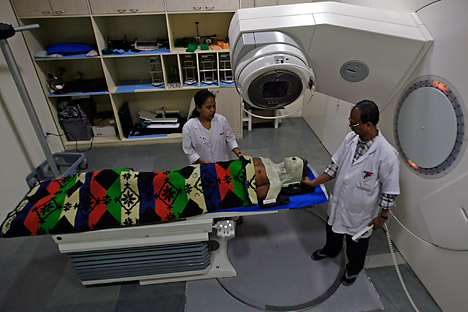
Indian hospitals are gearing up for Russian medical tourists. Source: Reuters

Indian hospitals are gearing up for Russian medical tourists. Source: Reuters

India’s decision to offer visa-on-arrival to citizens of 180 countries will be a boom for the medical tourism industry in the country, Ajay Bisaria, Joint Secretary of the Eurasia Division of the Indian External Affairs Ministry said at the sidelines of the Eurasian Health Summit 2014 in New Delhi. Russians would be among the major beneficiaries.

“We’d like to share the 60 years of our development experience (in medicine) with our friends in Eurasia, including Russia,” Bisaria said. “Medical tourism, which we aim to promote in India, will also allow us to develop medical diplomacy.” He pointed out that India looks to develop cooperation with private and state medical organisations in Eurasia, including Russia, which he named said was India’s “important strategic partner.”  This also involved the setting up of branches of big Indian clinics abroad.

The health summit, which was organised by Medanta, a super-speciality hospital in Gurgaon, was attended by senior diplomats in the Indian capital, including Russian Ambassador to India Alexander Kadakin.  “I’ve lived 25 years in India and I remember that in 1971 there was just one decent clinic in Delhi which offered European service – the Holy Family hospital,” Kadakin said while praising the Medanta hospital. “I can say that India has gone a long way since 1971,” he added.

“Russia would like to develop joint projects and ventures and would certainly like to increase the volume of medical tourism from Russia to India as well as from India into Russia, the ambassador said. “India is not just a great emerging power, in medicine it is a well-established leader, and we have a lot to learn from this success.”

Renowned cardiovascular surgeon Naresh Trehan, who is also the managing director of Medanta, said that his hospital was equipped to deal with Russian patients. “We have interpreters from Russia, we have the food that Russians like and we can make them comfortable in our clinic,” Trehan said, adding that the hospital would have a Russian-language website.

Trehan said about 16 percent of the 61,000-odd international patients that the hospital has treated since it opened in 2009 were citizens of former Soviet republics. A patient from Kaliningrad diagnosed with kidney cancer with multiple metastases was treated under the Da Vinci robotic surgical system. He now lives “a normal working life,” Trehan said.

source: http://www.indrus.in / Russia & India Report / Home> Economics> Cooperation / by Polina Ziza especially for RIR / February 19th, 2014

Medical Tourism In Asia Goes Under The Knife

Millions are willing to travel for cheaper cosmetic treatments. Dr. Neil Lunt discusses the risks and benefits Asian countries are facing as they progress into becoming the ‘hub’ of medical tourism.
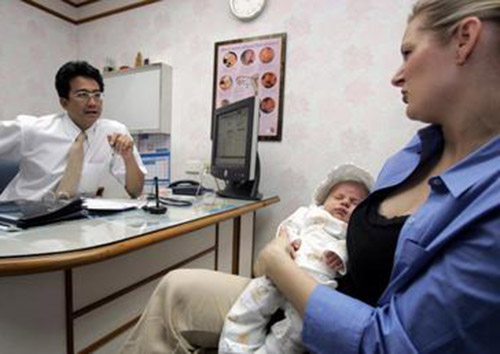
THAILAND-HEALTH-TOURISM

AsianScientist (Feb. 18, 2014) 

Medical tourism in Asia is booming. People from both Asia and the West are being attracted to cities and ‘hubs’ of medical excellence in a number of countries, such as Malaysia, Thailand, India, Singapore, Taiwan and South Korea. This tourism is a reversal of medical travel’s historic trend of being from low- to high-income countries. But the travel for cheaper treatments, including cosmetic, dental and transplantation surgery, has risks as well as benefits for the host countries.

Surgical techniques and patient safety knowledge have spread alongside the circulation of clinicians with overseas experience. This has led to the internationalization of techniques previously confined to Western nations.

Medical tourism across Asia has developed customer care strategies and large facilities akin to corporate five-star hotels — with strong clinical specialism. And countries seeking to develop medical tourism have the option to grow their own health service or form partnerships with large multinational players.

This development — effectively the internationalization of private healthcare aimed at travelling patients — has seen national governments promote their countries’ services.

National governments anticipate many benefits from medical tourism. There are financial benefits generated from health services and associated visitor spending. Human resource benefits can be gained by using medical tourism to attract back health workers who have emigrated — reversing the ‘brain drain.’

Positive spillovers may include the expansion of health-sector infrastructure and also roads and telecommunications. Equity benefits are potentially created by hospitals cross-subsidizing care for domestic patients, or helping to fund capital investment. Capital investments, such as MRI scanners, can then be used by all patients in the hospital or health system. And finally, there are symbolic dividends — ascension into the elite club of trading nations through domestic high-tech service industry development.

So do these anticipated benefits occur? The truth is that we simply do not have enough data on country indicators.

The involvement of transnational corporations may result in profits from medical tourism and ancillary activities being remitted overseas. While some evidence suggests medical tourism generates modest contributions to GDP, there are concerns about human resource migration to the private sector, with professionals lured by better salaries and work opportunities. It is possible resources will be taken away from the domestic population and instead invested into private hospitals, where foreign patients benefit from a high staff-to-patient ratio and expensive, state-of-the-art medical equipment. Such private activity is further supported by tax breaks and public subsidies for the training and education of health workers.

Another possibility is that investment is directed towards urban tertiary care rather than more appropriate domestic-population needs in rural primary care centers. The implications clearly vary depending on whether international patients are using spare capacity or competing with domestic patients.

But there is a curious gap in research and policy analysis. System-level evaluation of medical tourism policy and impact is absent. There is also a lack of independent government-funded work examining the pros and cons of medical tourism, and how benefits are distributed across the population. Medical tourism initiatives are launched as national policy platforms with much fanfare. But it becomes difficult to distinguish aspiration from reality given the veneer of country promotion strategies, provider rhetoric, and industry grandstanding. And one may question the political will that exists to grapple with the nature of system-level impacts.

Deeper empirical understanding of these impacts could inform policy and the regulation or stimulation of private sector activities. This may include ways to ensure human resources are made available to the domestic population — benefitting the domestic health system. Certainly medical tourism has the potential to influence the distribution of healthcare resources to the poorer local population. But it remains to be seen whether universal health coverage in East Asian countries and medical tourism development can go hand in hand.

National strategies must understand the risks within medical tourist markets. It is necessary to engage with the evidence when considering the benefits and demand for medical tourism globally. There is no simple upward curve: travel to particular countries may be volatile, reflecting their own political, climatic and economic events. There are also shifts in consumer preferences and exchange rates.

To date there has been relatively limited success by medical tourist providers in tapping revenue streams from private and workplace insurance systems or outsourcing from western public health systems. It is difficult to ensure that regulatory interest and public investment is prevented from being captured by the private sector and that the interests promoting medical tourism development are adequately countered.

Medical tourism may benefit individual patients, treating clinicians and the private providers. But it is time to ask — do the benefits add up?

Dr. Neil Lunt is Reader in Social Policy and Public Sector Management at the University of York.

——

Source: East Asia Forum.
Disclaimer: This article does not necessarily reflect the views of AsianScientist or its staff.

source: http://www.asianscientist.com / Asian Scientist / Home> Editorials / February 18th, 2014

Medical Tourism, an uncertain Prescription for Asian economies

The East Asian region led by Thailand and other countries such as Singapore, India and Malaysia is a dynamic and evolving destination for ‘medical tourists’, home to many of the most visible and well known hospitals currently serving medical tourists from across the world.

The remarkable success of established East Asian medical tourism providers in marketing their services to international patients has spurred interest among other countries in the region who aim to join these larger players. Medical tourism is a practice where patients travel abroad to purchase medically necessary services, such as heart surgeries and hip replacements; elective treatments, such as cosmetic surgeries or reproductive services; and experimental treatments, such as stem cell therapies.

The enthusiastic embrace of medical tourism by East Asian hospitals and governments is, in theory, well justified. Health services exports could potentially diversify regional economies.

Industry promoters say it can increase foreign direct investment into the private health sector, help countries retain their existing health workforce, increase training opportunities for health workers, and ensure that the local health sector has access to the latest technological advances.

Taken together, these benefits can provide local populations with the opportunity to access cutting-edge and high-quality health services at home.

But medical tourism also creates social and health risks for countries investing in the sector

Investment in medical tourism can drain resources from the public health sector and divert attention away from the less profitable health needs of the local population.

For example, high paying jobs in the medical tourism sector can increase the flow of workers from the public to private sector and from rural to urban areas, as has been the case in Thailand and Malaysia. New, high-tech equipment and highly trained health workers will certainly be a boon to wealthy patients within these countries. But there is little reason to think that these services, targeted at privileged locals and foreign patients, will be accessible or relevant to the vast majority of the local population.

Rather, medical tourism may actively worsen health inequities in these countries.

For example, increased investment in the private health sector in India has been accompanied with decreased public sector investment and promised public access to private facilities through public-private partnerships have generally not been realized. And the promised economic benefits of medical tourism are far from guaranteed. Growth in the sector has come through the lowering of trade barriers in the health services industry.

Large regional players in this industry have the power to play governments in the East Asian region off one another, seeking the regulatory and tax environments most favourable to their bottom lines.

This competitive environment is doubtlessly favourable to those investing in the medical tourism industry, but it is less clear whether the host countries will experience similar economic benefits if tax concessions and other benefits are not matched by economic returns or if medical tourism developments fail to materialise. Countries considering marketing their private health sector internationally should be cautious and aware that industry stakeholders have an incentive to inflate numbers about the market’s potential and exaggerate the potential benefits of this industry.

As East Asia already hosts some of the most developed and high-profile destinations for medical tourists, it is unclear if new markets in the region can successfully compete for the limited number of medical tourists, especially those from outside East Asia.

source: http://www.thailand-business-news.com / Thailand Business News / Home> Health/India/Malaysia / by Somchai Sakayathya / Tuesday – February 25th, 2014