Category Archives: Medical Tourism/Health Tourism

Quality of Care for Medical Travelers in Costa Rica

Among the numerous reasons medical tourism in Costa Rica has grown significantly over the last few years, quality of care stands out as being among the most important. In the 21stcentury, a handful of nations have consistently ranked among the top countries for health care in terms of quality and affordability, and Costa Rica is the most attractive destination for North American medical travelers due to a very important factor: JCI accreditation.

Quality-care-at-medical-tourism-in-Costa-RicaCT11mar2014

JCI stands for Joint Commission International , an organization dedicated to the evaluation and accreditation of health care facilities and practitioners around the world. According to JCI’s mission statement, this organization:

There are two major medical facilities in Costa Rica that proudly display JCI certification: CIMA Hospital and Clinica Bibilica . A third health care facility, Clinica Catolica, is going through the rigorous evaluation and accreditation process performed by JCI.

JCI evaluations focus on the well-being, convenience, comfort, and safety of the patient. Inpatient facilities in Costa Rica that receive this coveted accreditation excel in providing physical security to patients and their loved ones who come to visit them. The evaluation criteria extends to the medical equipment used, the quality of the nutritional services, amenities such as upscale accommodations , cable television, secure Wi-Fi connections, playrooms for children, and the experience of the medical staff. The fact that many physicians in Costa Rica travel to JCI hospitals abroad for medical and language training speaks volumes about the country as a health tourism destination .

The accreditation of a hospital by the JCI extends to the physicians and smaller medical centers affiliated with the institution; for example, the CIMA Hospital in Guanacaste would only work with outside cosmetic surgery centers that meet the JCI requirements and standards of care.

In essence, JCI accreditation puts Costa Rica’s accredited institutions on par with hospitals in the United States that have been properly certified by the Joint Commission U.S.A., which is JCI’s parent organization; some of these hospitals include: New York Presbyterian, University of California San Diego Health System, Holy Cross, Auburn Community Hospital, and many more.

Costa Rica is already ranked as a top retirement destination by various publications such as International Living, and some of the factors that support that ranking include quality and affordability of health care . Although retirement and travel for medical purposes are related activities, they are not precisely the same .

For many people, medical tourism is a more practical and dynamic decision than retiring overseas. In the end, quality and affordable health care is what really matters to medical travelers; to this end, health tourists should ask their providers for more information and details about what JCI accreditation means to them.

source: http://www.news.co.cr / Costa Rica News / Home> Costa Rica News / March 03rd, 2014

Gallery

Medical Tourism – Opportunity For Region’s Economic Recovery

This gallery contains 1 photos.

The development of health tourism promotes economic growth in the country, allows faster and more efficient treatment process, better health services and medical staff. The ultimate outcome of this sector is better health of the citizens , which is a … Continue reading →

TAT unveils new campaign to boost medical tourism

TAT08mar2014

Bangkok : (NNT)

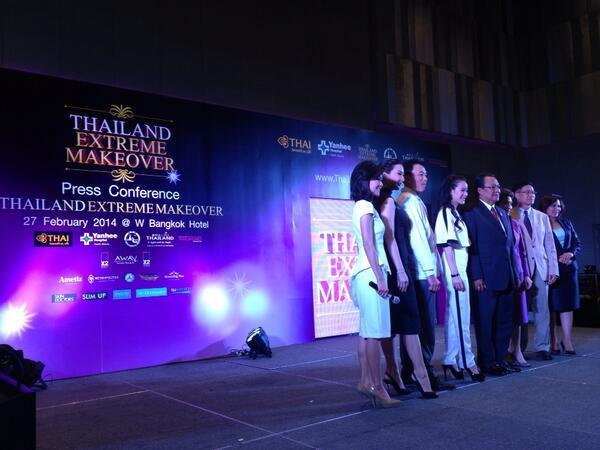
The Tourism Authority of Thailand (TAT) has introduced the “Thailand Extreme Makeover” campaign, aiming to attract more medical tourists from around the globe via the internet.

TAT Governor Thawatchai Aranyik said as part of the government’s policy to push Thailand to become a hub for medical tourism in Asia, the TAT was targeting to penetrate the beauty market this year, starting with the launch of a new campaign called “Thailand Extreme Makeover”. The campaign will accept online applications from foreigners and three of them will win a trip to Thailand to receive beauty services.

The winners will also get to travel around the country, during which video clips of all activities will be uploaded to social media in accordance with the theme “Happiness You Can Share”. The internet is one of the tools being used to serve the TAT’s goal of drawing more visitors to Thailand and generating up to 2 trillion baht in 2014.

According to reports, the number of foreign visitors in the medical tourism category currently exceeds 1 million persons a year, valued at over 30 billion baht. The Middle Eastern market is the largest, taking up 32%, followed by the Asian and European markets at 24% and 14% respectively. 67% of the visitors choose to come to Thailand for hospitality and quality services while 45% come for its high medical standard.

source: http://www.thainews.prd.go.th / National News Bureau of Thailand / February 28th, 2014

U.S. Medical Tourism To Dominican Republic Could Increase With High-Tech Clinic

This week the Metropolitan Hospital of Santiago (HOMS), Dominican Republic, opened the first robotic surgery institute in the Caribbean. Named after Dr. David Samadi, pioneer in robotic prostate surgery and member of the Fox News Medical A Team, the institute is sure to draw patients from throughout the continent.

Close to a million Americans a year now seek health care outside the U.S. Medical tourism is increasingly popular in the Caribbean for its high quality, cost savings of up to 75 percent, and of course, the unbeatable beautiful surroundings.

The Dominican Republic has long been a tourist destination known for its inexpensive plastic surgery and dental procedures. Now you can add the state-of-the-art Da Vinci robot, whose precision robotic arms allow surgeons to perform delicate procedures. Recovery with this kind of surgery is remarkable – you can get in and out of the hospital in a day.

Dominican Republic President Danilo Medina attended the opening of the new facility along with Dr. Raphael Sanchez Espanol, CEO of HOMS hospital and himself a renowned surgeon.

“You’re going to change the lives of many, many people out there and be part of the first robotic institute in the Caribbean,” said Dr. Samadi. “This is a huge blessing … for us to be part of this; we’re very proud.”

The institute will include treatment of prostate, kidney, gynecologic and surgical cases. Doctors operating in the Dominican Republic will now be able to use techniques developed by Dr. Samadi, who became the country’s first to treat prostate cancer as well as other delicate surgeries in a safer, more effective manner, with minimal blood loss.

“Big decisions have transformed into small decisions,” said Dr. Sanchez Espanol. “I like to say, with less trauma. The less trauma facilitates an amazing recovery.”

“This is a huge step in this country and it’s going to bring a lot of patients from the entire Caribbean to this hospital,” Dr. Samadi said.

And beyond the Caribbean. With more and more regulations and restrictions coming our way on American soil, many Americans may look elsewhere for their surgeries and the new David Samadi Robotic Institute could be another option.

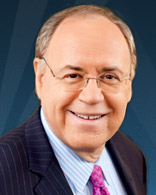
MarcSeigelCT07mar2014Dr. Marc Siegel, a practicing internist, joined FOX News Channel (FNC) as a contributor in 2008.

source: http://www.latino.foxnews.com / Fox News Latino / Home> Health / by Dr. Marc Siegel / February 27th, 2014 / Fox News Latino

Tourism industry continues to make strides

While a wave of anti-government protests swept across Turkey during the prime holiday months of June and July, tourists seemed undeterred, as tourism revenue increased in 2013, and industry workers and experts are devising ways to continue the expansion of this important sector of the economy.

According to the state-run Turkish Statistics Institute, tourism revenues increased to $32.3 billion from $29.4 billion in 2012. Tourism is estimated to account for 3.7 percent of the country’s GDP, according to the Association of Turkish Travel Agencies (TURSAB).

Foreign tourists generated 78.9 percent of the tourism revenue, while 21.1 percent came from Turkish citizens residing abroad.

Foreigners spent an average of $749 during their holidays, while average expenditure for Turkish expats was calculated at $1,252. The highest number of visitors came from European countries — a total of 18.7 million out of 34.9 million.

The Ministry of Tourism and Culture also announced recently that Turkey aims to rank among five top tourism destinations in the world.

In a statement, Minister Omer Celik stated “in 2012 Turkey ranked 17th among the most-visited countries around the world, while in recent years it reached 6th rank according to the ranking of [the UN World Tourism Organisation]. Tourism statistics for 2013 revealed again that Turkey’s position in world tourism sector is sustainable, and the efforts made to diversify tourism and to reveal its potential paid off, making Turkey one of the important actors in world tourism in recent years.”

The Gezi Park events seemed to have a limited impact on the tourism sector. Dicle Volkan, the general manager of Ramada Istanbul Grand Bazaar, located in one of Istanbul’s main historic tourist centres, said that although tourism was influenced by last year’s domestic instabilities, the picture seems brighter in recent months.

“During the off-seasons like January and February, we reached very high occupancy levels, which was quite interesting. There is a price decrease in the accommodation rates to keep the tourists coming, however the increased flow of tourists compensated this. The relative decline of Turkish liras vis-à-vis foreign currency is also an attraction for tourists to prefer our country,” Volkan told SES Türkiye.

According to the expectations of the World Tourism Organisation for 2013, the growth of tourism in European countries is set to be 5 percent, while the Ministry announced that Turkish tourism has shown a growth of 10 percent.

The government aims to triple its tourism profits and attract 50 million annual visitors by the republic’s centennial in 2023.

The Health Ministry began investing in some departments of state-run research hospitals in key areas, like ophthalmology, where Turkey attracts higher numbers of tourists for health purposes, and it will encourage health professionals to increase their linguistic skills with training to establish better communication with patients.

The ministry also started a campaign, entitled “Turkey: Right choice for your life” to promote 10 different health areas, like aesthetics surgery, elder tourism, orthopaedics, cardiology and transplantation. Booklets with text in English, French, Spanish and Arabic will be distributed to passengers on Turkish Airlines flights and will include information on accredited health institutions providing services in those areas. The ministry also plans 20 websites to promote this information.

The aim of the campaign is to increase Turkey’s health tourism target of $5.6 billion to $10 billion by 2018, and to compete with countries like Dubai, Thailand and India in health tourism.

Bulut Bagci, the chairman of the Young Tourism Leaders’ Association, said tourism remains an important part of Turkey’s economy, and that the target markets for Turkish tourism from low- and medium-income classes in European countries and Russia showed a relative economic improvement, which helped Turkey to boost its tourism revenues.

“The high currency of Euro and dollars vis-à-vis Turkish lira throughout the year also attracted tourists toward Turkey, where they could purchase much more goods and services compared with any other European country,” Bagci told SES Türkiye.

Bagci added that despite the Gezi Park protests and the civil war in neighbouring Syria, tourists maintain confidence in Turkey’s domestic stability, which is boosted by effective tourism agency marketing strategies. But he added that Turkey needs to diversify its tourism areas and use its untapped potential to attract a wider range of visitors and obtain higher tourism revenues.

“For instance, each single tourist who comes to Turkey for conventional tourism spends 15-fold than those who come for sea and sun tourism. We should consider tourism as a business and therefore think strategically. So, our country should use its resources in an organised manner and primarily focus on ‘niche’ areas where we can attract greater number of tourists who will spend more than the average ones,” Bagci said.

“Turkey needs to act with entrepreneurship mentality in convention tourism. We may boost the infrastructure of cities other than Istanbul in terms of convention centres and develop strategies to be among the world’s well-known attraction points for convention activities,” he added.

Bagci said Turkey might achieve higher records in tourism revenues and tourist profiles through health tourism as long as the number of modern hospitals increases, along with additional staff trained in foreign languages.

There are 47 institutions accredited by Turkey’s Health Ministry, which hopes to expand the number to 100 by the end of the year. Last year, 480,000 foreigners received treatment in Turkish hospitals, generating $2.5 billion. Turkey is aiming to reach $20 billion of health tourism revenue by 2023.

Gokce Ozdemir, associate professor from Izmir’s Yasar University, said that although Turkey ranks 6th in terms of tourist numbers, it remains at the 10th ranking in terms of tourism income.

Ozdemir said there is a crucial need for rendering a sustainable basis for Turkish tourism, however the on-going political and economic instabilities may have already had a negative impact on tourists’ preferences.

“Turkey should develop its tourism by focusing on specific destinations and by marketing them on a strategic basis. Each destination needs to be evaluated in line with its own assets and should be introduced to the relevant markets through appropriate strategies,” Ozdemir told SES Türkiye.

“Under one common brand, Turkey should support sub-brands to develop and to make a difference vis-à-vis rival destinations of tourism. At this point, cruise tourism, senior tourism, convention and fair tourism, golf tourism and thermal tourism might provide some distinctive tools for boosting Turkey’s touristic image in specific and niche areas,” she added.


20 February 2014

SES Türkiye

source: http://www.turkishweekly.net / The Journal of  Turkish Weekly / February 20th, 2014