Category Archives: Medical Tourism/Health Tourism

Germans to help health, wellness groups compete

A German organization will help Cebu’s health and wellness sector to adapt green global practices to boost the industry’s global competitiveness.

Volker Steigerwald, German Technical Cooperation (GTZ) Promotion of Green Economic Development (Proged) project manager, said yesterday the GTZ will hold a workshop today called the “Upgrading and Greening of the Health and Wellness Tourism Value Chain of Cebu”.

“The two day planning workshop aims to validate upgrading strategies and activities of the Health and Wellness Tourism Value Chains of Cebu,” Steigerwald said

Participating groups have already come up with project offerings of light medical, dental and wellness tour packages, primarily to the overseas Filipinos, through product and market development which will be tackled in the workshop, he said.

Representatives from the different key subsectors like transportation, tour operators, restaurants, clinic operators, Spa and massage centers are expected to attend the workshop to be held today at Harold’s Hotel. /Reporter Aileen Garcia-Yap

source: http://www.newsinfo.inquirer.net / Inquirer News / Home> NewsInfo> Cebu Daily News> CDN-Enterprise / Wednesday – September 25th, 2013


Couple giving health tourism a good name

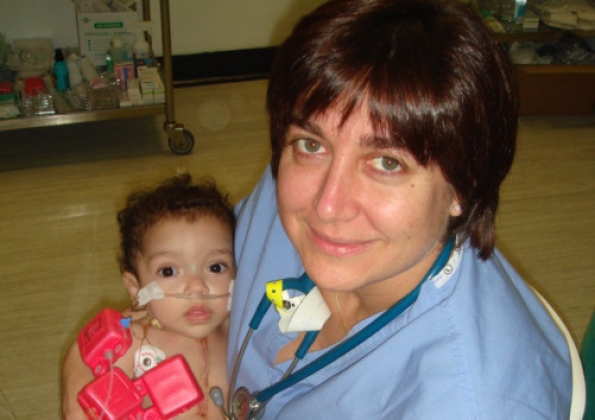
Fatemah Rajah and Sulleman Moreea, below.

Fatemah Rajah and Sulleman Moreea, below.

A medical couple from Yorkshire are dedicating any spare time they have when not saving lives in the county’s hospitals to helping others in developing countries. Catherine Scott meets them.

Most people with stressful jobs look forward to their annual holidays as a break from their daily routine, a chance to unwind and relax.

Not medical couple Drs Sulleman Moreea and Fatemah Rajah.

Instead of lying on a beach or touring Europe, these two dedicated doctors from West Park, Leeds spend the vast proportion of their annual leave helping others in developing countries,

Sulleman, a consultant at Bradford Royal Infirmary spends at least three-quarters of his annual leave either training doctors in his native Mauritius or helping to set up endoscopy units in St Lucia.

FathemahXCT01oct2013

Fatemah, a paediatric intensivist (a specialist in intensive care) with Sheffield Children’s Hospital’s EMBRACE team, spends her holidays volunteering for the International Child Heart Foundation. The foundation sends medics to different parts of the world to save lives and train people how to carry out heard surgery on children. Fatemah has been to Ecuador, Egypt and the Ukraine.

“It does mean we don’t see much of each other in the holidays,” says Sulleman. “What I do is nothing compared to what my wife does for charity.”

It was while on a rare holiday in St Lucia that Sulleman met a taxi driver who was to change his relationship with the island forever.

“It was a long journey and late at night as our plane had been delayed,” explains Sulleman.“I started asking him questions about the medical facilities in St Lucia.”

It turned out that the man was moonlighting as a taxi driver and he was in fact an IT consultant at a local hospital. Dr Moreea, a consultant gastroenterologist and hepatologist, learnt that St Jude’s Hospital, relied on both public money, private donations and the support of foreign doctors and nurses.

He requested a meeting with the medical director and chairman to ask what he could do to help. After being shown around the hospital, Sulleman was told it had no facilities for gastrointestinal endoscopy; the specialist medical equipment used to peer inside patients to examine and even treat diseases of the digestive tract.

He was already heavily involved in training doctors and developing endoscopy units in Mauritius after meeting the country’s Prime Minister a few years earlier.

“There are no medical schools in Mauritius and after my A-levels I got a scholarship to Leeds University where I have done all my studying, I love Yorkshire but I knew one day that I would give something back to my homeland,” says Sulleman.

He returns to Mauritius four times a year and has helped set up three endoscopy units, a fourth is planned, all in his own time and with his own money.

“When the Yorkshire Clinic was updating its endoscopy unit I asked if I could have the old equipment. When I went to Mauritius I realised they didn’t need the equipment but then I went to St Lucia and they did.”

He initially returned to St Lucia in August 2009, with £100,000 worth of equipment for St Jude’s Hospital, where he spent a week training doctors.

However, the entire unit burnt down ten days later in a fire which killed three staff. All medical equipment was lost.

“It was devastating,” he says.

Whilst preparations were being made for St Jude’s to be re-built, Dr Moreea sought donations from Pentax and Olympus, who donated equipment worth hundreds of thousands of pounds to the new unit whose plans are being overseen by his friend, Swiss architect, Oliver Zuber.

“This will ensure that the facilities are almost on a par with what we have in Bradford,” said Sulleman,who was then approached by Dr Lisa Charles, MD of the Victoria Hospital, in north St Lucia, who had heard about his work and invited him to set up a similar endoscopy unit there.

“This was the chance of a lifetime,” added Dr Moreea who has recently become a special adviser to St Lucia’s Chief Medical Officer and Minister for Health.

“To be able to bring new procedures to St Lucia from which patients would benefit was an offer I couldn’t refuse.

“My aim is to institute a culture of teaching, whereby people who have been trained will in turn pass on their knowledge to their juniors, as we do here in the UK.

“It is our duty as doctors to pass on knowledge and it does give you are great sense of satisfaction.

“It gives me enormous satisfaction to be able to help those less fortunate than us, here in the UK.”

A sentiment echoed by his wife: “Every time I come back to this country is makes me realise how lucky we are,” she says.

It was while training in Liverpool that Fatemah got involved with the International Child Heart Foundation.

“I had heard about a trip to Morocco with the Foundation and I really wanted to get involved.”

She now travels at least twice a year to a variety of different countries helping them establish children’s heart surgery programmes.

Without the teams work many of the children would not have survived.

Like her husband she doesn’t view what she does as exceptional.

“Someone has taken the time and money to train us to become doctors and it is our duty to pass on the knowledge we have learned to other, especially in countries less fortunate than our own,” she says.

“Working in these countries with less equipment makes me think on my feet and makes me a better doctor.”

Twitter@ypcscott

Foundation spreads care worldwide

In developing countries, congenital heart defects often go undiagnosed until the child begins turning blue and having difficulty eating.

A simple procedure performed by skilled surgeons could save many children. The challenge is to get skilled doctors to the children in time to save them.

The International Children’s Heart Foundation strives to correct this unfortunate situation by:

Providing direct care to as many children as possible in the short term,

Sending medications, surgical supplies and diagnostic equipment to medical facilities in developing countries;

Training surgeons and medical staff so they ultimately can provide care for their own people.

The foundation was founded 20 years ago by William M. Novick. As a trained and successful cardiac surgeon, he wanted to bring the resources and expertise of the developed world to the children in the developing nations. So he began to gather supplies and volunteers. In 1993, he made his first team trip to Zagreb, Croatia and operated on 13 children.

source: http://www.yorkshirepost.co.uk / Yorkshire Post / Home> Health & Family / September 26th, 2013

Gallery

Health: Greeks go to Russia to promote medical tourism

 Athens :  This autumn, 15 Greek businesses, including leading private hospitals, rehabilitation centers and hotels with spa facilities, will promote their services in a workshop in Moscow to increase their clientele and establish Greece as a medical tourism destination for … Continue reading →

Clark Howard: ‘Medical tourism’ is a growing trend

by Nedra Rhone

Fed up with the high cost of health care, some companies are giving incentives to employees to travel across the country to get the surgeries they need.

Smaller companies like newspaper publisher Stephens Media and mega-employers like Kroger and Walmart are now or will soon offer airfare and a waiver of out-of-pocket expenses for their employees to travel to medical centers around America, according to The Los Angeles Times. In some cases, the employers are even putting up family members at hotels in distant cities as you go in for your surgery.

This is a reversal of the medical tourism I’ve long talked about. Traditional medical tourism has involved Americans going out of the country for cheaper health care in Mexico, Costa Rica, Thailand or Hungary, among other places. Hungary and Costa Rica, in particular, are hot spots for cheap reconstructive dental procedures. The savings can be extraordinary — up to 75 percent.

The big question with medical tourism abroad has always been, “What kind of care do you get overseas?” If you are considering going overseas for a procedure, check first with the Joint Commission International to see which facilities are fully accredited.

Of course, there are also other things to consider before going overseas. Bringing malpractice litigation can be difficult; there are fewer regulations; you may face a lack of adequate follow-up care; and the culture shock and jet lag can sometimes be too much for patients.

Another big problem is isolation from your family. Try free video chat on your smartphone — just remember to buy an unlocked world phone and a SIM card for your country of destination to avoid getting hammered on the data rates.

Consumer expert Clark Howard’s column appears here each Thursday in conjunction with Deal Spotter, a weekly print section in The Atlanta Journal-Constitution. Find more answers to your consumer questions at Clark’s website.

source: http://www.ajc.com / The Atlanta Journal – Constitution / Home> Business> Personal Finance / by Nedra Rhone / Thursday – September 19th, 2013

Rupee fall may inject health into medical tourism: Study

Lucknow :

Though the fall of rupee vs dollar has impacted many sectors of the economy, it has proved to be advantageous to the patients from the Middle East, Africa and SAARC countries to the extent of getting 35% to 45% on complex surgeries at affordable rates this year, reveals the Associated Chamber of Commerce and Industry of India (ASSOCHAM).

Releasing the ASSOCHAM paper on “Falling Rupee: Lower Cost of Medical Travel,” DS Rawat, secretary general of ASSOCHAM said, “The information gathered by ASSOCHAM Social Development Foundation (ASDF) from the various private hospitals, nursing homes etc. It reveals that the inflow of patients has also gone up around 40% during the last six months.”

Rawat also said, “The cost of medical treatment in India is already considered to be about the lowest of any medical destination, the current decline in the rupee may bring even more medical tourists to India’s top hospitals.”

The paper further stated that the current market size of the Indian medical tourism sector is about Rs 7,500 crore and likely to touch Rs 12,000 crore by 2015 with 2015 with the growth rate of about 25% per annum.

The inflow of medical tourists in India is also likely to cross 45 lakh by 2015 from the current level of 25 lakh, the report states. The country attracts large number of medical tourists from the Middle East, America, and Europe and also from neighboring countries like Bangladesh, Pakistan and Afghanistan, adds the paper.

“Top-notch healthcare facilities like cardiology, joint replacement, orthopedic surgery, transplants and urology at a low price are certain key factors making India a favoured destination in terms of medical tourism,” the study further states.

States like Andhra Pradesh, Karnataka, Kerala, Tamil Nadu, Maharashtra and New Delhi are fast emerging as India’s best medical centres with several hospitals and specialty clinics coming up in the cities, added the study.

India is also offering other medical services like yoga, meditation and ayurveda, which is increasingly becoming popular as a non-surgical treatment for various ailments among the foreign patients, adds the paper.

Rawat further added that India is witnessing hoards of patients from abroad, who are coming here to undergo complex surgeries at pocket friendly rates, adds the ASSOCHAM recent assessment.

The medical procedure that cost a medical tourist US $10,000 in 2010 would now cost around $7,000- a 30 per cent difference. An Australian having the same procedure would also pay 45 per cent less today. Similarly, anyone paying in Euros would save around 25% to 35% in this current scenario, states the ASSOCHAM paper.

source: http://www.articles.timesofindia.indiatimes.com / The Times of India / Home> City> Lucknow> Medical Tourism / by Arunav Sinha, TNN / September 14th, 2013