
Category Archives: Medical Tourism/Health Tourism

MUST to extend service hours and develop medical tourism

The University Hospital at the Macau University of Science and Technology (MUST) will extend its pediatrics service hours next month, in order to meet the growing demands of the Island district. The hospital is also planning to tap into the lucrative business of medical tourism services, according to TDM.
Man Hon Meng, Director of the hospital’s medical affairs, told the media yesterday that the decision was made after learning that the demand for this area of medical services have greatly increased in recent times. This increase has occurred on the island side, including Taipa and Coloane. MUST will prolong its pediatrics services by two hours, extending the closing time from 7 p.m. to 9 p.m. The hospital expects to start the new arrangement in one to two months.
The hospital manager was speaking on the sidelines of the 13th Sino-Luso International Medical Forum. He said that MUST’s specialist treatments were well received by the public, with its surgical and gynecological services recording year-on-year increases in the number of users of over 50 percent. The facility on Avenida Wai Long in Taipa, near Cotai, has been established to meet growing medical service demands from the Island side, with major residential projects and resorts having brought additional residents and visitors to the district.
Man also disclosed that MUST is planning to develop their medical tourism industry, which he expects will also encourage visitors to stay longer in Macau. Many countries and territories in the region are developing medical tourism industries, combining medical treatments with post-treatment recuperation. These services are in the planning stages, with further details to come in future.
The 13th Series of the Forum focused on Dermatology and Wound Care Management. The two day event included a clinical training workshop on the application of wound addressing and an academic roundtable discussion. A symposium attended by specialist doctors from the mainland, Hong Kong and Macau, discussing the latest techniques to treat burn wounds and reinvigorate aging skin, was also part of the program.
The Forum was hosted by the Macau University of Science and Technology and organized by the Macau Healthcare Management and Promotion Association. SC

source: http://www.macaudailytimes.com.mo / Macau Daily Times / Home> Macau / June 03rd, 2013
New markets to star at Thailand Tourism Mart Plus

Bangkok :

THAILAND Travel Mart Plus (TTM+), which will take place from June 5 to 7 at IMPACT Muang Thong Thani, will once again focus on the niche tourism markets of health and wellness, wedding and honeymoon, golf and eco-tourism.

Organised by Tourism Authority of Thailand (TAT), the mart will feature 39 niche tourism operators, according to TAT deputy director for international marketing, Juthaporn Rerngronasa.

TTM+ will expand from 380 sellers in 2012 to 395 in 2013, of which 86 are making their debut this year, up from 75 last year.

Meanwhile, a stronger Greater Mekong Subregion presence ­– from 12 sellers in 2012 to 20 in 2013 – indicates “good growth in demand for this region”, Juthaporn opined. One of the new exhibitors this year is Yunnan Provincial Tourism Administration.

The mart will also see more buyers, with 303 participants from across 58 countries, including new source markets of Algeria, Belarus, Laos, Latvia and Slovenia. Similar to last year, the UK and India will have the largest representation, with 30 and 26 buyers respectively. There will also be nine buyers from Latin America and 23 from Central and East Europe.

TAT will introduce a new forum with two keynote sessions, as well as its biannual Friends of Thailand awards presentation ceremony, which recognises and rewards the efforts of tourism industry members in maintaining a positive image of Thailand and ensuring a steady flow of visitor arrivals. The ceremony is scheduled to take place on June 5 and will see awards go to 38 recipients from 24 countries.

In the meantime, the Thailand Tourism Festival (TTF) 2013 will take place between June 5 and 9 at the same venue. Showcasing the tourism potential of Thailand’s five regions, Thai cuisine as well as contemporary Thai and international art and culture, TTF is expected to welcome some 200,000 visitors this year to generate about 300 million baht (US$10 million).

source: http://www.ttgasia.com / TTG Asia / Home> Daily News Archives / by Xinyi Liang-Pholsena / Bangkok – May 29th, 2013

Medical Tourism and Medical Innovation

Margot Sanger-Katz of National Journal  describes  a new Wal-Mart initiative to contain rising health expenditures:

So last October, Wal-Mart announced that employees who needed certain pricey surgeries would have the option of traveling to one of the six best hospitals in the country that specialize in those procedures. Cashiers in California and store greeters in Alabama could fly to the Mayo Clinic in Minnesota—all expenses paid. The model, sometimes called “centers of excellence” or “travel surgery,” has caught on among a few large corporations and their employees. Unlike in retail stores, where the cheapest item is probably the shoddiest, this program is premised on the idea that cheaper health care is to be found at the nation’s very best providers. “We come at it from the perspective of how can we improve quality,” said Sally Welborn, Wal-Mart’s senior vice president of global benefits. “When we improve quality, often there will be a reduction in waste or unintended or unnecessary cost.”

John Goodman of the National Council on Policy Analysis has championed this kind of medical tourism , going so far as to claim that it could allow employers to cut their health costs in half:

Employers can cut their health costs in half if they will do three things:

1. Establish a generous Health Savings Account and let employees pay directly for all primary care.

2. Establish special HSAs for the chronically ill, giving them the opportunity to manage their own care.

3. Direct elective surgery patients to low-cost, high-quality hospitals (which may require travel to another city); if the employee chooses to go to some other hospital, he must pay the full marginal cost of the more expensive choice.

In describing the potential of domestic medical tourism, Goodman referenced MediBid , a firm that allows medical providers to bid to provide care. As Sanger-Katz explains, one of the chief advantages of travel-surgery programs like Wal-Mart is that they offer fixed-price contracts:

Instead of the usual arrangement, where insurance companies reimburse providers à la carte for various services, the travel-surgery programs are based on a flat fee for all the care involved in a procedure. Tough transplants don’t cost the employer any more than patients who sail through the surgery easily. The flat fee reduces employers’ risks and gives the hospital an incentive to avoid problems that could prove expensive down the line.

That is, the purchasing is shifting the risk of cost overruns to the provider, and the provider is betting that it is capable of delivering care for less than the flat fee. If Wal-Mart can help break down the cultural resistance to travel-surgery, the benefits could be enormous. High-quality, low-cost medical providers located in Minnesota and Ohio will be in a position to compete against low-quality, high-cost medical providers located in New York and California. For cities battered by the decline in mid-skill manufacturing employment, the rise of medical tourism could prove a huge boon, as patients from more affluent regions spend some of their wealth in Rust Belt centers of medical excellence. And as medical care becomes something more like a tradable good, we can expect it to get better – and cheaper – faster than if patients remained bound to a limited geographical area, not least because inefficient big-city hospitals will be forced to compete on cost.

source: http://www.nationalreview.com /  National Review Online / Home> The Agenda / by Reiham Salam / May 28th, 2013

Health-tourism potential in TT

IF THIS country becomes a centre for health tourism, the quality of general healthcare will improve, TT Coalition of Services Industries (TTCSI) CEO Nirad Tewarie says.

“The impact on the country will be great as we will be able to attract more and more tourists,” he said yesterday at the third annual Health and Wellness Expo at the Hyatt Regency, Port-of-Spain. The three-day expo is an initiative of Eidetic Publishing, which publishes the magazine U The Caribbean Health Digest.

Tewarie said as more and more people come to this country for increasingly higher value medical services there will be a concurrent increase in the quality level in the public health system. He said there will be complimentary services where the Health Ministry can purchase such services from the private sector that are lacking in the public sector.

“This will also create opportunities for our talented local medical professionals to feel comfortable that they can practice what they were trained to practice and they can expand their scope of practice right here in Trinidad and Tobago,” he said.

Tewarie continued: “And the impact of that on the health system overall, if managed properly and regulated to some extent and facilitated to a greater extent, will be tremendous. And therefore from top to bottom across the country we should, over time, see an increase in the quality of service,” he said.

Tourism Minister Stephen Cadiz, in his remarks, said in the next couple of years this country will become a centre for medical tourism. He reported that both he and Health Minister Dr Fuad Khan have had “numerous conversations” about medical tourism.

He noted they want to pursue it not only in the area of elective surgeries but also in the area of wellness. “I think we are ideally placed and suited for that,” he said. Cadiz pointed out that this country has always had medical tourism, though it may not have been recognised, and people from the region have come here for various types of treatment.

He noted, however, that “we never really went after”the sector. He said Costa Rica, for example, has a very large medical tourism sector and India as well.

Tewarie reported that the TTCSI through the Commonwealth Secretariat hired a team of experts to determine which of the local service sectors had the greatest short term growth potential to develop exports and they found that medical and education services had the highest among the sectors. He reported that the experts did an analysis of the number of beds and they found there is spare capacity in this country.

source: http://www.newsday.co.tt / Trinidad & Tobago Newsday / Home> Business / by Julien Neaves / Tuesday – May 28th, 2013

Diploma in Health Economics to push Dubai’s medical tourism

Examines the economics of health-care provision

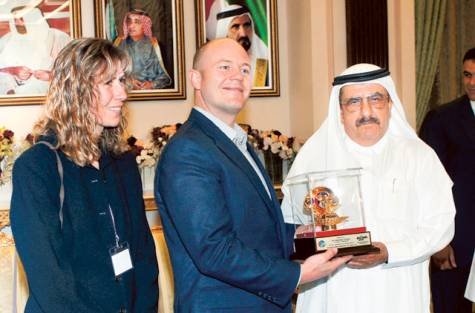
Shaikh Hamdan Bin Rashid Al Maktoum presents an award to Josh Carlson from the University of Washington at a ceremony to celebrate the launch of the diploma in Health Economics and Health Technology Assessment./ Image Credit: Virendra Saklani/ Gulf News

Shaikh Hamdan Bin Rashid Al Maktoum presents an award to Josh Carlson from the University of Washington at a ceremony to celebrate the launch of the diploma in Health Economics and Health Technology Assessment./ Image Credit: Virendra Saklani/ Gulf News

Dubai:

For the first time in the Middle East a diploma in Health Economics and Health Technology Assessment (HEHTA) is being offered, honing Dubai’s status as an international hub for medical tourism.

The three-module diploma is offered by the CME (continuous medical education) arm of the Shaikh Hamdan Bin Rashid Al Maktoum Award for Medical Sciences in collaboration with the College of Pharmacy, University of Washington, US.

Supported by bio-pharmaceutical company Bristol-Myers Squibb Middle East and Africa, the first module began on Tuesday.

To celebrate the milestone, Shaikh Hamdan Bin Rashid Al Maktoum, Deputy Ruler of Dubai, Minister of Finance, Chairman of Dubai Health Authority and the Award’s patron, hosted a ceremony at Zabeel Palace the same day.

Attended by a high-level delegation, including 30 decision-makers and opinion leaders representing health institutions in Kuwait, Bahrain and the UAE, the ceremony highlighted the importance of medical education.

According to the Award for Medical Sciences, which plays a leading role in medical education and research, the diploma examines the economics of health-care provision and the rationale behind the allocation of resources in the health-care sector.

Professor Najeeb Al Khaja, Secretary-General of the Award, said that the diploma will help students gain a better understanding of the economic issues relating to health care.

He stressed that through the diploma, students will raise their knowledge level and this in turn will drive the UAE medical tourism strategy.

Al Khaja told Gulf News: “The diploma will help decision makers understand health economics and empower them to make the right decisions.”

Gulf News also spoke to the visiting faculty.

US-based lecturer Dr Denise Boudreau, Affiliate Associate Professor from the College of Pharmacy, said that the health technology assessment focuses on several areas, including understanding the cost and clinical perspective of health technology and examining the short- and long-term consequences of the application of technology; whereas health economics looks into health-care resource allocation.

“The combination of the two fields has been developed as a response to increasing health-care costs. It will give policy makers the necessary tools to make informed decisions,” said Dr Boudreau.

US-based lecturer Dr Josh Carlson, Assistant Professor from the Fred Hutchinson Cancer Research Centre, added: “The benefit of the diploma is that it will help implement a system to allocate resources efficiently, especially with the rising costs of health care.”

The second and third modules of the diploma will run from October 29-31 and November 19-21.

source: http://www.gulfnews.com / Gulf News / Home>  News> UAE / by Caroline D’Souza, Staff Reporter / May 29th, 2013