Category Archives: Medical Tourism/Health Tourism

DILMUNIA AT BAHRAIN – Bahrain aims to become world-class health tourism destination

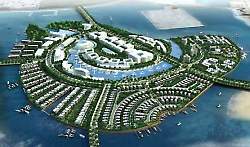
Dilmunia at Bahrain / Image via globalvillagedirectory.info

MANAMA, Bahrain :

Bahrain has taken a giant step towards becoming a world-class health tourism destination, with Dilmunia at Bahrain, the developer’s top official has said.

“This milestone has significant and far-reaching implications for Bahrain,” Ithmaar Development Company (IDC) chief executive and board member Mohammed Khalil Alsayed told the GDN on the sidelines of the groundbreaking ceremony of the project.

“It will, for example, help create potentially thousands of new jobs both directly and indirectly, bolstering the kingdom’s key construction, real estate and tourism industries.

“This, in turn, helps attract millions of dollars in investment and contributes to further boosting the national economy,” he said.

“The project has been delayed by around one year due to the unrest and a challenging economic environment.

“However, with the continuous support of the government, the project is now taking a major step forward and is fast transforming from a bold, ambitious vision into a tangible reality,” he added.

The chief executive said the first residential development in Dilmunia would come up off the north-western edge of the island.

“To be launched as SeaVilla@Dilmunia, this will be a luxury sea-front development of 34 villas in a secluded part of this island.

“As this is the first residential retail product being offered, the promoters have determined to price it most competitively.

“We would like to expeditiously forge ahead with the works, and progress to the next phase of the development.

“We expect that end-users will get the keys to their units by mid-2015,” he said.

“In the current economic context, while master-planning the island, we considered the new market dynamics in a changed economic environment and have introduced smaller plot sizes in some parts of the island in order to offer these for retail sale,” he added.

“This is one of the approaches we adopted to attract greater interest at the retail level, in addition to the developers’ target market we have, for large plots of land.

He expressed hope that the development would positively impact market sentiments and generate further interest amongst investors and buyers.

“There is already an improvement in real estate market activity in Bahrain over the last few months.

“This return of market confidence is despite the events of the last two years,” he said.

“Seen with the January 2013 revision by Standard and Poor’s of Bahrain’s sovereign rating outlook to stable from negative, and a reaffirmation of its credit rating, this is indeed a testament to how, we as a nation are addressing our political and economic issues in a mature way,” Mr Alsayed added.

source: http://www.eturbonews.com / etn Global Travel Industry News / Manama, Bahrain, April 05th, 2013

Source: gulf-daily-news.com

Iran earned $1.5bn from health tourism last year

Rasht, Gilan Prov. :

healthIranCT11apr2013

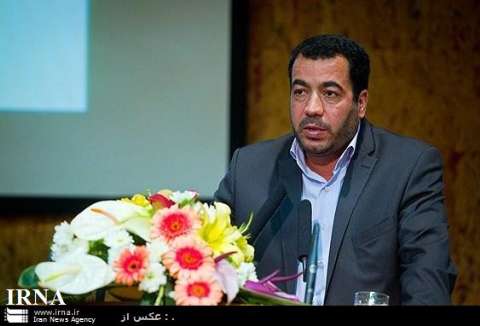
Deputy Head of the Cultural Heritage, Handicrafts and Tourism organisation Manouchehr Jahanian said here on tuesday that Iran hosted 200,000 health tourists last year. 

Addressing a ceremony to open Qaem Hospital in the northern city of Rasht on Tuesday, Jahanian said the countryˈs income from health tourism stood at $1.5 billion.

He said the tourists were from Azerbaijan, Turkmenistan, Iraq, Turkey, India and Pakistan.

He added that last year, more than 4.5 million foreign tourists spent nine billion dollars in Iran creating jobs for 2.5 million people directly or indirectly.

He noted that enjoying diversified climates as well as numerous tourist and historical attractions are among advantages of Iranˈs tourism sector.

source: http://www.irna.ir / Islamic Republic News Agency (IRNA) / Home> Latest News / April 09th, 2013

China’s Tropical Island Plans Medical Tourism Zone

The island province of Hainan has published a plan to build China’s first special zone for medical tourism, an official said on Saturday at the Boao Forum for Asia.

Under the plan, the Boao Lecheng International Medical Travel Zone will be located near Qionghai City and Boao Town, covering an area of about 20 square km, said Zhu Huayou, vice head of Hainan’s development and reform commission.

The southern part of the zone will feature health care centers for the elderly, patients with chronic disease and those in poor health, while the northern part will focus on medical treatment and research, Zhu said.

Medical tourism, which combines travel with leisure and healthcare, is already popular in some Asian countries like Singapore and India, and it is likely to boom in China thanks to rising living standards.

The zone in Hainan will make use of traditional Chinese medicine, the local tropical climate and world-class medical institutions the island aims to introduce, according to Zhu.

The official said that overseas medical institutions will be allowed to set up business within the zone. Other preferential policies will include lower taxes for imported medical instruments and medicines, and frontier medical programs like stem cell research will be allowed.

Construction of the zone is likely to cost up to 100 billion yuan (roughly 16 billion U.S. dollars).

The tropical island province, with its sun, sea and sand, is striving to build itself into an internationally famed travel destination.

According to the provincial statistics bureau, visitors to the island exceeded 33 million in 2012, with travel revenues hitting 37.9 billion yuan.

source: http://www.english.cri.com / CRI English.com / Home / Xinhua / Web editor: Mao Yaqing / April 06th, 2013

Room with a view and a root canal, please

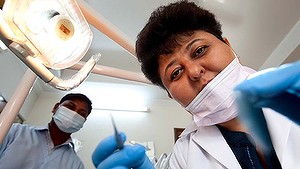
HIgh quality, low prices: Dr. Poonam Batra's Delhi dentist service. / Photo: Graham Crouch

HIgh quality, low prices: Dr. Poonam Batra’s Delhi dentist service. / Photo: Graham Crouch

Medical tourism is a growing international phenomenon.

A dental problem, a strong Australian dollar and a ticket to India: it was the perfect combination for my own ”off-shoring” project. It began when my dentist surprised me with a $2500 quote to have a tooth capped. Luckily, I was about to take a three-week holiday on the subcontinent.

India is known for its flamboyant street dentists who’ll pull a tooth for less than $2 while you sit on the footpath. But India’s rapidly expanding middle-class demands more sophisticated treatment. Medieval dental traditions are now offered side-by-side with state-of-the-art clinics staffed by well-trained dentists.

I made an appointment with Poonam Batra, a dentist in Delhi, to see if she could fix my tooth. Her neat waiting room was reassuring, especially a large pin-board with photos of Dr Batra with prominent clients from Delhi’s diplomatic corps including a former US ambassador and Australian high commissioner. If they had treatment here how could I go wrong?

The inside of Batra’s surgery looked just as high-tech and hygienic as any I’ve been to in Sydney and her two studious-looking male dental assistants could have passed for IT consultants.

The straight-talking Batra recommended similar (although not identical) treatment to what my Sydney dentist had advised. The two sessions I required in the chair over the course of a week went like clockwork. After each visit I received a text message from the surgery saying: ”Hello Sir. Just checking-up. How are you feeling?”

With service like this on offer at a fraction of the price of an Australian dentist, its no surprise the number of people having their teeth fixed in Asia is rising.

Cassandra Italia, from medical tourism company Global Health Travel, estimates at least 25,000 Australians went on a dental tour last year.

”Going overseas for medical treatment used to be quite frowned upon,” Italia says. ”There was a stigma associated with it because people thought you would be compromising on quality. But now there’s much more awareness in the community about medical tourism and it’s growing very fast every year.”

Dental care is a thriving subset of a worldwide medical tourism boom that has lasted more than a decade. Figures on the size of this market are sketchy but some estimates put its value at more than $US100 billion ($95.4 billion) a year. Anita Medhekar, a Central Queensland University economist who researches medical tourism, says the industry is still at least a decade from maturity and destined for further strong growth.

Thailand is recognised as the market leader in medical tourism. Its tourism authority says 1.5 million foreigners visited Thai hospitals in 2008 generating about $US6 billion for the Thai economy. Bangkok’s huge Bumrungrad International Hospital has been tagged the world’s first ”global hospital” and treats more than 400,000 foreigners a year. Bumrungrad has more than 30 medical specialties including dental services. But Thailand faces stiff competition in the medical tourism market especially from India, Singapore, the Philippines and Malaysia.

India’s low wages make it one of the cheapest destinations for medical tourism. The subcontinent also has a vast pool of well-trained medical professionals, many with Western training, and English is widely spoken. The growth of the Indian economy has been matched with rapid growth in high-quality medical facilities. Specialist ”medi-cities” featuring luxury accommodation and research facilities have been built near large cities to target growing offshore demand. One in Gurgaon, near Delhi, is spread over 17 hectares, has 45 operating theatres and caters for more than 20 medical specialities.

Lynne Pezzullo, a Deloitte Access Economics health economist, says the ”invisible hand” of market forces has been fundamental in the medical tourism boom.

”People are going to where the resources are relatively cheaper – Australia, of course, has very costly specialised and highly skilled labour,” she says.

”That means people will go to where they can get a similar level of service at perhaps a substantially lower cost.”

But other forces are also at work.

”Part of it is the rising costs of health care in Western countries, differences in quality and accessibility of services, information technology, lower transport costs, reduced language barriers and trade liberalisation,” says Pezzullo, who wrote a report about medical tourism in Australia for the federal government in 2011.

Italia believes social media has also helped legitimise medical tourism and stoke demand.

”Some patients are posting videos of their treatment on YouTube and people are getting on the internet and seeing people’s testimonials,” she said. ”That creates feelings of safety and security.”

Italia says demand for dental tourism is growing faster than other treatments such as cosmetic surgery and IVF. Her firm experienced a 40 per cent increase in demand for dental trips between 2011 and 2012.

Medhekar says people with little or no dental insurance are the most likely to opt for treatment in Asia.

”Demand for offshore dental work will grow because these services are not easily available and affordable for everyone here in Australia,” she says.

However, Pezzullo points out that the cost of overseas travel and accommodation means dental tourism is still out of reach for many low-income families.

”Among middle-income and upper-income Australians the options to go overseas for dental care are becoming more relatively attractive,” she said.

”The people that miss out twice are lower income and disadvantaged people who may have very acute dental conditions – with a lot of pain. They might be self-medicating because of a lack of access to dental care but are also excluded from going overseas for care because they can’t afford the travel.”

Treating a foreign traveller was nothing new for my Indian dentist – Poonam Batra has been peering into the mouths of dental tourists for 17 years. They have helped her build a thriving practice with five specialists offering a range of services. Her foreign patients normally have ”email consultations” before arriving in India and then arrange their travel around their dental work.

”The dental tourism trend has persisted and the volume of my tourist patients has gone up,” Batra says. ”Now they fly in and out for root canals, crown and bridge work, veneers, wisdom-teeth extractions and implants.”

”The wonderful thing is some come back repeatedly and bring friends or family.”

I was surprised by how much my off-shoring project saved me. Dr Batra charged $312.90 for my treatment, about one-eighth of what I was quoted in Sydney. In effect, the scheme paid for my airfare. But many dental tourists save far more than I did – Ms Cassandra Italia cites examples of people having dental work that would have cost $50,000 in Australia done for $15,000 in Asia.

So are Australian dentists worried about off-shoring? Chief executive of the Australian Dental Association Robert Boyd-Boland says any profession would be uneasy if business was going offshore because of price.

”It is a concern that there’s a market overseas that’s taking work that Australian dentists might otherwise be able to undertake,” he says.

The profession’s response has been to highlight the quality of Australian dental services and warn of the risks of having treatment abroad.

The association says there has been a ”disturbing increase in the number of Australians returning from overseas having received dental treatment with problems that are very difficult to address”.

It also warns that infection control standards are less rigorous in some other countries. Boyd-Boland says serious dental problems often require months of treatment and many dental tourists are in danger of rushing complex procedures.

”If it all blows up and there’s a need to have it fixed here in Australia the expenses will escalate and the saving that a patient thought they’d make will well and truly be lost,” he says.

Many Asian medical centres have responded to concerns about quality and hygiene by gaining top-level accreditation. Even so, Batra says dental tourists need to be careful. ”Things can go very wrong. The best referral is word of mouth really.”

source: http://www.m.smh.com.au / Home> Travel> Travel News / by Matt Wade / April 05th, 2013

Hair implant with your ski trip? Turkish tourism branches out

Istanbul :

Sitting in a private clinic in an upscale neighbourhood of Istanbul, Saleh, a human resources executive from Qatar, is preparing to leave Turkey with a smile on his face and more hair on his head.

Having previously brought his wife and children to Istanbul for sightseeing and shopping, Saleh has returned as the new kind of high-spending visitor Turkey is increasingly seeking to attract: a medical tourist.

“There’s a social pressure to look good,” the casually suited executive, declining to give his family name, told Reuters as he sat waiting for a check-up a day after having hair follicles implanted in his balding scalp.

“Two of my brothers and half of my friends had hair implants in Turkey. It was an easy choice after that.

As it tries to boost tourism revenues and narrow its current account deficit, its main economic weakness, Turkey is on a mission to diversify away from the all-inclusive package tours to its sun-drenched Mediterranean shores which, local businesses complain, often do too little for the local economy.

Of 37 million tourists visiting Turkey last year, about 270,000 came for surgical procedures, from moustache implants and liposuction to operations for serious ailments, generating $1 billion in revenues and representing a small but growing fraction of tourism receipts.

“They usually come for three days. We offer them shopping or skiing tours, they get well and have a short vacation,” said Kazim

Devranoglu, the medical head of Dunyagoz Group, which has 14 eye care clinics in Turkey and branches in western Europe.

Around 10 percent of the group’s patients – some 35,000 people a year – are now coming from abroad, he said.

“They are mostly from western European countries like Germany, the Netherlands, Belgium, as well as from Algeria and Azerbaijan.”

There are various factors behind Turkey’s appeal.

People from countries with heavily congested health systems welcome the opportunity to choose the time of their surgeries, while those from less-developed nations are attracted by Western-trained medics and new facilities sprouting up as Turkey’s private healthcare industry flourishes.

The moustachioed stars of Turkish soap operas, popular across the Middle East and North Africa, have also prompted an influx of men seeking a virile addition to their upper lip.

Health professionals and patients say plastic and corrective eye surgery costs, including travel and accommodation, can be up to 60 percent below comparable programmes in western Europe.

The government aims to double medical tourist numbers to half a million a year over the next two years and raise revenues to $7 billion by attracting them to higher-margin healthcare.

“We see Turkey as a prime destination for medical tourism,” said Dursun Aydin, head of the international patients department at the Health Ministry. “We have experienced doctors. Hospitals are new…Turkey is relatively inexpensive and the temperate climate helps too.”

TAX-FREE HEALTH ZONES

The phenomenon is a boon not only for Turkey’s tourism industry, which risks locking itself into a price war with rival destinations such as Greece and Spain, but also for its booming private healthcare industry.

Parliament passed new regulations in February to make private investment in the healthcare sector easier, a move it hopes could unlock billions of dollars of investment over the next few years.

Private equity investors favour Turkey’s fast-growing services industries, including healthcare and education, because of a near tripling of nominal, per capita gross domestic product over the past decade and a young population of 75 million.

Foreign institutions including Malaysia’s state investment arm Khazanah Nasional, U.S. private equity firm Carlyle, emerging markets investor ADM Capital, Qatar’s First Investment Bank and the World Bank’s International Finance Corp (IFC) have put money into the Turkish healthcare sector.

Turkey’s status as a medical tourism destination could add to the allure. Though the idea is still on the drawing board, the government is considering airport-accessible, tax-free health zones which would aim to attract up to 85 percent of their patients from abroad, while offering tax incentives for investors.

Under the new law passed in February, which facilitates public-private partnerships, the state will rent city hospitals built and run by the private sector for 25 years.

“The aim is to revitalise ageing hospitals. While built primarily for Turkish citizens, they’ll be luxuriously equipped and will aim to draw at least some of their customers from abroad,” said the Health Ministry’s Aydin.

ECONOMIC DIVIDEND

Growth has already been phenomenal, said Tolga Umar, chief executive of Visit and Care, a patient and doctor matching service which helps visitors from the Middle East and Europe.

“We’ve been matching patients and doctors for six years now. Back then there were few other players, but now hospitals have international patient management departments doing direct marketing,” he said.

“Even tour operators ask prior to a visit whether you want to have a dental exam or corrective eye surgery.”

Boosting tourism revenues is key to keeping a lid on Turkey’s current account deficit, which narrowed to around 6 percent of GDP in 2012 from roughly 10 percent in 2011. Net tourism receipts reached $21.6 billion last year, while the current account deficit stood at $47 billion.

Turkey is the world’s sixth top destination by tourist arrivals, according to the World Tourism Organization, but it may require strategies such as the medical tourism drive to maintain that status.

“Decreasing prices in Greece and Spain since the debt crisis mean that the competition for tourists is more intense,” said tourism consultant Fehmi Kofteoglu.

Timur Bayindir, head of Turkey’s TUROB tourism industry association, said: “What the industry needs is alternative tourism channels like medical and shopping tourism.”

That could mean men with red dots on their heads – a tell-tale sign of freshly implanted follicles – becoming a more common sight as they stroll through Istanbul’s designer malls, snapping up a last few purchases at the end of their medical tours. (Editing by Nick Tattersall)

source: http://www.mercurynews.com / Home> Travel / by Can Sezer and Ceyda Caglayan, Reuters / April 04th, 2013