Category Archives: Reports,Features, Statistics

Latest Aussie travel trend is ‘rehab tourism’

We Aussies can turn anything and everything into an overseas trip – even a stint in rehab.

First it was medical tourism drawing us overseas, in search of cheaper facelifts, breast implants or dental treatment.

Now we have “rehab tourism”, in which travellers can combine a stint in a drug and alcohol treatment facility with elephant rides, cooking classes and white-water rafting.

The Cabin Chiang Mai, which is a drug and alcohol treatment facility in northern Thailand, says its services are becoming increasingly popular with Australians, who make up a third of its guests.

Advertisement

The cabin says that lower operating costs allow it to offer treatment at a “third of the price of Australian rehabilitation clinics” and Aussies are staying at a rate of eight to 10 a month.

Fitness therapy and excursions are considered part of the treatment and these can include anything from cooking classes and elephant trekking to mountain biking and white-water rafting — although the staff are quick to say it is “far from being a holiday”.

Resident psychologist Cameron Brown says the cabin’s Australian guests come from all walks of life.

The resort’s location gives guests anonymity while getting them far away from their usual routine and addiction triggers.

source: http://www.smh.com.au / The Sydney Morning Herald / Home> Travel> Travel News> Article / by Travel Insider, June E. Fraser, the Sun-Herald’s travel, insider / October 02nd, 2012

Russians top list of health care tourists

For generations, people have been coming to Finland for health reasons.

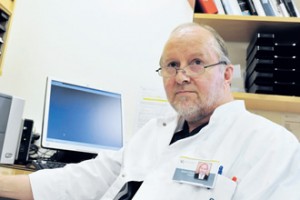
Sakari Orava a preeminent surgeon in the fields of sports injuries, was sought by David Beckham  to help with a ruptured Achilles tendon.

WHEN David Beckham ruptured an Achilles tendon several years ago, he chose to come to Finland for surgery. He, along with other top international athletes, trusted his career with surgeon Sakari Orava and the Finnish health care system. While high-profile footballers generate headlines for domestic health care, such tourism is nothing new for Finland.

At the end of the 19th century Finnish health spas were a popular destination for health-conscious foreign travellers, with Naantali, Turku and Lappeenranta hosting resorts. According to a presentation from Markku Tyni at the University of Savonia Applied Sciences, the people who came to these spas from abroad were not only urbane aristocrats: commoners as well as the elite came to Finland.

Here they visited doctors and received modern therapy, such as electric treatments and turpentine vapours. Many were from Russia.

New EU directive

Although St. Petersburg residents may have flocked to the Grand Duchy of Finland for health reasons, in the last century health care tourism dwindled. Conflict with Russia limited such visits, and other European nations developed their own national health care systems.

“It has not been very common,” explains Matti Bergendahl, CEO of the private health care services company Mehiläinen. “Generally speaking, health care services have been provided locally. Finnish private or public hospitals have not been marketing health care services outside Finland.”

Yet this may be changing. Bergendahl points out that the quality and access of care in Finland could be a draw to foreign visitors. Some specific physicians and services may develop good reputations internationally. More changes may come from Europe.

“In the future, demand may increase due to a new EU law,” continues Bergendahl. “A newly-adopted EU directive improves patients’ rights to cross-border health care and should become part of national law by the end of October 2013. Patients travelling to another EU country for health care should then enjoy equal treatment with the citizens of the country in which they are treated. This new law can increase demand for cross-border services.”…

DAVID J. CORD
HELSINKI TIMES
LEHTIKUVA / VESA MOILANEN / MIKKO STIG

source: http://www.HelsinkiTimes.fi / Parent category: Themes ,  Category: Health & Wellbeing / September 14th, 2012

Stem cell therapy to lead DOT’s proposed ‘medical tourism’ plan

The Department of Tourism plans to add another reason for more visitors to come to the country through a soon-to-be drafted “medical tourism” plan, which highlights the relatively cheap yet world-class health services some of the country’s hospitals have to offer.
In this proposed plan, DOT Secretary Ramon Jimenez aims to get the country’s medical sector to put its best foot forward by highlighting stem cell therapy as well as other areas of specialization.
“Medical tourism focuses on some very serious, important areas of healthcare that the world will travel for,” Jimenez said during a forum on stem cell science conducted at the Medical City hospital in Pasig City on Tuesday evening.
Through promoting world-class medical services in the country, such as some of Philippine hospitals’ stem cell programs, Jimenez said the DOT aims to draw foreigners into the country who, in his words, “yung sasakay sila ng eroplano, tatawid sila ng dagat.”
“(Foreigners) would obviously spend less if they sought care in their own country like the United States or (places in) Europe. So you really have to have a value that will mitigate the cost of that travel. Your service has to be superior, greater value for their money,” Jimenez said.
Jimenez was at the event because his wife Abby has a rare but mild motor neuron disease, and avails of stem cell therapy treatment herself.
The Medical City, as well as a few other hospitals, offers this type of therapy that Jimenez hopes  to promote to other countries.
Stem cell therapy entails taking stem cells from a patient, a compatible donor, or from other sources. These cells are then modified to fit the specifics of the patient’s condition, and are injected into the patient’s body.
According to a primer from the Medical City’s Institute of Personalized Molecular Medicine, which handles stem cell therapies, stem cells are “master cells” that are capable of renewing themselves through cell division, and can be modified, under particular physiologic conditions, to become tissue or organ-specific cells with special functions.
Stem cells can come from three sources: bone marrow, peripheral blood (referring to blood circulating the body), and blood from the umbilical cord. These sources are the best for multi-organ repair, according to the IPMM.
Apart from the Medical City, other hospitals in the country providing stem cell therapy are the Makati Medical Center, St. Luke’s Medical Center in Taguig, and the Kidney and Transplant Institute.
A six-month program for stem cell therapy, in the Medical City at least, is priced at around P2.2-P2.5 million for disease-related services, while for the health and wellness (or aesthetic purposes), the therapy is at around P1.4-P1.6 million
It was pointed out that the treatment in other countries would be thrice as expensive as the Philippine rates.
Sam Bernal, a globally renowned cancer specialist and head of the Medical City’s IPMM also said the Philippines has the potential for medical tourism in that the requirements to offer high-quality services, at least in stem cell therapy, are already here.
“The Philippines is an ideal destination for international patients. Moreover, there is really no reason for any Filipino patient to have to travel abroad for stem cell therapy when the best technology and the best VIP treatment is available right here,” Bernal said.
In the Medical City hospital, over 315 patients have undergone stem cell therapy since 2005. Out of that number, around 17 percent or 54 people are from abroad.
Jimenez said tourists who flock to the country for medical treatment are pegged at less than 150,000, citing 2011 figures. He said that number could rise quickly if awareness about the exceptional medical services the country can offer will be raised.
According to Bernal, some foreign clientele who have undergone stem cell therapy in the hospital he works for include an American billionaire couple who failed to be cured through the services of the renowned Johns Hopkins hospital in Baltimore state; shipping magnates from Norway, and patients from Singapore and Malaysia.
Aside from promoting stem cell therapy, Jimenez said possible areas where Filipino medicine excels in and would most likely be part of the medical tourism proposal are other forms of cancer treatment, orthopedics, and dentistry.
Jimenez said should the medical tourism proposal finally be done, its execution would be drastically different from the It’s More Fun in the Philippines Campaign, which was vibrant and utilized social media to get Filipinos to advertise the country to foreigners.
“To tell you frankly as a marketing person that’s not something I would emphasize. That mood and that tone may not be totally appropriate at all times,” Jimenez said. “However, the emphasis on people will still be pretty much the same.”
The plan for promoting medical tourism in the country internationally will be through the form of road shows and direct selling of the concept.
The secretary emphasized that Filipinos will still be the selling point of the campaign, however different the style of the campaign for medical tourism will be.
“Like (the More Fun in the Philippines campaign), it is additional evidence that it is the Filipino that makes the difference. As you can see pati sa medical tourism that will be the differentiator, the skill, the professionalism ,the genius, the caring,” Jimenez said.
“Iba talaga mag-alaga ang Pilipino e, di tayo nagtatapon ng tao,” he said. “Filipinos never forget they’re dealing with people,” he also said.
Jimenez said the medical tourism plan will take around three to six months to be conceptualized and drafted, but initial moves to promote the country’s health services will be done as soon as possible, and that the DOT is “determined to develop it as it comes.” — ELR, GMA News

source: http://www.gmanetwork.com / by Gian C. Geronimo, GNA News / September 19th, 2012

The Philippines can be a hub of medical and wellness tourism

One aspect of diversification in the hospitality and tourism sector in reaction to consumer and external influences is the flourishing of medical and wellness tourism.

Foster (2010) defined medical tourism as “the practice of traveling across international borders to obtain health care. This includes use of hospitals, clinics and spas specialized in fields, such as surgery (e.g. heart, liver, kidneys, joint replacement, eye and dental care, cosmetology) and rehabilitation towards recovery those recovering from illness or surgery. Besides the lower cost, shorter waiting lists, and the possibility for patients to combine treatment with conventional tourism attractions like climate, regional cuisine, local activities and culture, the growing option to link a medical stay with time in a resort for convalescence makes medical tourism important.”

On the other hand, Mueller and Kaufmann (2001) explained that wellness tourism means “the sum of all relationships and phenomena is resulting from a journey and residence by people whose main motivation is to preserve or promote their health.” Increased interest in fitness, disease prevention, maintaining good health, new age remedies and alternative treatments to alleviate various types of stress are key factors behind the rising use of spas worldwide. As cited in Foster (2010), the Global Spa Economy Study reported in 2007 that Asia-Pacific had 21,566 spas, 363,649 employees, and revenues of $11.38 billion, making it the fastest-growing spa industry worldwide.

Core offerings

In 2010, the ILO paper on the Developments and Challenges in the Hospitality and Tourism Sector indicated that “medical tourism is one of the core offerings in countries such as Colombia, Costa Rica, Estonia, Hungary, India, Jordan, Kenya, Latvia, Lithuania, Malaysia, Poland, Thailand and Tunisia.” It estimated that 60,000 British tourists traveled abroad in 2009 for medical purposes: to receive dental care (43 percent), cosmetic surgery (29 percent) or other surgeries, and infertility treatment (28 percent). Some 750,000 Americans traveled abroad for medical purposes in 2007. India attracted many of these British and American medical tourists, as well as patients from neighboring countries such as Bangladesh, China and Pakistan. In Southeast Asia, Thailand had up to one million medical tourists per year, Malaysia more than 85,000, while Singapore plans to attract one million foreign patients per year by 2012. A private hospital in Bangkok, Thailand, for example, Bumrungrad Hospital, had more than one million patients per year; 42 percent of whom were international patients from over 190 counties and provide 55 percent of the hospital’s revenue.

By 2012, the Federation of Indian Chambers of Commerce and Industry reported that the medical tourism market is expected to grow from $22.2 billion (5.2 percent of GDP) to $69 billion (respectively, 6.2 percent and 8.5 percent of GDP). In another report by HealthCore (2012), medical tourism is projected to achieve an annual growth rate of about 19 percent in the next three years.

In response, our Asian neighbors, like India, Thailand, Malaysia and Singapore, have made strategic moves to create the necessary infrastructure and policy and incentive framework for attracting visitors to go to them for medical and wellness services. In some countries, hospitals are linked to wellness clinics so patients can have personal assistance for post-hospital recovery. This condition is likely to require better care skills, as well as the adapting of service skills to respond to international tourist expectations.

A premier destination

The Philippine government, the private sector, and other stakeholders need to give serious attention to said development and a number of local challenges, as reported by various groups, so that the Philippines could also soon become a premier medical and wellness tourism destination. First of these challenges is the continuing brain drain where competent Filipino health care practitioners leave with a heavy heart for greener pastures abroad. Second, we lack adequate state-of-the-art medical equipment and constant upgrading of medical facilities to be at par with world-class standards. Third, we lack marketing strategy to create packages that integrate medical and wellness services offering complete healing and revitalization for foreign patients. Fourth, we lack concrete policies and administrative foundations across broad-ranging areas to facilitate the in-bound entry of medical tourists and to make medical tourism a preferred investment area. Fifth, we do not have clear policies, mechanisms, and incentives to install accreditation and certification quality systems and support protocols to enhance the acceptability of the Philippines as a medical and wellness tourism destination.

There are many good reasons (Filipino innate hospitality, pleasant tropical weather, beautiful tourist spots, rich healing practices, and being home to some of the best hospitals and stand alone specialty clinics) to be optimistic about the Philippines’ chances to compete in the global market. If we act soon enough and mobilize the collective support of all stakeholders, particularly the government and the private sector, our joint coherent and sustainable efforts could develop our country into a preferred hub in the global healthcare market, given the reality that our main competitive advantage is the world-class quality of medical services rendered the Filipino way of care and compassion by our health care professionals at a comparatively reasonable cost to patients.

Dr. Divina Edralin is a full professor at the Management and Organization Department of the Ramon V. del Rosario College of Business of De La Salle University. She teaches Human Behavior in Organizations, Strategic Human Resource Management, Labor Relations and Research. She is also a management consultant to SME’s, schools, and NGOs. She may be reached at divina.edralin@dlsu.edu.ph.

The views expressed above are the author’s and do not necessarily reflect the official position of De La Salle University, its faculty and administrators.

source: http://www.ManilaStandardToday.com / Manila, Philippines /’ by Divina M. Edralin / September 17th, 2012

Passport to health

Clinique Biotonus Bon Port in Switzerland is attracting Chinese clients who want anti-aging treatment. Provided to China Daily

More and more affluent Chinese are heading overseas in search of a wide variety of treatments

Twice a month Li Aobo, a private trip consultant, flies 12 hours in each direction to accompany a few clients from Beijing to the Clinique Biotonus Bon Port in Switzerland, which treated former South African president Nelson Mandela in 1992.

“My clients sit in the business-class or first-class cabins while I always get an economy ticket and have to get ready to take orders at any time,” says Li.

Li works for Lavion, a Beijing-based travel agent focusing on private medical tourism. The growth of the company’s membership, which went from zero to more than 1,000 in fewer than five years, is demonstrative of the business opportunity in the sector.

While China is emerging as a hot destination among medical tourists for its affordable prices and its fusion of modern medical practices with traditional Chinese therapeutic techniques, increasing numbers of affluent Chinese are traveling abroad for better medical procedures, regardless of their price.

In China, nearly 60,000 people go abroad annually for healthcare services, especially for anti-aging therapy, cancer screening, to give birth and to get treatment for chronic diseases, said Yang Jian, CEO of the Shanghai Medical Tourism Products and Promotion Platform, in a China Daily report from November 2011.

The figure was just several thousand in 2006, he said.

Bearing in mind China’s huge population and rising middle class, the outbound medical-tourism market seems a good bet for companies such as Lavion.

“We have been working with Lavion for six years. We started with about 50 patients in the first year and now have more than 200 patients every year,” says Dr Reza Tavassoli at Clinique Biotonus Bon Port, who was also Nelson Mandela’s chief doctor.

In the future, he says the clinic hopes to receive as many as 500 Chinese clients each year as he sees more Chinese people paying attention to longevity and anti-aging treatments.

On his latest trip to Switzerland, Li Aobo’s clients were three women real estate entrepreneurs around 40 years of age. They were mainly going to the clinic to receive treatment for intensive fatigue, burnout and problems linked to age.

After the therapy, Li took them to Lucerne, Geneva and Zurich to help with his customers’ needs for shopping and sightseeing.

“Some of our clients are not used to Western-style food, especially during the therapy. I often make porridge with a rice cooker and prepare some simple Chinese dishes,” says Li.

“Each time, we bring six people at most to the center on the shore of Lake Geneva to ensure the quality of our customized service. I am not only a medical translator, but also a private butler who is in charge of all the details of their daily life during the seven-day trip.”

The lowest price for such a trip is 200,000 yuan ($31,500, 25,000 euros). Some clients ask for private jets for the journey, which can be arranged for about an additional 1.5 million yuan, says Zhou Kaiwen, founder of Lavion.

With more than 10 years of experience in the incentive and business-travel department of China International Travel Service, a leading Chinese travel enterprise, Zhou has plenty of exposure to high-end tourism.

“When we were consistently receiving upmarket overseas clients, I was wondering whether Chinese people have sophisticated needs in outbound travel,” says Zhou.

When he founded Lavion in 2006, Zhou did not rush into doing business. He hired a consulting company for market research, which selected 3,000 high-income customers to answer a questionnaire.

Upon discovering that their top concern was health, Zhou decided to make healthcare tourism the focus of his business to differentiate it from competitors.

“Although we spent much money and energy in the first year, it seems to be worth it. In 2007, we had about 100 members and began to make money, and our turnover has a growth rate of 30 percent every year,” he says.

Apart from the trips to Switzerland, other travel programs include diabetes and chiropractic-treatment tourism to Germany, major-disease screening in Japan, and beauty-treatment trips to South Korea.

“Local hospitals and companies are not familiar with the Chinese market, and we are playing the role of an agent for them,” Zhou says.

“But about 70 percent of our customers choose Europe as their destination as they have more trust in the superior healthcare there.”

Most of his clients are successful entrepreneurs in their early 40s. In the beginning, women accounted for 60 percent of his clients, but as men are also paying attention to their health, the proportion has become almost equal. Zhou also mentions that returning customers account for 40 percent of his clientele.

“Anti-aging, insomnia, depression and face-lifting are long-term rehabilitation projects, one trip cannot solve the problem once and for all,” he says.

Other medical-tourism agents have since joined the market, including Pure Blue International, which is working with four clinics in Switzerland; LuckTour Medical Tourism, providing tourism to Japan and Singapore; and Rigii, which is cooperating with Swiss medical institution Centre de Sante Helvetique S.A.

“More rich people are willing to pay for outbound medical expenses, not only for health, but also to enjoy the relaxation during the trip,” says Li Yuyang, business director of Ogilvy Health.

He says these people are realizing the importance of health and they are tired of seeing a doctor in traditional hospitals.

However, Li points out that while more companies are rushing into the business, they are providing very similar routes, projects and services.

“I think they have to develop more projects or product portfolios to cater to different needs and also build their own characteristics,” he says.

But Li says expensive medical tourism will be primarily targeted at rich people.

“If it expands into a service that everyone can enjoy, the quality of the service will not be guaranteed,” he says.

When it comes to the increasing number of competitors, Lavion’s Zhou says the market is not mature, but he is confident in his company’s position and reputation in the industry.

“We will stick to high-end and tailor-made services in the future,” he says.

yaojing@chinadaily.com.cn

source: http://www.europe.chinadaily.com.cn / Home> E-Paper/Business / by Yao Jing (China Daily)/ September 07th, 2012