
Category Archives: Reports,Features, Statistics

‘Trained manpower needed for wellness tourism’

The Indian government is looking to raise trained manpower to meet the growing needs of the wellness tourismsector, which is fast-growing and recession-free, an official said yesterday.

WellnessCT10aug2013

“Lack of skilled manpower is a major challenge faced by the wellness tourism sector. Untrained manpower would adversely affect quality of services offered to the tourists, the sector being recession-free with 20 percent growth rate over last year,” said Girish Shankar, additional secretary in the tourism ministry.

“Proper strategies and policies for human resource development will have an effect on the industry,” Shankar said at the fifth annual wellness conference organised by the Federation of Indian Chambers of Commerce and Industry (FICCI).
Synergy should be struck between medical and wellness tourism, said Shankar.
“For many tourists, India is the favourite destination for medical tourism owing to the quality of healthcare. If wellness tourism gets synergised it will further increase the inflow of tourists. With ayurveda, yoga, panchkarma and rejuvenation therapies … some traditional systems of medical treatment will attract more tourists.”
In order to increase awareness about wellness tourism and to bring together various stakeholders on one platform, the tourism ministry is organising a Global Spa and Wellness Summit (GSWS) in October, he added.
“This summit will bring together leaders and visionaries to positively impact and shape the future of the global spa and wellness industries across the globe,” Shankar added.

source: http://www.canindia.com / CanIndia / Home> Health> India / August 06th, 2013
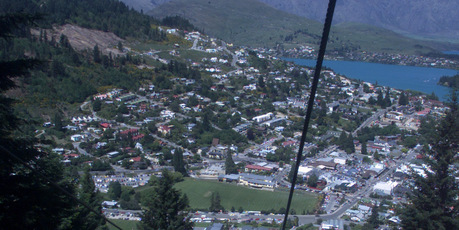
Medical tourism heading to Queenstown

Photo / File / Mark Mitchell

Photo / File / Mark Mitchell

Medical tourism is coming to Queenstown, with a stem cell centre planned to be operating by the start of next year.

It would start treating sportsmen and osteoarthritis suffers, with a view to later treating multiple sclerosis and diabetes.

Prof Richard Boyd, of Monash University, Melbourne, told delegates at the New Zealand College of Appearance Medicine conference – being held in the Otago resort – about his plans for the centre.

It would be an extension of Queenstown Regenerative Medicine and a collaboration between the resort’s regenerative medicine movers and shakers; Marcelle Noble and Dr Peter Britton, Dr John Flynn of the Gold Coast in Australia and Prof Boyd.

Professor Boyd is the director of Immunology and Stem Cell Laboratories at Monash University.

Ms Noble is the owner and director of Queenstown Regenerative Medicine (QRM) and said discussions are under way for a purpose-built centre, funded by private investors. A location has not been confirmed but is likely to be near the Remarkables Park Shopping Centre and at a “high end” standard.

A cryopreservation facility to store stem cells, umbilical cord blood and amnion is an expected future development, with Prof Boyd yesterday emphasising the value of the amnion – a sack filled with stem cells involved in embryo development during pregnancy.

“Bank it, donate it but don’t discard it,” he said.

Prof Boyd said Queenstown’s mixture of types and quantity of sports injuries and proactive people involved in regenerative medicine were major reasons why the resort was chosen.

A procedure which “stops the pain” (platelet rich plasma) from causes such as osteoarthritis is already available in the resort at QRM. Stem cell therapy was a step up because it also worked towards “fixing” the issue.

Ms Noble said the market for such a centre “is huge”.

New Zealand and Australia’s strong medical reputation in the United States helped.

Stem cells would come from a person’s own fat, and the treatment price is estimated at between $7000 and $9000 for the initial treatments of sports injuries and osteoarthritis.

As people get older stem cells are less viable, and Ms Noble said there is also market demand for a cryopreservation centre to store stem cells as an insurance for a person’s future health.

“Bring them to Queenstown for a holiday for a week and couple it with banking their stem cells,” she said.

Queenstown would be the only centre in New Zealand to offer both the plasma and stem cell therapy.

– Otago Daily Times

source: http://www.nzherald.com / The New Zealand Herald / Home> National / by Christina McDonald / Friday,  August 02nd, 2013

Medical tourism for Americans seeking affordable healthcare

SOUTH AMERICA – AN OPTION TO BEAT MEDICAL COSTS IN THE UNITED STATES?

CT31jul2013

Central and South America are the top destinations for American medical tourists. Many US healthcare providers have recognized this and are expanding their operations to include branches in other countries. This has the added benefit of giving the expats living in these countries access to high-quality facilities at affordable prices

Since the recession hit more people in the United States of America are looking abroad for healthcare options. There are many popular destinations for medical tourism that provide very affordable care at a quality to equal the USA.

So where offers the best standard of care at the best prices?

ECUADOR

Ecuador is very popular among expat retirees and is steadily building a reputation as a medical tourism destination. Cuenca in particular is catching the attention of medical tourism representatives.

According to expats can expect to pay 7-10% of what they would pay in the US for medical treatments. A heart bypass that would cost US$130,000 in the U.S., will cost closer to US$10,000 in Cuenca and a hip replacement priced at anywhere from US$43,000 to US$51,000, only US$8,000.

It’s not only expats and medical tourists from the US who are taking advantage of the medical system, Ecuadorians living in America often travel home to make use of the affordable healthcare.

COSTA RICA

Often mentioned as the top destination for US expats, the standard of healthcare in Costa Rica is one of the many perks. Expats and medical tourists can choose from one of the private, accredited hospitals again at a cost much lower than they would pay at home.

Waiting times for surgery and treatment are practically non-existent and many doctors are trained in the U.S. meaning most speak good English.

Other countries popular with both expats and medical tourists are Mexico and Panama where outposts of U.S. health care providers offer high quality, affordable treatment options.

source: http://www.eturbonews.com / eTN Global Travel & Industry News / by Juergen Stein / July 27th, 2013

‘Lawas an untapped eco-tourism goldmine’

Lawas :

The eco-tourism potentials of Lawas is immense, but creativity and innovation are needed to turn them into money spinners.

Second Minister of Resource Planning and Environment Datuk Amar Awang Tengah Ali Hasan said lessons could be learnt from the Republic of Czechoslovakia, which managed to turn a valley with a hot spring into a renowned medical tourism attraction.

“Tourism is a money spinning industry, and it can provide employment and economic spinoffs. Czechoslovakians used their creativity and innovation on the valley, which now contributes to their national coffers,” he said at a Sarawak Energy Berhad (SEB) gathering in Hotel Seri Malaysia to present Raya goodies to orphans, the disabled (OKUs), and single mothers over the weekend.

Awang Tengah said Lawas had great attractions in the Merarap hot spring and Mount Murud, the highest mountain in Sarawak.

In addition, tucked in Brunei Bay are marine resources that would soon be gazetted as a marine park to protect the
biggest sea grass plains in this region. The area boasts of dugongs and is a rich fish-breeding ground.

On the cultural front, the rich and unique heritage of the Tagals, Lun Bawangs, Kedayans and Brunei Malay communities, coupled with food unique to the region between Brunei’s Temburong District and Sabah – as such ‘Tahai’ (smoked fish) also help bring in tourists.

“We are proud also of our rich diversity, cooperation and unity,” he beamed.

Awang Tengah acknowledged that for this dream tourist destination to materialise, Lawas needed proper infrastructure.

“This (infrastructure) would be carried out in stages,” he said, urging the private sector to give a helping hand.

“With tourism thriving in neighbouring Sabah, there should be a spillover effect in Lawas.”

On air connectivity, he appealed to the government to build a new Lawas Airport. The present one is prone to flooding as it is located near the river bank. It can only accommodate 17-seater Twin Otter aircraft.

On the Ramadan gathering, he commended Sarawak Energy for bringing cheer to less fortunate members of society here.

“Success in any corporation will be more meaningful if they were able to share their profits with those who need help.”

Also present were Limbang Resident Maria Hasman and Sarawak Energy vice-president Zuraimy Kushaili.

source: http://www.theborneopost.com / Borneo Post Online / Home> News> Local / by Philip Kiew,  reporters@borneopost.com / Tuesday – July 30th, 2013

Wealthy Russians eye trips to Finland for medical tourism

Tampere , Finland  :

Sitting on a hospital bed with a slight smile on her face, Valentina Micheeva looks a decade younger than her 80 years as she explains how four days earlier she had her hip replaced — not in her native Russia but at a clinic in Finland.

A sports-loving woman, she had to stop jogging because her hip ached and, despite the pain, she was unable to get an operation performed at home in Moscow.

“I was too old to get a prosthesis. They only gave me painkillers,” she said. “There are good doctors in Russia. But too many people want to visit them! If you don’t have connections, it’s very complicated.”

The only solution that remained was surgery abroad. “My daughter lives in Finland. She heard about the Coxa (Clinic) on television and told me to come here,” she said.

Each year, the Coxa Clinic in Tampere in southern Finland, which is majority public-owned, welcomes about 20 Russians among its 3,000 patients.

“It’s not a lot yet, but we haven’t been looking for foreign patients for a long time,” said Tarmo Martikainen, the clinic’s CEO.

“We would like to have a hundred foreign patients per year,” he added.

Coxa HealthCareFinland, together with other Finnish hospitals, has formed a group to attract Russian patients, seeking to benefit from the Finnish health sector’s competitive advantages.

Although they’re out of reach for most Russians, Finnish healthcare providers say their services are competitively priced compared with other countries targeting Russia’s wealthy.

“Our prices are lower than in Germany for instance, and we’re much closer. You only need six hours to go by train from Saint Petersburg to Tampere,” said Jorma Pajamaaki, one of the clinic’s surgeons.

Treating foreign patients however poses some problems. “Language is probably the biggest obstacle,” said Pajamaaki.

To tackle the language barrier, Coxa has recruited Russian staff such as Irina Ivanova, a medical doctor who is in charge of receiving new patients and translating for them.

Next to her hospital bed, Valentina Micheeva proudly displays a stack of laminated vocabulary cards showing the same words in Russian and in Finnish.

But special care comes at a price.

“Coming to Finland for surgery is very expensive for the Russian patients. I think it’s about the price of a (luxury) car,” Ivanova said.

source: http://www.chinapost.com.tw / The China Post / Home> Arts & Leisure / by Pauline Curtet, AFP / July 28th, 2013