Category Archives: Reports,Features, Statistics

Medical Tourism and Medical Innovation

Margot Sanger-Katz of National Journal  describes  a new Wal-Mart initiative to contain rising health expenditures:

So last October, Wal-Mart announced that employees who needed certain pricey surgeries would have the option of traveling to one of the six best hospitals in the country that specialize in those procedures. Cashiers in California and store greeters in Alabama could fly to the Mayo Clinic in Minnesota—all expenses paid. The model, sometimes called “centers of excellence” or “travel surgery,” has caught on among a few large corporations and their employees. Unlike in retail stores, where the cheapest item is probably the shoddiest, this program is premised on the idea that cheaper health care is to be found at the nation’s very best providers. “We come at it from the perspective of how can we improve quality,” said Sally Welborn, Wal-Mart’s senior vice president of global benefits. “When we improve quality, often there will be a reduction in waste or unintended or unnecessary cost.”

John Goodman of the National Council on Policy Analysis has championed this kind of medical tourism , going so far as to claim that it could allow employers to cut their health costs in half:

Employers can cut their health costs in half if they will do three things:

1. Establish a generous Health Savings Account and let employees pay directly for all primary care.

2. Establish special HSAs for the chronically ill, giving them the opportunity to manage their own care.

3. Direct elective surgery patients to low-cost, high-quality hospitals (which may require travel to another city); if the employee chooses to go to some other hospital, he must pay the full marginal cost of the more expensive choice.

In describing the potential of domestic medical tourism, Goodman referenced MediBid , a firm that allows medical providers to bid to provide care. As Sanger-Katz explains, one of the chief advantages of travel-surgery programs like Wal-Mart is that they offer fixed-price contracts:

Instead of the usual arrangement, where insurance companies reimburse providers à la carte for various services, the travel-surgery programs are based on a flat fee for all the care involved in a procedure. Tough transplants don’t cost the employer any more than patients who sail through the surgery easily. The flat fee reduces employers’ risks and gives the hospital an incentive to avoid problems that could prove expensive down the line.

That is, the purchasing is shifting the risk of cost overruns to the provider, and the provider is betting that it is capable of delivering care for less than the flat fee. If Wal-Mart can help break down the cultural resistance to travel-surgery, the benefits could be enormous. High-quality, low-cost medical providers located in Minnesota and Ohio will be in a position to compete against low-quality, high-cost medical providers located in New York and California. For cities battered by the decline in mid-skill manufacturing employment, the rise of medical tourism could prove a huge boon, as patients from more affluent regions spend some of their wealth in Rust Belt centers of medical excellence. And as medical care becomes something more like a tradable good, we can expect it to get better – and cheaper – faster than if patients remained bound to a limited geographical area, not least because inefficient big-city hospitals will be forced to compete on cost.

source: http://www.nationalreview.com /  National Review Online / Home> The Agenda / by Reiham Salam / May 28th, 2013
Health-tourism potential in TT

IF THIS country becomes a centre for health tourism, the quality of general healthcare will improve, TT Coalition of Services Industries (TTCSI) CEO Nirad Tewarie says.

“The impact on the country will be great as we will be able to attract more and more tourists,” he said yesterday at the third annual Health and Wellness Expo at the Hyatt Regency, Port-of-Spain. The three-day expo is an initiative of Eidetic Publishing, which publishes the magazine U The Caribbean Health Digest.

Tewarie said as more and more people come to this country for increasingly higher value medical services there will be a concurrent increase in the quality level in the public health system. He said there will be complimentary services where the Health Ministry can purchase such services from the private sector that are lacking in the public sector.

“This will also create opportunities for our talented local medical professionals to feel comfortable that they can practice what they were trained to practice and they can expand their scope of practice right here in Trinidad and Tobago,” he said.

Tewarie continued: “And the impact of that on the health system overall, if managed properly and regulated to some extent and facilitated to a greater extent, will be tremendous. And therefore from top to bottom across the country we should, over time, see an increase in the quality of service,” he said.

Tourism Minister Stephen Cadiz, in his remarks, said in the next couple of years this country will become a centre for medical tourism. He reported that both he and Health Minister Dr Fuad Khan have had “numerous conversations” about medical tourism.

He noted they want to pursue it not only in the area of elective surgeries but also in the area of wellness. “I think we are ideally placed and suited for that,” he said. Cadiz pointed out that this country has always had medical tourism, though it may not have been recognised, and people from the region have come here for various types of treatment.

He noted, however, that “we never really went after”the sector. He said Costa Rica, for example, has a very large medical tourism sector and India as well.

Tewarie reported that the TTCSI through the Commonwealth Secretariat hired a team of experts to determine which of the local service sectors had the greatest short term growth potential to develop exports and they found that medical and education services had the highest among the sectors. He reported that the experts did an analysis of the number of beds and they found there is spare capacity in this country.

source: http://www.newsday.co.tt / Trinidad & Tobago Newsday / Home> Business / by Julien Neaves / Tuesday – May 28th, 2013

Health ministry sets up desk for private healthcare providers

Health minister Godfrey Farrugia launches Business Friendly Contact Desk for private healthcare providers.

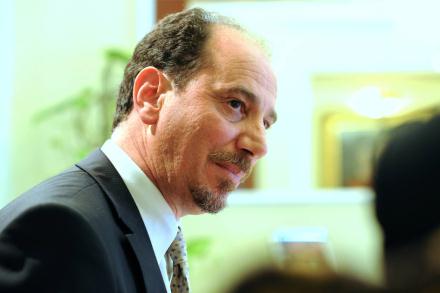
Health minister Godfrey Farrugia

Health minister Godfrey Farrugia

Report by Jean Pierre Cassar

A Business Friendly Contact Desk has been set up within the health ministry to promote contacts with the business community for ventures within the health sector.

In a press conference held this morning at the Ministry of Health in Valletta, current Health Minister Godfrey Farrugia accompanied by his Chief of Staff, Claudio Tonna, said the  desk will “serve as a contact point with the healthcare providers.”

All private sector health services will be able to use this new project from self-employed health operators to private clinics and hospitals. It will advice in the development of partnerships between the public and the private health services.

Farrugia said the desk will work hand in hand with private health sector stakeholders “to develop synergistic and complementary public and private health services that will lay a strong basis on which a sustainable health system will be built on a national level.”

This desk, with the collaboration of the Ministries for Tourism and Enterprise, is planned to promote Health Tourism in all ways and serves as a catalyst for private health care providers to seek opportunities in the health tourism market.

The minister said that this would obviously help in removing the bureaucracy from the past years, as the reduction of administrative burdens in itself is to promote health care sustainability.

Farrugia explained how this desk is to reach out and engage with private health insurers and in partnership with the leading government institutions, unions and NGOs.

source: http://www.maltatoday.com / Malta ToDay / Home> News> National / Saturday – May 25th, 2013

DHA’s prescription to boost medical tourism in Dubai: 3 new hospitals, 40 clinics

A Dh3bn Rashid Hospital masterplan inspired by Sheikh Mohammed also in works as part of the health strategy 2013-2025

Vital signs are healthy for medical tourism in the emirate, as the Dubai Health Authority (DHA) announces three new hospitals, 40 new health centres and a Dh3 billion redevelopment plan for the existing Rashid Hospital.

As part of the Dubai Health Strategy 2013-2025, approved by His Highness Sheikh Mohammad bin Rashid Al Maktoum, Vice President and Prime Minister of the UAE and Ruler of Dubai, the masterplan is aligned with the Dubai Strategic Plan 2015 that aims to provide the resident population and visitors with access to internationally recognised levels of healthcare and transform the emirate into a hub for medical tourism.

Essa Al Maidoor, Director-General of the Dubai Health Authority (DHA) chalked out a detailed health strategy, saying: “The strategy takes into consideration the expected population growth of Dubai across the various geographical areas of the emirate.

“After a careful analysis of the Dubai Population growth study and after looking into all the health services presently available across the emirate, we chalked out the additional projects required until 2025.

“Access to healthcare is a priority and the new projects are in line with our strategy to have hospitals within the radius of eight to 12 kilometres from all catchments areas and health centres to be within three to five km of all catchment areas.”

New healthcare facilities on the plan

In a bid to achieve this target growth, DHA confirmed the need to build additional hospitals and clinics to serve this purpose.

Al Maidoor said: “Based on this, the Dubai Health Strategy master plan includes construction of three new hospitals and 40 primary healthcare centres across the geographical areas of the emirate.”

The three new hospitals include the Sheikh Mohammad bin Rashid Hospital on Sheikh Mohammad bin Zayed road; Al Maktoum Hospital will be located in Jebel Ali’s Al Maktoum Airport area; the third will be Al Khawaneej Hospital.

Meanwhile, Rashid Hospital will be rebuilt along with its adjoining area in a Dh3bn masterplan that will includes six new specialised health centres, one four-star and another five-star hotel, villas and flats for staff accommodation, a mosque, a lakeway and landscaping and open spaces for children and families.

Infrastructural growth

The UAE is fast developing into a top draw for medical tourism in the region, with research estimating the market valuation at $1.6 billion, with a seven per cent growth expected by end of 2013 as per market research firm, Euromonitor.

The mind-boggling number is only fuelled further by the Economic Intelligence Unit Estimates, which calculates the UAE’s healthcare spending to rise to a whopping $16.8bn by 2015.

“The UAE’s central geographic positioning, the efforts in connectivity by its airlines, the relaxing of visas have all collectively helped the efforts. It is what you call a one stop shop for all your needs,” Al Maidoor toldEmirates 24|7 earlier.

The government of Dubai has already taken a proactive step in creating a unified health tourism board, combining the expertise of the DHA, along with that of the Dubai Healthcare City and the Department of Tourism and Commerce Marketing, in facilitating the influx of medical tourists.

“The newly launched tourism initiative under the directive of the Crown Prince and the Chairman of Dubai Executive Council, Sheikh Hamdan bin Mohammed bin Rashid Al Maktoum, is strategising and identifying specialities that will fill market gaps that exist currently to draw in medical tourists,” he explained. “Investors will be facilitated to invest in the right fields, but expansion is imminent across all specialities.”

In a landmark move, a joint initiative, spearheaded by the DHA and the General Directorate of Residency and Foreigners Affairs (GDRFA), facilitates overseas patients who wish to seek treatment in Dubai to be able to avail of a three-month medical tourist visa, extendible twice up to nine consecutive months.

Currently, only hospitals with international accreditation such as the Joint Commission International (JCI) and those in the process of securing one will be eligible.

Referring to the current strategy, Al Maidoor said its four pillars are: prevention and awareness; easy access to health services; quality, and investment and competitiveness.

Highlighting the authority’s ambitious plans, he said: “The expansion plans have been designed to provide state-of-the-art services to the population of Dubai, as well as visitors who come to the emirate for medical tourism.

“The expansion plans not only fulfil the main criteria of provision of excellent healthcare facilities and health infrastructure but also taken into consideration landscaping, leisure activities, hotel accommodation for medical tourists, staff accommodation etc.

“All these aspects ensure we have taken a 360 degrees view of the requirements of patients, their families, staff members and medical tourists.”

Customer service index

In line with the DHA strategy 2013-2025, Sheikh Mohammed has also launched a new consumer care measurement mechanism known as the DHA customer service index.

Al Maidoor said: “Build on the lines of the concept of the index, the customer service mechanism has two bars: red and green. Green signifies satisfaction and red signifies dissatisfaction.

“Before exiting the premises, customers can press the ‘happy’ or ‘unhappy’ button and the rating will appear on the screen in the form of red and green bars.

“It will be implemented across all the DHA hospitals and primary healthcare centres and the DHA headquarters will have an area where all these screens are displayed and customer satisfaction can be viewed in real time.”

The thought process behind this service is to further empower customers to express their opinion and let them be the judge of the services provided by the DHA.

(With inputs from Bindu Suresh Rai)

source: http://www.emirates247.com / Emirates 24/7 / Home> News> Emirates / May 26th, 2013

Medical Tourism In Malaysia: A Growing Industry the Government Encorages and Officially Supports

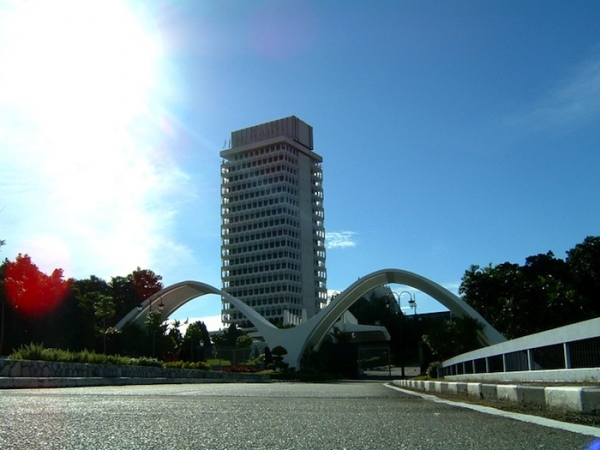
Medical tourism is booming in Malaysia.(Photo : Wikimedia)

Medical tourism is booming in Malaysia.(Photo : Wikimedia)

Medical tourism is going through a booming growth phase, according to Research and Markets. Medical tourism in Malaysia is ranked among the top five destinations for health tourism. The growth provides many opportunities for those in that industry, and the Malaysian government even has a web site devoted specifically to medical tourism.

“We are proud to be among one of the only countries within the region where medical tourism is promoted by the government,” reads the web site. “This thus provides medical tourists the assurance on quality care, regulations, safety standards and the governing laws within this industry

“Malaysia healthcare offers specialties in various medical disciplines and performs some of the most complicated treatments in the world,” the site continues. “Today, the medical practices in Malaysia are at par with some of the best in the world, incorporating both sophistication as well as international expertise.”

The market is growing despite a global economic downturn, with growth in every field of medical treatment. The market attracts 8.5 percent of all U.K. medical tourists.

Medical tourism is when people seek health care in another country to receive treatment at lower costs, and with the ever increasing costs of healthcare in the U.S. and other developed countries, many people are seeking more affordable treatment options in Malaysia.

The latest research study, “Booming Medical Tourism In Malaysia,” found the areas offering the most promising possibilities for growth in the medical industry. Factors such as cost-effective treatments, skilled medical professionals and government support are driving the growth.

The report analyzes the medical tourism market in multiple aspects. It includes the existing medical infrastructure including hospitals, human resources in the healthcare field, and technological developments.  The report also looks at what is driving the market to provide a more thorough understanding of market dynamics. This is intended to aid companies in their business strategies and to provide them with information that will increase profits, comparing the cost of treatment in Malaysia with the costs in other countries.

The report also breaks the market down into eight major segments. This has found that alternative medicine is a growing market in Malaysia. Tourists are interested in the practices that cure illnesses as well as increase the resilience of the immune system without side effects.

Finally, the study covers the major players involved in the industry and their recent developments so clients have a clear understanding of the best strategy to pursue when looking into the market, allowing them to determine the best strategy when looking to participate, whether in receiving treatment as a participant in medical tourism or as an investor.

source: http://www.travelerstoday.com / Travelers Today / Home>  Travel Tips / by Karen Frederickson / May 25th, 2013