Category Archives: Reports,Features, Statistics

Medical tourism: Remove red tape and provide bold support measures

The “creative economy’’ initiative presented by President Park Geun-hye as one of her election pledges is apparently aimed at making a breakthrough in the nation’s increasingly fixed trend of low economic growth. Given the visible limitations in the manufacturing sector amid ever intensifying global competition, the first female leader won’t deny the need to groom new growth engines in service industries, especially the medical sector in which many talented Koreans are employed.

In this regard, we welcome the news that the number of foreign medical tourists visiting here is rising at a steady pace and Korean medical systems will be exported to Saudi Arabia under the so-called “Twinning Project.’’

According to the Ministry of Health and Welfare, the number of foreign health tourists to Korea surpassed 150,000 last year, up 27.3 percent from a year earlier. The ministry expects the figure to reach 200,000 this year and 1 million in 2020. Last year’s revenues from medical tourism amounted to about 240 billion won ($212.4 million), a whopping 32 percent rise from 2011, with the nation’s health-related surplus estimated at $34.6 million.

Most notable is that Chinese medical travelers surged 63.7 percent to 31,472, outstripping Americans for the first time. While Japanese patients declined due largely to the yen’s devaluation, those from the Middle East continued to rise.

The landmark deal with Saudi Arabia on medical cooperation also carries significance in that the health care sector could be a new locomotive to spur the country’s growth momentum, as the construction industry did in the 1970s and 1980s. Under the agreement, Korea will export its medical knowhow and systems to the oil-rich Middle East country and the project will serve as a good occasion for our medical industry to raise its profile globally.

Medical tourism is a value-added service industry that can provide an answer to the ”jobless growth’’ that has been the painful norm since the currency crisis in the late 1990s. Given that the medical sector generally creates three times more jobs than manufacturing, Thailand sets a good example for Korea as it attracts more than 1.5 million medical tourists a year. India and Singapore also hosted 730,000 and 720,000 foreign patients last year.

Our reality is far from satisfactory, though. There has been much talk about the need to develop medical services as a next growth engine along with education, tourism and other key service industries, but little has been done, choked by administrative red tape and tough opposition arising from the possible weakening of public health care services.

The time is long overdue for Korea to act on this issue, given the desperate need to create more jobs. The “hallyu’’ or Korean wave in medical services can be realized through a two-track initiative by wooing foreign patients actively and encouraging hospitals and medical staff to go abroad. To that end, the government needs to have a forward-looking attitude toward for-profit hospitals, putting an end to the controversy that has been persistent over the past decade.

The point is to globalize our health care industry by removing outdated regulations and providing bold support measures.

source: http://www.koreatimes.co.kr / The Korea Times / Home> Opinion> Editorial / April 14th, 2013

Inbound tourism should focus on leisure travel: FICCI Survey

India’s inbound tourism strategy needs to be tailored to the leisure segment, business travel, medical and adventure tourism and domestic tourism should be targeted at the middle age segment (35-50 years) tocash in on the rising disposal incomes and increased propensity to travel, a quick survey by FICCI reveals.

The survey findings released to the media today by Jyotsna Suri, vice president and chairperson of FICCI’s tourism committee, show that a bulk of the respondents 37% saw the potential growth in inbound tourism in the leisure segment. Business travel and medical tourism came second with adventure tourism, the third.

The respondents are of the view that India’s tourism should target the middle age segment 35-50 to accelerate its growth. The strategy, hence, should be to capitalize on the growing disposable incomes on travel and entertainment.

The survey received 480 written and telephonic responses from tourism industry professionals in hotels of all categories, tour operators, travel agents, airlines, investors and tourism associations.

Suri said 55% of the respondents felt that there will be a moderate impact of the slowdown on tourism over the next six months on tourism, 45% opined that there would be no impact.

She said to discuss some of the findings of the survey and for targeting potential consumers of tourism products from across the globe and India, FICCI along with the department of tourism, government of Rajasthan and ministry of tourism, government of India is organizing the sixth ‘Great Indian Travel Bazaar 2013’ (GITB) from  April 14- 16 in Jaipur, Rajasthan. GITB is a landmark event and the largest international tourism mart of the country which is widely attended by the industry from India and abroad.

The FICCI survey reveals that the industry feels let down by the Union Budget 2013-14 proposals as these have had no impact on tourism. In fact, around 45% said the budget impacted the industry negatively due to major unmet and long standing demands such as declaration of tourism as an industry, export industry status and inclusion of hotels as infrastructure.

The silver lining is that 46% of the respondents were confident of the foreign tourist arrivals to go up in the coming 6 months. Their optimism stems from the fact that foreign tourist arrivals to India have grown by 2.1% in Jan and Feb 2013 and in during these 2 months, the foreign exchange earnings from tourism rose by 19.8% in rupee terms and by 11.4% in dollar terms.

It was remarkable and extremely encouraging to note that 83% of the respondents were of the view that the current environment of safety andsecurity for the foreign travellers in India was totally safe. A small minority was skeptical on this point.

As regards the air fare structure, a majority (75%) of the respondents felt that the air fares for foreign tourist movement in the country were expensive as compared to India’s competing destinations. Said Suri, this must be noted as cheap air connectivity is imperative for augmenting foreign tourist arrival.

It was positive to note that majority of the respondents 66% found the hotel tariff to be expensive but not burdensome.

A food for thought for the tourism industry as majority 56% of the respondents found the state of air connectivity to tourist destinations as satisfactory but could be better.

As for hygiene and sanitation, both have been rated (by 91% of the respondents) as very important for choosing India as a destination. Asked which countries can India partner with for joint tourism programmes, the respondents listed the following in order of priority:

1. China
2. Sri Lanka
3. Nepal
4. Germany
5. Australia
6. Japan and Thailand
7. The UK

The respondents listed out what is required for the growth of Inbound Tourism in India that is not being provided today by the stakeholders in tourism. These are:

> Neat and clean hotels in remote places
> Budget hotels
> Last mile road connectivity catering to smooth and seamless travel
> Security and safety for tourists
> Visa on arrival for at least all western countries
> Better infrastructure in tier II cities
> Knowledgeable guides
> Greater awareness on accessibility
> To look at new markets
> More thrust on promotion of India in mainland China and Latin American countries
> Promoting destinations collectively
> Recognizing tourism as an Industry and grant it export industry status.

Suri said that the government of India needs to work towards meeting the critical demands of the tourism industry that contributes an estimated Rs 944.87 billion towards foreign exchange, around 6.4% to the GDP and 7.8% towards total employment.

source:  http://www.myiris.com / Home> News / source: IRIS (09-Apr-13)

Iran earned $1.5bn from health tourism last year

Rasht, Gilan Prov. :

healthIranCT11apr2013

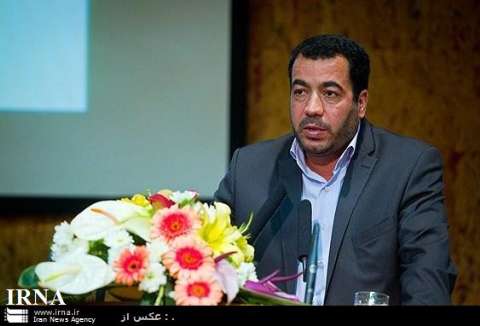
Deputy Head of the Cultural Heritage, Handicrafts and Tourism organisation Manouchehr Jahanian said here on tuesday that Iran hosted 200,000 health tourists last year. 

Addressing a ceremony to open Qaem Hospital in the northern city of Rasht on Tuesday, Jahanian said the countryˈs income from health tourism stood at $1.5 billion.

He said the tourists were from Azerbaijan, Turkmenistan, Iraq, Turkey, India and Pakistan.

He added that last year, more than 4.5 million foreign tourists spent nine billion dollars in Iran creating jobs for 2.5 million people directly or indirectly.

He noted that enjoying diversified climates as well as numerous tourist and historical attractions are among advantages of Iranˈs tourism sector.

source: http://www.irna.ir / Islamic Republic News Agency (IRNA) / Home> Latest News / April 09th, 2013

China’s Tropical Island Plans Medical Tourism Zone

The island province of Hainan has published a plan to build China’s first special zone for medical tourism, an official said on Saturday at the Boao Forum for Asia.

Under the plan, the Boao Lecheng International Medical Travel Zone will be located near Qionghai City and Boao Town, covering an area of about 20 square km, said Zhu Huayou, vice head of Hainan’s development and reform commission.

The southern part of the zone will feature health care centers for the elderly, patients with chronic disease and those in poor health, while the northern part will focus on medical treatment and research, Zhu said.

Medical tourism, which combines travel with leisure and healthcare, is already popular in some Asian countries like Singapore and India, and it is likely to boom in China thanks to rising living standards.

The zone in Hainan will make use of traditional Chinese medicine, the local tropical climate and world-class medical institutions the island aims to introduce, according to Zhu.

The official said that overseas medical institutions will be allowed to set up business within the zone. Other preferential policies will include lower taxes for imported medical instruments and medicines, and frontier medical programs like stem cell research will be allowed.

Construction of the zone is likely to cost up to 100 billion yuan (roughly 16 billion U.S. dollars).

The tropical island province, with its sun, sea and sand, is striving to build itself into an internationally famed travel destination.

According to the provincial statistics bureau, visitors to the island exceeded 33 million in 2012, with travel revenues hitting 37.9 billion yuan.

source: http://www.english.cri.com / CRI English.com / Home / Xinhua / Web editor: Mao Yaqing / April 06th, 2013

Technology, sustainability, health and wellness tourism emerge as top hotel trends for 2013

 In a newly released report, global trends for the hotel industry showed environmental initiatives to be the most salient emerging trend in 2013.

Technology followed, with social media and Health and Wellness gaining a fair amount of attention.

The reigning ‘Environmentally-friendly’ trend, in conjunction with rising sustainable travel interests among tourists, continues to drive the reduction of environmental impact, promotion of sustainable business practices and green products and services offerings.

The use of eco-friendly cleaning products with an emphasis on locally sourced food and reduced environmental footprint is considered a key sustainability measure by both respondent categories.

Low-flow water systems and the adoption of renewable energy for Asia-Pacific and energy-related staff education for global respondents, were identified as the key measures to be implemented in 2013. For senior level respondents, credentials and reputation surfaced as the key objectives with a focus on online presence.

According to Timetric’s report, 35 per cent of respondent segments indicate that they may save less than 5 per cent of total organisational expenditure over the next 12 months ensuing to the implementation of sustainability measures. The regional analysis of cost-saving targets reveals that 59 per cent of respondents from companies primarily operating in Asia-Pacific expect to save 5–10 per cent of their organisational expenditure.

Timetric’s report demonstrated that 35 per cent of luxury respondents expect expenditure increase to be 3–10 per cent. Wi-Fi technology, online reservations, and high-speed internet access being the primary technological facilities provided to customers by luxury hotels.

Correspondingly, flat-screen televisions, Wi-Fi technology, and online reservation are the key technological facilities expected by customers in luxury hotels. In addition to technology, investment on social media and networking sites, mobile, and online portals are expected to increase amply.

In total, 65 per cent of luxury hotels and 32 per cent of other hotels expect health and wellness tourist volumes to grow in 2013. Respondents have already implemented items on their menus to meet the needs of health and wellness tourists. Gymnasiums and swimming pools are considered the key facilities offered by hotels, while free access to health and fitness facilities is a key complimentary facility.

Timetric is a leading provider of online data, analysis and advisory services on key financial and industry sectors.

source: http://www.hotelview.net / Home> Hotel News / April 04th, 2013