Category Archives: Reports,Features, Statistics

Ayurveda helps Kerala emerge as a key medical tourism hub

Thiruvananthapuram, India :   

The centuries-old tradition of Ayurveda is fast turning Kerala into a global medical tourism destination, attracting holidayers as well as international celebrities to the State.

When British super model Naomi Campbell landed in Kerala last year for an ayurvedic massage session at Leela Kovalam Beach hotel, she was only affirming the efficacy of the Indian healing system with God’s Own Country as its torch-bearer in modern times.

CELEBRITY VISITORS

According to sources in Kerala Tourism department, those who visited the State in recent times included Italian film director Bernardo Bertolucci, known for his global hits such as Last Tango in Paris and The Last Emperor, who came to the State for ayurvedic treatment for a nagging ailment.

German TV and film actress Ingeborg Schoener (77) has been trooping into the state for the last eight years for Ayurveda treatment.

Completely cured of her painful knee problem, she told tourism officials that she had stopped allopathic treatments.

“Thanks to Ayurveda, I feel fantastic. I make ghee at home and have stopped using oil to fry food. I do my yoga, drink a glass of hot water first thing in the morning and buy ayurvedic medicines for a whole year,” a spokesperson for the department quoted her as saying.

Pop star Madonna, Hollywood actress Demi Moore and Cherie Blair, wife of former British Prime Minister Tony Blair, have also used Ayurveda.

Back home, former Prime Minister A.B. Vajpayee is an ardent believer in the healing properties of Ayurveda’s Panchakarma therapy.

After his visit to Kumarakom resort, from where he famously “mused” on the state of the affair of the nation in 2000, Vajpayee told people around him that he felt very relaxed after Ayurveda therapy in Kerala.

The list of celebrities from the showbiz world, sports and politics, fascinated by Ayurveda’s power to rejuvenate, detoxify and cure, is a never ending one.

TRADITIONAL FORM

“Ayurveda, practised in Kerala in its traditional and authentic form, has been a major attraction for tourists. We are now planning to leverage its healing and curative aspects, along with its wellness system, to woo tourists during the monsoon season”, Kerala Tourism Secretary Suman Billa told PTI.

“It can help Kerala become a 365-day destination and ensure repeat visits,” Billa said.

WIDE RANGE

From autism to Alzheimer’s, from migraine to diabetes, from sexual disability to slip disc, there is not a single problem that Ayurveda does not have an answer for.

K.B. Bhadran, DGM, Quality Assurance Department, Santhigiri Ashram, said “We are sticking to the traditional form of Aurveda. We are not acting as a massage parlour but as a genuine healthcare provider round the year with wellness and recreation only a part of it.

In view of the growing fascination for Ayurveda, the private sector has entered in the wellness sector in a big way, as is evident from the number of spas, hotels and resorts coming up in Kerala.

Pankajakasthuri, Kottakkal, Kairali, Shanthigiri and Vaidyaratnam are among the major private players in the Ayurveda sector.

CLASSIFICATIONS

Kerala Tourism has introduced the “Green Leaf” and “Olive Leaf” grading for Ayurvedic institutions in order to ensure quality service.

“Green Leaf is given to those ayurvedic centres which provide ‘five star’ facilities while Olive Leaf is for the ‘three star’ category. These classifications ensure the credibility of service providers and the quality. It will help tourists to identify appropriate centres for their requirements,” says Billa.

According to State Tourism Director Rani George, Ayurveda has resulted in the average stay back period of tourists in Kerala going up from 14. 1 to 18 days now, the highest in the country.

source: http://www.thehindubusinessline.com / Business Line / Home> Industry> Travel / by Press Trust of India / Thiruvananthapuram – April 28th, 2013
Ambassador: Around one million tourists from Azerbaijan to visit Iran

TrendCT28apr2013

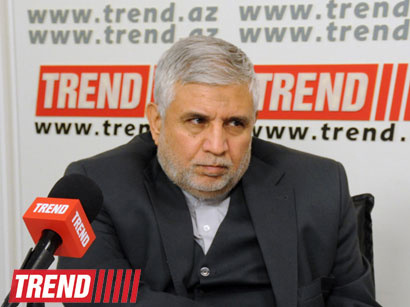
Around one million tourists from Azerbaijan will visit Iran by late 2013, Iranian Ambassador to Azerbaijan Mohsen Pakayin told journalists on Friday.

He said at present, relations are being developed in the field of tourism between the two countries, mainly in the field of medical tourism.

The ambassador said the opening hours of the border checkpoints has been increased to 12 to simplify border crossing between Azerbaijan and Iran.

As for the work conducted within the North-South railway project, Pakayin said Iran is currently working on the Rasht-Astara (Iran) railway project. This railway is very important from the point of view of relations between Azerbaijan and the Persian Gulf.

The Rasht – Astara (Iran) – Astara (Azerbaijan) railway line construction project is of great importance for the development of the international North – South transport corridor. The commodity market is estimated at 25-26 million tons by 2015. A significant part of the North – South corridor stretches along Russian rail routes.

Creating a direct rail link to the west coast of the Caspian Sea can significantly affect the growth of transportation in the region and become a good stimulus for the expansion of foreign economic relations of these countries with European countries.

source: http://www.en.trendz.az / Trend / Home> Business> Economy & Business News / by Trend E. Mehdiyev / Azerbaijan, Baku – April 26th, 2013

Heritance Ayurveda Maha Gedara bags Global award for Best Resort

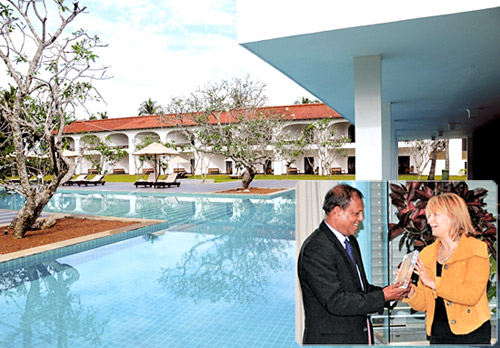
Heritance Ayurveda Maha Gedara was recognized as the “Best Ayurveda Resort” at the 4th FIT Health and Wellness Awards held at ITB 2013 in Berlin, the world’s largest travel trade fair. The FIT Health and Wellness Awards are presented in three categories- “Best Ayurveda Resort”, “Best Health and Spa Resort” and “Best Active Wellness Resort”. FIT Reisen is Europe’s largest tour operator for wellness holidays. The accolade was awarded based on guest experiences with similar resorts across the globe.

Heritance Ayurveda Maha Gedara and Malin Hapugoda (Managing Director, Aitken Spence Hotels ) receiving the award

Heritance Ayurveda Maha Gedara and Malin Hapugoda (Managing Director, Aitken Spence Hotels ) receiving the award

ITB Berlin 2013 is the world’s largest meeting point of international tourism decision- makers and business leaders. The global tourism industry acclaims this summits’ dual function of a travel trade fair, to be the largest in the world and it acts as a global platform for diverse resorts to present itself.

Since time immemorial, man has been engaged in the pursuit of achieving and maintaining an optimum state of health.

The emergence of Ayurveda in 600 BC as a natural way of healing has grown in global popularity as it has evolved into a scientific system of holistic healing.

The resorts novel delivery of a professional Ayurvedic experience without the compromise of luxury has enabled it to carve its niche in the minds of wellness enthusiasts globally. This has helped Heritance Ayurveda Maha Gedara pave its way to been regarded as the “Best Ayurveda Resort” per global standards.

“Ayurveda has evolved into a holistic lifestyle system and it is viewed as a system of treatment and comprehensive health care”, said Samantha Gunarathne, General Manager, Heritance Ayurveda Maha Gedara.

“The maintenance of constant innovation into adapting the traditional rituals of the Ayurvedic practice has helped Heritance Ayurveda Maha Gedara offer a differentiated unmatched experience.

A consistent trend across the Heritance portfolio is the ability to incorporate the rich culture and tradition into the processes adopted by our resorts”, said Malin Hapugoda, Managing Director, Aitken Spence Hotels.

Aitken Spence is Sri Lanka’s largest resort operator and one of the largest international hotel operators in the Maldives. The group also manages a portfolio of hotels in India and Oman. The company’s premier resorts operate under the brand Heritance.

source: http://www.dailynews.lk / Daily News / Home / Tuesday, April 23rd, 2013

Rwanda targets medical tourism

Investments in modern health facilities to help attract foreign patients

RwandaCT22apr2013

Joseph Uwimana, a resident of Kabuga, a Kigali suburb says that 2012 was his worst year.

“I had an eye complication which our local eye specialists couldn’t treat. Specialists recommended a transfer to India or South Africa where I ended up paying a lot of money to cater for transport, accommodation and treatment,” he says.

Cases like Uwimana’s are frequent in East and Central Africa and they are always referred to specialised medical attention abroad.

UP to 100,000 people; medical tourists, go to India for medical treatment from East Africa and the number is increasing by 4% annually.

Rwanda, whose expenditure on medical tourism is unknown but could be among those that are rapidly growing in the East African region, is looking at becoming a regional hub of inbound medical tourism.

The acting head of services development section at the Rwanda Development Board (RDB), Hubert Rutage Ruzibiza, says the institution believes that medical tourism is a new product suitable for developing countries like Rwanda.

“It strengthens linkages in the national economy and increases foreign exchange earnings,” he says.

Medical tourism happens when consumers elect to travel across international borders with the intention of receiving some form of medical treatment.

Rwanda is looking at options to sustain the budding tourism sector that registered high foreign exchange receipts last year, and tapping into medical tourism is one of the catalysts the government is employing.

There has been an increase in the steady health infrastructure mainly boosted by the public and private investments in decent health facilities which include specialised hospitals and state of the art medical equipment to boost medical tourism.

King Faisal hospital, Rwanda’s leading state-owned healthcare provider, has imported state of the art equipment, such as Computed Tomography (CT) scanner system, Magnetic Resource Imaging (MRI) systems, and other advanced imaging machines that may provide better healthcare for patients.

This kind of investment has led to an international accreditation of King Faisall hospital which is currently laying the ground to become a regional referral hospital in the East African region.

“Such investments have enhanced our local healthy sector and this means that Rwanda will earn more foreign exchange from patients from the neighboring countries like Burundi, DRC, Uganda and others,” says Ruzibiza.

Statistics from King Faisal Hospital indicate that in 2012 alone the hospital received 3,755 foreign patients from across the region and DRC sent the biggest number with 1,850.

Recently, another specialised foreign hospital opened in Rwanda to provide eye treatment across the region. Dr. Agarwal’s Eye Hospital from India is the first foreign specialist establishment in Rwanda, which is most likely to become a regional eye referral centre.

Dr. John Nkurikiye, a consultant ophthalmologist at Dr. Agarwal’s Eye Hospital, says that the facility is well equipped with state of the art technology for performing surgeries related to cataract, retina, Glaucoma and other eye ailments with techniques matching the international standards comparable with Europe and South Africa.

“These facilities and services are currently in Rwanda for the first time,” says Dr. Nkurikiye.

“Dr Agarwal’s eye hospital is aimed to be the centre of excellence in the field of ophthalmology, fulfilling the need for advanced eye care services of the Rwandan and people from neighboring countries.”

Setting up the hospital in Kigali has so far consumed over US$2 million and more investments are in the pipeline to ensure that the facility delivers the state of the art eye treatment to the regional patients.

Ruzibiza says that boosting medical tourism in Rwanda “is also an added advantage for citizens as they are to enjoy reduced cost, the availability of latest medical technologies, and a growing compliance of international quality standards.”

Dr Nkurikiye says that medical tourists generally pay higher, out-of-pocket rates than local patients and also offer the prospect of spending tourism dollars on hotels, meals and even tours and entertainment for themselves and family members.

Dr. Nkurikiye acknowledges that Rwanda could become a tourism hub only if it has world-class medical facilities, which would be difficult without the participation of private entities.

He says that Rwanda is in a good location in terms of climate, the security and quiet environment, which patients need when going through the healing process.

Tourism is Rwanda’s leading foreign exchange earner for many years. Last year, it registered strong performance compared to 2011 as the revenue generated increased by 17% to US$281.8 million compared to US$251.3 million in 2011.

source: http://www.independent.co.ug / Home> News> Regional News / by Godfrey Ntagungira / Monday, April 22nd, 2013

Gallery

Booming medical tourism woos NRI docs from UK

This gallery contains 1 photos.

Chennai , India : Tamil Nadu ranks third in  health tourism destination after Delhi and Mum­bai attracting around 6.65 lakh medical tourists eve­ry year. The medical in­f­rastructure in the state has been making remarkable strides to include in­creasing number of … Continue reading →