
Category Archives: Reports,Features, Statistics

City scores low on medical tourism

Despite its super-specialty hospitals and world class health infrastructure, Bangalore is far behind Chennai in attracting international patients.

While Chennai sees a minimum of 200 international patients every day, Bangalore has an estimated 10-15.

According to a study on medical tourism in India by the Confederation of Indian Industries (CII) and McKinsey, medical tourism market in India is valued to be worth over $310 million with 1,00,000 foreign patients coming in every year.

Of this, Chennai attracted 40 per cent of the patients. The report says the medical value travel or medical tourism is the key driver for Indian health care sector.

“World class treatment at almost 1/10th of the cost with no waiting time for surgeries as compared with advanced nations like the UK and the USA have been instrumental in a large number of foreign arrivals to access health care services in India,” the report said.

“Flight connectivity to Chennai from United States, Middle East and other countries is much better than Bangalore. This is one of the major reasons why Bangalore’s medical tourism industry is still only picking up,” said N Prabhu Dev, chairman, Karnataka State Health Commission.

“In 2012, Bangalore hospitals had around 1,000 international patients.”

In 2012-13, Manipal Group of Hospitals treated 800 in-patients and 4,100 out patients in the departments of oncology, nephro-urology and cardiology.

“We had patients who came in for spinal surgeries, orthopaedic intervention and In Vitro Fertilisation (IVF). They were primarily from Africa (central and east), Middle East, including Iraq and Iran, Mauritius, Maldives, Australia and Sri Lanka,” said Dr Sudarshan Ballal, medical director, Manipal Hospitals.

Around 15 patients were treated at Sri Jayadeva Institute of Cardiovascular Sciences and Research in 2012.

“This year we have treated seven international patients,” said Dr C N Manjunath, director of the hospital.

He said the trend of medical tourism in Chennai started much earlier than Bangalore. “Several hospitals in Chennai have signed MoUs with the governments of African countries Tanzania, Uganda, Kenya. So, they automatically send their citizens there for treatment. Most hospitals in Bangalore do not have such tie-ups,” he said.

Explaining why the industry is only yet to pick up in the city, Dr Dev said better facilities must be provided in city hospitals to house caregivers, who accompany international patients.

“Most patients who come for medical intervention have a prolonged recovery period. In such a situation, the hospital authorities must also take care of the comfort of attenders and the kith and kin who accompany medical tourists,” he said.

Dr Abhijit Barve, president (R&D), Biocon Research Centre, said the segment is yet to be looked at, and developed.

“Medical tourism focuses only on chronic and life threatening conditions. This gives us a segment of people who seek specific treatment and intervention. The market has to be explored further,” he said.

source: http://www.newindianexpress.com / The New Indian Express / Home> Cities> Bangalore / by Sharadha Kalyanam – Bangalore / May 19th, 2013
S. Korea clinics, hospitals target medical tourists from S’pore and region

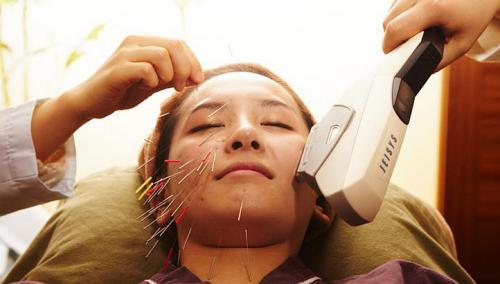
A patient undergoing facial acupuncture at Kwangdong Oriental Hospital in Seoul. Industry insiders in South Korea say Singapore, as an established medical tourism destination, will pose keen competition. -- PHOTO: KWANGDONG ORIENTAL HOSPITAL

A patient undergoing facial acupuncture at Kwangdong Oriental Hospital in Seoul. Industry insiders in South Korea say Singapore, as an established medical tourism destination, will pose keen competition. — PHOTO: KWANGDONG ORIENTAL HOSPITAL

Medical clinics and hospitals in South Korea are on a major drive to woo foreign patients, including those from Singapore and the region.

They are joined by medical travel agencies, “book a doctor” portals and hotels, which are tying up with the clinics to offer their guests lower treatment rates.

The effort, however, will not be a walk in the park, said industry insiders in South Korea, because Singapore, as an established medical tourism destination, will pose keen competition.

Singapore Tourism Board figures show foreigners spent about $1 billion on medical treatments here in 2011.


BACKGROUND STORY

Before you fly…

FAST facts for a medical traveller to South Korea

IN 2012

About 156,000 medical tourists visited South Korea. People from China, the United States, Russia and Japan led the way. The top five services foreign patients bought were:

  • Internal medicine
  • Health screening
  • Dermatology
  • Plastic surgery
  • Obstetrics and gynaecology 

HOT SPOTS

Seoul and nearby Gyeonggi province treat more than 70 per cent of the foreign patients. Busan is next. In Seoul, 154 dermatology clinics, 319 plastic surgery clinics and 317 dental clinics take in foreign patients.

PRECAUTIONS

The Korea Tourism Organization recommends taking these steps:

  • Find out if the hospital or clinic is registered with the Korean government.
  • Before flying there, get in touch with a coordinator who speaks your language.
  • Check the receipt or invoice, preferably before the procedure.

Unsatisfactory service may be reported to the Korea Medical Dispute Mediation and Arbitration Agency.

Source: Korea Tourism Organization

source: http://www.straitstimes.com / The Sunday Times / Home> Breaking News> Singapore> Story / by Poon Chian Hui / May 18th, 2013

Herculane Spa topping priorities of health tourism development strategy

Bucharest : (AGERPRES).

The Herculane spa ranks first in the country’s strategic plan for the development of health tourism, Minister-delegate for SMEs, Business Environment and Tourism Maria Grapini declared recently while on a visit to the resort lying on the Cerna river (south-west of Bucharest).

Spa tourism is the major priority in the government’s tourism strategy, followed by cultural tourism and ecotourism.

“I am about to take tough measures. Whoever committed to buying here must observe this pledge, for whoever doesn’t I would suggest we should go as far as seizing property. There are historic buildings here that can berefurbished and brought to their former shape. I’ll personally see which investor left these buildings in this derelict state. The property right will be respected, but taking after European models we will oblige these people to relinquish them if they do not have the necessary material resources,” said Minister-delegate Maria Grapini.

The Minister of Tourism considers that it is unacceptable for an area with tourism potential above EU average and one-of-a-kind objectives to go unattended. For this reason, the historic buildings in Herculane will be restored and re-commissioned so that the spa gets back to its former glory and the Romanians draw a double benefit, as tourists, but also an economic advantage.

“If we develop, we will collect higher incomes. The spa’s condition is far worse compared to the years before 1990. The springs and buildings are mostly damaged. They say the state is a poor manager, but here in Herculane the buildings are privately owned and are in an equally bad condition,” Grapini said.

The Tourism Minister blamed the local government for failing to find the legal means to compel the guilty.

According to Herculane mayor Nicusor Vasilescu, the most urgent works are related to water and sewer infrastructure and the revamping of streets.

The Minister of Tourism visited the hotels Dacia and Domogled, the Roman Hotel, the Neptune Baths and the Afrodita Hotel, the latter being completely renovated and modernized as a European-standard treatment facility.

source: http://www.bsanna-news.ukrinform.ua / BSANNA news / The Black Sea Association of National News Agencies / AGERPRES / May 13th, 2013

Tourism project for island off Doha

Qatar-based hospitality giant Katara Hospitality is to develop an island near the Ritz-Carlton Doha as an international tourist spot and open hotels in Paris and Milan in the coming months.
Katara Hospitality CEO Hamad Abdulla al-Mulla  told Gulf Times in an interview on the sidelines of the Arabian Travel Market in Dubai that the island, owned by the group near Ritz, would be either developed as a  fashion centre or a medical tourism hub.  He also said that Katara Hospitality planned to launch about 10 hotels in the next 10 years.

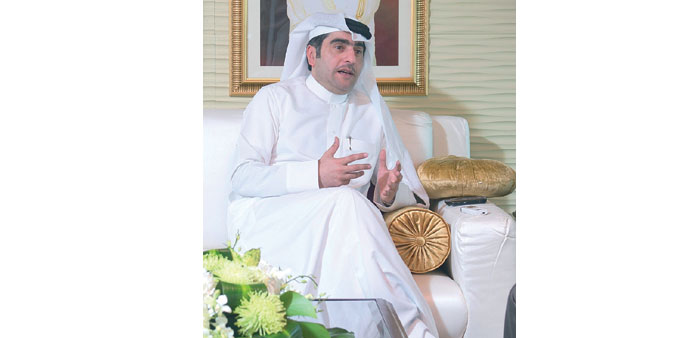
Hamad Abdulla al-Mulla: Katara Hospitality CEO

Hamad Abdulla al-Mulla: Katara Hospitality CEO

“The hotel in Paris will be opened in the first week of June and in September this year another hotel in Milan will be launched. Katara Hospitality is the only group that is opening so many hotels each year in the recent times.” 
Al-Mulla said the group was ready to operate the Milan hotel at any time. “From our side we are ready and we have got all the requirements to start the hotel. If there is any delay from the contractor’s side, we will open it by the first quarter of 2014.”
He further said the island off Doha would be developed into a “unique” project. “We are exploring the possibility of turning it into a unique place so that people from all over the world will fly to Qatar to experience it. We are looking for the possibilities of turning it into a fashion centre or medical tourism place or any such grand  project which will be known internationally. Once we finalise the project, we will entrust it to the right people to develop it .”

He  disclosed that Doha Sheraton would be closed for major renovation and  rebranded once the work was completed. “Doha Sheraton will be closed for two years for major renovation from 2014-2016. Once the renovation is completed, it will be rebranded but the operator will continue to be the same.”
As for the Lusail project, al-Mulla said it would be completed according to schedule.  “The Lusail hotel will be the landmark of Qatar and Katara Hospitality.  It will  be completed, latest by early 2017. At any cost we will start operations from 2017.”
He said that the hotel would be operated by Katara Hospitality. “We will be operating the hotel and we want to show to others that we can do it like any other operator. Similarly, we will be operating other hotels under our group in later years.”
The CEO said Katara Hospitality had property worth  QR150bn. “The group will have  around 6,000 employees by 2014.”

As for the projects in Gambia and Maldives, al-Mulla said  the group was ready to start the projects. “However, we are evaluating the market and  studying the feasibility before starting the project. According to the market evaluation, we will start the project. We will be there very soon.”
Operational hotels like Raffles Singapore, Le Royal Monceau – Raffles Paris, Schweizerhof Bern and upcoming hotels like Excelsior Gallia Milan, Bürgenstock Resort Lake Lucerne, Royal Savoy Lausanne or The Peninsula Paris are hospitality jewels that are now part of Katara Hospitality portfolio.

source: http://www.gulf-times.com / Gulf Times / by Joseph Varghese, Staff Reporter / Doha, Qatar – May 07th, 2013

Medical tourism is serious business

The concept of medical tourism in a nutshell is the movement of patients from expensive territories to cheaper destinations in order to undergo procedures.

In this way, healthcare costs can be significantly reduced for the patient whilst the destinations also benefit from not just the direct costs associated with procedures but a raft of secondary effects.

Those who can benefit come in several stages including those in construction, consultants, engineers and utilities as infrastructure is built. Government benefits from the taxation and duties payable with the exception of specific exclusion incentives.

Should staff be local, money remains in the economy to a great extent and if from off-island their spending whilst on-island extends to their own utilities, leisure, rent and cost of living spend.

Secondly, once a facility is established, workers are needed to staff it. Whilst Cayman may not be able to supply specific specialists, there is also a need for nurses, carers, kitchen, administration, cleaning and security staff. Suppliers of food and other goods could benefit from the increased activity, leading to an economic stimulus.

Any imported specialists would also need housing with the attendant second order effects on the rental and accommodations industry, with possibilities that new build housing be established for the same reasons.

Following the undergoing of procedures, it is felt that the beaches and atmosphere of the venue are an ideal way to recuperate. Therefore, the tourism industry proper comes into play at this stage.

Cayman Airways and other airlines would be required to service areas of the greatest demand, which would be likely to add significant aircraft movement to Owen Roberts International Airport, which would reopen the discussion about runway extension and landside facility revamping. Facilities would need to be refined for people unable to stand or queue through immigration. There may also be a need for an investment in the road system in order to obviate any potential gridlock issues at peak times.

source: http://www.compasscayman.com / Cay Compass.com / Home> Article / by Joe Shooman   joe@cfp.ky / April 30th, 2013