Category Archives: Reports,Features, Statistics

Medical Tourism Arrivals to Taiwan up 156% to 100,000 in 2012

Taipei, Dec. 26, 2012 (CENS) :

Taiwan witnessed 100,000 medical tourists this year, far exceeding the goal set at 60,000 and surging 156% from last year’s 39,000, according to Walter Yeh, executive vice president of Taiwan External Trade Development Council (TAITRA).

Revenue generated by medical tourism is estimated at NT$70 billion (US$2.33 billion), of which 40% believed by mainland Chinese. Such value is expected to rise a 20% in 2013 and TAITRA hopes Taiwan’s medical tourism can surpass that of South Korea in five years.

Yeh said that the quality of Taiwan’s medical care is very good, but needs to be promoted to international tourists. The Department of Health approves some 40 hospitals and clinics on the island to treat Chinese tourists, with the Taiwan Joint Commission on Hospital Accreditation, a non-profit and non-governmental hospital accreditation agency here, certifies 19 plastic surgery clinics for quality of treatment.

Also 14 Taiwanese hospitals are approved by the Joint Commission International (JCI), a U.S.-based world’s leading health care accreditation agency, Yeh added.

Yeh believes that Taiwan’s medical tourism can outpace S. Korea’s driven by rising mainland Chinese tourists as clients, as well as sizable overseas Chinese in North America and Southeast Asia also looking for quality, cheaper medical care in Taiwan.
For instance, a knee joint can be replaced in Taiwan for about US$15,000 or NT$435,000, but costs in the U.S. or Canada about US$50,000.

Starting in January of this year Taiwan has been offering medical care visa to Chinese mainlanders, and lately TAITRA has been promoting Taiwan’s medical tourism in metropolitan Beijing and Shanghai.

(by Judy Li)

source: http://www.news.cens.com / Home> CENS> Taiwan Economic News> Daily Prime News / December 26th, 2012

The Advantages of Medical Tourism?

Recently Miguel Forbes in his article “Medical Tourism Is A Massive Opportunity For Emerging Nations Like Thailand,” pointed out the benefits of foreign medical care. American trained doctors, in hospitals that are as well equipped as those found in the U.S. but found in third world countries.  Thailand is now a destination hotspot for those looking for first rate medical care at a fifth of the cost. Plus you can factor in a nice vacation as well.

“Many countries like Thailand don’t have the strict FDA regulation and threat of malpractice lawsuits that are big factors in the American healthcare industry. So in addition to traditional medicine, they can provide stem cell therapy and other ground breaking treatments not offered in America.”

I’ve heard stories of folks heading off to Mexico  and Costa Rica  and recently Germany  for medical and dental care. While I cannot comment about the level of care (here is where my lawyers come and spoil that picture!) I can observe that there are a number of groups that oversee such care.  Research is the key, however.

We can assume that ” The Medical Tourism Association” which has been under a cloud in times past, now no longer is in trouble. Many countries have their own associations that regulate their medical care for foreigners. Ultimately it is up to you to make that decision. The idea of a vacation along with medical care done with first world expertise is appealing, however.

The bottom line?  It’s your money and more importantly your health and well-being. Use the internet (and trust your instinct!) wisely to find the best doctor for your situation.

source: http://www.GoldenBoomers.com / Home> Finance> Health> International / posted by Peter / by Miguel Forbes

Furore over medical tourism, Indian hospitals

Legislator pledges action on bill to stop medical tourism by govt officials
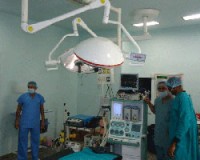
IN recent times, India has become a destination of choice for Nigerians seeking advanced and affordable medical services. From Kidney transplant to cancer treatment, thousands of Nigerians travel to India annually.

Minister of State for Health, Prof. Mohammed Ali Pate, recently disclosed that the country loses $500 million or N81 billion yearly to others as Nigerians seek solutions to their medical challenges abroad.

President, Nigeria Medical Association (NMA), Dr. Osahon Enabulele frowned at increasing medical tourism, which he said always made Nigeria lose fortunes to other countries like China and India, yearly.

Enabulele said, “years of systemic decay occasioned by lack of political commitment, cancerous levels of corruption and mismanagement of our collective wealth had adversely affected the sector even such that today, our political leaders paradoxically seem not to have confidence in healthcare facilities established by them, anymore.”

Indeed, Indian hospitals are fast taking advantage of lapses in the Nigerian healthcare delivery system to attract Nigerians seeking high-class medical treatment with international touch. One of such hospitals that have already set up shop is the Primus International Super Specialty Hospital located in Karu, a suburb of the Federal Capital Territory (FCT) Abuja.

However, the growing demand for cheap and specialised medical care from Indian hospitals is not without skirmishes. There have been allegations of unmethodical practices by some Indian hospitals in their quest for Nigerian clients.

It is alleged that some companies representing hospitals in India advertise in Nigerian Hospitals in collusion with the medical directors and are allowed to speak to doctors directly. They often invite doctors in these hospitals to refer patients to them for a 10 per cent return on the total cost of treatment. This money is added to the cost of the patients’ treatment and then surreptitiously paid to the doctor.

Indeed, Primus International Specialty Hospital ever since it took base in the country has been in the eye of the storm with sundry allegations leveled against it. Yet, the hospital is said to boast of world-class facilities with specialist Indian doctors providing care.

A pharmacist, Adaeze Omaliko said this is to be expected given the fact that anti-India sentiments is very high among Nigerians.

However, The Guardian investigations revealed that the gory picture painted by some Nigerians against the hospital is not as bad as it seems given the encomiums and praises showered on it by many high profile and not so highly-placed Nigerians in the society.

Recently, some patients of the hospital gathered at the hospital premise to protest what they believed to be deliberate attempt by some “unscrupulous” Nigerians to bring down the image of the hospital.

The patients’ testimonies also came against the backdrop of pending case in an Abuja High Court filed by two of its doctors over alleged maltreatment.

Speaking to journalists recently at the Primus International Specialty Hospital in his capacity as someone, who had earlier accessed care in the hospital, Hon Albert Tanimu emphasised that with such a facility in the country there was no need for Nigerians to travel abroad.

The House Committee on Rules and Business, Hon Tanimu, pledged to sponsor a bill to stop medical tourism by federal government officials who travel out of the country to seek medical treatment.

The House of Representatives member, who represents Takum Duga Ussa from Taraba State, lamented that Nigerians, who travel abroad to seek treatment are gradually destroying the health sector, the economy and slowing killing development.

He said,  “I am from Taraba State. My governor has been sending people abroad for medical treatment. It is not as if I wanted to travel abroad I wouldn’t have gone I would not sponsor myself. My governor would have done so. I wanted to go outside for my treatment but I thought the better of it especially considering that we have facilities in Nigeria. We have been mounting a campaign for Nigerians to be treated in the Nigerian way.”

Tanimu said he had accessed care at Primus Hospital and was sure at given the right support many more hospitals could compete well in Nigeria.

He said people send their wards abroad and neglect the facilities in the country thereby gradually killing the economy, destroying the education and health sector while helping to build the economies of other nations that encourage medical or other tourism.

Narrating his experiences from visiting several health facilities in search of relief from the pain in his hip, he said the Primus International Specialist Hospital, gave him succour by successfully replacing his hip-bone through surgery making it possible for him to walk and make use of his legs again.

He said he had recommended to the National Assembly that six hospital should be established the six geo-political zones of the country.

Chairperson of Market Women’s Association of Nigeria, Chief Mrs Fatima Muhammadu Sani expressed joy that 6000 of her members were treated free of charge by the hospital.

She said,  “all the facilities abroad are found here, there is no need to travel abroad, when you can actually get the same quality care here, this hospital has saved us from Visa, tickets and accommodation issues.”

She said that the attitudes of staff at the hospital was a far cry from what was obtainable in Nigerian hospitals wherein the staff were rude and insensitive to patient’s plight.

According to her, what kills a man when he goes to Nigerian hospitals is not the ailment that took him there but it’s the various medical things and anomaly that take place inside treatment centres.

She called on Nigerian hospitals to improve their services and imitate the good qualities and care provided at the Primus International Specialty hospital, Karu.

Sani also called on persons spreading ugly rumours about the hospital to desist from such saying the hospital has come to bring succor to Nigerians, who are ill and unable to afford the funds to travel abroad.

The management of the hospital refused comment, owing to a court case it had pending in an Abuja High court, but the Managing Director and Chairperson of the Hospital, Dr. Achla Dewan, in an interview with journalists in Abuja recently, asked rhetorically the “what offence have we committed by bringing this investment to Nigeria.”

Dewan said their intention to come to Nigeria was to bring Medicare closer to Nigerians, because they constitute their major patients abroad; adding hat high number of Nigerians coming to India becomes a source of concern to the Nigerian High Commission in New Delhi, later, the High Commission then contacted her.

She said, “it is very disappointing, we’re helping humanity, we have come all the way, our doctors, it is easy for us to come all away to start a hospital because Nigerians need it.”

On qualifications of the Indian doctors, Dewan said the process of recruiting the medical personnel was thorough and in line with the guidelines of government of Nigeria.

Primus Hospital commenced operation in April 2011, after it entered into an agreement with the Federal Capital Territory Administration (FCTA) based on Public Private Partnership (PPP). The idea was to build a complete five star international hospital, it was then decided that since FCDA had an existing facility, it was better to contract it through the PPP model.

Dewan, said the objective was to establish a network of world-class centres in health care by providing state of the art facility and creation of ethical, compassionate patient care through professional excellence. The 120 bed space international hospital services, according to Dewan will offer several state-of-the-art services including neurosciences, kidney transplantation, minimal access and bariatric surgery, among other means of preventive health.

She said the need to reduce the cost of travel for prospective Nigerian patients also informed establishment of the hospital.

source: http://www.ngrguardiannews.com / The Guardian, Nigeria / Home> Features – Natural Health / by Chukwuma Muanya & Emeka Anuforu / Thursday, December 20th, 2012

Medical tourism up 135%

Some 85,670 medical tourists arrived in Iran during the first half of the current Iranian year (started March 20), showing an increase of 135 percent compared with the corresponding figure of last year.

Manouchehr Jahanian, the deputy head of Iran’s Cultural Heritage, Handicrafts and Tourism Organization for tourism, made the above statement in a press conference on the sidelines of the Third Medical Tourism Conference, IRNA reported.

Jahanian said the figure is expected to exceed 200,000 by the yearend, adding that the country earned $600 million in revenues through medical tourism during the period.

The official went on to say that a majority of medical tourists arrived in the country from Azerbaijan, Iraq, Turkmenistan, Afghanistan and Kuwait.

“Tehran, Khorasan Razavi, Gilan, East Azarbaijan and Ardebil provinces hosted the largest number of medical tourists during the period,” he said.

Jahanian pointed out that 50,000 medical tourists arrived in Iran during last year, generating $150 million for the country.

Referring to the role played by tourism in establishing social and cultural relations with other countries, he said the tourism industry not only creates friendship between the people of different cultures and fosters peace and security, but also generates jobs and earns revenues.

More than 983 million people traveled to various parts of the world in 2011, generating a total of $1,030 billion for the countries involved.

Jahanian said the United Nations World Tourism Organization (UNWTO) announced that one billion tourists have travelled across the world in 2012, marking a new record for international tourism. The industry accounts for one in every 12 jobs and 30 percent of the world’s services exports.

On the symbolic arrival of the one-billionth tourist on 13 December 2012, UNWTO revealed the steps tourists can take to ensure their trips benefit the people and places they visit.

Referring to the progress made by Iran in various fields, especially health and medical treatment, Jahanian said the Iranian achievements are due to the capabilities of its physicians, high level of medical knowledge, medical equipment and low cost of treatment.

Thanks to the efforts made by Iran Chamber of Commerce, Industries, Mines and Agriculture, ICHHTO and health and foreign ministries, a 50-percent discount is given to medical tourist visa issued by Iran.

The official said special privileges will be given to tour and travel agencies that attract medical tourists to the country.

The Third Medical Tourism Conference will be attended by the tourism ministers and ambassadors from Muslim countries, representative of UNWTO and tourism experts at Razavi Hospital of Mashhad from Dec. 18-19.

source: http://www.english.irib.ir / IRIB World Service / English / Home> Iran> Tourism / Monday, December 17th, 2012

Robotic intervention to boost city’s medical tourism capacity

Anjana, a 42-year-old working woman, was diagnosed with a tumor in her left kidney and was advised by doctors to have it removed. Since she wanted to preserve her kidney and at the same time get rid of the tumor, she underwent a procedure called robot-assisted Partial Nephrectomy (kidney preserving surgery), wherein only the tumor was excised, leaving her kidney intact. She stayed in the hospital for only three days and was able to return to her job within two weeks.
Till recently, the treatment of such tumors involved removal of the kidney along with the tumor. Not anymore, thanks to robot-assisted surgeries that has made organ preservation possible while removing tumors. Surgeries like these have not only cured thousands of patients, but also helped boost Bangalore’s image as a leading medical tourism destination in the country.

Patients flock to the city from across the world, including Middle East, Africa, Australia, The Netherlands, Denmark, Russia and Sri Lanka. Today, robotic-radiation which was introduced three years ago in the city, contributes to around 20% of the city’s medical tourists. Adding a boost to the trend, is the robotic surgery which was introduced a year ago.
The potential of this innovation is not limited to urology alone. Most gynaecological surgeries can be done assisted by robotics. Over the year, Manipal Hospital has received inquiries on robotic surgery from patients hailing from Africa, Maldives and Sri Lanka. “The robot can be used in removal of fibroids, removal of uterus, hysterectomy, recanalisation of fallopian tubes in patients with blocked tubes or when sterilisation is to be reversed, endometriosis surgery and surgery for cervical and uterine cancers,” said Dr Gayathri Karthik, consultant gynaecologist at Manipal Hospital. She feels that the progress in this field has boosted the city’s image as a sought after medical destination.

Take the case of Caroline (name changed) from Nigeria, who recently underwent a uterine surgery in the city, after being diagnosed with fibroids. She was advised removal of her uterus. However, she was not comfortable with the idea as she wanted to have another baby. She had heard of robotic surgery and decided to make a trip to Bangalore to undergo the same. She underwent a robot assisted myomectomy performed by Dr Karthik, where two fibroids were removed. She recovered well and left for Africa in ten days.

Radiation with the help of robots (also called Cyberknife) is another specialisation, that has gained popularity among both Indian and foreign patients over the last couple of years. According to Dr Sridhar P S, consulting radiation oncologist at Healthcare Global (HCG), robotic surgery is the future and the country so far has done well to gain expertise in this. “Earlier, we faced the problem where we did not achieve accurate radiation. So, if there is a tumor in the lungs, radiation would affect the surrounding areas.

However, with the help of robotic radiation, there is little damage done to the surrounding areas,” he said. Robotic radiation also helps in reaching areas where it is not possible to operate by the surgeon’s hands, he added. Hence, robotic surgery is increasingly becoming an alternative to normal surgery. More so in cases of pancratic tumors, where prostate and lungs is involved. HCG alone has treated over 1000 patients in the last three and a half years.
Going by the demand of robotic surgery, other city based hospitals are also planning to procure this advanced technology. For instance, BGS Global Hospitals plans to introduce the technology in their hospital shortly. “The technology of robotic surgery is advancing and soon we are likely to have second generation robotic equipment”, said Dr N K Venkataramana, vice-chairman and chief neurosurgeon of BGS Global Hospitals. “Surgeons are increasingly resorting to minimally invasive surgeries wherever possible. The advantages of this technology are minimal damage to tissue and less invasiveness, lesser hospital stay, speedy ambulation of patient, less pain and cosmetically aesthetic with a smaller scar.

Robotics will definitely help to achieve these goals with much more precision,” he said.

source: http://www.dnaindia.com / Daily News & Analysis / Home> Bangalore> Report / by Soumita Majumdar & Suparna Goswami Bhattarcharya / Place: Bangalore, Agency: DNA / December 14th, 2012