

Category Archives: Uncategorized

New Initiative for Medical Tourism Unveiled

Pharmacy chemist woman in drugstore

Most destinations that position themselves as medical tourism centers have world-class health-care facilities that Southern Nevada would never be able to match.

But that hasn’t dampened the enthusiasm of a group of organizations that sees economic opportunity for the region if it capitalizes on its medical tourism assets instead of lamenting its weaknesses.

Instead of recruiting medical specialists from places that those experts aren’t likely to leave, local leaders instead will focus on local attributes and redefine their mission.

The Las Vegas Regional Strategic Plan for Medical and Wellness Tourism was unveiled Wednesday evening at a meeting of health care and tourism professionals, organizations and nonprofit groups. The event was sponsored by the Las Vegas Convention and Visitors Authority, the Las Vegas Global Economic Alliance, Las Vegas Health, Education, Advocacy and Leadership in Southern Nevada and the University of Nevada, Las Vegas.

Medical tourism is considered a lucrative economic engine, estimated to generate $50 billion to $60 billion a year. Recent reports indicate that the industry will grow to $100 billion a year in the next decade and that the combination of medical and wellness tourism could eclipse $500 billion annually.

A handful of Southern Nevada medical specialists have built practices around serving wealthy clients that jet into Las Vegas from anywhere in the world to receive treatment.

“This is about taking what our community already does well and collaborating to forge new and unexpected economic opportunities in medical and wellness tourism,” said Tom Skancke, president and CEO of the Global Economic Alliance, an economic development advocate.

So instead of wooing the world’s best medical specialists, Southern Nevada should market its medical training infrastructure, its menu of wellness offerings — including more than 45 world-class resort spas — and its team of service industry professionals that can steer prospective clients to medical specialists few people know are based in Las Vegas.

Wednesday’s announcement, attended by 100 people in the medical and tourism industries, was made at the 5-year-old Oquendo Surgical Training Center, a facility with surgical stations and telecommunications systems that enable groups to view and learn medical procedures.

A summary of the plan was presented by its co-authors, Douglas Geinzer, CEO of Las Vegas HEALS; Stowe Shoemaker, dean of UNLV’s College of Hotel Administration; Michael Vannozzi, director of public policy for Global Economic Alliance; and Cheryl Smith, medical and wellness tourism manager for the Convention and Visitors Authority.

Thousands of people travel to Las Vegas for medical conferences at which they learn about new procedures that can be demonstrated for large groups.

The report notes that wellness and prevention are key components to the Patient Protection and Affordable Care Act, and Southern Nevada’s spa industry is well-suited to serve the wellness tourism market.

“I think there is an assumption that wellness is only defined by things like cholesterol check-ups and executive physicals,” said Smith, co-author of the report.

“That’s the medical aspect of it. But there’s a proactive side, prevention,” she said. “Our spas contribute to overall health and well-being, stress reduction and destination for visitors to experience wellness differently then perhaps they can at home.”

The Affordable Care Act has placed a heavy emphasis on electronic medical records, and Southern Nevada’s high concentration of ultra-secure cloud and data storage facilities has attracted new firms and talent to the region.

The plan also envisions wellness travel agents and medical concierges that can identify resources and introduce Las Vegas’ list of client offerings.

Las Vegas has niche disciplines within the health-care industry — such as fertility, plastic surgery, age management, bariatric and orthopedic surgery, diagnostic imaging and dental — which attract both domestic and international travelers to Southern Nevada.

Organizers also hope to position Southern Nevada as a location for clinical trials. The Governor’s Office of Economic Development awarded a Knowledge Fund grant to UNLV to start a Quantitative Clinical Trials Center at the university.

Experts say that if private and academic partners can build capacity for clinical trials, it should drive additional visitation to the area by patients seeking innovative experimental treatments.

The report issued Wednesday was developed by the founding partners after meetings that began more than a year ago with 147 businesses and organizations.

“Although we have made significant progress over the past 10 years,” the report said, “the medical and wellness tourism market in Las Vegas has yet to take off. Our region needs a more robust strategy to capture a healthy slice of the medical and wellness tourism market and after more than a year of meetings and outreach, the project partners have developed a strategy that begins to address the systemic issues that are holding our medical and wellness tourism economy from realizing its full potential.”

lvrj.com

source: http://www.capstonebrokerage.com / Capstone Brokerage / Home> News Articles / by Richard N. Velotta (Las Vegas Review Journal) August 2014 / August 07th, 2014

Government Boosts Medical Tourism Efforts in North Kazakhstan

The industry of pantotheraphy, the use of an extract from the horns of the maral, will develop in northern Kazakhstan and the Aiyrtau area will see a new tourism project, according to the press service of the Committee for Tourism Industryof the Ministry of Industry and New Technologies. The official opening of a core tourism project in the Aiyrtau area of the region was based on one of the recreation sites.

DeerCT26jul2014

Native to Kazakhstan, and most widespread in the Altai Mountains, the maral is a large, semi-wild deer. Its horns, called “panty,” are the young, ossified, growing horns of adult male deer that are covered with velvety bristles, with plenty of symmetrically-arranged outgrowths. The antlers contain a biologically-active medicinal substance in combination with hormonal properties. Maral breeders say that the secret lies in a special root that the deer eat, which grows only in the Altai and the Far East.

The Aiyrtau area will be positioned as a tourism cluster in northern Kazakhstan. Today, there are 23 recreational facilities and about 40 tourist sites. A master plan is envisioned for the development of the cluster. It will be set up as a special portal for tourists and promises a huge potential boost for the region.

The government’s official statement states that “there are plans to develop medical, cultural, historical, environmental and other types of tourismin the region. Particular attention will be paid to the development of medical tourism. Pantotheraphy will be actively developed, in particular during the planning of the 2014-2015 maral breeding season.”

Pantotheraphy is developed today in East Kazakhstan, where every year hundreds of people travel for treatment. During the spring season, the antlers are soft, rich in nutrients and contain trace elements and hormones with a huge biologically-stimulating multilateral force.

source: http://www.astanatimes.com / The Astana Times / Home> Tourism / by Yelden Sarybay in Tourism / July 15th, 2014

Medical Tourism Business Gets 50 Mln Yuan from Investment Company

Chinese firm that helps patients travel to well-known hospitals in countries like U.S. and Britain gets the backing of Sequoia Capital China

_________________________________________

By staff reporter Li Yan

(Beijing) :

An international investment company signed an agreement on June 16 to invest 50 million yuan in a Chinese company specializing in medical tourism.

Sequoia Capital China signed the agreement with Beijing Saint Lucia Consulting Co. Ltd., the first investment deal in the country’s growing medical tourism industry.

Saint Lucia Consulting is a member of the Medical Tourism Association (MTA), which is based in the United States. The MTA is a global non-profit association for the medical tourism and “international patient” industries.

Being a member of MTA allows the company to negotiate with foreign hospitals directly, said Cai Qiang, the founder of Saint Lucia Consulting. The company sends employees to help patients during their journey to get medical treatment overseas. The workers help patients plan travel, take care of medical records and get approval from foreign hospitals.

Only a few Chinese companies cooperate with foreign organizations to provide these services. Saint Lucia Consulting has signed agreements with many top hospitals in the United States, Britain, Germany, South Korea and Singapore. It works with Massachusetts General Hospital and Mayo Clinic in the United States, and Wellington Hospital and Royal Brompton Hospital in Britain.

“The demand for overseas medical services will be great in the future,” said Zhou Kui, a partner at Sequoia Capital.

Sequoia Capital China carried out a review of Saint Lucia Consulting, sending specialists to carry out research at its overseas partner hospitals, Zhou said.

“We do not expect the investment to provide a return in a short period,” he said. “It targets long-term growth.”

The investment will help Saint Lucia Consulting provide more high-quality services, Cai said, but it still might not be ready to expand quickly.

Saint Lucia Consulting was registered in April 2011 in Beijing with capital of 8.8 million yuan. It is the largest overseas medical service provider in China, the company’s website said. It became a member of the MTA in 2011.

On May 23, the Mayo Clinic signed an agreement with Saint Lucia Consulting to receive Chinese patients through the company.

Over the past five years, the number of Chinese patients going to Mayo Clinic rose from 30 to about 200, said Melissa Goodwin, director of the clinic’s international office.

Sequoia Capital set up Sequoia Capital China with Chinese businessmen in September 2005. It mainly focuses on the fields of technology, media, medical services and energy. It has invested in 150 companies, including about 30 listed firms. The health care industry is its second largest target, getting about 25 percent of its total investment, Zhou said.

(Rewritten by Guo Kai)

source: http://www.english.caixin.com / Caixin Online / Home> Business & Industry> Top Stories Industry / by Staff Reporter Li Yan / June 18th, 2014

Tourism: Pilot-programme carried out in spa resorts to capitalize on the Ana Aslan brand

The Spa Tourism Employers Association (OPTBR), backed by the National Tourism Association (ANT), has recently, initiated in partnership with the National Institute of Gerontology and Geriatrics and the Ana Aslan Foundation a pilot-programme meant to promote treatments of this type and to revitalize the famous Romanian brand Ana Aslan.

According to a press release of the initiators, the Romanian Medical Tourism Association (ARTM) and the despreSpa.ro team have also participated in the realization and promotion of this project.

At the inauguration event, organised in the Baile Tusnad resort (central Romania), participants talked about the power of the Ana Aslan brand, about the effects of geriatric treatments and also about geriatric treatments as a new opportunity for development of the spa tourism.

‘The development of this geriatric programmes for attracting Romanian and foreign tourists, by capitalizing on the notoriety and the efficiency of the Ana Aslan brand, is part of the national strategy of development of the spa and health tourism. That’s why we hope that we will be able to expand the geriatric programme that we launched at the O3Zone hotel to other hotels in the OPTBR network too,’ it was said in the abovementioned release.

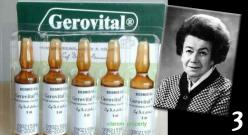
GeroVitalCF03jun2014
The pilot-programme includes two programmes in fact (‘Live Young’ and ‘Relaxation. Rebalancing. Revitalization’) and it will be carried out at the O3Zone Hotel, whose guests will benefit from free access to the swimming pool, jacuzzi, dry and wet sauna and to the gym all at the SPA centre.

The Ana Aslan therapy includes preventive or curative treatment with products from the Gerovital H3 range, personalized depending on the age and pathology of the patient.

‘A biologist and a physician, Ana Aslan recommended her patients to begin the therapy at the age of 40. Treatment is recommend for a wide range of problems associated with the degenerative process specific to the aging women: rheumatism, peripheral circulatory disorders, depression, hypertension, atherosclerosis,’ according to the ARTM.

Ana Aslan (1897-1988, born in Braila) studied at the Faculty of Medicine in Bucharest (1915-1922). She was professor of Cardiology at the Faculty of Medicine in Timisoara (1945-1949). Between 1949 and 1952 she was head of department at the Institute of Endocrinology in Bucharest. Starting in 1952 she became General Director of the Institute of Geriatrics. As one of the pioneering scientists in the world on medical gerontology, Ana Aslan focused also on social gerontology.

She discovered the anti-aging effects of procaine, based on which she developed the drugs Gerovital H3 and Aslavital.

The Gerovital H3 is the first Romanian original biotrophic product and also the first medicine designed to delay human aging processes. It was developed between 1946 and 1956 by Prof. Ana Aslan and her followers, as a result of numerous clinical and experimental studies.

source: http://www.actmedia.eu / actmedi – Romanian News Agency / Home> Economic / Tuesday – May 20th, 2014

DHA receives president of medical tourism association

Dubai :

Engineer Essa Al Maidoor, director-general of the Dubai Health Authority (DHA) recently received Renee-Marie Stephano, President of the Medical Tourism Association (MTA) that is a not-for-profit trade association headquartered in the United States of America.

The meeting was held at the DHA headquarters and was attended by Dr Ramadan Ibrahim, director of medical regulation and director of the medical tourism programme, and Linda Abdullah Ruhi, head of healthcare facility regulation unit and project manager of the medical tourism programme.

The two sides discussed cooperation in training courses for medical tourism, cooperation in the field of conferences and participation in the DHA congress that will be held in October to discuss the role of regulation in medical tourism.

The two factions discussed ways to share experiences in the field of medical tourism and participation in global medical tourism conferences.

Al Maidoor provided an overview of the medical tourism strategy of the DHA.

He said that in line with the vision, leadership and encouragement from Sheikh Hamdan Bin Mohammed Bin Rashid Al Maktoum, Crown Prince of Dubai and Chairman of the Dubai Executive Council and as per the  goals of the Dubai Health Sector Strategy 2013-2025, the DHA recently announced Dubai’s medical tourism initiatives and that Dubai is relying on its strengths by  building a health system that supports excellence in health care with a focus on  healthcare professionals,  health investment and excellence in services across a diversified range of  medical specialities.

He said that the strategy has been designed over two phases, the first one has been chalked out until 2016 and the second until 2020 and that the  aim of the strategy is to ensure Dubai features among the top medical tourism destinations around the world.

He concluded that DHA is keen to work with local, regional and international stakeholders to strengthen the medical tourism initiative.
source: http://www.gulftoday.ae / The Gulf Today / Home> Local / by Rayan  Sheety / May 07th, 2014