PQ minister wary province being used for medical tourism

pq-minister-wary-province-being-used-for-medical-tourism-1.1139421

Health Minister Rejean Hebert didn’t mince words.

“I think it’s unacceptable and I don’t want it to be repeated,” said Hebert, responding for the Marois government after it was revealed that a 31-year-old Kuwaiti woman had heart surgery at the McGill University Health Centre.

A year ago, the Kuwaiti government paid the hospital $200,000 to perform the surgery, speed the woman’s recovery at the ICU and then in a private room.

The health minister says, if a hospital can make room for surgery for a foreign patient, then it should make room for Quebecers on waiting lists.

“We have waiting lists for surgery and it’s unacceptable to use the facilities in the Quebec health care system to let people from very rich country to have a special access to these facilities,” said Hebert.

The Quebec Federation of Medical Specialists agrees.

“It’s quite amazing to see that there was a bed available for someone in December, a period where we all know that emergency wards, including all those at the MUHC, are overcrowded,” said Dr. Gaetan Barrette.

Defending its actions, the MUHC says the surgery was performed on compassionate grounds.

“We are involved in a project in Kuwait, or some of the doctors are, to help train their physicians and this patient came in through, we became aware of that through the doctor who was training there and he just realized that this could not be done in Kuwait and her life could be saved by bringing her here,” said Ian Popple, speaking for the hospital network.

Popple says no Quebecer in need was denied care. He says the staff worked on their own time and the beds the patient occupied were closed for budgetary reasons.

“The funding from the Kuwait government allowed us to open up beds that weren’t currently funded by the Quebec government,” said Popple.

This patients’ rights advocate says he has no objections to what the MUHC did, so long as two basic criteria were met.

“That the budget, the public money, is not affected and that no patient is being left aside because of it,” said patients’ rights advocate Paul Brunet.

The question for some remains: If a foreign patient can pay for speedy care in a public institution can a Quebecer do the same? The answer is no.

“This was a one-off case. It was on compassionate grounds and we’re not looking at doing any more of these cases,” said Popple.

The health minister has told the MUHC he doesn’t want to see the practice repeated, adding that if there’s humanitarian surgery that’s needed, he wants to be informed so he can authorize it.

source: http://www.montreal.ctvnews.com / CTV Montreal / Home> News / February 01st, 2013

New destination for medical tourism: Puerto Rico

Puerto Rico is growing in popularity as a medical tourism destination to get medical treatments for less. (Photo by Al Bello/Getty Images)

A growing number of Americans are looking farther south than Mexico, and a bit further east, for their “medical tourism” needs.

Puerto Rico, a U.S. territory in the Caribbean, has become a top destination of choice for those attempting to bypass the high costs of healthcare in the United States.

According to the Medical Tourism Association , a global non-profit organization raising awareness on medical tourism, Puerto Rico is joining the game of vying for the billions of dollars spent by people seeking cheaper healthcare abroad.

“Puerto Rico is becoming a prime destination for American medical tourists,” said Renee-Marie Stephano, President of the Medical Tourism Association based out of West Palm Beach, FL.

“Since Puerto Rico is just gaining momentum, it cannot be compared to other countries, but it could catch up very fast,” said Stephano.

With healthcare costs in the U.S. increasing at a rate of 6-percent a year, and insurance coverage decreasing, Latin America has always been a viable solution for Americans looking to save money.

“I saved a lot of money,” said Lorena Romero, with a sigh of relief.

Romero spent two weeks in Puerto Rico on a medical tourism trip through  Satori World Medical . The company gives employers the option to send people internationally for their healthcare needs.

And in dire need of a hysterectomy, and trying to avoid high hospital fees in the United States, Romero chose Puerto Rico.

“Everything was paid for. I have no extra medical expenses from that trip,” she said.

“It was either Puerto Rico, Mexico or Turkey,” said Romero. “I decided Puerto Rico because it would be closer to the U.S. and that way my mom wouldn’t be more worried that we were in some foreign country.”

“It was a wonderful experience. The doctor contacted me months in advance, and let me know step-by-step what was going to happen,” said Romero.

“The nurses would speak in Spanish, but when I responded in English, they responded back in English.”

According to the Deloitte Center for Health Solutions , an organization that has monitored medical travel abroad, an estimated  1.6 million Americans would receive medical services abroad in 2012  , with a growth rate of 35-percent per year. That’s over  2.1 billion dollars a year spent on healthcare services in other countries  , costing the United States billions of dollars in lost revenue.

Countries like Mexico, Argentina, Colombia, Costa Rica, Chile, Brazil and Venezuela, have supported the American demand for cheaper healthcare abroad. Procedures can include anything from orthopedic surgery on hips, knees, back and spine, to cosmetic procedures like breast implants and face-lifts.

Other top destinations for international medical tourists include India, Thailand and other Asian countries.

According to the  International Federation of  Health Plans ,  a hip replacement in the U.S. on average would cost around $38,017 . In Argentina, that same procedure would cost $3,589. A CT head scan in the U.S. goes for a commercial average of $510 or more. In Chile, that same procedure will cost around $184, and in countries like India, can be as low as $43.

In Puerto Rico, procedures like orthopedic surgery, cardiovascular disease treatment, oncology, neurology procedures, and many more, can be done for 60 to 80-percent less than in the United States, and with the same standards.

As a U.S. territory, all hospitals are required to comply with the U.S. infrastructure standards and be staffed by board certified physicians.

“It is American healthcare at much more affordable prices,” said Stephano.

The cost for supporting the infrastructure of healthcare in Puerto Rico is almost 70 to 80-percent less according to the Medical Tourism Association. The cost of labor for doctors and nurses, healthcare supplies, and equipment, all contribute to Puerto Rico’s lower prices.

Travel to Puerto Rico is also fast and simple for United States Citizens.  U.S. Citizens don’t require visa or a passport; just a government issued identification card.

Since most medical procedures abroad are outpatient, which can include anything from breast implants to dentistry, the patient can be sent home within hours of the surgery, making farther destinations a bit more complicated.

Puerto Rico doesn’t have that problem.

“When traveling to a medical facility away from home, patients look for three qualities – ease of travel, value and high quality of services, and a safe leisure tourism haven. Puerto Rico has all three,” wrote the Puerto Rico Tourism Company  on their website.

Many tourism agencies in Puerto Rico have been attempting to take advantage of that ease, creating travel packages for potential American patients. They offer activities like excursions, shopping, and cultural events, all to be enjoyed before or after the procedure.

“At the present there are over 70 hospital facilities, some that have partnerships with hotels,” writes the company.

“There are also six approved projects that integrate hotel and hospital facilities.”

One of those facilities is the 104-room Hyatt place, with the El Tropical Casino, that sits adjacent to the San Pablo HIMA Bayamon Hospital.

“The Puerto Rico Tourism Company has also provided training and presentations for members of the industry, including hotels and hospitals,” said Luis Rivera-Marin, Executive Director of the Puerto Rico Tourism Company.

“These efforts are meant to create awareness of this market, and bring members of the industry together to begin a collaborative effort in promoting PR as a medical tourism destination.”

Despite some of the obvious advantages, many U.S. based doctors and lawyers continue to raise red flags about medical travel abroad.

For Jed Kurzban, an attorney in Miami, FL specializing in medical malpractice, he’s witnessed how medical travel abroad can play out of favor for the “medical tourist.”

“I think it’s always more dangerous to go abroad because it limits your ability to recover (money) if there is wrong done to you,” said Kurzban.

He says it’s not uncommon to have patients seek malpractice abroad, and they usually come up short.

“If they are a out-of-country doctor, it’s very difficult to list them on a verdict form,” which would place them at fault for malpractice. “So what happens is you end up not being able to recover that money, which is necessary many times for future medical treatments,” said Kurzban.

“But I certainly understand why people do go abroad because health insurance is so expensive.”

For Lorena Romero, she says it was worth her risk.

“Just take the chance,” Said Romero. “At this point, nobody has the extra money anymore to give to the hospitals. Medical care is just really outrageously expensive. I just say why not. Why not do it?”

And as the price of healthcare and insurance in the United States continues to rise, Puerto Rico, and many Latin American countries, will continue to accept those looking for other options.

Alex Peña is a freelance foreign correspondent currently covering Ciudad Juarez, Mexico. Previously, Pena was based in Nairobi, Kenya covering East Africa for Voice of America TV, and has also filed stories from the Middle East, including the border of Jordan and Syria. He graduated from the journalism program at Florida Gulf Coast University in December 2011.

source: http://www.nbclatino.com / Home> News / by Alex Pena / February 02nd, 2013

$1bn Medical City set for 2016 launch

Muscat :

The promoters of the $1 billion International Medical City project in Salalah plan to bring the prestigious healthcare infrastructure and medical tourism venture into operation in 2016, according to a high-level executive of the flagship development.

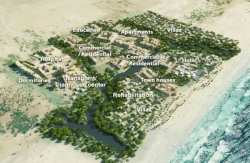
Dr Naeema Aziz, Project Director, said the integrated development, which will house the region’s first purpose-built transplantation and rehabilitation centre, as well as Oman’s first advanced tertiary care hospital and diagnostics centre, promises to transform the country’s healthcare landscape.
“The International Medical City will open a new chapter in Oman’s healthcare development,” said Dr Aziz. “It will establish the Sultanate as a regional hub for transplant based medical tourism, encompassing kidney, liver and pancreas transplantation and rehabilitation services. Besides easing the government’s burden in providing tertiary healthcare services, this prestigious venture will also contribute to economic development in Salalah, and create employment for Omanis,” she added in a presentation at the Oman Construction Summit yesterday.
Development of the unique project is expected to begin in earnest this year on an 870,000 sq metre waterfront stretch overlooking the Arabian Sea. The plot has been allocated by the Ministry of Tourism, underscoring strong governmental backing for the scheme. The Ministry of Health is also supporting the development as a strategic partner, she said.
The International Medical City project is being spearheaded by the Dammam (Saudi Arabia) based Apex Medical Group, which is a wholly subsidiary of Al Joaib Investment Group, a major Saudi firms with interests primarily focused on the oilfield contracting services. Apex Medical is currently weighing partnership offers from Omani, as well as GCC investors, said Dr Aziz.
Given the size and ambitious nature of the venture, the International Medical City will be implemented in three phases, according to the project director. The first phase will centre on the construction of a 530-bed multispecialty tertiary care hospital supported by three proposed centres of excellence in transplantation services, rehabilitative care, and diagnostic services.
Envisioned in Phase 2 is a healthcare resort complete with 4-star medical hotel. Residential quarters for faculty and staff, serviced apartments for clients, and commercial components will also be added in this phase. The third phase will focus on the development of a medical education complex featuring dedicated medical and nursing colleges, and an R&D centre.
Importantly, the reputed American global hospital brand, Methodist International, has been roped in as the strategic partner in the project. The Texas-based brand will be responsible for hospital programme management and the secondment of senior executive staff to manage the Medical City.
Drawing a timeline for the implementation of the project, Dr Aziz said the development of infrastructure would commence this year, alongside the engineering design of the healthcare components and serviced apartments. Actual construction of the healthcare cluster, as well as the serviced apartments, is targeted for completion in 2015. The Medical City will be formally inaugurated in 2016, she added.
Bank Muscat has been appointed as Financial Advisors for the project. The pre-concept master plan was undertaken by Atkins. Korea’s Asan Medical Centre has been named the Strategic Partner for the training of staff in transplantation care.
Significantly, the International Medical City will create an estimated 1,000 jobs during Phase 1 of the project, rising to around 3,000 when all three phases are operational, Dr Aziz added. The Oman Construction Summit 2013, organised by Global Exhibitions and Conferences in partnership with IQPC, formally opens today.

source: http://www.main.omanobserver.com / Oman Daily Observer / by Conrad Prabhu / Monday, January 28th, 2013

More foreign guests get visas in Chennai

Chennai :

An increasing number of foreign nationals are using the visa-on-arrival facility to visit Chennai because of the city’s bustling medical tourism market and with several international conferences being hosted here.

According to bureau of immigration officials, only Delhi and Mumbai receive more people of foreign nationality using the provision than Chennai, which welcomed 2,273 visitors using the facility in 2012, more than Bangalore and Hyderabad.

More citizens of Japan (4,604) made use of the provision to visit the country last year than people of any other country. New Zealand nationals (3,150) and those of the Philippines (2,444) accounted for the second and third highest numbers in 2012, according to data from the ministry of tourism.

Officials said most foreign nationals visited Chennai to attend conferences and for medical procedures. India offers the visa-on-arrival facility to citizens of 14 countries including Japan, Finland, Singapore and New Zealand. The ministry of external affairs last May extended the facility to French, German and Russian nationals.

Tourism companies confirm that more customers now get their visas when they arrive in the city. “Five years ago most visitors were people with ethnic links to Tamil Nadu, said Basheer Ahmed of Metro Travels. “Over the past three years, however, more foreign nationals started to use visas on arrival for business and medical reasons and even for shopping.

Indian and foreign airlines also committed more violations of passport rules last year. The bureau of immigration had from November 1 to January 29 fined various airlines a total of Rs 50 lakh for flying passengers into Chennai in violation of the Immigration (Carriers’ Liability) Act, 2000.

The law is intended to make ‘carriers’, which includes the owners of airlines or ships, liable for bringing passengers to the country in contravention of provisions of the Passport (Entry into India) Act, 1920.

Carriers often bring people to the city from abroad without certifying that they hold valid travel documents or are entitled to the visa-on-arrival provision.

“There has been big rise in the number of foreign nationals visiting Chennai with the visa-on-arrival provision,” a senior immigration official said. Most of these visitors come to Chennai on invitation to conferences and other events as well as for healthcare facilities at the city’s world-class hospitals. The official said the immigration department expects the numbers to increase further this year.

source: http://www. articles.timesofindia.indiatimes.com / Home> City> Chennai / by Daniel P. George, TNN / January 30th, 2013

Gallery

Asia Medical Tourism & Healthcare Conference, 9-10 April 2013, Kuala Lumpur, Malaysia

As most of the Western countries such as United States, Canada and other European countries have staggering healthcare related issues, such as high medical costs and long waiting lists, it is becoming a trend for patients to leave their respective … Continue reading →