Editorial: The hard work of medical tourism

Medical tourism

Medical tourism.

When we first heard the term a few years ago, it got our attention.

We wondered: What does it mean?

How does it work?

How many jobs would it bring?

How can we help?

From then on we kept hearing bits and pieces here and there about medical tourism and how certain new services and facilities might play roles to help lure patients who have the time and resources to pick and choose where they will have certain surgeries, for example.

Now we get some more information via a medical tourism trade show in Fort Lauderdale.

The event’s formidable title — fifth annual World Medical Tourism & Global Healthcare Congress — declares this is an extremely entrenched and competitive field.

Field? Make that an industry.

The trade show demonstrated that not only are other hospitals, locales and states involved; entire countries are in the game and marketing themselves aggressively.

East coast hospitals already have international relationships. Some have entire staffs dedicated to building and growing new markets.

And, the competition goes both ways, with foreign countries seeking to attract and not just send patients.

That trade show — or Global Healthcare Congress — was a reality check.

Our medical complex cannot simply put up a sign that we are open for business and expect everyone to come.

So now we know.

Now our community has to decide what services it can provide better than anyone else along with what services are different or more innovative than those found anywhere else.

There is real work to be done.

There are real rewards too.

Can we do it?

source: http://www.NaplesNews.com / Home> News / November 04th, 2012

Medical tourism peaks in Asia

Medical tourism is gaining worldwide popularity and blossoming throughout Asia, with government-backed programs and MICE events creating plenty of competition.

Asia’s medical tourism industry is set to reach $8.5 Billion by 2013, according to research released by Global Information Inc.

Thailand and India currently lead the way when it comes to medical tourism, while the Philippines, Singapore, Malaysia and South Korea are fast advancing in this burgeoning industry.

Singapore’s medical tourism market experienced steady growth of 11.9 percent between 2004 and 2008.

The study also revealed international patient arrivals to Malaysia are expected to grow at an annual growth rate of 29.27 percent between 2009 and 2013.

Clinical partnership opportunities will be discussed and tendered at upcoming Asia-based medical tourism conferences.

Global Information Inc. recently announced two new MICE events to be held next year; Taiwan Trials and the 4th Annual Clinical Trial Supply China.

source: http://www.etbmice.com / Home> Headline News / e-Travel Blackboard P.T / Thursday, November 01st, 2012

Gallery

Hyderabad to host 1st Edition of IMTCA 2012 on Nov 2 &3

Taking Indian Healthcare to the next highest level on the global radar, Hyderabad is all set to host the 1st edition of the Indian Medical Tourism Conference scheduled to be held on November 2 and 3, 2012 at HICC. The … Continue reading →

Global Wellness and Spa Tourism Monitor 2012 Goes Live!

Global Wellness and Spa Tourism Monitor 2012 goes live!

Welcome to the Global Wellness and Spa Tourism Monitor 2012! This is the first and unprecedented initiative launched by The Tourism Observatory for Health, Wellness and Spa (an initiative from Xellum). The project is recommended by the following leading organizations and companies from the wellness, spa and tourism industries:

-Asia-Pacific Spa and Wellness Coalition

-Asia Spa India

-Aspen Resorts International

-Australian Spa Association

-Brazilian Spas and Clinics Association

-Bulgarian Spa Association

-National Association For Spa And Wellness Tourism (Bulgaria)

-Canadian Tourism Commission

-Consorcio de Turismo de Salud de la Región de Murcia

-Cyprus Spa Association

-Czech Spa Association

-Danubius Hotels Group (as a key partner)

-Destination Wellness France

-dR Global

-Elégance Groupe

-Estonian Tourism Office

-European Travel Commission (ETC)

-Fairmont Hotels

-Global Healthcare Network

-GOCO Hospitality

-Hospitality in Health Network

-Hotelverband Deutschland

-Hungarian Bath Association

-Hungarian Hotel and Restaurant Association

-Ibex Fairstay Hotels

-International Medical Spa Association

-Leading Spas of Canada

-Leading Spas of the World (Leading Hotels of the World)

-L’atelier Du Spa

-Lithuanian Spa Association

-Lux Island Resorts

-Mandarin Oriental

-Mystic Asia

-Nola 7

-Pacific Asia Travel Association (PATA)

-Portuguese Spa Association

-Raison d’Tre Spas

-Serbian Spas Association

-Skyros Holidays

-Spa Australasia Magazine

-Spa Ireland

-Spas of America

-Spa & Wellness International Council (Russia)

-Starwood Hotels

-Switzerland Hotel Association

-THERMARIUM

-TIP-TOUCH

-Travelshanti

-Turkish Spa Association

-Wynne Business

The survey takes maximum 10 minutes and does not ask you to share sensitive information.

You can access the questionnaire here:https://www.surveymonkey.com/s/GlobalWellnessSpaTourismMonitor

The results will be shared with the participants and will provide benchmarking data and trend forecasts for 2013 that are not available from any other source.

The Tourism Observatory for Health, Wellness and Spa keeps the global wellness, spa and tourism society informed about the developments via the following channels:

-facebook.com/TheTourismObservatoryforHealthWellnessandSpa

-twitter.com/healwellnessspa

-linkedin.com/The Tourism Observatory for Health, Wellness and Spa.

For further information, please contact

Dr. Puczko Laszlo CMC

Managing director

T/F:  +36 1 269 1920; M:  +36 20 398 7562

http:// www.xellum.hu

twitter: lpuczko

source: http://www.pata.org / Home> News / October 25th, 2012.

Japan Hopes Medical Tourists Immune to China Row

As relations between Tokyo and Beijing appear increasingly in need of major surgery, officials in the far north of Japan are hoping the nascent industry of medical tourism can thrive unscathed.

They are quietly confident that a spat over disputed islands will not seriously impact the growing number of relatively wealthy Chinese visiting Japan for its high quality treatment, therefore keeping the lifeblood pumping in an industry that analysts say could one day be worth $7.0 billion a year.

And for a tourism industry that was battered by the tsunami and subsequent nuclear disaster of last year — visitor numbers were down by around a quarter — that might be just what the doctor ordered.

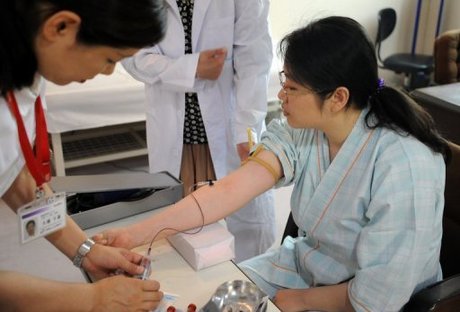
“I came here because Japanese medicine has a very good reputation in China,” 30-year-old Zhang Lan told Agence France Presse, two translators in tow, as staff welcomed her to a well-equipped hospital in Asahikawa in Hokkaido.

Treatments there range from head-to-toe check-ups, with a focus on cancer screening and neurological diseases, to anti-ageing and cosmetic surgery, including breast enhancements and liposuction.

Getting a clean bill of health was at the top of Zhang’s agenda, but she also liked the idea of breathing fresh air in a region known for skiing and nature tourism — a big change from her hometown of Shenyang, an industrial city in northeastern China.

“I’m here this time for a follow-up to the last check-up as the doctor said I needed careful observation of my stomach,” she said of her $2,400 trip, which took place before the current tensions erupted.

“But I really liked the hot springs, the food and the sea the last time I visited. I’m not interested in big cities such as Tokyo and Osaka, because China has many big cities.

“Hokkaido is placid and pastoral. The air is fresh and you can relax here,” she added.

Of the several hundred thousands of foreign tourists who visit Hokkaido annually, the lion’s share are from East Asia, with many keen to see the dramatic mountains, extensive pastures and rich woodlands.

That image is a key selling point for Zhang’s tour operator, Medical Tourism Japan, which last year brought about 270 Chinese customers to northern Japan, a number it hopes will grow.

Most clients chose Hokkaido because it “has the image of being an ‘Asian Switzerland’ to the Chinese,” said company president Katsuya Sakagami.

“I was originally selling medical equipment and came to realise the potential of medical tourism for Chinese people,” he told AFP.

— “Not hostile” to Japan–

A long-running dispute over the sovereignty of Tokyo-administered islands in the East China Sea, known as the Senkakus in Japan and the Diaoyus in China, is a worry for the industry, said Kayo Uemura, researcher at the Development Bank of Japan.

Sometimes violent anti-Japanese protests shook a number of Chinese cities in September after Tokyo nationalised the islands, and airlines linking the two countries reported a fall-off in demand.

Japanese exports to China, its biggest trading partner, tumbled 14.1 percent that month as a result of the row and the impact of a broader slowdown.

“The territorial row could last longer than most Japanese had expected, so we have to watch how many Chinese tourists will come back to Japan, say, by the start of next year,” said Uemura.

Cho Shosho, a senior official and a medical translator at Medical Tourism Japan, said the company had noticed some impact from the spat, including cancellations during the long Chinese holiday at the start of October.

“But we think it is a temporary phenomenon,” she said.

“Wealthy Chinese are not very hostile to Japan and I think our customers want to come to Japan but are staying away because anti-Japanese sentiment is rising at the moment.

“We are still receiving inquiries from Chinese customers and I think they will come back later, probably after the Chinese leadership change (in mid-November).

“It will be like the temporary drop in tourism in Japan after the quake and tsunami disaster last year,” said Cho.

Japan’s medical tourism sector is a sliver of the wider industry with just 10,000 visitors annually, said Uemura.

She said the potential demand could see those figures soar to more than 400,000 with Russians and Americans among those visiting in a market that could be worth 550 billion yen ($7.0 billion).

“But to realise the potential demand, Japan needs a new category for visas for medical tourism and needs to hire people for medical translation and other things necessary to support the industry,” as well as mending ties with neighbours, she said.

Health offerings are just part of the picture, with the industry stoking the real estate business.

One Chinese man who was visiting the historic port city of Otaru near Sapporo, the region’s biggest city, slapped down 30 million yen on the spot for a house while on a medical tour, tourism operator Sakagami said.

“If we provide opportunities for them to enjoy both tourism and a medical check-up, or tourism and investment in Japan, the demand is there,” he added.

Zhang reckons that it is just a matter of time before Hokkaido is flooded with like-minded medical tourists.

“More and more Chinese people are aware of the importance of maintaining their health,” she said.

source: http://www.Naharnet.com / Home / by Nahar net Newsdesk, source: Agence France Presse / October 28th, 2012