
Medical Tourism Growing at Over 30 Percent Per Annum

Seoul, Korea:

The number of foreign patients visiting Korea has been soaring at an annual rate of over 30 percent since 2009. The figure rose 35.9 percent from 60,201 in 2009 to 81,789 in 2010, and is estimated to have exceeded 110,000 last year, up 34.5 percent, according to the Korea Health Industry Development Institute.

The target for this year is 150,000 medical tourists, marking growth of 36 percent, it added.

American patients topped the list with 32.4 percent in 2010, followed by Chinese (19.4 percent), Japanese (16.8 percent) and Russians (7.7 percent). Foreign patients spent an average of W1.31 million per person on medical expenses here (US$1=W1,133).

“Attracting three to four patients with serious illnesses creates a comparable economic effect to exporting a Hyundai Sonata,” the institute said.

People from Kazakhstan paid the highest medical bills, or W3.78 million on average, followed by Russians with W2.97 million and Mongolians with W2.58 million, as many of them came for expensive treatments for cardiovascular or other serious diseases.

Japanese patients spent the least amount of money, or W840,000 on average.

U.S. patients visited Korea largely to undergo medical check-ups or seek treatment from dentists, while most Chinese patients got treated by beauty therapists or plastic surgeons, and Russians sought cardiovascular or orthopedic surgeons.

Japanese mostly sought herbal and skin treatments. They accounted for 76 percent of the total number of foreign patients visiting Oriental medicine clinics, and 35 percent of those seeking dermatologists.

“Many Japanese want to receive simple treatments like acupuncture or skin care during their short visit” to Korea, said a director at the institute.

Meanwhile, Chinese patients, mostly women in their 20s or 30s, accounted for 66 percent of the total number of foreigners visiting plastic surgeons in Korea.

“Recently, an increasing number of older Chinese visitors have also been coming to get medical check-ups here as part of tour programs,” the director said. “As Korea begins to be recognized for its advanced medical skills, the number of foreign patients with serious conditions is on the rise.”

In the southern port city of Busan, Russian patients account for 35 percent of foreign patients visiting clinics. Many hail from the eastern region of Vladivostok and show symptoms of cardiovascular, hip or disk diseases, the institute said.
source: http://www.english.chosun.com / / April, 02nd, 2012

Poor promotion loses Turkey billions in dental tourism

PHOTO Ssunday’s Zaman

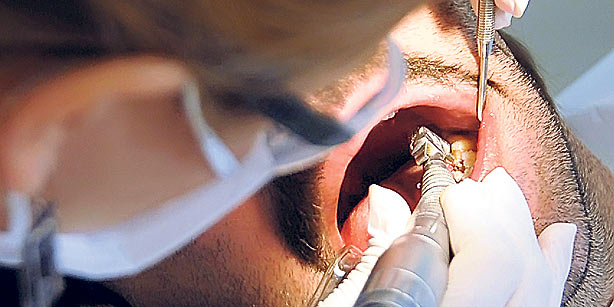
Turkey is missing out on a lucrative dental care tourism business with billions of dollars of profit-making potential due to poor promotion, the result of a few necessary legal amendments that have been shelved for years, market representatives argue with Sunday’s Zaman.

With its increased popularity for quality health services at relatively lower prices Turkey has attracted a growing number of visitors from abroad, particularly Europe, in the past decade. The country’s first ever full-face transplant that accompanied multiple organ transplants (only recently) didn’t just spark enthusiasm at home but also helped fuel the tide of health tourists to Turkish clinics from surrounding countries.

Some argue, however, that the country cannot use its potential to attract foreign dental patients at a desired level. Thousands of foreign tourists visit Turkey to receive dental care, spending millions of dollars at Turkish dentists each year. According to market observer Emin Çakmak, opportunities in dental care tourism can actually be far beyond what Turks anticipate.

Çakmak tells Sunday’s Zaman that Turkey has the potential to attract as many as 2 million foreign visitors for dental care each year, the size of which he estimates at around $3 billion. He gives much of this credit to European customers. “Turkey is by far Europe’s most profitable destination for patients with dental problems. A patient pays 2,000 euros for dental care on average in the UK, while this number declines to 900 euros when the same work is done in Turkey,” he explains. A niche tourism area, dental tourism each year sees more than 1 million patients globally who travel to countries where they find relatively lower treatment costs and shorter waiting times when compared to their countries of origin. Research shows the average waiting time for dental treatment in the UK is one-and-a-half months while this period in Turkey can be as short as one day.

The highest number of dental tourists is believed to come from the US, while EU citizens are the second largest group who travel abroad for cheap treatment for their gums and teeth. Noting that most tour operators combine dental care with travel, Çakmak says a possible influx of dental tourists to Turkey would also mean money spent on service and other sectors, including hotels, food and souvenirs. One critical benefit of an improvement in Turkey’s dental tourism could be retaining high-profile professionals at home, observers argue. Turkey suffered from serious brain drain in the past, and quality dentists are needed at home to maintain high standard levels. An increased number of dental tourists would also create new job opportunities in the market, especially when taking thousands of jobless dentists inside Turkey into consideration.

What’s in a name: ‘dentist’?

Çakmak argues that one of the major obstacles to advanced dental tourism in Turkey is an arrangement that forbids dentists from using names, titles and ads for their clinics in any foreign language, currently supported by the Turkish Dental Association (TDB). Underlining the foreign visitor potential, Çakmak says clinics are still fined for using the word “dentist” on their signs or, likewise, picking a foreign name (mostly in English) for their clinics. “The problem is that the TDB is accepted as an independent public institution by law, which means it has the authority to define binding rules for member dentists. The government cannot intervene to correct this ambiguity.”

Fuat Akyıldız from Kuşadası is a dentist who received a warning from the TDB to omit the word “dentist” on his sign and business cards. He tells his story to Sunday’s Zaman: “It didn’t take the TDB long to warn me with a letter when I used the word dentist in English. I was off the hook, erasing the word from my sign; but not all dentists were as lucky.” He recalls two friends had to shut down their clinics for using English words to define their clinics in Kuşadası. “Around 85 percent of my patients are foreign tourists, and the majority of them are Irish and British. We keep in touch in a mutual language, English; what is wrong with this?” he asks, as he laments no progress has been made after waiting for so many years for the TDB to correct this problem. This also creates problems in effectively promoting Turkey in international fairs on dentistry, while the Ministry of Culture and Tourism also does very little on this issue, Akyıldız adds.

Officials from the TDB, who are criticized for failing to represent and protect the rights of dentists in Turkey, were not immediately available for comment. The association said it would later respond to criticisms in an email.

source: http://www.SundaysZaman.com / Ergin Hava, Istanbul / April 01st, 2012

Dubai CP meets officials …1st and final add

Sheikh Hamdan discussed Dubai Health Authority’s (DHA) new initiatives regarding medical tourism in the emirate. He was briefed on the main features of the initiative which are aimed at boosting the international status of Dubai as a favorite international hub for medical tourism through concerted efforts of the concerned departments and their private sectors’ counterparts to introduce integrated and unique model as well as presenting excellent and distinguished services systems in the emirate.

Dubai CP also underlined the importance of launching new initiatives of joint services and facilitations between DHA, Department of Tourism and Commerce Marketing, Department of Naturalization and Residency Dubai (DNRD) and stakeholders to ensure the targeted national goals.

WAM/HH/AM

source: http://www.wam.org.ae / April 01st, 2012

Vancouver Fertility Travel Company Partners with Hawaiian Island IVF Institute

IVF Vacation Center, a Vancouver, British Columbia medical tourism company specializing in arranging overseas fertility treatments, announced today that they are now partnering with the Fertility Institute of Hawaii.

Partnership provides fertility treatment assistance and hope to those in need.

IVF Vacation Center, a Vancouver, British Columbia medical tourism company specializing in arranging overseas fertility treatments, announced today that they are now partnering with the Fertility Institute of Hawaii to provide  IVF in Hawaii.

The Fertility Institute of Hawaii was founded to provide advanced fertility treatment to infertile couples in Hawaii, the Pacific, the Western United States, Canada, Australia and Asia. As the premier IVF clinic in Hawaii and the surrounding area, the Fertility Institute of Hawaii offers all modern fertility services and has some of the best pregnancy rates in the world. Their overall desire is to produce a pregnancy that will result in the birth of a normal and healthy child using methods that optimize the utilization of a client’s emotional, financial and physical resources.

“At the Fertility Institute, we understand the needs and fears of our patients. We also realize that every patient has very different and specific concerns,” said Dr. John L. Frattarelli, Medical, Practice and Laboratory Director for the Fertility Institute. “We strive to always provide personalized care, and treat all patients as individuals in order to optimize each patient’s treatment outcome.

”Frattarelli is a world renowned expert in infertility and In Vitro Fertilization, with over 20 years experience treating infertile couples. Dr. Frattarelli has participated in over 25,000 fertility treatment cycles resulting in over 10,000 babies. This makes Dr. Frattarelli, and the Fertility Institute of Hawaii, one of the most experienced fertility centers, providing state of the art advanced services including in-vitro fertilization, intracytoplasmic sperm injection, intrauterine inseminations, ovulation induction, and fertility preservation using embryo, egg, or sperm cyroperservation.

“Hawaii provides not only a world-class site for fertility treatments but a fantastic destination which just enhances the holistic approach to care.  We know that stress is the enemy of fertility, so what better way than to be treated in paradise?” said Mark Semple, president of IVF Vacation Center. “We are pleased to partner with The Fertility Institute of Hawaii to provide the best quality medical assistance to our clients.”

IVF Vacation Center is a Vancouver-based fertility tourism company.  IVF Vacation Center seeks to facilitate the whole process of finding and coordinating quality fertility treatmentsat reduced cost or in stress-free, value–added destinations – from making initial contacts, to answering fertility-related questions, to scheduling, and final arrangements. They have successfully managed over 900 patients, and their parent company was awarded the “Leadership Excellence in Medical Facilitation” award at the 4th Annual World Medical Tourism and Global Healthcare Congress held in Chicago.

To learn more, visit the IVF Vacation Center, visit them on the web at http://www.ivfvacationcenter.com For additional information regarding the Fertility Institute of Hawaii, visit  http://www.ivfcenterhawaii.com

source: http://www.webwire.com / Home> News by Industry / Wednesday, March 28th, 2012

Chandigarh: Doctor Z signs MoU to boost medical tourism

Chandigarh:

Doctor Z India Healthcare Pvt. Ltd. Chandigarh (India) and Center for Education Technology and Partnerships for Accelerated Development (CETPAD) Accra-Ghana have signed an MoU to promote Medical Tourism in India and abroad.

CETPAD has tied-up to extend cooperation for referring the patients for ensuring world class treatment to International patients in the hospitals in India associated with the help of Doctor Z India Healthcare Pvt. Ltd.

The MoU was officially signed by Dr. Zora Singh, MD and CEO, Doctor Z India and Mr. Osei Darkwa, Director CETPAD Ghana (West Africa).

source: http://www.Daily.Bhaskar.com / Home> Chandigarh / Friday, March 30th, 2012