
Latin America’s Top Health Care Haven

Health care, both the quality and the cost, is a prime concern for anyone approaching retirement. Some retirees are moving abroad in order to get access to top-notch health care at affordable prices.

Here’s the good news: You have an excellent option for arranging access to world class medical care that is as good or better than services you could get from the best facilities in the U.S. And most health care facilities overseas charge just a fraction of the cost of similar care in the U.S.

Doctors in the U.S. struggle with high overheads and insurance costs, while trying to keep the drug companies happy and fend off personal injury lawyers. The patient often takes a back seat to all these conflicting agendas. The improvement in the quality of care can be dramatic when only the doctor and the patient are involved in the doctor-patient relationship.

Cuenca, Ecuador for example, is one of the world’s top places to consider retiring overseas for many reasons, most notably this city’s excellent health care system. The cost of care in this city is so low that it’s a place where you could go without health insurance, if you chose, and pay for care as you need it. I know several retired Americans in Cuenca who have taken this approach and been very happy with their decision.

Cuenca is becoming a popular city for medical tourism, and has begun offering city-sponsored programs. Cuenca’s five top hospitals have joined together to offer a package deal. The medical tourist (or retiree) is provided with an ID card that entitles you to a package of exams at standard prices at the facility of your choice. You sign up for the bundle of medical services that best suits your needs. Prices range from $66 to $401 for the entire suite. Here are some examples:

  • Mammogram: $40
  • Chest X-ray: $25
  • PSA test: $15
  • Cholesterol workup (Cholesterol, HDL, LDL, and triglycerides): $8
  • EKG: $25
  • EEG: $60

One important advantage of medical care in Ecuador is that the results and records belong to the patient. The doctor delivers them to you, along with any recommendation, and you can do as you please, easily going somewhere else for follow-up or treatment if you like. Your medical tourist card also entitles you to hotel and travel discounts throughout the city, including things like hot springs and massages. You can see the city, while getting a great check-up at a low price.

Even if you’re not part of this program, your costs for health care services can be very low. A hospital stay in a semi-private room at Santa Ana Hospital is just $30. A private room with an extra bed for family members is $50, while a private suite is $75, including meals, but not doctor fees or medications.

A friend recently had a minor surgery performed at this facility. The total cost was $90, including the outpatient surgery, office visit, local anesthesia, and supplies. In addition, he paid $20 for associated lab work, bringing the total to $110. My friend had the exact same procedure performed in Arizona in 2011. The total cost there was $5,190. After insurance, his portion of the bill came to $347. It cost 300 percent more to have the same procedure performed with insurance in the U.S. than it cost to undergo the procedure without insurance in Ecuador.

Going without health insurance can be frightening and certainly isn’t for everyone. If you would prefer to carry insurance, coverage can be extremely inexpensive in Cuenca. For example, premiums cost less than $60 per month for complete coverage for a 60-year-old male.

Retirees considering a move overseas should also make sure each place provides nursing home care in case it is eventually needed. Many countries simply don’t provide assisted living facilities to a standard the typical North American retiree is probably looking for. Cuenca is an exception. In this city you will find good nursing home care at an affordable price. The total cost for a clean, professionally staffed facility where the residents are well cared for can be $450 per month, including 24-hour doctor and nurse attendance, food, laundry, personal care, and occupational or rehabilitative therapy.

Kathleen Peddicord is the founder of the Live and Invest Overseas publishing group. With more than 25 years experience covering this beat, Kathleen reports daily on current opportunities for living, retiring, and investing overseas in her free e-letter. Her book,  ‘How To Retire Overseas- Everything You Need To Know To Live Well Abroad for Less’ was recently released by Penguin Books.

source: http://www.money.usanews.com / Home> Money> On Retirement / by Kathleen Peddicord / March 26th, 2012
Gallery

Tourism Alliance presents program April 25

South Florida: The Collier County Lodging & Tourism Alliance (CCLTA) (www.cclta.org), will present “The Benefits of Medical Tourism” on April 25. The program will be hosted by Arthrex Inc. at 1370 Creekside Blvd. in Naples. Registration and social begin at … Continue reading →

Translators aid medical tourism

Noida:

If words are the physicians of the diseased mind, the words spoken by these physicians are helping heal not only the mind but also the body. With an increasing numbers of patients coming to Noida – a fast emerging hotspot for  medical tourism – hospitals in the city have hired translators to make these patients feel comfortable during their treatment while at the same time helping in the facilitation of their treatment.
Doctors said a bulk of their international patients are coming from Balkan and African countries in search of quality and affordable treatment for a variety of diseases. “The problem is there is a genuine difficulty in communication which can prove to be a hindrance in case of diagnosing these patients. However, we have employed translators with fluency in a variety of languages to solve the problem. It not only makes the patient feel at home but also helps the doctor,” said the Fortis Noida spokesperson.Recently, Kailash Hospital in Noida successfully treated 11-year-old Shohona Ezhnazarova from Tajikistan.

Doctors said the miraculous surgery cured the girl from a rare heart condition that had restricted her movements and growth. All this wouldn’t have been possible without the help of doctors proficient in Russian. “Language can become an unfortunate barrier in case of such international patients. In the case of Shohona, we were lucky to have Dr Tauseef Akhtar who is fluent in Russian and had helped us in communicating with the patient and her family. He also helped us in translating her previous medical history for a better understanding,” said the spokesperson of Kailash Hospital.Students studying different languages are increasingly turning to medical tourism as an avenue to utilize their skills. “I am presently studying Russian and also plan to study Croatian and Bulagarian languages. With the increasing price tags of medical surgeries in the West, patients are turning to India for treatment,” said Shreyas Tyagi, a student of the  Department of Slavonic and Finno-Ugrian Studies.

source: http://www.timesofindia.indiatimes.com / Home> City> Gurgaon / by Aniruddha Ghosal, TNN / March 25th, 2012

Global Health Voyager to Offer HIPPA-Compliant Medical Records Storage to Medical Tourists

Global Health Voyager Partners With Janus to Provide Medical Travelers and Domestic Patients Secure Records Transfer

LOS ANGELES, CA–(Marketwire – Mar 20, 2012) – Medical tourism facilitator Global Health Voyager (OTCBB: GLHV) has announced a new data partnership to provide medical tourists with HIPPA-compliant records storage. Through an exclusive contract with Janus Medical Systems, Global Health Voyager will offer its patients and members the ability to store their entire family’s medical records in one secure place. This new service is an extension of Global Health Voyager’s offerings to patients who wish to exercise more control over their healthcare options. The software is market-ready and the Company expects to make it available to patients within weeks.

The primary concern is the security and confidentiality of users’ information. All medical data will be stored with state-of-the-art security and encryption technology to protect users’ data. Records are stored on servers which are housed in HIPAA compliant data centers in the USA. Each account is secured by a unique combination of User ID and password.

In addition to passwords and data encryption, data access is protected through multiple levels of network security to prevent unauthorized access and to help protect the privacy and integrity of customer data. Global Health Voyager employees do not have access to any information placed into the system by our customers. The service will be offered for free to patients with qualifying medical procedures and on a scaled pricing model for member patients.

“The firm specializes in matching medical patients with accredited foreign hospitals offering standardized surgical procedures at lower cost. These can range from minor cosmetic surgery to less expensive fertility treatments, dental surgery or hip, knee and heart valve replacement,” said Ali Moussavi, CEO of Global Health Voyager.

The new alliance between GLHV and Janus, a data storage provider, adds convenience and extra security to the transfer of client medical records. “You can log procedures, meds, allergies, doctors, history, lab results — all in a very user-friendly and organized format. Records are shared easily in whole or part with anyone you choose by supplying a temporary password and can be done from a computer or smartphone. In addition to records, images such as x-rays and scans can be stored as well.”

He notes that one membership allows medical records for an entire family to be stored at no additional cost.

“We continually bring top-rated medical facilities into our worldwide network,” he adds. “And while the attraction of medical tourism centers around medical care and cost savings and quality care, we are continuing on our pledge to add more value to the patient experience and access to secure storage of personal and family records is a key element of what we are offering our patients.”

Industry figures show steady growth in medical tourism worldwide as patients take greater control over their medical decisions, says Moussavi. “They are aware of available domestic and international options — and in many cases after weighing the cost, recovery time, and quality of service it clearly benefits them to have a procedure done elsewhere.”

“We’re here to broaden those medical choices and to make savings possible.”

source: http://www.MarketWire.com / March 20th, 2012

Ambassador of Ayurveda

Dr Sergio Lais-Suarez

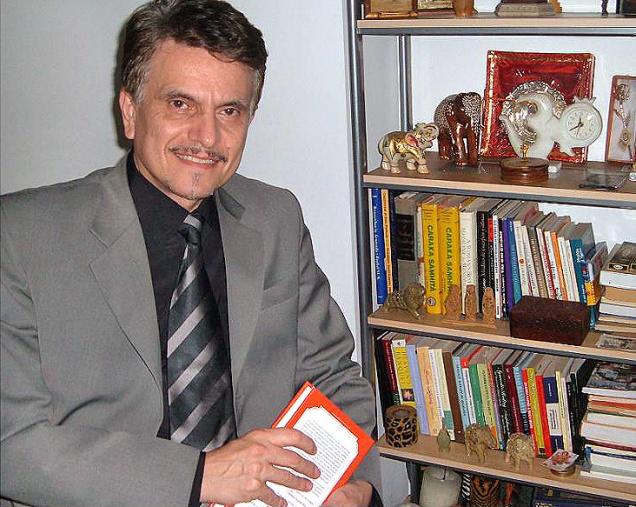
Dr Sergio Lais-Suarez, an oncologist and surgeon, has introduced Ayurveda as a medical course in Argentinian universities

For a vegetarian and teetotaller from Latin America who practices yoga and meditation every day, Sergio Lais- Suarez of Argentina is more Indian than me, says R. Viswanathan, Ambassador of India to Argentina, Uruguay and Paraguay who is self confessedly passionate about Latin America.

The good doctor not only has profound knowledge of Indian philosophy and traditions, he has been practicing, teaching and promoting Ayurveda for the last thirty two years.

Sergio’s passion for Ayurveda ignited in 1980 when he visited India for a seminar. At that time, Ayurveda was completely unknown in Latin America and he had to struggle to convince the Argentines.

It helped that he was an oncologist and a surgeon. After 16 years of unrelenting persuasion, he was instrumental in the setting up of a Department of Ayurveda Medicine. With its success, the University of Buenos Aires opened an Ayurvedic course followed by University of Maimonides. In no time, the Catholic University and Cordoba University had followed suit.

Dr Sergio also melded ayurveda with the concept of medical tourism by opening the first ayurvedic health resort and spa on the banks of a stream and surrounded by hills and greenery, The spa offered full fledged treatment for health recovery and anti-stress, attracting, top business and political leaders, thus raising the profile of Ayurveda in Argentina.

Actually the wheels were set in motion seven years after his return from India, but in a different Latin American country. Dr Sergio was selected by the Brazilian Health Ministry to train 350 doctors in Ayurvedic medicine. He was part of a team coordinated by Vaidya Gopinath Raju from Hyderabad.

The team also taught Ayurvedic medical meditation and anti-stress techniques to the military police in several cities of Brazil. Dr Sergio recalls the incredible scene of the police, with their uniform and guns, seated in large groups with eyes closed practising meditation twice a day. These two programmes, which became successful, have made Ayurveda popular in Brazil. The success of Dr Sergio’s Ayurvedic work in Argentina and Brazil opened the doors to other Latin American countries.

He has been giving lectures across the region and his series on FOX Latin America TV Channel has raised the profile of Ayurveda in the region as a whole. He is also on the lecture circuit in universities and non-governmental organizations in USA and Japan too.

His mission now is to get Ayurveda accepted officially and legally as an alternative system of medicine in Argentina and in Latin America. This is where he needs the support of India with scientific documentation, public promotion activities such as seminars and registration of Ayurvedic medicines with the local regulatory authorities.

In recognition of his passion for India, Dr Sergio has been made the Honorary Consul of India for Cordoba and other interior provinces of Argentina since 2007.

He has taken up this job seriously and has been organizing a number of events and giving speeches promoting India-Argentina relations especially in culture and business.

When Dr Sergio speaks about India, in his native Argentine accent with jokes and anecdotes, India’s image gets more boost than that of any Indian speech.

“Dr Sergio is an Indian in spirit, honorary consul in protocol but more than these, he is an Ambassador of Ayurveda,” notes Ambassador Viswanathan.

source: http://www.TheHindu.com / Health> Medicine & Research / by Sandeep Dikshit / March 21st, 2012