What S’pore can do to attract Chinese tourists

At the China International Tourism Mart held in November in Shanghai, I saw the hunger among many countries competing for Chinese visitors. The global landscape has changed.

In 1990, Singapore, Thailand and Malaysia became the pioneer batch of nations granted the Approved Destination Status. Today, at least 116 have been granted this status, vying for a share of China’s outbound tourism.

Singapore received 1.72 million Chinese tourists last year, faring worse than our close rivals (“For first time in 6 years, number of visitors drops”; Feb 12). For example, South Korea received only 470,000 Chinese tourists in 2004 but six million last year, thanks to its coordinated strategies such as visa facilitation, medical tourism and K-pop branding.

With the increasing competition the Republic faces, the entire tourism industry should come together under the Singapore Tourism Board’s leadership to identify a strategic positioning of Singapore tourism.

Firstly, the Chinese are now free to travel widely. Only through distinctive brand positioning and unique destination appeal can Singapore sustain interest among Chinese tourists. Are we as uniquely Singapore as before in the eyes of tourists?

Secondly, since Singapore pioneered visa facilitation, giving Chinese tourists easier entry via innovative schemes, not much progress has been made in the past decade, while many others are catching up fast with visa waiver or visa on arrival.

Even the United States and Japan have announced plans to relax visa requirements for Chinese visitors.

With China’s outbound numbers soaring from 29 million in 2004 to 109 million last year, with a record S$223 billion spent overseas, Singapore should review visa facilitation to boost arrivals. To reciprocate Singaporeans’ 15-day visa-free travel to China would be a nice gesture in time for the 25th anniversary of diplomatic ties with China.

Thirdly, Chinese tourists are more discerning and demanding. Generic attractions such as aquariums are aplenty in China and elsewhere.

Singapore, which is facing structural challenges in tourism offerings, must regain its capability to develop innovative concepts such as the world’s first Night Safari and Formula One night race.

Strong government support and larger ownership are needed to view the industry as an important economic pillar, to deal with issues in long-term planning, manpower and funding.

Last year, China announced the ambitious US$40 billion (S$54 billion) Silk Road framework, including the development of a Maritime Silk Road covering South-east Asia and West Asia.

As an important sea hub, Singapore can lead in conceptualising regional tourism with ideas such as a visa-free zone and regional cruises, leveraging this theme with China’s backing.

Finally, a stronger currency and higher cost of living weaken Singapore’s competitiveness against rivals offering a quality experience. We must develop experiential and trusted tourism to counter the cost disadvantage.

There are still many discerning tourists willing to spend on a unique experience with peace of mind.

source: http://www.todayonline.com / ToDay / Home> Voices / by Edmund Chua Eng Heng / February 16th, 2015


Korean gov’t to enhance foreign patient protection

medicalsafetyCT26feb2015

South Korea’s Ministry of Health and Welfare recently announced measures to crack down on illegal brokers and to enhance medical safety for foreigners seeking cosmetic plastic surgery in the country.

The Ministry said in a report in its website that the measures were drafted after a discussion of relevant ministries at the ‘Committee on Medical Export Promotion and Medical Tourist Attraction’ in response to rising concerns about foreign patient protection.

Since 2009 when Korea began to attract medical tourists in earnest, the number of medical tourists visiting Korea grew at an annual rate of 36.9 percent, and in particular, the number of foreigners seeking plastic and cosmetic surgery has increased significantly (at 53.5 percent per annum).

“Anyone who intends to solicit foreign patients need to be registered with the Ministry of Health and Welfare in pursuant to Article 27.2 of the Medical Act,” the report said.

The ‘Measures to Regulate Cosmetic and Plastic Surgery Market Targeting Medical Tourists,’ announced on 12 February, aim to ensure Korean cosmetic and plastic surgery industry remain trustworthy.

The program will have three components: stronger crack down on illegal brokers while promoting authorized medical intermediaries; building a medical information system easily accessible by patients seeking information on medical fee and clinic information; and stronger foreign patient protection and enhanced dispute resolution mechanism.

“The government will enhance the confidence and transparency of plastic surgery market to attract as much as 500 thousand foreign patients by 2017,” it said.

Moreover, the Ministry said it will do its best to ensure that the bill on ‘International Medical Project Support Act’ pending at the National Assembly be passed as early as possible as the Act needs to be legislated to provide the legal framework for the implementation of the measures.

source: http://www.enterpriseinnovation.net / Enterprise Innovation / Home> Finance Innovation> Verticals> Health / by Healthcare Innovation Editor / February 25th, 2015

Facilities to tap opportunities in medical tourism

HealthHubCT23feb2015

Hospitals offer EXCLUSIVE divisions

With Coimbatore now having emerged as a major destination for medical tourism, the city is attracting an increasing number of patients from other cities and even foreign countries.

With the objective of catering to such elite clientele, several city hospitals have now begun to set up exclusive divisions and facilities.

Sri Ramakrishna Hospital, run by the S.N.R. Sons Charitable Trust, recently launched a VIP Priority Lounge.

C.V. Ram Kumar, Chief Executive Officer of SNR and Sons, says Coimbatore itself has a high concentration of High Net Worth Individuals. The lounge will have separate staff to ensure there is no waiting time for such clients. The objective is to achieve full utilisation of existing capabilities of the hospital. However, he adds, care is taken so that treatment of other patients is not disturbed.

V. Ramesh, Vice-President (Marketing), Kovai Medical Center and Hospital, says the hospital has allotted an entire floor for treating such patients.

The sixth floor of the hospital has a 1,500-sq.ft king suite along with two slightly smaller queen suites besides ten deluxe suites, all of which are well-equipped to cater to this exclusive clientele.

Further, a Golden Café and health spa have also been set up on this floor. Most of the people who avail these services are businessmen and patients from abroad.

The Ganga Medical Centre and Hospitals has exclusive waiting areas for the high profile clients, where the service will include a personal touch with a dedicated team. There are several suites in the Plastic Surgeries Department and in the Orthopaedics Department also.

S. Rajasekaran, Clinical Director and Head of the Orthopaedic Department, says the hospital focuses on optimal utilisation of resources to reduce the hospitalisation time for patients with time constraints.

“As the hospital has 18 operating theatres, we can perform major, elective and emergency surgeries at almost any point of time. Hence, the waiting period for surgeries is almost zero.”

(Reporting by R. Sairam)

source: http://www.thehindu.com / The Hindu / Home> News> National> Tamil Nadu / February 20th, 2015

Expert Fertility Providers in Lebanon Partner with VisitandCare.com

VisitandCare.com announces partnership with two emerging Lebanese leaders in the field of reproductive medicine. The IVF clinics in Lebanon have demonstrated an exceptional commitment to the fertility industry and have made a significant impact on international fertility landscape.

IVFLebanonCT22feb2015

New York, NY  :

On Tuesday, medical tourism company VisitandCare.com, announces two emerging Lebanese leaders in the field of reproductive medicine. The company’s partnered IVF clinics in Lebanon have demonstrated an exceptional commitment to the fertility industry and have made a significant impact on the international fertility landscape.

The Lebanese partnered fertility providers of VisitandCare.com set a satisfactory example for fertility success — including professionalism, medical performance, and solidarity.

Tolga Umar, VisitandCare.com CEO and Founder, stated this week, “Lebanon is firmly established in the field of reproductive medicine, and has built a reputation by continually drawing patients with attractive costs, by changing the perception of age and fertility options, and finding ways to encourage patients to never give up on their dreams of parenthood.”

Leading IVF Technology in Lebanon —

In many Muslim-majority countries fertility rates have dropped considerably — due to an intricate mixture of cultural, social, economic, and religious factors. An increasing numbers of Middle Eastern women are escaping from the traditional stereotype and finding opportunities for self-fulfillment with successful career opportunities — further postponing the opportunity to have a child.

Recognizing that marriage and children are progressively being delayed, Lebanon’s fertility specialists are expending tradition-based research to make advancements in the development of innovative IVF techniques for older women and leading-edge technologies for male and female infertility.

The Belgian Lebanese Center for Infertility is one of the Middle East’s most innovative fertility centers offering a variability of world-class IVF treatments. The fertility clinic in Beirut boasts highly experienced IVF physicians who have held leadership roles in leading medical societies. The reproductive professionals at Belgian Lebanese Center aim to provide high quality, supportive and personalized care to patients struggling with infertility.

The fertility center of Dr. Bernard Kassab gives patients a unique approach to fighting infertility — and embraces the emotional journey that coincides with fertility treatment. Dr. Bernard Kassab and his team in Lebanon work diligently to help intended parents have a baby. The clinic shares a collective goal of overcoming infertility by harnessing the power of advanced reproductive technologies.

Family Planning in the Middle East —

With a broader acceptance of and greater access to family planning services, Lebanon is defining fertility tourism. The world-class fertility care in Lebanon is centered on technical expertise, proven successful outcomes, and the ability to guide patients with confidence and on-going support.

Prominent Lebanese fertility providers of VisitandCare.com provide personalized fertility treatment plans, including IVF, egg donation, and gender selection — among other fertility options.

VisitandCare.com beholds a commitment to connect patients to fertility providers who are using intelligence, integrity, and innovation to create miracles every day.

Mr. Umar further stated, “We’re extremely honored to partner with remarkably emerging fertility providers in Lebanon. These fertility clinics deserve the recognition and support as they continue to develop innovative fertility treatments. It is our goal to partner with IVF clinics across the globe who provide reproductive expertise, compassion, professionalism, and the strength to support individuals on their journey to becoming parents.”

source: http://www.prweb.com / PRWeb.com  / Home / New York, NY – February 20th, 2015

Costa Rica is Still a Top Medical Tourism Destination

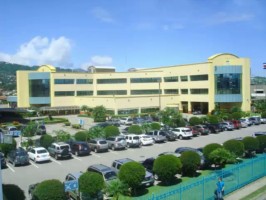
CIMA Hospital in San Jose is often visited by medical tourists

CIMA Hospital in San Jose is often visited by medical tourists

Baltimore, MD ;

Living in a sunny, low-cost, laidback destination overseas doesn’t mean foregoing good healthcare. In many countries outside the U.S., the healthcare is excellent and affordable.

Malaysia received the top score in the healthcare category of International Living’s just- released Annual Global Retirement Index 2015, followed by Costa Rica, Uruguay, Thailand and Panama.

Malaysia offers excellent, low-cost healthcare, and some of the best-trained surgeons, dentists and specialists in the world. Medical expertise here is comparable – and sometimes better – than in most Western countries. Most of the professionals have either trained in the U.S. or the UK, or at the very least have completed their post-graduate studies there.

“Penang Island, popular with expats and medical tourists , delivers first-rate hospitals that offer excellent healthcare at reasonable prices,” reports InternationalLiving.com’s Asia correspondent Keith Hockton. “In fact, the island has two planeloads of medical tourists arriving every day, and when it only costs $20 to see a specialist, you can understand why.”

Costa Rica has a high-quality, government-run universal healthcare system for citizens and legal residents called La Caja.

Residents of the country pay into La Caja. The fee is 7% to 11% of the person’s monthly income, which provides coverage for a spouse as well as a dependent.

“After you pay your monthly fee, you receive free care,” says InternationalLiving.com Costa Rica editor Jason Holland. “Anything you need is available through a nationwide network of clinics and hospitals: doctor’s visits, medical testing, prescriptions, major surgeries, and hospitalization,” Holland says.

Medical care from private providers is also available in Costa Rica. It’s high quality, with all the latest equipment and techniques being used. Many medical tourists from the U.S. come to Costa Rica for procedures not covered by insurance in the U.S. or for procedures which cost a lot out of pocket back home, including cosmetic surgery, knee replacements, and more.

Thailand has a great reputation for affordable and easily accessible healthcare. Many expats living in Thailand say that the facilities are on a par with, and sometimes better than, what is available in their home countries.

Although the private hospitals tend to be slightly more expensive than the government institutions, both are still affordable. A consultation with a specialist will cost less than $15, and many medical tests and procedures are immediately available for a fraction of the cost they would be in other parts of the world.

As Panama is a small country, most expats don’t live more than an hour from a major facility. General consults at private hospitals and clinics range from $5 to $50. Retiree residents pay 20% less thanks to Panama’s Pensionado or pensioner program.

Public and low-income facilities are also widely available, and can charge 90% less than private facilities for everything from lab tests to hospital stays.

The full report on where to find the best health care in the world in 2015 can be read here: Where to Find the Best Healthcare in the World.

Media Contact: For information about InternationalLiving.com content republishing, available source material or to book an interview for radio, TV or print with one of our experts, contact Associate Editor Carol Barron, 772-678-0287 (US), CBarron(at)InternationalLiving(dot)com or visit the Media Center. For automatic updates on the most current stories, follow International Living Media on Twitter.

For more than 30 years, InternationalLiving.com has been the leading authority for anyone looking for global retirement or relocation opportunities. Through its monthly magazine and related e-letters, extensive website, podcasts, online bookstore, and events held around the world, InternationalLiving.com provides information and services to help its readers live better, travel farther, have more fun, save more money, and find better business opportunities when they expand their world beyond their own shores. InternationalLiving.com has more than 200 correspondents traveling the globe, investigating the best opportunities for travel, retirement, real estate, and investment.

source: http://www.news.co.cr / The Costa Rica – Star / Home / by Jaime Lopez / February 18th, 2015 ( PR Web, Feb 12, 2015 )