Wellness Tourism Explodes Into $500 Billion Industry

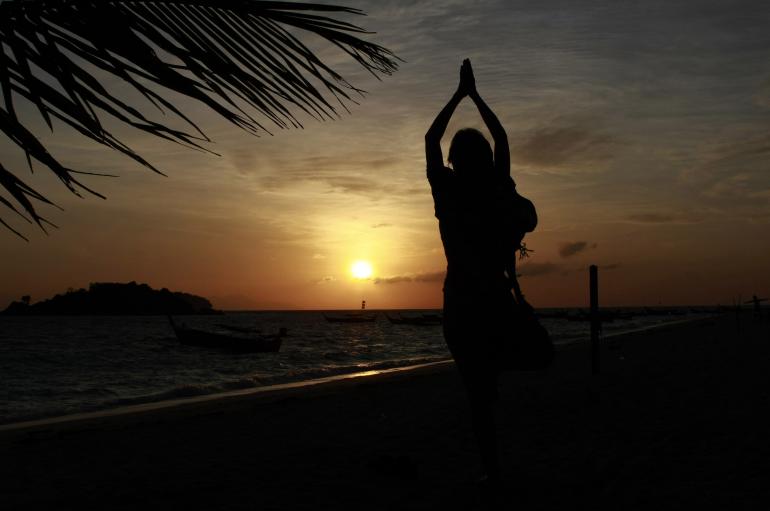
Wellness tourism is a growing sector within the travel industry. REUTERS/Arthur Jones Dionio

Wellness tourism is a growing sector within the travel industry. REUTERS/Arthur Jones Dionio

To celebrate her 40th birthday, Ann Abraham, an information technology consultant in Dallas, wanted to try something completely new. She had traveled with friends and family in the past, but she’d never taken a solo trip. And, to mark what was a milestone in her life, she wanted to discover something about herself.

“I was trying to find something completely out of the box for me,” says Abraham. “I wanted to explore a spiritual side, to become better at meditation.” Thailand sounded like an appealing destination, so she started researching tours online. And while she was excited to go somewhere by herself, she wanted some guidance and structure, too. “I could get lost in a grocery store,” she says.

Abraham ended up traveling to Chiang Mai, Koh Klang and Koh Lanta last November, on a two-week small group tour arranged by  Pravassa Wellness Travel , a New York City based tour company that creates “balanced vacations” offering “a unique travel experience to renew self-care.”

The experience, says Abraham, was life-changing. Each day iran Thailand started with a yoga session, followed by some kind of cultural activity designed to get the travelers interacting with locals and seeing the country from a unique perspective. Abraham and her fellow tour members met with Buddhist monks and arranged to bring them food, spent a day at an elephant park taking care of elephants that had been abused, tasted worms in a local market and attended a celebration of Thailand’s famed Loi Krathong lantern festival, where Abraham released her own candle-lit paper lantern into the sky along with thousands of others.

“On a normal trip, you might go to the city, visit some tourist attractions. This trip involved actually spending time with people there,” says Abraham.

Abraham’s trip can be categorized into a newly flourishing sector of the travel industry known as “wellness travel.” According to research firm SRI International, wellness tourism is a $494 billion industry that has grown 12.7 percent since 2012.

“Back in the day, wellness travel was focused on the notion of spas,” says Anne Banas, executive editor of SmarterTravel. “But now, it’s really expanded into this area of experiential travel, with a combination of well-being, fitness and soulful, spiritual experiences as well as working on the mind-body connection. Connecting to local community is also a big part of it.”

Modern travelers “are looking for unique experiences,” says Sean Murphy of Jetsetter.com. “They want the power of discovery.”

Such wellness vacations align with that notion. Wellness travel includes the classic yoga retreats and spa experiences, of course, but also extreme fitness boot camps, agro-tourism and farm stays, hot springs and thermal bath trips, cycling vacations and more.

Linden Schaffer, the owner of Pravassa, says that when she launched her company almost six years ago, the term “wellness travel” didn’t even really exist. She wanted to offer vacations helping people “restore your best self.” To that end, all the trips arranged by Pravassa include some kind of stress reduction activity such as yoga or meditation, interaction with local culture, physical activity, food education and what Schaffer calls spiritual connection. But most people assumed such trips meant going to an ashram or eating an all-vegetarian diet. “We ended up calling it healthy travel,” says Schaffer, who arranges 25 to 30 trips a year in destinations from Argentina to Vietnam.

Today, the term “wellness travel” has exploded and more players want a piece of the wellness tourism action. The hotel industry has picked up on the fact that travelers are looking for a holistic experience when they vacation. Major resort and hotel brands such as Marriott, Hilton and Shangri-la are adding services to their properties that include everything from yoga classes and in-room fitness videos to locally sourced food offerings and expanded gyms and spas. Both Starwood Hotels and InterContinental Hotels Group have launched their own dedicated wellness brands of hotels.

“The travel industry is realizing that people have difficulty relaxing and unplugging,” says Banas. “So they’re building this stuff in. In 2014, a bunch of hotel chains rolled out new wellness programs, like offering fitness classes on the hotel rooftop. And IHG is rolling out a new hotel chain called Even, completely dedicated to wellness. When you see it at the major chain level, that’s when you know the trend has hit the mainstream.”

In addition to a proliferation of resorts and retreats dedicated to helping you unwind through experiences such as hiking, cooking classes and all sorts of fitness options, the trend has even spawned the rise of “wellness travel agents” dedicated to arranging trips for busy individuals who want their own custom-designed experience.

And while destinations such as India have been traditionally associated with wellness travel, sub-Saharan Africa is the world’s fastest growing region for such trips, reports Skift . Tourists spent $3.2 billion on wellness experiences in the region there in 2013, up 57 percent from the previous year.

But the U.S. has a firm hold on the wellness market, says Susie Ellis, chairman of the Global Spa and Wellness Summit. “Europe, Asia, the U.S. and Canada are all fairly close in terms of how mature their wellness markets are,” Ellis told Skift . “The most important reason why tourists are looking for wellness experiences is prevention, and we’re seeing more destinations make a conscious effort to offer these experiences that focus on prevention.”

Abraham, who travelled to Thailand with Pravassa, says she would love to take another trip like that. “It was fascinating to see what kind of person I could be without someone else’s restrictions and expectations around me,” she says. “It was kind of a journey of self discovery for me.”

source: http://www.ibtimes.com / International Business Times / Home> Media & Culture> Travel / by Ismat Sara Mangla / January 30th, 2015


Medical tourism takes shape in UP with apex Institutes readying packages

Lucknow :

The city is poised to turn into a hub of medical tourism with both Sanjay Gandhi Post Graduate Institute of Medical Sciences and King George’s Medical University is working to project themselves for the purpose. The move comes close on the heels of chief minister Akhilesh Yadav expressing ‘desire’ to develop Lucknow as medical tourism destination during the recently held NRI meeting.

KGMU seems to be a step ahead of SGPGI on the count. To take the idea further, a team from KGMU met chief managing director of IRCTC (Indian Railway Catering and Tourism Corporation) to work out the travel component in the medical tourism packages to be offered.

Vice-chancellor Prof Ravi Kant said, “KGMU would offer packages in six specialties including cardiology and neurosurgery in domestic and international categories. The packages would be in deluxe and super-deluxe classes and would include cost of travel, medical procedure and stay.” Chief managing director, IRCTC Manoj Sinha said that the packages would be finalised very soon.

Director, SGPGIMS, Prof Rakesh Kapoor, said, “The proposal is in the final stage and we would send it to state government for approval soon.” He claimed that presence of 24 super-speciality departments, including genetic medicine, endocrine surgery and renal transplant, makes SGPGI one of a kind in North India which makes it a fit case for medical tourism. “The institute is already attending a number of patients from Nepal, Pakistan, Sri Lanka, Malaysia among other South Asian countries,” he added.

Besides KGMU authorities, many other believe in Lucknow becoming a medical tourism hub. “Lucknow is one of the very few rare combo cities having a rich heritage, picturesque places to visit and good quality medical health care facilities, especially when it comes to super-speciality treatment,” said Dr Ashok Yadav, president, UP government doctor’s association.

“Doctors in SGPGIMS and KGMU are known in the Americas because of their skill and research as well. Their names can be marketed as a brand name to boost the potential in the medical tourism sector,” said Prof MC Pant, International Georgian Association secretary general.

source: http://www.timesofindia.indiatimes.com / The Times of India / Home> City> Lucknow / by Shailvee Sharda, TNN / February 10th, 2015

Palm Springs tourism group to focus on health

(Photo: Richard Lui/The Desert Sun)

(Photo: Richard Lui/The Desert Sun)

The Mayor’s Race in Palm Springs could grow to become a centerpiece of a “wellness week,” as the city positions itself as a health and wellness destination in addition to its already well-established creed in areas like LGBT or film tourism.

“We see that this event, truly, has so much opportunity,” said Aftab Dada, chair of the non-profit PS Resorts, remarking on the organization’s $50,000 sponsorship of the 2015 Mayor’s Race.

PS Resorts is a consortium of about a dozen hotels in the city, charged with growing tourism. It received $406,760 in funding in 2014, according finance documents. PS Resorts’ funding comes in the form of transient occupancy tax rebates it receives from the city. For example, 50 percent of the TOT hotels collect on resort fees is rebated back to PS Resorts for the purpose of offering sponsorships to local events and growing tourism.

The 2015 Mayor’s Race was the largest single sponsorship in 2014 — the year before, the race received a $25,000 PS Resorts sponsorship — and reflects a clear direction the organization would like to move when thinking about growing a “signature event” in Palm Springs.

“One of our plans and goals is to create a ‘health week,'” said Tim Ellis, general manager of the Palm Mountain Resort and Spa and a member of the PS Resorts Board of Directors. “One market that would be easy for us to put our arms around could be ‘adult retreat’ things like yoga, and exercise and the health benefits… And do a whole health week where maybe people would come out and spend four or five days.”

Last year, PS Resorts tried to attract Wanderlust, a traveling yoga festival with a dedicated following, but was unable to secure the dates.

“They’re still at the table,” Ellis remarked. “And that would be a tremendous endcap for this wellness week.”

“So that’s a possibility. Can we merge them together? Well, that would be the goal,” he added.

Next year’s Mayor’s Race will be moved one week later so that it overlaps with the Humana Classic golf tournament and Health Matters summit, even though Mayor Steve Pougnet is careful to point out that the Mayor’s Race is its own event and not officially connected to the Humana.

“I just think the visibility of that weekend is always a good weekend to have my race because the money that I raise does fund all the stuff that President Clinton is doing here in the valley,” Pougnet said Friday.

Clinton and his Clinton Foundation are the centerpiece of the Health Matters summit, launched in 2013, with an emphasis on using technology and creative partnerships to improve the community health picture, largely through preventive care and improved health through exercise and healthier eating.

The Mayor’s Race, with its strong focus on health and wellness, is “a natural fit” with the Health Matters conference, said Pougnet.

And the goal is to leverage the Mayor’s Race to grow Palm Springs’ reputation as a health and wellness destination, say officials.

“That fits right in, sort of like eco-tourism. Eco-tourism is on the rise, and wellness tourism kind of goes hand-in-hand, and there’s absolutely no doubt,” said Pougnet. “I’m convinced that is a growth opportunity for us.”

Seventeen years ago a little known bike race called the  Tour de Palm Springs attracted 400 riders. Today, the race attracts some 9,000 cyclists from across the country, with 72 percent of them participating in the 50 mile route or longer.

Tourism officials look to the growth of events like the Tour de Palm Springs as an indicator of not only the growth of wellness and eco-tourism, but the attraction the Coachella Valley poses for these types of visitors.

“I don’t have the exact numbers, but I know there were well over 1,000 participants in the actual race, and another couple thousand that came to the wellness festival,” said Pougnet of the Mayor’s Race. “So we had several thousand people there… And I’m pretty sure nearly half were from outside Palm Springs. So some are starting to book rooms, some from out of the country.”

PS Resorts contributed a total of $266,741 to Palm Springs events in 2014. Other expenses like consulting and administration fees or public relations totaled $82,049, according to finance reports filed with the city. Altogether, sponsorships and expenses totaled $348,790, down 11.6 percent from 2014. PS Resorts’ revenue in 2014 was $406,800 in 2014, up 8.3 percent from the year before.

However, in 2015 PS Resorts’ largest single sponsorship will be its partnership with the Buzz trolley system. PS Resorts will contribute $100,000 toward the system’s $900,000 first-year price tag.

source: http://www.desertsun.com / The Desert Sun / Home / February 02nd, 2015

Opportunities abound for medical tourism in Korea

KoreaCT04feb2015

In recent years, the development of medical tourism has become increasingly important in some Asian countries. Korea, however, is yet to fully benefit from the Asian medical tourism market. In relation, Dr Seongseop Kim (right in right photo), Dr Jinsoo Lee (left in right photo) and a former PhD student at PolyU’s School of Hotel and Tourism Management jointly studied the current development of medical tourism in Korea and suggested measures to secure Korea’s competitive advantages in this aspect.

Gathered from related industry publications and in-depth interviews with infield experts, the research findings suggested that Korea is highly competitive in aspects including high-quality and specialized medical staff, advanced medical services and state-of-the-art technologies, but relatively weak in promoting the industry and cooperative marketing among government agencies and institutions. The researchers have thus made some recommendations, including more patient-oriented and one-stop services to be offered, promotional strategies (e.g. organizing tourism conferences, international exhibitions and tour programmes) to be improved, as well as pricing and related legal issues to be addressed.

The research findings have been published in Asia Pacific Journal of Tourism Research

http://hotelschool.shtm.polyu.edu.hk/wcms-common/temp/201412171542160106/news_medical_tourism_20141217.pdf

source: http://www.polyu.edu.hk / excel@PolyU – The Hong Kong Polytechnic University / Issue. 67 / January 2015

K’bu doesn’t need micro-managing Board Chair – Frimpong Boateng

KBteachinghospitalCT03feb2015

Former Chief Executive Officer of the Korle Bu Teaching Hospital, Prof Kwabena Frimpong Boateng has said the major referral hospital must not be saddled with a Board Chair who micro-manages the health post’s operations.

“One thing I pray [for] is that they will get a Board Chairman who will not micro-manage Korle Bu but will leave the management to the Chief Executive and his management team, because if a Board Chairman micro-manages the enterprise and he makes mistakes, who is there to check him?” Prof Frimpong Boateng said at the launch of his book: ‘Taming a Monster’”

Africa’s third largest referral hospital has gone through a lot of controversies involving its management.

The latest of such issues occurred last year. The Management and Board were accused by the hospital’s senior staff association of misusing internally generated funds to buy nine luxurious vehicles.

The Board was later dissolved by President John Mahama following a petition made to the President by the staff association.

Brief history of Korle Bu

Established on October 9, 1923, the Korle Bu Teaching Hospital has grown from an initial 200 bed capacity to 2,000. It is currently the third largest hospital in Africa and the leading national referral centre in Ghana.

Korle Bu, which means the valley of the Korle lagoon, was established as a General Hospital to address the health needs of the indigenous people under Sir Gordon Guggisberg’s administration, the then Governor of the Gold Coast.

Population growth and the proven efficacy of hospital-based treatment caused a rise in hospital attendance in Korle Bu. By 1953, demand for the hospital’s services had escalated so high that the government was compelled to set up a task force to study the situation and make recommendations for the expansion of the hospital.

The government accepted and implemented the recommendations of the task force which resulted in the construction of new structures, such as the Maternity, Medical, Surgical and Child Health Blocks. This increased the hospital’s bed capacity to 1,200.

Korle Bu gained teaching hospital status in 1962, when the University of Ghana Medical School (UGMS) was established for the training of medical doctors.

The UGMS and five other constituent schools are now subsumed under the College of Health Sciences to train an array of health professionals. All the institutions of the College however, undertake their clinical training and research in the Hospital.

At the moment, the Hospital has 2,000 beds and 17 clinical and diagnostic Departments/Units. It has an average daily attendance of 1,500 patients and about 250 patient admissions.

Clinical and diagnostic departments of the hospital include Medicine, Child Health, Obstetrics and Gynaecology, Pathology, Laboratories, Radiology, Anaesthesia, Surgery, Polyclinic, Accident Centre and the Surgical/Medical Emergency as well as Pharmacy. Other Departments includes, Pharmacy, Finance, Engineering, General Administration.

The Hospital also provides sophisticated and scientific investigative procedures and specialisation in various fields such as Neuro-surgery, Dentistry, Eye, ENT, Renal, Orthopaedics, Oncology, Dermatology, Cardiothoracic, Radiotherapy, Radio diagnosis, Paediatric Surgery and Reconstructive Plastic Surgery and Burns.

The Reconstructive Plastic Surgery and Burn Centre, the National Cardiothoracic Centre and the National Centre for Radiotherapy and Nuclear Medicine in particular also draw a sizeable number of their clientele from neighbouring countries such as Nigeria, Burkina Faso and Togo.

Korle Bu Teaching Hospital continues to blaze the trail when it comes to the introduction of specialised services. It recently carried out the first ever kidney transplant in Ghana. It is one of the few hospitals in Africa where DNA investigations are carried out. Other specialised services the Hospital provides include brachytherapy intervention for the treatment of prostate cancer and keyhole surgeries.

Plans are underway to venture into molecular testing and employ the use of cutting edge technology. All these are part of the grand plan to offer a wider spectrum of specialist care to position Ghana as the hub of health tourism within the West Africa Sub region.

source: http://www.ghanaweb.com / GhanaWeb / Home> News> Article 344518 / source: starrfmonline.com / January 29th, 2015