Ontario vulnerable to legal challenge because of medical tourism: nursing leader

Allowing international patients to pay for health care sets Ontario up for a challenge by Canadians who want to do the same, warns the head of the Registered Nurses Association.
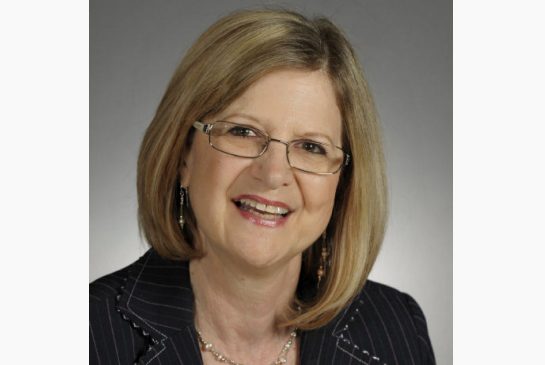
Doris Grinspun, head of the Registered Nurses’ Association of Ontario, says the recent practice of some hospitals to accept foreign patients for profit may lead to demands by Canadians to be allowed to pay for prompter medical care.

Doris Grinspun, head of the Registered Nurses’ Association of Ontario, says the recent practice of some hospitals to accept foreign patients for profit may lead to demands by Canadians to be allowed to pay for prompter medical care.

If the province doesn’t order hospitals to stop practising medical tourism, it risks a court challenge over the right to pay out-of-pocket for health care, the head of the Registered Nurses’ Association of Ontario warns.

“If you seek out people from other countries to pay for health care here, you are inviting a lawsuit from someone in Canada who wants to pay,” Doris Grinspun suggested.

Among Ontario hospitals that treat patients from abroad are Sunnybrook Health Sciences Centre and the University Health Network.

Medical tourism is a threat to medicare  because it creates a double standard that could see well-heeled Canadians demand to pay out-of-pocket to jump the queue and get quick treatment, Grinspun said.

Ontario could find itself in a similar position to that of British Columbia, which is headed to court this fall, she said. The western province is facing a legal challenge  over patient access to private surgery centres.

Not only would Ontario be stuck with big legal bills if there is a court challenge here, but patients might end up with a weakened health system because resources were being drawn away to treat international patients, Grinspun said.

In a written statement, Health Minister Eric Hoskins said international patients can be treated in Ontario hospitals only if “zero public dollars” are used, domestic patients are not displaced, and any monies made are reinvested into improving care for Ontarians.

An ongoing ministry review is looking at ways to strengthen these rules, he said.

“There is no more ardent defender of our universal public health care system than our government, and Ontario patients should have full confidence that their hospitals have their care as their very top priority,” Hoskins said.

As part of a pilot program, Sunnybrook has so far this year treated three foreign patients for cancer, said hospital president Craig Duhamel. Two were from the Caribbean and one was from Europe.

The hospital has made about $100,000 so far, enough to cover the cost of the insurance for the international program, Duhamel said.

“At this point, we are breaking even, but if we treat others, we will be able to invest whatever revenue we generate, minus expenses, back into the provision of patient care for Ontarians,” he said.

Over at the University Health Network, 75 international patients have so far been treated this year. Of those, 31 have been from Libya and the rest from the Caribbean, Middle East and Africa.

These international patients have received orthopedic, cardiac and cancer care, and the University Health Network has taken in $4.5 million in revenue.

Dr. Nizar Mahomed, managing director of “UHN International,” said he does not consider what the University Health Network is doing to be medical tourism.

“This is about people who cannot get access to care” in their home countries,” he said. “I don’t think it has anything to do with two-tier (medicine).”

In an article that he co-authored in the online health policy magazineHealthyDebate.ca, Nizar explains that patients from Libya were wounded in that country’s civil war and that their care at UHN is paid for by the Libyan government.

Grinspun said it is disturbing that “medical tourism experiments” have been concocted out of the public eye and with no public debate. In an open letter to Premier Kathleen Wynn earlier this month, she urged the province to ban the practice.

Before becoming deputy health minister, Dr. Bob Bell was president of the University Health Network. In an interview  last April, he made no apologies for the fact that the hospital was treating international patients and said plans were being made to do more of it.

But in an interview the following month, immediately before starting his new job as deputy minister, Bell was more cautious:

“I think it’s fair to say that the position I have at UHN and the position I have as the deputy, they would be different, obviously. I don’t like the term health-care tourism or medical tourism. I think it degrades the concept that we are trying to give good care. It has been something that has been one of the areas of strategic focus at UHN, but it is not something I will anticipate will be a focus at the ministry.”

source: http://www.thestar.com / The  Star.com / Home> Life – Health & Wellness / by Theresa Boyle / Tuesday – August 05th, 2014
Gujarat set to emerge as a medical tourism hub: PHDCCI

Highlights the vast medical and wellness tourism opportunities exist in states like Gujarat & Maharashtra in western India

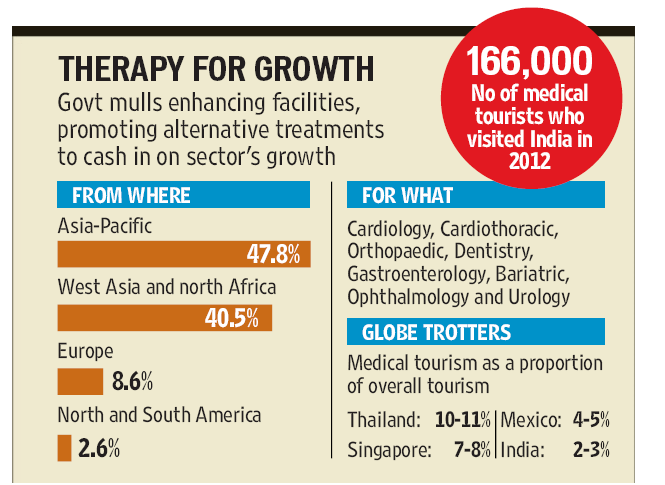
While it is estimated that Indian medical tourism  expected to touch $6 billion by 2018, in India the total share of medical tourist arriving is 2-3 per cent only with countries like Thailand getting a major share. As the industry is expected to grow at 20 per cent CAGR through 2014 to 2018,  Gujarat  is all set to emerge as a medical tourism hub with low cost treatment offerings in place.

In a recent study done by PHD Chamber of Commerce and Industry (PHDCCI) on Medical and Wellness Tourism opportunities in India, it is estimated that Indian Medical Tourism expected to touch $ 6 billion by 2018. The report further highlights the vast medical and wellness tourism opportunities exist in states like Gujarat & Maharashtra in western India.

According to the report, India had made to top five spots because of hosting a nearly 166,000 medical tourist from all over the word in 2012. India is more popular among medical tourists interested in wellness, orthopedic and cardiac procedures.

However, the number of medical tourist arriving percentage is much higher in Thailand with number one position. In India the total share of medical tourist arriving is 2-3 per cent only. The report further stated that while170,000 medical tourists arrived in 2012, the figure will touch 430,000 medical tourists by 2014.

The chamber, however, adds that the Indian medical tourism segment in value terms would be growing at CAGR 20 per cent between 2014 and 2018.

Currently, the size of the segment in India in value term is estimated at little over $ 3 billion with tourist arrivals estimated at 230,000.

Apollo Hospitals, Gandhinagar, which now gets around 5-10 per cent patients from overseas, is eyeing to take that up to 35 per cent of net patient admissions over the next few years. Another hospital chain, Sterling Hospitals is planning to set up representative offices in key countries like countries like Nigeria, Kenya and Uganda apart from the UK to get more patients. Another major city-based hospital, Shalby Hospitals gets around 10-12 per cent of its patients from African countries mainly for joint replacement surgeries.

Apollo handles around 20 international patients every month who mainly come for transplant surgeries, cardiac and cancer surgeries.

Abhijat Sheth, director, medical services, Apollo Hospitals, Gandhinagar said, “The cost of these surgeries is around ten times more in major western countries.”

He further added that while a knee replacement surgery costs around $4,500 (Rs 2.8 lakh) in Ahmedabad, it would cost in the range of $35,000-45,000 overseas (Rs 21.8- 28 lakh).

“Ahmedabad has already earned a reputation as preferred knee replacement surgery destination, and on an average, around 5,000-7,000 such surgeries happen in the city per year,” Sheth said.

source: http://www.business-standard.com / Business Standard / Home> Economy & Policy> News / BS Reporter / Ahmedabad – August 03rd, 2014

New initiative for medical tourism unveiled

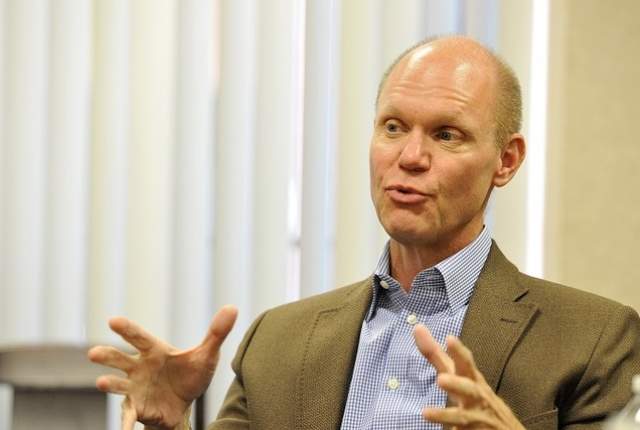
Tom R. Skancke, president and CEO of the Las Vegas Global Economic Alliance, speaks with the Review-Journal editorial board on Monday April 28, 2014. (Mark Damon/Las Vegas Review-Journal)

Tom R. Skancke, president and CEO of the Las Vegas Global Economic Alliance, speaks with the Review-Journal editorial board on Monday April 28, 2014. (Mark Damon/Las Vegas Review-Journal)

Most destinations that position themselves as medical tourism centers have world-class health-care facilities that Southern Nevada would never be able to match.

But that hasn’t dampened the enthusiasm of a group of organizations that sees economic opportunity for the region if it capitalizes on its medical tourism assets instead of lamenting its weaknesses.

Instead of recruiting medical specialists from places that those experts aren’t likely to leave, local leaders instead will focus on local attributes and redefine their mission.

The Las Vegas Regional Strategic Plan for Medical and Wellness Tourism was unveiled Wednesday evening at a meeting of health care and tourism professionals, organizations and nonprofit groups. The event was sponsored by the Las Vegas Convention and Visitors Authority, the Las Vegas Global Economic Alliance, Las Vegas Health, Education, Advocacy and Leadership in Southern Nevada and the University of Nevada, Las Vegas.

Medical tourism is considered a lucrative economic engine, estimated to generate $50 billion to $60 billion a year. Recent reports indicate that the industry will grow to $100 billion a year in the next decade and that the combination of medical and wellness tourism could eclipse $500 billion annually.

A handful of Southern Nevada medical specialists have built practices around serving wealthy clients that jet into Las Vegas from anywhere in the world to receive treatment.

“This is about taking what our community already does well and collaborating to forge new and unexpected economic opportunities in medical and wellness tourism,” said Tom Skancke, president and CEO of the Global Economic Alliance, an economic development advocate.

So instead of wooing the world’s best medical specialists, Southern Nevada should market its medical training infrastructure, its menu of wellness offerings — including more than 45 world-class resort spas — and its team of service industry professionals that can steer prospective clients to medical specialists few people know are based in Las Vegas.

Wednesday’s announcement, attended by 100 people in the medical and tourism industries, was made at the 5-year-old Oquendo Surgical Training Center, a facility with surgical stations and telecommunications systems that enable groups to view and learn medical procedures.

A summary of the plan was presented by its co-authors, Douglas Geinzer, CEO of Las Vegas HEALS; Stowe Shoemaker, dean of UNLV’s College of Hotel Administration; Michael Vannozzi, director of public policy for Global Economic Alliance; and Cheryl Smith, medical and wellness tourism manager for the Convention and Visitors Authority.

Thousands of people travel to Las Vegas for medical conferences at which they learn about new procedures that can be demonstrated for large groups.

The report notes that wellness and prevention are key components to the Patient Protection and Affordable Care Act, and Southern Nevada’s spa industry is well-suited to serve the wellness tourism market.

“I think there is an assumption that wellness is only defined by things like cholesterol check-ups and executive physicals,” said Smith, co-author of the report.

“That’s the medical aspect of it. But there’s a proactive side, prevention,” she said. “Our spas contribute to overall health and well-being, stress reduction and destination for visitors to experience wellness differently then perhaps they can at home.”

The Affordable Care Act has placed a heavy emphasis on electronic medical records, and Southern Nevada’s high concentration of ultra-secure cloud and data storage facilities has attracted new firms and talent to the region.

The plan also envisions wellness travel agents and medical concierges that can identify resources and introduce Las Vegas’ list of client offerings.

Las Vegas has niche disciplines within the health-care industry — such as fertility, plastic surgery, age management, bariatric and orthopedic surgery, diagnostic imaging and dental — which attract both domestic and international travelers to Southern Nevada.

Organizers also hope to position Southern Nevada as a location for clinical trials. The Governor’s Office of Economic Development awarded a Knowledge Fund grant to UNLV to start a Quantitative Clinical Trials Center at the university.

Experts say that if private and academic partners can build capacity for clinical trials, it should drive additional visitation to the area by patients seeking innovative experimental treatments.

The report issued Wednesday was developed by the founding partners after meetings that began more than a year ago with 147 businesses and organizations.

“Although we have made significant progress over the past 10 years,” the report said, “the medical and wellness tourism market in Las Vegas has yet to take off. Our region needs a more robust strategy to capture a healthy slice of the medical and wellness tourism market and after more than a year of meetings and outreach, the project partners have developed a strategy that begins to address the systemic issues that are holding our medical and wellness tourism economy from realizing its full potential.”

source: http://www.reviewjournal.com / RJ / by Richard N. Vellotta – Las Vegas Review  – Journal / Home> Business> Tourism / August 06th, 2014

India among world’s top 5 medical tourism hotspots

India is one among the top five medical tourist spots in the world having hosted nearly 166,000 medical tourists from across the globe in 2012, said a PHD Chamber’s Medical and Wellness Tourism Report released on Friday.

The medical tourism industry in India is expected to reach an estimated value of $6 billion (`36,060 crore) by 2018, it added.

“The growth of medical tourism in India has led to the enhancement of better and advanced medical facilities in the country. More tourists are coming to India because cost of treatment here is much less compared to the US and the European countries. We are also trying to integrate medical tourism with normal tourism,” said Parvez Dewan, secretary, ministry of tourism, government of India.

“The guidelines for the new electronic visa has been finalized last week and we are also in support of offering incentives for the promotion of medical and wellness tourism,” he added.

TherapyCT09aug2014

The report further mentions that highly-skilled doctors coupled with improvement in medical infrastructure are attracting medical tourists.

The union ministry of health and family welfare is also trying to engage international agencies for the promotion of alternative and traditional medicine.

“We are trying to get a foothold in the promotion of traditional medicine like Ayurveda and yoga in around the world with the help of World Health Organization (WHO).

Promotion of herbal industry and propagating cultivation of medicinal plants is done with all seriousness,” said Nilanjan Sanyal, secretary, department of AYUSH.

source: http://www.hindustantimes.com / Hindustan Times / Home> Business-news> Business / HT Correspondent, Hindustan Times, New Delhi / July 26th, 2014

Low medical costs make Asia top for medical tourists

ASIA is claiming top spots as medical tourism destinations, according to the PHD Chamber’s Medical and Wellness Tourism Report for 2013 with the first five places going to Singapore, Thailand, Malaysia, India and South Korea respectively.

The report predicts medical tourism in Asia will grow at 18 per cent annually through to 2017. Singapore has 22 medical facilities certified by Joint Commission International, the US-based quality- and safety-accrediting organisation. In contrast, third-place Malaysia has eight.

Debjit Dutta, director of Impression Tourism Services that does outbound medical tourism from India, commented: “We send critical care patients to Mount Elizabeth Hospital in Singapore for their overall expertise, infrastructure and reputation. Many of our British clients, unwilling to wait in queue for National Health Service facilities, travel to Asia as it is quicker and much cheaper.”

Similarly, Reuven Sagi, director of RAS International Tours Mexico, noted: “Many US citizens save thousands of dollars by having a surgery done in Mexico, Singapore, Thailand or India. Some insurance companies encourage medical tourism and incentivise their clients’ trips abroad.”

Not only do tourists benefit, but local hospitals do as well. Said Parvez Dewan, secretary, Ministry of Tourism India: “The growth of medical tourism in India has led to the enhancement of better and advanced medical facilities in the country.”

source: http://www.ttgasia.com / TTG / Home> Daily News Archives / Shekhar Niyogi / Kolkata – July 30th, 2014