Medical tourism : Cd’A Resort, NW Specialty Hospital partner to attract Canadians

Great things come in bundles.

The Coeur d’Alene Resort and Northwest Specialty Hospital in Post Falls are teaming up to provide bundled pricing to Canadians and others who receive medical care at the hospital and whose family members are staying in Coeur d’Alene at the same time.

The partnership, referred to as “medical tourism,” will not only benefit both businesses, but the community at large when patients and their families spend time here relaxing and enjoying North Idaho, Resort and hospital officials say.

“There is an incredible synergy when two organizations with such great reputations come together,” said J.J. Jaeger, The Resort’s sales and marketing director. “The Coeur d’Alene Resort is world-renowned and Northwest Specialty Hospital is one of the top hospitals in the United States.

“The total experience we are offering to patients both foreign and domestic will be absolutely outstanding.”

Vaughn Ward, former NWSH CEO who worked on starting the program and recently accepted the position of regional vice president for United Surgical Partners International in Scottsdale, Ariz., said the partnership is intended to be win-win.

“The vision of Northwest Specialty Hospital is, and has been, to provide high-quality medical care at an affordable cost,” Ward said. “Our launch into Canada represents an opportunity for us to extend those services beyond our own borders in a way that provides life-changing services to those desperately in need of them.”

The bundled pricing will be offered to anyone, but the focus is to tap into the Canadian market, Ward said.

Our neighbors to the north are heading south for medical care in increasing numbers due to long wait times for procedures.

According to a U.S. Department of Commerce report issued in 2010, the Canadian market is forecasted to increase medical tourism to the United States by about 34 percent in the next several years.

Wait times, according to the Canadian Wait Time Alliance formed by doctors in 2004, can be up to six and a half months in that country. Comparatively, wait times here are in the six-week range, Ward said.

“If you’re suffering from obesity and your life is in jeopardy, you may not have time to wait six months,” Ward said. “We’re giving Canadians the ability to move to the proverbial front of the line to access our outstanding health care.”

Even when care is received, the patient isn’t provided a choice in the surgeon providing the care or the implants they receive, according to the Canada alliance. Rather, patients are at the mercy of the system and have to settle for luck of the draw.

Medical care is becoming increasingly consumer-based, Ward said.

“We’re trying to be out in front of the migration of health care in a consumer-dominated market,” he said.

Darron Rock, NWSH marketing director, said the hospital anticipates the highest demand for its services will come from Canadians looking for knee replacements.

Rock said the total bundled price for a knee replacement, for example, including a five-night stay at The Resort would be $22,500, which is nearly $10,000 cheaper than advertised comparable bundled packages at some competitors in other tourist areas.

Ward added: “We don’t believe that anyone can compete with what we’re offering.”

Rick Rasmussen, NWSH chief financial officer and interim CEO, said more patients are asking what a hospital’s infection rate is and he believes NWSH’s answer will help the local program. The infection rate for some hospitals is 5 to 8 percent; the NWSH rate last quarter was 0.24 percent.

“Patients are getting to be more savvy,” Rasmussen said.

Bill Reagan, The Coeur d’Alene Resort general manager, said NWSH got the ball rolling on the medical tourism package and The Resort’s administration was excited to jump on board. He said he believes the program will not only help tourism, but economic development in North Idaho in general.

“When people are here for a surgery, they oftentimes have time to mingle with residents and see the wonderful place we live,” Reagan said. “We see people move here because of that.”

Reagan estimates that about 20 percent of The Resort’s business comes from Canada.

“Canadians are a significant part of our market,” he said.

Reagan said other local businesses could be a part of the bundled program in the future.

Ward called NWSH’s partnership with The Resort a “natural fit.”

“It’s all about trying to help the community,” he said.

source: http://www.cdapress.com / CDAPress.com / Home> News> Local News / by Brian Walker  bwalker@cdapress.com / July 29th, 2014

Medical tourism gains popularity with health insurers

Cost challenges under healthcare reform have caused major U.S. health insurers to jump onto the medical tourism trend.

Some uninsured or underinsured Americans already travel overseas for bargain priced elective procedures and treatments. Now UnitedHealth Group, WellPoint and Humana are looking to curb expenses by encouraging their members to receive medical tourism procedures abroad through cross-border plans, Medical Tourism Magazine reported.

Blue Cross Blue Shield of South Carolina has been embracing medical tourism strategies with its subsidiary Companion Global Healthcare, Inc., which has contracts with hospitals in Singapore, Thailand, Ireland, Turkey and Costa Rica. Add to the list MediExcel, a cross-border HMO that offers San Diego-area employers group healthcare coverage, including 24/7 access to routine doctor visits from delivery networks in the Mexican cities of Mexicali and Tijuana, the article noted.

Similarly, Aetna has a benefits plan that provides members and eligible dependents 100 percent coverage for qualified preventative care, such as immunizations and wellness exams, obtained in Mexicali, Tecate and Tijuana, Medical Tourism Magazine noted. Furthering its medical tourism efforts, Aetna in February launched a new partnership with Mexico’s largest health insurer to give about 30,000 people who buy high-end plans access to its provider network both in this country and abroad.

Aetna’s medical tourism partnership comes as many Mexican immigrants and naturalized citizens living in states like California and Texas cross the border to access healthcare services, given treatments in Mexico usually cost less and the doctors speak their language.

While Medical tourism is gaining ground among U.S. health insurers, the growth is falling short of industry expectations. A recent study found healthcare organizations that have a financial interest in increasing medical tourism have promoted the concept even if it’s not based on any data or hard evidence, FierceHealthcarepreviously reported. The researchers also found fewer people are prepared to travel internationally for medical treatment than conventional wisdom holds.

For more:
– read the article‘

source: http://wwwfiercehealthplayer.com / Fierce Health Player / Home> News> Operations & Business Management / by Alicia Caramenico / July 21st, 2014

Dominican Republic among top medical tourism destinations

DominicanCT04aug2014

Santo Domingon:

Americans, especially Costa Rican Americans living in the Unites States, choose to go to Mexico, the Dominican Republic and Costa Rica for complex medical procedures, dental works and aesthetic surgery.

According to a report published by thecostaricanews.com, Costa Ricans living in the U.S. have an advantage over Americans who do not speak the Spanish language and are also familiar with the culture of those countries.

The Dominican Republic, known for the best beaches in the world, takes advantage of its natural beauty to draw medical tourists to the exclusive medical institutions for various medical procedures.

The reasonable prices of the whole medical trip is 50% less than having surgery in the States, the report says. Medical tourists come to the country for dentistry, orthopedic, cardiology and cosmetic surgery.

source: http://www.dominicantoday.com / Dominican Today / Home> Tourism / July 26th, 2014

Gallery

ePatient: World Medical Tourism Congress to Address Digital Technologies and Transformation of Healthcare

Rohit Bhargava, best-selling co-author of “ePatient 2015: 15 Surprising Trends Changing Healthcare,” to speak at World Medical Tourism & Global Healthcare Congress, Sept. 20-24, 2014, in Washington, D.C. Palm Beach Gardens, FL :  A big picture view of the “ePatient” … Continue reading →

Tourism : Techirghiol Spa and Sanatorium (Constanta), refurbished, modernised and operating at full capacity

RomanianSpaCT02aug2014

The Techirghiol Spa and Sanatorium (SBRT), which in June 2014 celebrated its 115th anniversary, is an oasis of hope for body and mind wellness where more than 14,000 patients a year come.

The beneficial health effects of the stimulating local climate, of sapropel, of water rich in chlorine, sodium and iodine as well as the professionalism of the medical staff make the sanatorium, which has a capacity of nearly 1,000 beds, to be fully occupied throughout the year, except December and January.

‘Approximately 2% of the Romanian population have visited us. There is a rising trend in the number of patients. The sanatorium meets the same conditions as any another similar unit in Europe. Over 10 million euros have been invested in recent years in improving services and raising the comfort level, using our equity and funds from the Ministry of Health. Wings A and B are refurbished and modernised, and we hope to complete all rehabilitation projects for the entire premises,’ SBRT Manager Vasilica Rusu told Agerpres.

According to medical director Elena Ionescu, most of the patients from other countries seeking the medical services provided to the Techirghiol Sanatorium come from Russia, Israel and the European Union, some of which are Romanians settled abroad.

‘We are always turning down patients because we do not have enough beds. Appointments are made long before for chronic patients, but we keep a few beds for acute patients. (…) Patients are scheduled by their physicians,’ said Elena Ionescu.

According to her, the main conditions that can be treated successfully at Techirghiol are musculoskeletal, rheumatic, inflammatory and posttraumatic conditions, as well as conditions of the respiratory tract, dermatological, neurological and gynaecological conditions.

‘We are glad to see that, from year to year, the Techirghiol Sanatorium turns into a meeting ground for increasingly more Romanians and foreigners. (…) Things are going on so fast, both as far as the infrastructure of the sanatorium is concerned and as far as the scientific and medical components are concerned, that we barely cope with the changes. (…) The mud is in a perfect condition and we discover increasingly more interactions between it and the health of the body,’ said the doctor, adding that research is being conducted to demonstrate the anti-aging value of the Techirghiol mud.

As far as the conditions for which a SBRT treatment is contraindicated are concerned, Ionescu gave as an example the cardio-vascular pathology, stating that ‘all the patients of the sanatorium are seen by a doctor before starting any treatment, in order to exclude all risks.’

Increasingly more young people have been among the patients of the sanatorium in the recent years, and one explanation for the situation does not exclude the fact that the youth get sick because they no longer exercise and they spend too much time in front of computers.

‘The largest share of the patients is made up of the elderly, but as the years pass the percentage is reversed. Increasingly more young people come to the sanatorium. (…) Maybe the young people understand the need for disease prevention or maybe they come because they no longer exercise, have a sedentary lifestyle, sit at the computer too much and get sick. (…) I think there is a balance between the two aspects,’ argued the medical director of the sanatorium.

Because there are patients who arrive at the Techirghiol Spa and Sanatorium without being able to move on their own and leave ‘on their own feet,’ as representatives of the sanatorium claim, several dozen of these people have donated to the sanatorium their wheelchairs, crutches, and canes that were used and were no longer needed. Thus, the idea of establishing a museum of wheelchairs inside the sanatorium came to life.

‘The Techirghiol Sanatorium has a museum of wheelchairs, crutches, canes, various walking aids, a museum set up using donations from the patients who have gone home without needing them anymore. (…) The museum is not active now. (…) The patients donated them as a token of gratitude for the fact that we healed them and in order to help other patients with the wheelchairs and the walking aids,’ said the SBRT representatives.

About the Techirghiol sapropel mud, former Health Minister Vasile Cepoi said that this natural healing resource is in danger of decay.

‘In my opinion, yes, it is in danger. Because I saw they started building very close to the lake, which can change a number of natural factors such as air and water streams and lead to mud degradation. That is why I was saying that clearer legislation is needed on defence premises for areas with natural healing factors. (…) There is a Government project, an inter-ministerial group that I coordinate, set up last year and taking care exactly of this issue. We are going to release a strategy from which to issue subsequent pieces of legislation conducive to solving many problems, one of which is this. It is not the Techirghiol alone, but all the spa resorts,’ said Cepoi.

According to him, Techirghiol is a reference for the internationally recognised healing properties of the natural factors in the coastal zone, but health tourism in Romania is not stimulated.

‘Health tourism needs to be stimulated, given that before 1990 Romania was 14th to 15th in the world rankings, while currently it is no longer in any ranking. When it comes to health tourism, the tourist component should be developed, because, for example in Techirghiol, the medical component is well represented, but unfortunately, tourism is not well represented. Recreational tourism in health tourism has a number of particularities and, on the one hand, tranquillity has to be observed, but on the other hand the desire for relaxation and entertainment should also be kept in mind. Authorities and investors should think about this because only this way will Techirghiol become a magnet not only for Romanian, but also for foreigners,’ said Cepoi

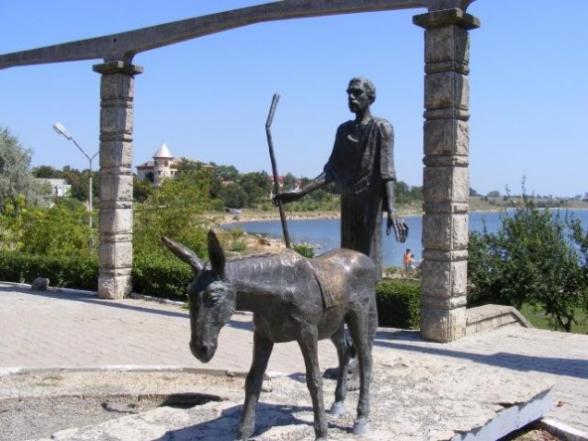
The Legend of Techir tells the story of how the healing properties of the mud in Lake Techirghiol were discovered.

Legend has it that hundreds of years ago, a crippled and blind old man named Techir, left only with his donkey, one day happened on the mud of Techirghiol Lake that had attracted mainly his donkey. The old man struggled for hours to get out of the foul smelling mud but his stubborn donkey would not budge. Once they came out of the mud, Techir realised that his eyes could perceive light again and his legs, helpless for a long time, started to obey him. At the same time, the ugly wounds on the donkey’s back had healed and its body became visibly nimbler. The news that the mud in Lake Techirghiol would be miraculous spread quickly, and upon hearing what miracle had happened to Techir and his donkey, people started coming in droves to Techirghiol to bathe in the mud for healing.(Source:agerpres.ro)

source: http://www.actmedia.eu / ActMedia / Home> Economic / Tuesday – July 29th, 2014